

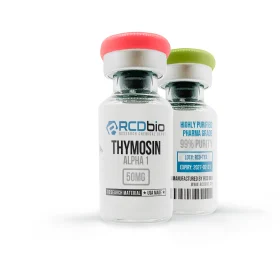
Description
What is Thymosin Alpha-1?
Thymosin Alpha-1 (Tα1) is a synthetic 28-amino acid peptide originally isolated from thymosin fraction 5, a partially purified bovine thymus extract, and first fully sequenced and characterized by Allan Goldstein and colleagues in 1977. In its endogenous form, Tα1 is produced by proteolytic cleavage of the 113-amino acid precursor protein prothymosin alpha (ProTα), encoded by the PTMA gene. The synthetic research-grade form replicates this native sequence, with an acetylated N-terminus (Ac-) and a free acid C-terminus (-OH), and contains no cysteine residues, conferring a linear, disulfide-free architecture.
In laboratory and preclinical settings, Tα1 has been extensively investigated as a pharmacological tool for examining toll-like receptor (TLR)-mediated innate immune signaling, dendritic cell (DC) maturation, T-lymphocyte differentiation, and downstream cytokine regulation. Its primary targets of study include TLR2 and TLR9 on myeloid and plasmacytoid dendritic cells, through which it activates MyD88-dependent and IRF3-dependent downstream pathways in a variety of in vitro and in vivo experimental models.
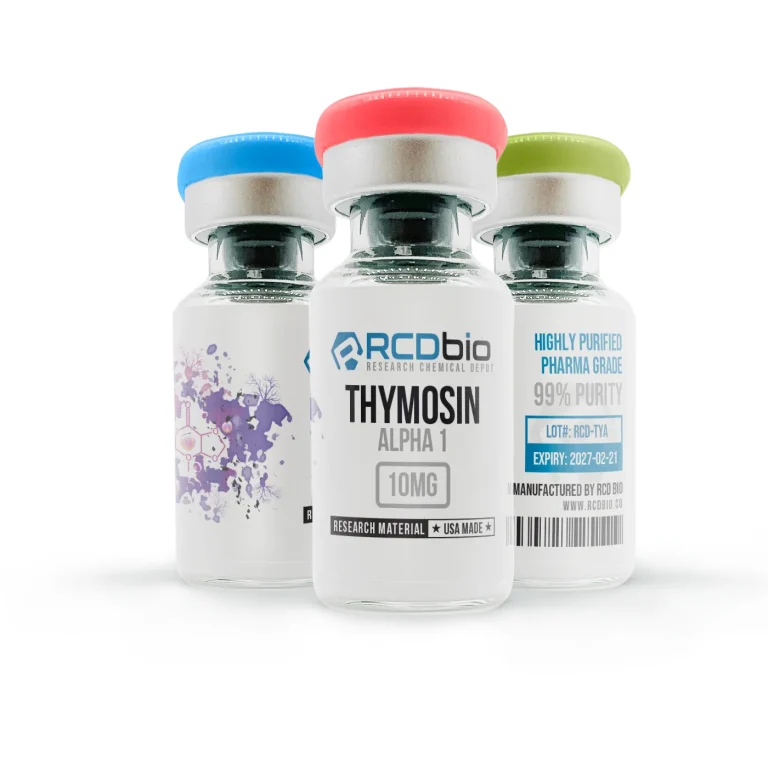
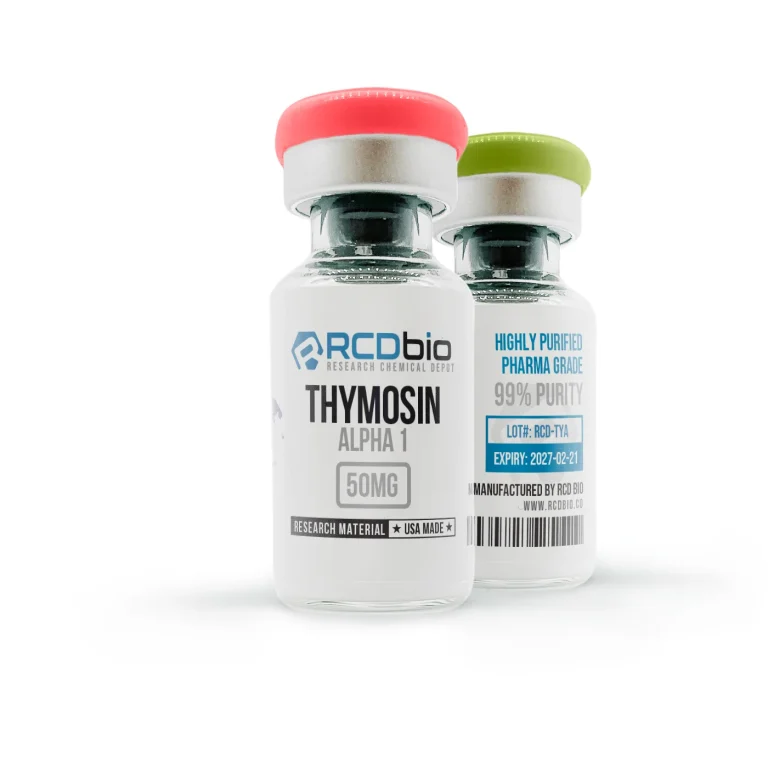
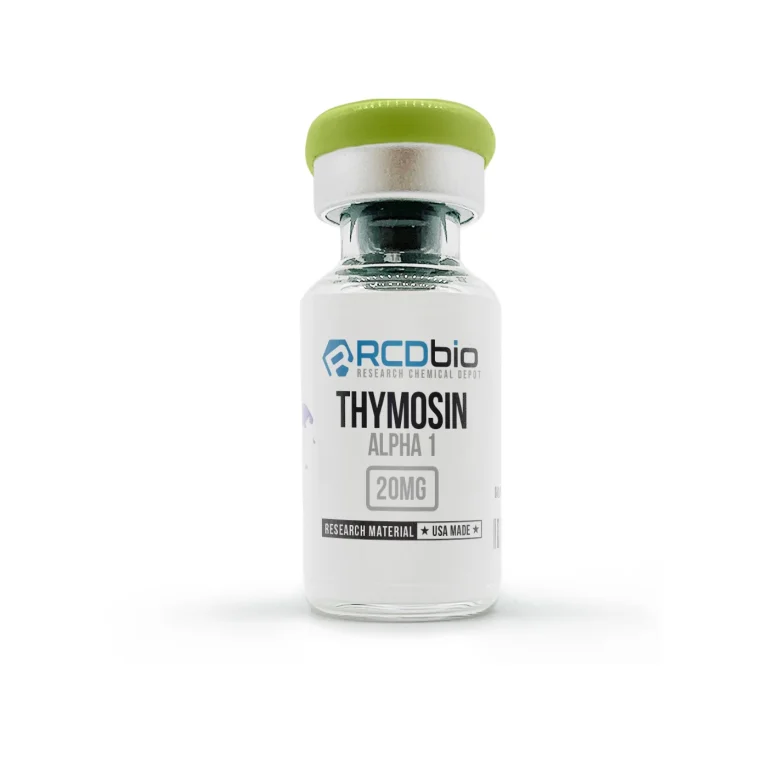
Synthetic Thymosin Alpha-1 supplied by RCDbio is intended strictly for laboratory and research purposes. It is not approved by the Food and Drug Administration for use in this research-grade, non-pharmaceutical form. It is not a dietary supplement and is not intended for human consumption or therapeutic self-administration.
Chemical Properties
| Property | Detail |
| Product Type | Synthetic Linear Acetylated Peptide |
| Product Name | Thymosin Alpha-1 |
| Application | Scientific / Research Use Only |
| CAS Number | 62304-98-7 (free acid form) |
| Molar Mass | 3,108.30 g/mol (free acid) |
| Chemical Formula | C₁₂₉H₂₁₅N₃₃O₅₅ |
| Sequence | Ac-Ser-Asp-Ala-Ala-Val-Asp-Thr-Ser-Ser-Glu-Ile-Thr-Thr-Lys-Asp-Leu-Lys-Glu-Lys-Lys-Glu-Val-Val-Glu-Glu-Ala-Glu-Asn-OH (28 amino acids; N-terminus: Ac-; C-terminus: free acid -OH) |
| IUPAC Name | N-acetyl-L-seryl-L-alpha-aspartyl-L-alanyl-L-alanyl-L-valyl-L-alpha-aspartyl-L-threonyl-L-seryl-L-seryl-L-alpha-glutamyl-L-isoleucyl-L-threonyl-L-threonyl-L-lysyl-L-alpha-aspartyl-L-leucyl-L-lysyl-L-alpha-glutamyl-L-lysyl-L-lysyl-L-alpha-glutamyl-L-valyl-L-valyl-L-alpha-glutamyl-L-alpha-glutamyl-L-alanyl-L-alpha-glutamyl-L-asparagine |
| Synonyms | Thymalfasin (pharmaceutical trade name, not equivalent to research-grade form); Zadaxin (pharmaceutical brand name); Tα1; TA1 |
| Physical Form | Lyophilized white to off-white powder |
| Solubility | Freely soluble in sterile distilled water or aqueous buffer. A small volume of 0.1% TFA or DMSO may be used to facilitate initial dissolution; mix gently. Contains no disulfide bridges and no cysteine residues — no reducing agent sensitivity. |
| Storage (Lyophilized) | −20°C in sealed, light-protected container with desiccant; stable for up to 2 years under recommended conditions |
| Storage (Reconstituted) | 4°C; use within 48–72 hours of reconstitution; use low-binding sterile polypropylene or borosilicate glass vials; avoid polystyrene; discard any solution exhibiting turbidity, particulate matter, or discoloration |
| PubChem CID | 16130571 (free acid, Thymosin alpha-1); verified against compound name and molecular formula |
| Purity | ≥98% (HPLC verified, independent third-party laboratory analysis; COA available per batch) |
| WADA Status | Thymosin Alpha-1 (thymalfasin) is not listed by name on the current WADA Prohibited List; however, it may fall under the S0 Non-Approved Substances category for competitive athletes, as it is not approved for therapeutic use in most jurisdictions. Researchers engaged in sport-adjacent studies should verify the current status at GlobalDRO.com before use. |
How Does Thymosin Alpha-1 Work?
Thymosin Alpha-1 has been investigated across multiple immunological pathways, with its primary mechanistic activity characterized through TLR-mediated signaling on dendritic cell populations in both in vitro and in vivo preclinical models. The compound does not function as a direct T-cell mitogen; rather, it modulates the upstream regulatory milieu in which T-cell differentiation occurs, producing context-dependent outcomes across experimental systems.
TLR2 and TLR9 Receptor Engagement on Dendritic Cells
In murine and human DC preparations, Tα1 has been observed to bind TLR2 and TLR9 on myeloid dendritic cells (mDCs) and plasmacytoid dendritic cells (pDCs). TLR9 engagement triggers MyD88-dependent downstream activation, leading to nuclear translocation of NF-κB and IRF3/IRF7 transcription factors. In isolated murine DC cultures, this signaling cascade has been characterized as driving DC maturation, upregulation of co-stimulatory surface markers (CD80, CD86, MHC class II), and production of Th1-polarizing cytokines including IL-12 and IFN-γ. TLR2/NF-κB and TLR2/p38 MAPK parallel pathways have also been documented in murine macrophage and DC preparations. [Romani et al., 2004; Romani et al., 2006]
MyD88-Dependent Cytokine Regulation
In murine bone marrow-derived DC systems and human peripheral blood mononuclear cell (PBMC) preparations, MyD88-dependent signaling downstream of TLR9 has been associated with differential production of IL-12 and IL-10 by DC subsets. Tα1-exposed DCs have been characterized as producing increased IL-12 relative to IL-10 in Th1-polarizing experimental conditions, whereas in tolerogenic contexts, TLR9/IDO (indoleamine 2,3-dioxygenase) activation was observed, linking Tα1 to a bidirectional immunoregulatory profile in murine in vivo models. [Romani et al., 2006]
T-Lymphocyte Differentiation and Maturation
Preclinical studies in thymectomized murine models and isolated thymocyte preparations have investigated Tα1 for its capacity to promote differentiation of CD4+ T helper and CD8+ cytotoxic T-lymphocyte (CTL) populations. Upregulation of CD3, CD4, and CD8 surface markers on thymocytes was characterized in murine thymic preparations following Tα1 exposure. The observed shift toward Th1-type cytokine profiles — characterized by increased IL-2 and IFN-γ secretion in mitogen-stimulated murine T-cell cultures — has been a consistently studied mechanistic outcome across experimental models. [Dominari et al., 2020]
MHC Class I Expression and Antigen Presentation
In FRTL-5 thyroid cell lines and other in vitro cellular systems, Tα1 has been reported to upregulate MHC class I surface expression at the transcriptional level, a mechanistic finding investigated in the context of antigen presentation and immune surveillance in preclinical tumor and viral infection models. This effect has been linked to NF-κB-dependent transcriptional control of MHC I genes in isolated cell preparations.
NK Cell Activation
In isolated human NK cell preparations and murine in vivo models, Tα1 exposure has been associated with increased NK cell-mediated cytotoxic activity against target cell lines, a finding attributed in part to the upstream Th1-cytokine milieu produced by Tα1-conditioned DCs rather than direct NK cell receptor binding.
Key Research Findings
- TLR9-mediated DC maturation: Tα1 activates TLR9/MyD88 signaling in murine and human dendritic cell preparations, driving Th1-polarizing cytokine profiles (IL-12, IFN-γ) in isolated cell culture systems. [Romani et al., Blood 2004]
- IDO activation and immune balance: In murine DC systems, Tα1-induced TLR9 signaling was characterized as concurrently activating IDO-mediated tryptophan catabolism, establishing a bidirectional tolerance/inflammation regulatory axis in isolated cell preparations. [Romani et al., Blood 2006; PMID 16741252]
- Th1 cytokine upregulation: IL-2 and IFN-γ production was characterized in mitogen-stimulated human PBMC and murine T-cell preparations following Tα1 exposure; CD4+ and CD8+ marker upregulation observed in thymocyte systems. [Dominari et al., 2020; PMID 33362999]
- MHC class I regulation: Transcriptional upregulation of MHC class I expression characterized in FRTL-5 cell line preparations; mechanistically linked to NF-κB pathway activation; relevant to antigen presentation research models. [Garaci, 2007; PMID 17567941]
- NK cell cytotoxicity modulation: Enhanced NK cell cytotoxic activity against K562 leukemia target cell lines observed in isolated human peripheral blood preparations; dependent on Th1 cytokine context produced by Tα1-conditioned immune environments. [Dominari et al., 2020]
All findings listed above are derived from preclinical or in vitro data. No conclusions regarding human therapeutic efficacy can be drawn from these observations. These findings do not constitute evidence of safety or efficacy in any human condition or organism.
What are the Potential Research Applications of Thymosin Alpha-1?
TLR Signaling and Innate Immune Pathway Research
Thymosin Alpha-1 serves as a pharmacological tool in investigations of TLR2- and TLR9-mediated innate immune signaling cascades. It is utilized in DC activation assays, NF-κB reporter cell systems, and MyD88 pathway dissection studies in murine and human cell preparations. Its well-characterized TLR engagement profile makes it a reference compound for experiments examining pathogen-associated molecular pattern (PAMP) recognition and downstream innate immune effector responses.
Dendritic Cell Maturation and Th1 Polarization Studies
In experimental immunology, Tα1 is investigated as a DC-conditioning agent in studies examining the relationship between innate DC activation and adaptive Th1/Th2/Treg axis polarization. Bone marrow-derived DC (BMDDC) preparations treated with Tα1 in murine in vivo and ex vivo systems are studied for surface maturation marker upregulation (CD80, CD86, MHC II) and cytokine secretion profiling.
Immunooncology Research Models
Tα1 has been employed in preclinical tumor immunology models to examine mechanisms of MHC class I upregulation, NK cell activation, and cytotoxic T-lymphocyte (CTL) priming in the context of tumor immunosurveillance. Murine syngeneic tumor models and in vitro tumor cell line/immune cell co-culture systems constitute the primary experimental frameworks.
Infectious Disease Immunology Research
As an extensively studied immunomodulatory peptide, Tα1 is utilized in preclinical models of fungal, viral, and bacterial infection to characterize the relationship between TLR-mediated innate immune priming and adaptive immune resolution. Aspergillus fumigatus murine infection models, CMV in vivo models, and hepatitis B viral replication in vitro systems have been primary research contexts for Tα1.
Sepsis Immune Dysregulation Models
In rodent cecal ligation and puncture (CLP) models of polymicrobial sepsis, and in human PBMC preparations from septic patients studied ex vivo, Tα1 has been investigated for its effects on TLR2, TLR4, and MyD88 mRNA expression in peripheral blood mononuclear cells, as a means of characterizing immune dysregulation and potential immunorestorative mechanisms in sepsis-relevant experimental settings.
These are observed in preclinical and in vitro contexts only and do not constitute claims of efficacy or safety in any organism.
What are the Potential Side Effects of Thymosin Alpha-1?
- Local tissue reactions at the site of peptide administration — including transient erythema and injection site discomfort — have been observed in rodent subcutaneous administration models in vivo; dose-dependent in character.
- Transient alterations in cytokine balance (IL-12, IL-10, IFN-γ) have been characterized in murine in vivo models; these are expected pharmacological consequences of TLR9/DC pathway activation and are not uniformly reproduced across all experimental systems or dose ranges.
- In murine in vivo sepsis models at elevated dose levels, modulation of TLR2 and TLR4 expression in PBMCs has been characterized; downstream inflammatory sequelae at supraphysiological exposures have not been consistently characterized across model systems.
- No acute systemic toxicity has been established in preclinical rodent models at research-relevant concentrations; however, the absence of reported acute toxicity findings should not be construed as confirmation of a benign safety profile in experimental subjects.
No human safety or tolerability data pertaining to research-grade Thymosin Alpha-1 has been established. These observations are derived from experimental systems and should not be extrapolated to human or animal outcomes.
Risk & Handling
Handling Precautions
Thymosin Alpha-1 lyophilized powder should be handled exclusively by trained laboratory personnel. Minimum personal protective equipment includes nitrile gloves, a laboratory coat, and appropriate eye protection. Reconstitution of lyophilized peptide should be performed in a designated laboratory area to avoid aerosol generation; a biosafety cabinet is recommended for reconstitution steps. As Tα1 contains no cysteine residues and no disulfide bridges, reducing agent exposure (DTT, β-mercaptoethanol, TCEP) does not present a structural stability concern; however, standard peptide handling precautions apply. Avoid polystyrene labware; use low-binding sterile polypropylene or borosilicate glass vials to minimize peptide adsorption losses.
Exposure Risks
Risk Tier: LOW–MODERATE
Thymosin Alpha-1 is a biologically active 28-amino acid peptide with well-characterized pharmacological activity at TLR2 and TLR9 in immune cell preparations. At research-relevant concentrations in rodent in vivo models, it is not acutely toxic; no lethal dose or dose-limiting toxicity data have been characterized in standard preclinical toxicology models. Its plasma half-life in preclinical in vivo studies is approximately 2 hours following subcutaneous administration, reflecting peptide degradation by circulating proteases. Biologically active immunomodulatory peptides should be handled with precautions appropriate to their receptor engagement profile — TLR pathway activation is an expected pharmacological consequence that may elicit inflammatory cytokine responses in exposed biological systems. No human safety data has been established for research-grade Thymosin Alpha-1.
Storage
- Lyophilized form: Store at −20°C in a sealed, light-protected container with desiccant
- Reconstituted form: Store at 4°C; use within 48–72 hours of reconstitution
- Do not subject to repeated freeze-thaw cycles; structural integrity of linear peptides degrades incrementally with each cycle
- Tα1 is not sensitive to reducing agents (no disulfide bridges), but avoid prolonged exposure to high temperatures or strongly acidic/basic conditions, which may promote peptide hydrolysis
- Discard any reconstituted solution that appears turbid, discolored, or exhibits particulate matter
FAQs
Q: What is Thymosin Alpha-1 and what is it investigated for in laboratory research? A: Thymosin Alpha-1 (Tα1) is a synthetic 28-amino acid peptide with an N-terminal acetyl group, identical in sequence to a naturally occurring fragment cleaved from the thymic precursor protein prothymosin alpha. In laboratory and preclinical research, it is investigated for its modulation of TLR2- and TLR9-mediated innate immune signaling in dendritic cell and macrophage preparations, Th1 cytokine polarization, T-lymphocyte differentiation, and NK cell activation in murine and human ex vivo models. It is not approved for human therapeutic use in its research-grade form and is supplied exclusively for laboratory research purposes.
Q: What is the half-life of Thymosin Alpha-1 in preclinical models? A: The plasma half-life of Tα1 in rodent subcutaneous administration models is approximately 2 hours, reflecting proteolytic degradation by circulating plasma peptidases. In aqueous solution under laboratory conditions (4°C, sterile), reconstituted Tα1 retains stability for approximately 48–72 hours. These parameters are derived from preclinical rodent pharmacokinetic data and do not represent pharmacokinetic profiles of pharmaceutical-grade thymalfasin or human pharmacokinetic data for research-grade material.
Q: How should Thymosin Alpha-1 be stored to maintain stability? A: Lyophilized Tα1 should be stored at −20°C in a sealed, light-protected container with desiccant, where it is stable for up to 2 years under recommended conditions. Upon reconstitution, the peptide solution should be stored at 4°C in low-binding polypropylene or borosilicate glass vials and used within 48–72 hours. Repeated freeze-thaw cycles should be avoided. Unlike disulfide-containing peptides, Tα1 does not require protection from reducing agents due to the absence of cysteine residues.
Q: What toxicity observations have been reported in preclinical studies? A: No dose-limiting toxicity or acute lethality has been established for Tα1 in standard rodent preclinical models at research-relevant concentrations. Transient local tissue reactions at subcutaneous administration sites (erythema, minor inflammation) have been reported in murine in vivo models and are consistent with expected biological activity at TLR-expressing tissue-resident immune cells. Cytokine shifts — including elevated IL-12 and IFN-γ in serum — are expected pharmacodynamic consequences of TLR9/DC pathway activation and are dose-dependent in character. No human safety or tolerability data has been established for research-grade Tα1.
Q: What reconstitution solvents are typically used for Thymosin Alpha-1 in laboratory research? A: In laboratory settings, Tα1 is typically reconstituted in sterile distilled water or phosphate-buffered saline (PBS, pH 7.4), in which it is freely soluble. A small volume of 0.1% trifluoroacetic acid (TFA) or DMSO may be used to improve initial solubility for concentrated stock preparation, followed by dilution in aqueous buffer. Gentle mixing is recommended; avoid high-temperature heating and vortexing, which may promote peptide aggregation.
Q: What is the significance of the N-terminal acetyl group on Thymosin Alpha-1? A: The N-terminal acetylation (Ac-) of Tα1 is a structural feature required for its full biological activity in experimental systems. Deacetylated analogs have been characterized as significantly less potent in TLR-engagement and DC maturation assays compared to the native acetylated form. The acetyl group confers resistance to aminopeptidase-mediated cleavage of the N-terminus, contributing to the peptide’s observed 2-hour plasma half-life in rodent models relative to non-acetylated peptides of similar length.
Q: Is Thymosin Alpha-1 prohibited under WADA regulations for sport-adjacent research? A: Thymosin Alpha-1 is not currently listed by name on the WADA Prohibited List. However, as a non-approved biological substance, it may fall under the S0 Non-Approved Substances category when used in sport-adjacent contexts. Researchers designing studies with any sport-adjacent relevance should independently verify the current status at GlobalDRO.com before use. RCDbio supplies Tα1 exclusively for laboratory and research purposes; no athletic performance implication is stated or implied.
Related Research Compounds
Epithalon Peptide — A synthetic tetrapeptide (Ala-Glu-Asp-Gly) investigated in murine telomerase activation and neuroendocrine regulatory models; complements Tα1 in longevity-focused immunological research frameworks examining thymic and epigenetic regulation.
BPC-157 Peptide — A 15-amino acid pentadecapeptide investigated in murine and rat models of tissue regeneration, angiogenesis, and inflammatory cytokine modulation; studied alongside Tα1 in preclinical models examining intersecting immune and tissue repair signaling pathways.
KPV Peptide (Lysine-Proline-Valine) — A tripeptide fragment derived from α-MSH, investigated in murine intestinal inflammation models for NF-κB inhibitory activity; mechanistically complementary to Tα1 in studies characterizing multi-pathway immune modulation in preclinical settings.
References
- Garaci E. Thymosin alpha1: a historical overview. Ann N Y Acad Sci. 2007;1112:14–20. PMID: 17567941. Available at: https://pubmed.ncbi.nlm.nih.gov/17567941/
- Romani L, Bistoni F, Perruccio K, Montagnoli C, Gaziano R, Bozza S, et al. Thymosin alpha1 activates dendritic cell tryptophan catabolism and establishes a regulatory environment for balance of inflammation and tolerance. Blood. 2006;108(7):2265–2274. PMID: 16741252. Available at: https://pubmed.ncbi.nlm.nih.gov/16741252/
- Dominari A, Hathaway D, Pandav K, Matos W, Biswas S, Reddy G, et al. Thymosin alpha 1: A comprehensive review of the literature. World J Virol. 2020;9(5):67–78. PMID: 33362999. Available at: https://pubmed.ncbi.nlm.nih.gov/33362999/
- Romani L, Moretti S, Fallarino F, Bozza S, Ruggeri L, Casagrande A, et al. Jack of all trades: thymosin α1 and its pleiotropy. Ann N Y Acad Sci. 2012;1269:1–6. PMID: 23045964. Available at: https://pubmed.ncbi.nlm.nih.gov/23045964/
- Liu CH, Wang FS. Thymosin alpha 1: biological activities, applications and genetic engineering production. Peptides. 2010;31(11):2151–2158. PMID: 20699109. Available at: https://pubmed.ncbi.nlm.nih.gov/20699109/
Disclaimer
Thymosin Alpha-1 is exclusively for laboratory research purposes. RCDbio products are not intended to diagnose, prevent, treat, or cure any disease or medical condition.
The Food and Drug Administration has not evaluated the statements on our website. This product is not approved for human or veterinary use. Researchers must comply with all applicable local, state, and federal laws and regulations governing the purchase and use of research compounds. By purchasing, you agree to our Terms and Conditions. RCDbio reserves the right to refuse sales to unauthorized individuals.
ATTENTION: All RCDbio products are strictly for LABORATORY AND RESEARCH PURPOSES ONLY. They are not intended for human consumption, veterinary use, or any other non-research application. For queries, complaints, or support, contact support@legacy.rcdbio.co
Reviews
There are no reviews yet