

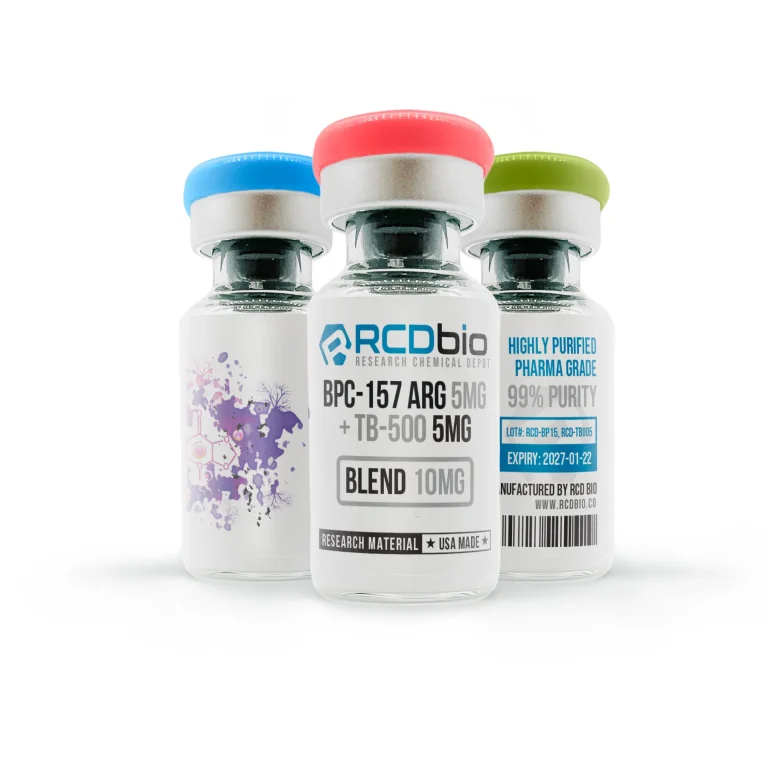
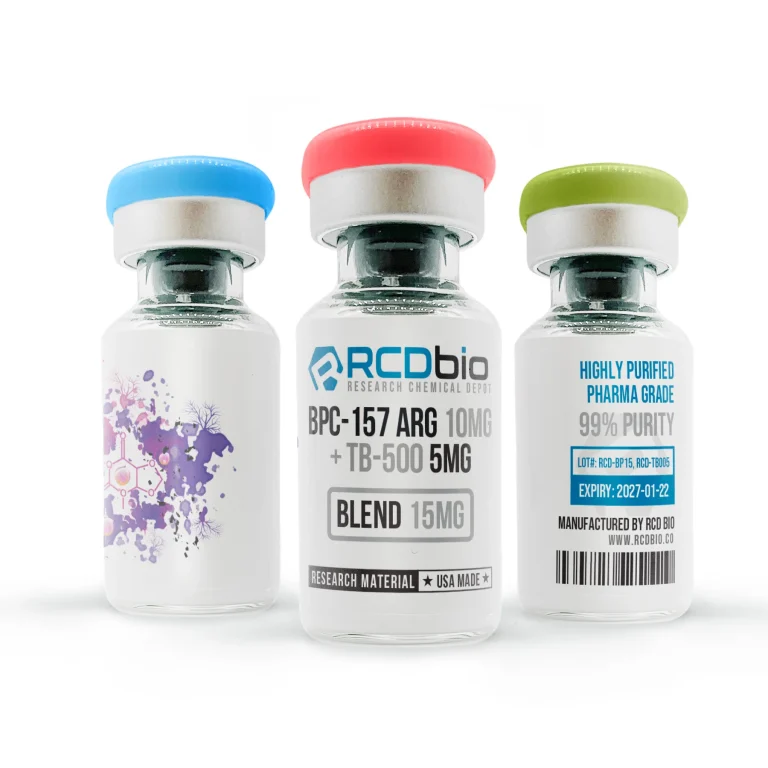
Description
What is the BPC-157 + TB-500 Blend?
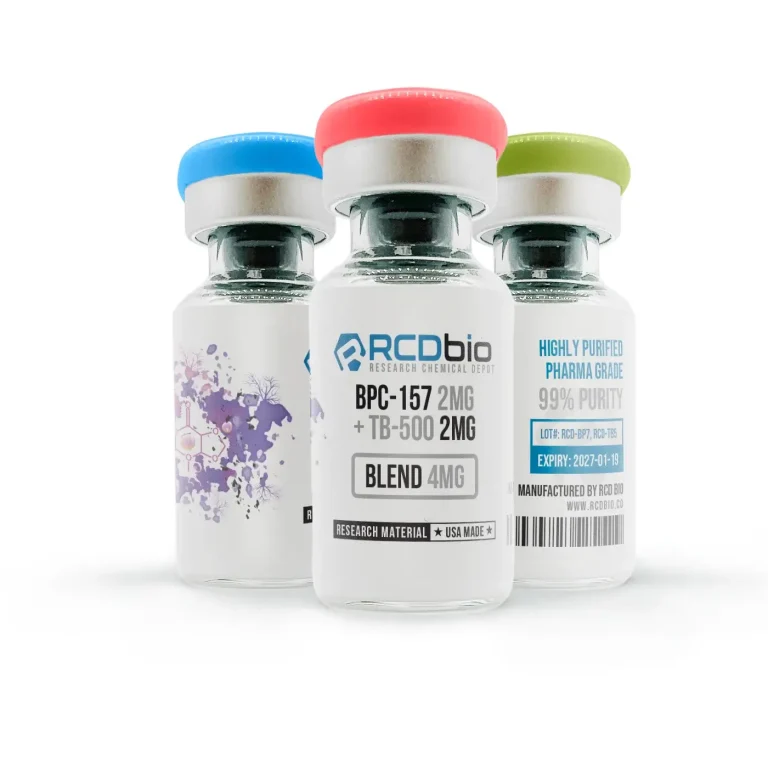
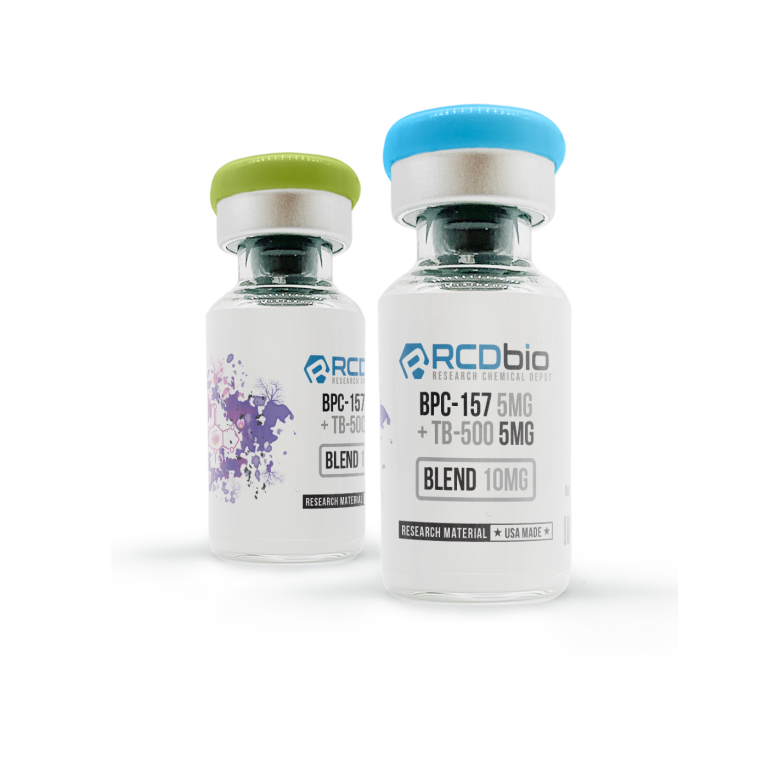
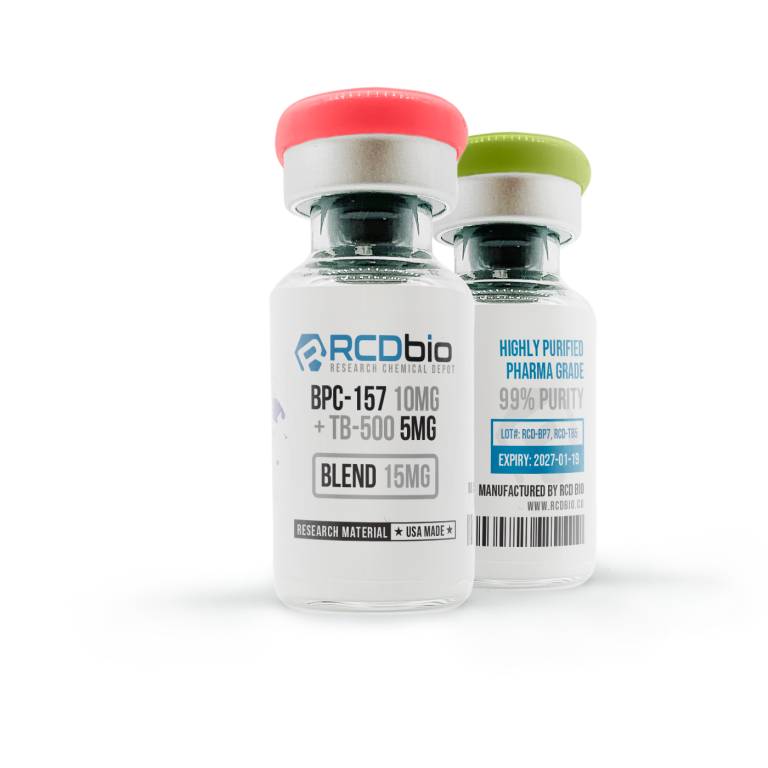
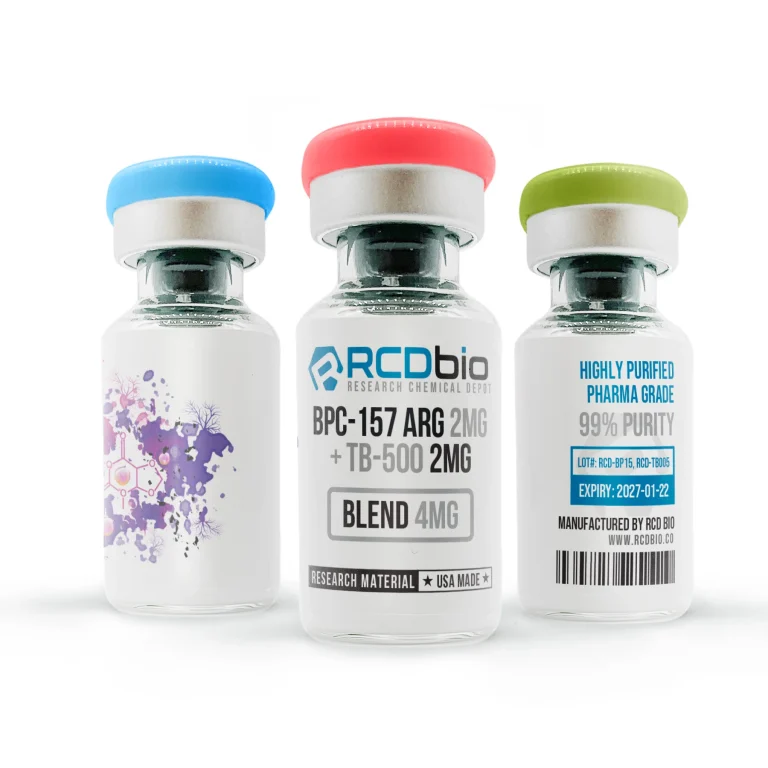
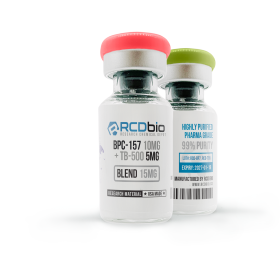
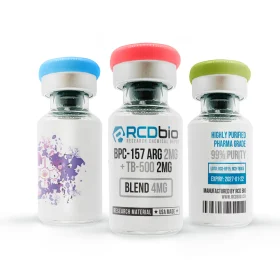
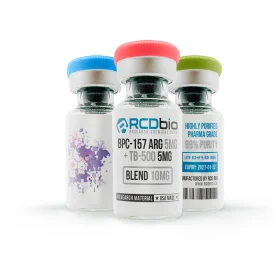
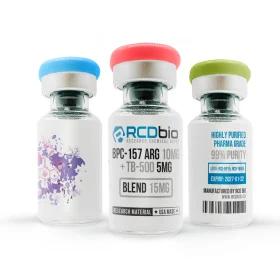
The BPC-157 + TB-500 Blend is a research preparation combining two mechanistically distinct synthetic peptides — BPC-157 (Body Protection Compound-157) and TB-500 (Thymosin Beta-4 or its active fragment) — co-formulated for preclinical investigations into tissue repair, angiogenesis, extracellular matrix remodelling, and cell migration pathway research. The two compounds are combined based on the hypothesis that their mechanisms are complementary and non-overlapping: BPC-157 acts primarily through nitric oxide pathway modulation, VEGF signalling, and growth factor receptor upregulation to create vascular and molecular conditions for tissue repair, while TB-500 acts through actin sequestration, cytoskeletal reorganisation, and cell migration facilitation to physically direct repair cells into damaged tissue. No dedicated peer-reviewed study has directly evaluated the combined formulation in a controlled head-to-head model against either compound alone; the synergy hypothesis is inferred from the compounds’ characterised individual mechanisms and their non-overlapping pathway profiles.
BPC-157 (Gly-Glu-Pro-Pro-Pro-Gly-Lys-Pro-Ala-Asp-Asp-Ala-Gly-Leu-Val; GEPPPGKPADDAGLV) is a synthetic 15-amino acid pentadecapeptide derived from a partial sequence of a protective protein isolated from human gastric juice. It was first characterised in the laboratory of Professor Predrag Sikiric at the University of Zagreb. The majority of published BPC-157 research originates from a single research group (Sikiric et al.) — a concentration of authorship that the broader scientific community has identified as a limitation in assessing the independent replicability of reported findings. Studies from this group have investigated BPC-157’s involvement in VEGF/VEGFR2 signalling, nitric oxide synthase modulation, growth hormone receptor upregulation, and gastrointestinal mucosal cytoprotection across rodent in vivo models. BPC-157 has been employed in ulcerative colitis clinical trials in the past; it is not currently approved by the FDA for any indication.
TB-500, as commonly supplied in research contexts, refers either to the synthetic 7-amino acid active fragment of thymosin beta-4 (Ac-Leu-Lys-Lys-Thr-Glu-Thr-Gln; Ac-LKKTETQ-NH2) corresponding to amino acids 17–23 of the full Tβ4 sequence, or to the full 43-amino acid synthetic thymosin beta-4 (Tβ4) itself — depending on supplier specification. The actin-binding domain of Tβ4 (residues 17–23) is the region responsible for G-actin sequestration and the primary mechanism attributed to TB-500. Both preparations are available under the TB-500 designation; researchers should verify which form is supplied from the product’s Certificate of Analysis.
Neither BPC-157 nor TB-500 is approved by the Food and Drug Administration for human or veterinary use. Neither BPC-157 nor TB-500 is a dietary supplement, and neither is intended for human consumption or therapeutic self-administration. All RCDbio research compounds are supplied strictly for laboratory and research purposes only.
Chemical Properties
| Property | Detail |
| Product Type | Dual-Peptide Research Blend (BPC-157 + TB-500) |
| Product Name | BPC-157 + TB-500 Blend |
| Application | Scientific / Research Use Only |
| BPC-157 Component | |
| BPC-157 CAS Number | 137525-51-0 |
| BPC-157 Molar Mass | 1419.556 g/mol |
| BPC-157 Chemical Formula | C62H98N16O22 |
| BPC-157 PubChem CID | 9941957 |
| BPC-157 Sequence | Gly-Glu-Pro-Pro-Pro-Gly-Lys-Pro-Ala-Asp-Asp-Ala-Gly-Leu-Val (GEPPPGKPADDAGLV); 15 amino acids |
| BPC-157 Synonyms | Body Protection Compound-157; Bepecin; PL 14736; Stable gastric pentadecapeptide |
| TB-500 Component | |
| TB-500 CAS (Fragment) | 885340-08-9 (Ac-LKKTETQ, 7 AA active fragment; MW 889.018 g/mol; C38H68N10O14) |
| TB-500 CAS (Full Tβ4) | 77591-33-4 (full 43 AA thymosin beta-4; MW 4963.44 g/mol; C212H350N56O78S) |
| TB-500 PubChem CID | 62707662 (Ac-LKKTETQ fragment) / 16132341 (full Tβ4) |
| TB-500 Active Sequence | Ac-Leu-Lys-Lys-Thr-Glu-Thr-Gln (Ac-LKKTETQ; residues 17–23 of Tβ4 = actin-binding domain) |
| TB-500 Synonyms | Thymosin Beta-4 fragment; Tβ4 fragment 17-23; Ac-LKKTETQ |
| Supplier Clarification | TB-500 designation varies — may refer to the 7 AA active fragment (MW 889) or the full 43 AA Tβ4 (MW 4963). Verify from the product COA which form is supplied. |
| Physical Form | Lyophilized white to off-white powder (blend) |
| Solubility | Both components soluble in sterile water and PBS |
| Storage (Lyophilized) | −20°C; sealed container; protected from light and moisture |
| Storage (Reconstituted) | 4°C; use within 48–72 hours; avoid repeated freeze-thaw cycles |
| Purity | ≥98% each component (HPLC verified, independent third-party laboratory analysis) |
| WADA Status | Both BPC-157 and TB-500 are prohibited under the 2026 WADA Prohibited List. BPC-157 falls under S0 (Non-Approved Substances). TB-500/Thymosin Beta-4 is explicitly prohibited under S2 (Peptide Hormones, Growth Factors, Related Substances — Thymosin β4 and its derivatives). Researchers in sport-adjacent contexts must verify the current status at GlobalDRO.com before use. |
How Does the BPC-157 + TB-500 Blend Work?
The two components operate through distinct and non-overlapping molecular pathways, providing the mechanistic rationale for their investigation as a combined preparation in tissue repair research systems.
BPC-157 — VEGF/VEGFR2 and Nitric Oxide Pathway
BPC-157 has been investigated in preclinical rodent models for its modulation of vascular endothelial growth factor (VEGF) signalling, with data suggesting upregulation of VEGFR2 expression on endothelial cells and activation of downstream AKT-eNOS and ERK1/2 signalling pathways [Sikiric et al., 2018]. Nitric oxide synthase modulation is a recurring finding in BPC-157 rodent model studies — observed as both NO pathway stabilisation under ischaemic conditions and attenuation of excessive NOS activity in inflammatory preparations. BPC-157 has also been characterised in isolated fibroblast cell preparations for growth hormone receptor (GHR) upregulation at mRNA and protein levels, potentially priming tissue repair cells to respond to growth hormone via JAK signalling cascades. These findings originate predominantly from Sikiric group publications; independent replication across multiple research centres remains limited.
BPC-157 — Gastrointestinal Cytoprotection and Antiulcer Activity
In rodent gastrointestinal models, BPC-157 has been investigated for its cytoprotective effects on gastric mucosal integrity, including protection against NSAID-induced damage, alcohol-induced mucosal injury, and experimental inflammatory bowel disease preparations. Stable gastric pentadecapeptide BPC-157 has been described as acting through Robert’s cytoprotection mechanisms — maintaining endothelial integrity and exhibiting angiomodulatory effects in multiple wound models in rodent preparations.
TB-500 — G-Actin Sequestration and Cytoskeletal Regulation
The primary characterised mechanism of TB-500 (Tβ4) is sequestration of monomeric G-actin. The actin-binding domain (residues 17–23; Ac-LKKTETQ) binds G-actin monomers at an approximate KD of 1 μM, preventing premature actin polymerisation and maintaining a regulated pool of free G-actin available for controlled filament elongation at the leading edges of migrating cells. This cytoskeletal regulation controls cell migration dynamics in fibroblasts, keratinocytes, and endothelial cell preparations — making TB-500 the mechanistic driver of directed cell infiltration into damaged tissue areas in preclinical models. TB-500 also modulates NF-κB signalling in isolated cell preparations, reducing IL-6 and TNF-α expression under inflammatory conditions.
Complementary Pathway Hypothesis — Blend Research Rationale
The blend is investigated based on the hypothesis that BPC-157’s angiogenic signalling activity (VEGFR2 activation, NO stabilisation, growth factor receptor upregulation) creates the vascular and molecular environment for tissue repair, while TB-500’s actin sequestration and cell migration facilitation physically directs repair cells into that environment. These pathways do not overlap, providing the mechanistic basis for combined investigation. No dedicated peer-reviewed study directly comparing the blend against individual components in matched preclinical models has been published at the time of this writing.
Key Research Findings
In preclinical and in vitro research contexts, BPC-157 and TB-500 have individually been associated with the following observations. No peer-reviewed published data specifically characterises the combined blend in controlled experimental comparisons.
- BPC-157 VEGFR2 upregulation: Increased VEGFR2 expression on endothelial cells with downstream AKT-eNOS and ERK1/2 activation observed in preclinical rodent tissue repair models [Sikiric et al., 2018]; findings originate predominantly from one research group.
- BPC-157 NO pathway modulation: Bidirectional nitric oxide synthase interaction characterised in rodent ischaemia and inflammatory model preparations; attenuation of cytotoxic NO activity observed alongside preservation of protective NO function.
- TB-500 G-actin sequestration: Tβ4 binds G-actin at KD ~1 μM in isolated cell preparations; controls actin polymerisation dynamics and directs fibroblast, keratinocyte, and endothelial cell migration into wound environments [Philp et al., 2004].
- TB-500 anti-inflammatory activity: Tβ4 reduces NF-κB pathway activation and decreases IL-6 and TNF-α levels in isolated cell and preclinical model preparations, creating an inflammatory microenvironment permissive to tissue repair [Goldstein et al., 2007].
- BPC-157 research concentration caveat: A 2025 systematic review noted that over 80% of BPC-157 published literature originates from a single research group, limiting assessment of independent replication across multiple laboratories.
All findings listed above are derived from preclinical in vitro and in vivo data. No human clinical trial data have been established for the BPC-157 + TB-500 blend. No dedicated peer-reviewed study characterises the combined preparation in controlled head-to-head comparisons. These observations do not constitute evidence of efficacy or safety in any human condition or organism.
What are the Potential Research Applications of the BPC-157 + TB-500 Blend?
In controlled laboratory environments, the blend has been investigated for the following research applications. These are observed in preclinical and in vitro contexts only and do not constitute claims of efficacy or safety in any organism.
Angiogenesis and Vascular Remodelling Research. The blend is employed in studies characterising complementary angiogenic mechanisms — BPC-157’s VEGFR2/AKT/eNOS signalling contribution alongside TB-500’s endothelial cell migration facilitation through actin regulation. Research examines whether combined pathway engagement produces additive or synergistic effects on capillary tube formation in endothelial cell culture and neovascular network formation in rodent wound model preparations.
Extracellular Matrix and Fibroblast Remodelling Studies. In fibroblast cell culture and rodent connective tissue injury models, the blend is investigated for complementary effects on collagen synthesis, matrix metalloproteinase (MMP) regulation, and ECM scaffold remodelling. BPC-157’s growth factor receptor upregulation is hypothesised to prime fibroblast populations, while TB-500’s cytoskeletal regulation facilitates their directed migration into matrix repair sites.
Musculoskeletal Tissue Repair Models. In rodent models of muscle, tendon, and ligament injury, the blend is investigated for effects on tissue healing kinetics, angiogenic density at injury sites, and functional restoration markers. Research examines whether BPC-157’s vascular signalling and TB-500’s cellular recruitment pathways together improve healing outcomes compared to single-compound conditions.
Gastrointestinal Mucosal Research BPC-157 has been used as a reference compound in rodent gastrointestinal mucosa protection models, including NSAID-induced ulcer preparations and inflammatory bowel disease models. The blend’s addition of TB-500 is investigated for complementary effects on mucosal cell migration and re-epithelialization kinetics in these systems.
Comparative Pathway Analysis — SAR Studies The blend serves as a reference preparation in SAR investigations examining how compounds with distinct tissue repair mechanisms (vascular-signalling vs. cytoskeletal-migration) interact in shared experimental systems, characterising whether their outcomes are additive, synergistic, or independent.
What are the Potential Side Effects?
Researchers in preclinical and in vitro settings have noted the following observations. No dedicated toxicity or adverse effect data for the combined blend exists in the published literature.
- BPC-157: No lethal dose (LD1) was obtained in rodent toxicity studies in the Sikiric research programme at doses up to 2 g/kg — however, independent toxicity characterisation across multiple research centres is absent from the published literature; this discrepancy has been noted in a 2025 systematic review
- TB-500 (Tβ4): Generally well-tolerated profile in preclinical rodent studies and limited human studies of the full thymosin beta-4 protein; no significant acute toxicity reported at research-relevant doses
- No dedicated combined formulation toxicity data is available in the peer-reviewed literature
- No human safety or tolerability data have been established for either BPC-157 or TB-500 as research-grade compounds. These observations should not be extrapolated to human or animal outcomes.
Risk & Handling
Handling Precautions
BPC-157 + TB-500 Blend should only be handled by trained laboratory personnel. Appropriate PPE is required: nitrile gloves, a laboratory coat, and eye protection at a minimum. When working with lyophilized powder, use within a laminar flow cabinet or a clean area. Avoid aerosol generation during reconstitution. The blend contains two active research peptides; apply precautions appropriate to both components simultaneously.
Exposure Risks
Risk Tier: LOW–MODERATE
Both BPC-157 and TB-500 have demonstrated generally low acute toxicity profiles in published preclinical studies. BPC-157’s VEGF/NO pathway activity and TB-500’s cell migration facilitation mean that accidental systemic exposure may produce pharmacological effects in tissues expressing relevant targets. The absence of independent replicated safety data for BPC-157 specifically warrants handling caution appropriate to a compound with limited multi-centre characterisation. No human safety or tolerability data have been established for research-grade preparations of either compound.
Storage
- Lyophilized blend: Store at −20°C in original sealed, light-protected container with desiccant
- Reconstituted form: Store at 4°C; use within 48–72 hours of reconstitution
- Do not subject to repeated freeze-thaw cycles; the integrity of both peptide components may be compromised
- Protect from prolonged light exposure and moisture
Frequently Asked Questions
Q: What is the BPC-157 + TB-500 blend, and why are the two compounds combined? A: The blend co-formulates BPC-157 (a 15-AA gastric pentadecapeptide) and TB-500 (a Thymosin Beta-4 preparation) for preclinical research based on the hypothesis that their mechanisms are complementary and non-overlapping. BPC-157 is investigated for VEGF/VEGFR2 signalling, NO pathway modulation, and growth factor receptor upregulation; TB-500 is investigated for G-actin sequestration, cytoskeletal regulation, and directed cell migration facilitation. Neither compound is approved by the FDA, and both are intended strictly for laboratory research purposes.
Q: Does “TB-500” refer to the 7-amino acid fragment or the full Thymosin Beta-4 protein? A: “TB-500” is used in the research community to refer to both the 7-amino acid active fragment of Thymosin Beta-4 (Ac-LKKTETQ; residues 17–23; CAS 885340-08-9; MW 889.018 g/mol) and the full 43-amino acid synthetic Thymosin Beta-4 protein (CAS 77591-33-4; MW 4963.44 g/mol). Both are sold under the TB-500 designation by different suppliers. Researchers should verify which form is present in the specific product from the product’s specifications and analytical documentation.
Q: Is there published research directly studying the BPC-157 + TB-500 combination? A: No peer-reviewed published study has directly evaluated the combined BPC-157 + TB-500 preparation in a controlled head-to-head comparison against individual components in matched preclinical models, as of the time of this writing. The rationale for their combination is inferred from the individual characterised mechanisms of each compound and the observation that these mechanisms address non-overlapping stages of the tissue repair cascade.
Q: What is the WADA status of the blend components? A: Both components are prohibited by WADA. TB-500/Thymosin Beta-4 is explicitly prohibited under S2 (Peptide Hormones, Growth Factors, and Related Substances — specifically naming Thymosin β4 and its derivatives). BPC-157 falls under S0 (Non-Approved Substances — any pharmacologically active substance not approved for therapeutic use). Researchers in sport-adjacent contexts should verify the current status at GlobalDRO.com.
Q: How should the blend be stored? A: Lyophilized blend should be stored at −20°C in a sealed, light-protected container with desiccant. Once reconstituted, store at 4°C and use within 48–72 hours. Repeated freeze-thaw cycles should be avoided as both peptide components may lose integrity. Apply storage precautions appropriate to both individual components simultaneously.
Q: What is the significance of BPC-157 research being concentrated in one group? A: A 2025 systematic review identified that over 80% of published BPC-157 literature on PubMed and Google Scholar originates from a single research group (Sikiric et al., University of Zagreb). While this reflects the group’s sustained and productive investigation of the compound, it represents a limitation in the broader scientific context: independent multi-centre replication is limited, which affects the overall strength of evidence base compared to compounds studied across multiple independent research programmes. Researchers should account for this concentration of authorship when evaluating the weight of evidence for BPC-157’s mechanistic and efficacy findings.
Related Research Compounds
Researchers investigating the BPC-157 + TB-500 blend may also be interested in the following compounds currently available for laboratory research at RCDbio:
- BPC-157 — The standalone gastric pentadecapeptide component; used as the reference compound for BPC-157-specific mechanism studies in tissue repair, angiogenesis, and gastrointestinal mucosal research without the TB-500 contribution.
- GHK-Cu Copper Peptide 1:1 — A copper-binding tripeptide investigated in preclinical models for extracellular matrix remodelling, MMP regulation, and collagen synthesis; shares the tissue repair and ECM pathway research context with the BPC-157 component of the blend.
- TB-500 (Thymosin Beta-4) — The standalone TB-500 preparation, used as the reference compound for actin sequestration and cell migration mechanism studies without the BPC-157 contribution.
All products listed are for laboratory and research purposes only.
References
- Sikiric, P., Seiwerth, S., Rucman, R., Drmic, D., Zoricic Cvek, S., Milavic, M., & Knezevic, M. (2018). The stable gastric pentadecapeptide BPC 157 has pleiotropic beneficial activity. Current Pharmaceutical Design, 24(18), 1994–2001. https://pubmed.ncbi.nlm.nih.gov/29737246/
- Hsieh, M. J., Lee, C. H., Chueh, H. Y., Chang, G. J., Huang, H. Y., Lin, Y., & Pang, J. S. (2020). Modulatory effects of BPC 157 on vasomotor tone and the activation of Src-Caveolin-1-endothelial nitric oxide synthase pathway. Scientific Reports, 10, 17078. https://pubmed.ncbi.nlm.nih.gov/33051601/
- Philp, D., Huff, T., Gho, Y. S., Hannappel, E., & Kleinman, H. K. (2004). The actin-binding site on thymosin beta4 promotes angiogenesis. FASEB Journal, 18(3), 445–446. https://pubmed.ncbi.nlm.nih.gov/14715705/
- Goldstein, A. L., Kleinman, H. K. (2007). Minireview: Reexamination and new perspectives on the role of thymosin beta4 in tissue repair and regeneration. Annals of the New York Academy of Sciences, 1112, 18–27. https://pubmed.ncbi.nlm.nih.gov/17600278/
Disclaimer
BPC-157 + TB-500 Blend is exclusively for laboratory research purposes. RCDbio products are not intended to diagnose, prevent, treat, or cure any disease or medical condition.
The Food and Drug Administration has not evaluated the statements on our website. Neither BPC-157 nor TB-500 is approved for human or veterinary use. Researchers must comply with all applicable local, state, and federal laws and regulations governing the purchase and use of research compounds. By purchasing, you agree to our Terms and Conditions. RCDbio reserves the right to refuse sales to unauthorized individuals.
ATTENTION: All RCDbio products are strictly for LABORATORY AND RESEARCH PURPOSES ONLY. They are not intended for human consumption, veterinary use, or any other non-research application. For queries, complaints, or support, contact support@legacy.rcdbio.co
Reviews
There are no reviews yet