

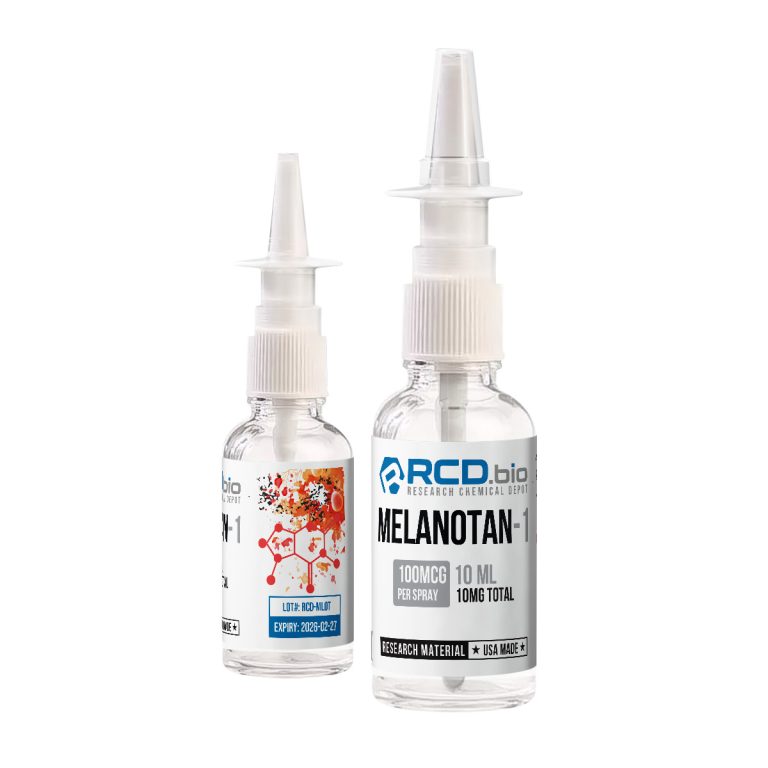
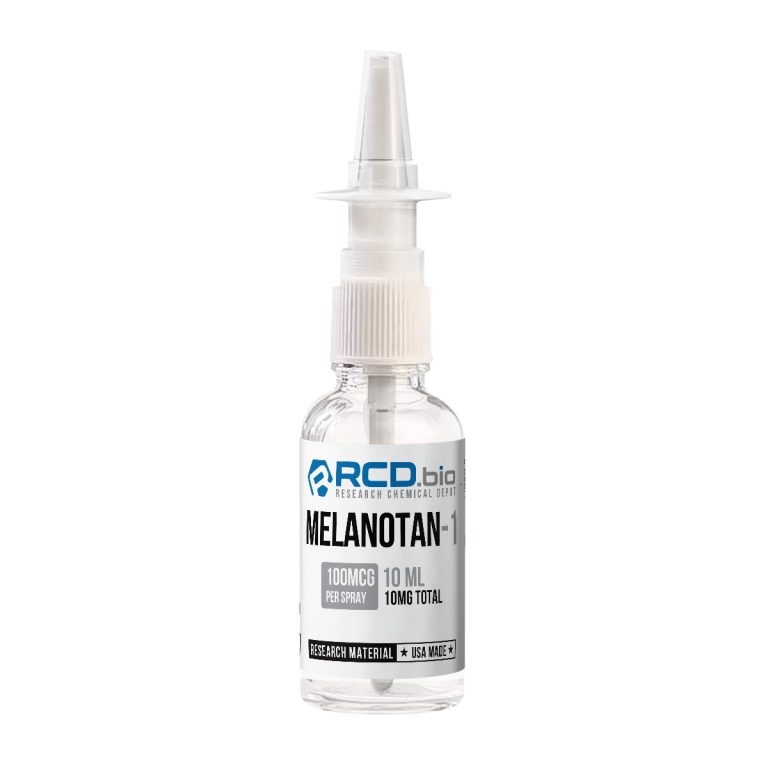
Description
What is Melanotan-1 Nasal Spray?
Melanotan-1 (afamelanotide; [Nle4, D-Phe7]-alpha-MSH) is a synthetic linear tridecapeptide analog of alpha-melanocyte-stimulating hormone (alpha-MSH). It was developed at the University of Arizona in the early 1980s by Victor Hruby and Mac Hadley. Two substitutions distinguish it from native alpha-MSH: norleucine at position 4 and D-phenylalanine at position 7. These confer substantially increased potency and metabolic stability. Melanotan-1 acts as an agonist at MC1R, MC3R, MC4R, and MC5R, with primary research focus on MC1R-mediated melanocyte pigmentation. It was approved by the Food and Drug Administration in October 2019 as Scenesse, a 16 mg subcutaneous bioresorbable implant for the prevention of phototoxic reactions in adults with erythropoietic protoporphyria (EPP). The European Medicines Agency approved it in 2014, and the Australian TGA in 2020. The research-grade nasal spray supplied by RCDbio is not a pharmaceutical product, is not equivalent to Scenesse, and is not approved for any use outside laboratory research contexts.
The compound has been investigated in mouse melanoma cell preparations, transfected cell line systems expressing human melanocortin receptors, and in vitro melanogenesis assay systems for MC1R binding kinetics, adenylyl cyclase-mediated cAMP elevation, and downstream melanogenesis pathway activation. Research models include B16F10 mouse melanoma cells and HEK293 cell preparations expressing human MC1R, MC3R, MC4R, and MC5R subtypes. The nasal spray formulation is studied as a preclinical research delivery route. Evidence of olfactory bulb-mediated CNS transport for intranasally administered peptides in rodent models supports this approach. Intranasal delivery also bypasses hepatic first-pass metabolism relative to systemic routes in preclinical pharmacokinetic models.
Melanotan-1 Nasal Spray, as supplied by RCDbio, is not a dietary supplement, is not approved by the Food and Drug Administration for human or veterinary use beyond the specific FDA-approved Scenesse subcutaneous implant product, and is not intended for human consumption or therapeutic self-administration. All RCDbio research compounds are supplied strictly for laboratory and research purposes only.
DISCLAIMER: Melanotan-1 Nasal Spray has not been approved by the Food and Drug Administration for human use, consumption, or any therapeutic application. This product is supplied exclusively for in vitro and preclinical laboratory research purposes.
Chemical Properties of Melanotan-1
| Property | Details |
| Product Type | Synthetic Linear Tridecapeptide / Melanocortin Receptor Agonist / alpha-MSH Analog / MC1R Agonist |
| Product Name | Melanotan-1 Nasal Spray |
| Application | Scientific / Research Use Only |
| CAS Number | 75921-69-6 |
| Molar Mass | 1646.87 g/mol |
| Chemical Formula | C78H111N21O19 |
| IUPAC Name | N-acetyl-L-seryl-L-tyrosyl-L-seryl-L-norleucyl-L-alpha-glutamyl-L-histidyl-D-phenylalanyl-L-arginyl-L-tryptophylglycyl-L-lysyl-L-prolyl-L-valinamide |
| Synonyms | Afamelanotide; NDP-alpha-MSH; [Nle4, D-Phe7]-alpha-MSH; Melanotan I; MT-1; CUV1647; EPT1647; Scenesse (FDA/EMA-approved brand name for the 16 mg subcutaneous implant form only) |
| Physical Form | Aqueous nasal spray solution (lyophilized peptide reconstituted in sterile buffered solution) |
| Solubility | Soluble in sterile water and 0.9% saline at ≥1 mg/mL |
| Storage (Lyophilized) | −20°C, desiccated, protected from light |
| Storage (Reconstituted / Nasal Spray) | 2–8°C; use within 28 days; protect from light; do not freeze reconstituted solution |
| PubChem CID | 16154396 |
| Purity | ≥98% (HPLC verified, independent third-party laboratory analysis; COA available per batch) |
| WADA Status | Melanotan-1 (afamelanotide) is not explicitly named as a prohibited substance on the 2026 WADA Prohibited List under S2 categories. It does not act as a GH secretagogue or GHRH analog. WADA status under other potential prohibited classes has not been formally determined. Researchers operating within WADA Code contexts should verify current status at GlobalDRO.com prior to any sport-related research application. |
How Does Melanotan-1 Work?
Melanotan-1 acts as an agonist at melanocortin receptors, with primary research interest in its activity at MC1R on melanocytes. MC1R is a G protein-coupled receptor expressed on the surface of epidermal melanocytes. Receptor engagement activates adenylyl cyclase, elevates intracellular cAMP, and drives a downstream signaling cascade resulting in eumelanin synthesis. The following mechanistic observations are from preclinical and in vitro data only.
MC1R Binding and Receptor Subtype Profile
Melanotan-1 ([Nle4,D-Phe7]-alpha-MSH; NDP-MSH) binds human melanocortin receptor subtypes MC1R, MC3R, MC4R, and MC5R. The Nle4 and D-Phe7 substitutions confer substantially increased binding affinity and metabolic stability relative to native alpha-MSH. In transfected HEK293 cell preparations expressing individual human melanocortin receptor subtypes, NDP-MSH demonstrated binding affinity at all four receptor subtypes in competitive radioligand displacement assays [Haskell-Luevano et al., 1997; PMID 9171884]. NDP-MSH showed greater binding affinity at hMC3R and hMC5R relative to the cyclic analog MTII (Melanotan-II) in these preparations, confirming a distinct receptor selectivity profile between the two MSH analogs.
MC1R/cAMP/PKA/MITF/Tyrosinase Melanogenesis Pathway
MC1R engagement by melanocortin agonists activates Gs-protein-coupled adenylyl cyclase, elevating intracellular cAMP. Elevated cAMP activates protein kinase A (PKA), which phosphorylates cAMP response element-binding protein (CREB). Phosphorylated CREB drives transcription of microphthalmia-associated transcription factor (MITF), the master regulator of melanocyte gene expression. MITF upregulates tyrosinase and tyrosinase-related proteins TRP-1 and TRP-2, driving eumelanin synthesis in melanocytes. In alpha-MSH-stimulated B16F10 mouse melanoma cell preparations, this MC1R/cAMP/PKA/CREB/MITF/tyrosinase cascade was confirmed as the primary signal transduction pathway linking MC1R activation to melanin production [Lim et al., 2021; PMID 34299073].
cAMP Elevation and Downstream Signaling Characterization
The MC1R/cAMP pathway was further characterized in alpha-MSH-stimulated B16F10 cell preparations, where MC1R protein expression, MITF protein level, tyrosinase activity, and TRP-1 expression were all confirmed as downstream outputs of MC1R-mediated cAMP elevation [Wu et al., 2018; PMID 29642438]. Inhibition of the cAMP/PKA/CREB axis via GSK3beta phosphorylation and ERK pathway activation suppressed MITF transcription and downstream melanin synthesis in these preparations, confirming the centrality of the cAMP pathway in MC1R-mediated melanogenesis.
Eumelanin vs Pheomelanin Selectivity
Melanotan-1/afamelanotide selectively stimulates eumelanin production in melanocytes. Eumelanin is the brown/black pigment form that provides UV photoprotection. Alpha-MSH analogs acting via MC1R shift the melanogenic switch from pheomelanin (red/yellow pigment) toward eumelanin in melanocyte cell preparations. These observations are from in vitro and preclinical systems and do not constitute evidence of efficacy via any route in human subjects.
Intranasal Delivery & Pharmacokinetics
Olfactory Bulb-Mediated CNS Transport
When administered intranasally in preclinical rodent model systems, peptide compounds can access the central nervous system through the olfactory nerve (cranial nerve I) pathway. Compounds deposited on the olfactory mucosa are transported along olfactory axons through the cribriform plate to the olfactory bulb, from which access to deeper CNS structures has been characterized in rodent preparations. The olfactory and trigeminal nerve pathways for nose-to-brain peptide transport have been investigated in preclinical studies of peptide and protein delivery [Wong et al., 2024; PMID 38441832]. No compound-specific olfactory transport data for Melanotan-1 have been published. The primary pharmacological target of Melanotan-1 in the melanogenesis context is peripheral MC1R on skin melanocytes rather than central melanocortin receptors, which is relevant to intranasal delivery route selection.
Hepatic First-Pass Metabolism Bypass
The intranasal route avoids portal circulation and hepatic first-pass metabolic processing. Melanotan-1, as a 13-amino acid linear peptide, is susceptible to peptidase activity in the GI environment. The D-Phe7 substitution confers resistance to aminopeptidase cleavage at the D-amino acid position, improving metabolic stability relative to native alpha-MSH. Intranasal delivery bypasses the GI and hepatic enzymatic environment. These observations are derived from preclinical studies and do not constitute evidence of efficacy via any route in human subjects.
Nasal Mucosal Absorption
Melanotan-1 has a molar mass of 1646.87 g/mol (approximately 1.65 kDa). This molecular weight falls within the 1-5 kDa bracket, indicating paracellular and endocytic uptake mechanisms are the likely predominant absorption pathways at the nasal mucosa alongside potential transcellular contributions. The D-Phe7 substitution provides partial resistance to nasal mucosal aminopeptidase activity relative to native alpha-MSH. Specific nasal mucosal permeability coefficients for Melanotan-1 have not been published.
Compound-Specific Pharmacokinetics
Specific intranasal pharmacokinetic data for Melanotan-1 in standardized preclinical models are not available in the published literature as of June 2026. The FDA-approved Scenesse implant has an apparent half-life of approximately 15 hours following controlled-release subcutaneous administration, with a median Tmax of 36 hours. These values are specific to the controlled-release subcutaneous implant formulation and cannot be applied to the intranasal research-grade formulation. The elimination half-life of Melanotan-1 following bolus administration is approximately 30 minutes based on non-controlled-release data. Researchers should account for the absence of intranasal-specific pharmacokinetic parameters when designing laboratory protocols.
Key Research Findings
MC1R-MC5R Binding Profile of NDP-MSH (Transfected HEK293 Cell Preparations): NDP-MSH ([Nle4, D-Phe7]-alpha-MSH) demonstrated binding affinity at hMC1R, hMC3R, hMC4R, and hMC5R in competitive radioligand displacement assays; NDP-MSH showed greater relative binding affinity at hMC3R and hMC5R compared to cyclic MTII, confirming a distinct receptor selectivity profile between linear and cyclic alpha-MSH analogs [Haskell-Luevano et al., 1997; PMID 9171884]
MC1R/cAMP/PKA/MITF/Tyrosinase Pathway Characterization (B16F10 Mouse Melanoma Cell Preparation): Alpha-MSH stimulation of MC1R in B16F10 cell preparations activated the cAMP/PKA/CREB signaling cascade, upregulated MITF transcription, increased tyrosinase activity, and drove melanin synthesis; CREB, PKA, MITF, and tyrosinase were all confirmed as downstream outputs of MC1R-mediated cAMP elevation in this preclinical in vitro system [Lim et al., 2021; PMID 34299073]
MC1R/cAMP Downstream Protein Expression (B16F10 Mouse Melanoma Cell Preparation): Alpha-MSH-stimulated MC1R activation in B16F10 preparations increased MC1R protein expression, MITF protein levels, tyrosinase activity, and TRP-1 expression; inhibition of cAMP/PKA/CREB axis via GSK3beta and ERK pathways suppressed MITF-driven melanogenesis, confirming the cAMP pathway as the central MC1R melanogenesis signal transduction mechanism [Wu et al., 2018; PMID 29642438]
All findings listed above are derived from preclinical in vitro model systems using mouse melanoma cell preparations and transfected human receptor cell lines. These observations do not constitute evidence of efficacy or safety for Melanotan-1 nasal spray in any organism. No human clinical data have been established for research-grade Melanotan-1 administered via the intranasal route.
What are the Potential Research Applications?
In controlled laboratory environments, Melanotan-1 nasal spray has been investigated for the following research applications. These are observed in preclinical and in vitro contexts only and do not constitute claims of efficacy or safety in any organism.
MC1R Receptor Binding and Selectivity Research
Melanotan-1 (NDP-MSH) is a well-characterized melanocortin receptor agonist used as a reference compound in competitive radioligand binding assays across human MC1R, MC3R, MC4R, and MC5R subtypes. Research applications include receptor subtype binding affinity characterization, competitive displacement studies with novel melanocortin ligands, and comparative receptor selectivity profiling between linear and cyclic alpha-MSH analogs in transfected cell preparations.
Melanogenesis Pathway Research
Melanotan-1 provides a potent MC1R reference agonist for studying the cAMP/PKA/CREB/MITF/tyrosinase melanogenesis cascade in melanocyte and melanoma cell preparations. Research applications include dose-response characterization of MC1R-mediated cAMP accumulation, MITF transcription factor expression studies, tyrosinase activity assays, and eumelanin/pheomelanin switching studies in B16F10 and normal human epidermal melanocyte preparations.
Photoprotection and EPP Research Model
Melanotan-1 serves as a pharmacological tool for studying eumelanin-mediated photoprotection mechanisms in preclinical cell preparations. Research applications include UV-induced DNA damage quantification in melanocyte preparations pretreated with MC1R agonists, examination of eumelanin photoprotective capacity in keratinocyte co-culture systems, and characterization of the MC1R-mediated anti-phototoxic mechanism relevant to EPP biology in preclinical model systems.
Melanocortin Analog Comparative Pharmacology
Research applications include comparative pharmacology studies between Melanotan-1 (linear tridecapeptide), Melanotan-2 (cyclic heptapeptide), and endogenous alpha-MSH across MC1R, MC3R, MC4R, and MC5R receptor preparations. The distinct receptor subtype profile of NDP-MSH relative to MTII provides a tool for dissecting melanocortin receptor subtype contributions to downstream melanogenesis and CNS signaling outputs in preclinical cell systems.
What are the Potential Side Effects?
Researchers in preclinical and in vitro settings have noted the following observations. Long-term safety and toxicity profiles for the research-grade nasal spray formulation remain incompletely characterized, and no human safety data have been established for this route.
- Skin hyperpigmentation (from Scenesse label/FDA data): The FDA-approved Scenesse subcutaneous implant is associated with nevi darkening, increased skin pigmentation, and new nevi formation; this observation is attributed to MC1R activation on melanocytes; the relevance to the research-grade nasal spray formulation and intranasal route has not been characterized
- Nausea and fatigue (from Scenesse label/FDA data): Nausea and fatigue were reported as adverse events in Scenesse clinical study data; these observations are from the controlled-release subcutaneous implant route and may not directly translate to the intranasal research-grade formulation
- Injection/implant site reactions (from Scenesse label/FDA data): Implant site reactions, including discomfort and nodule formation, were reported in Scenesse clinical studies; the relevance to the intranasal route has not been characterized
- Potential CNS receptor engagement (preclinical class context): Melanotan-1 binds MC3R and MC4R in addition to MC1R in transfected cell preparations; inadvertent intranasal self-exposure may engage central melanocortin receptors (MC3R, MC4R) in addition to peripheral MC1R, carrying a theoretical risk of CNS melanocortin system modulation distinct from peripheral pigmentation effects
- Absence of intranasal-specific safety data: No safety or tolerability data specific to the intranasal route of administration for Melanotan-1 has been published in the peer-reviewed literature as of June 2026
No human safety or tolerability data have been established for Melanotan-1 nasal spray. These observations are derived from experimental systems and data associated with a different route and formulation, and should not be extrapolated to outcomes via the intranasal route.
Risk & Handling
Handling Precautions
Standard laboratory PPE is required: nitrile gloves, a laboratory coat, and eye protection. The following nasal spray-specific precautions apply:
- Do not direct the nasal spray actuator toward the face, eyes, or mucous membranes during handling, testing, or transfer. CNS-active compounds may produce pharmacological effects via inadvertent intranasal self-exposure.
- Handle the nasal spray solution in a clean laboratory environment. For aliquoting or analytical sampling, use a laminar flow cabinet.
- The nasal spray solution is an aqueous formulation susceptible to microbial contamination if compromised. Handle under aseptic conditions. Discard if the solution appears cloudy, discolored, or shows particulate matter.
- Avoid aerosol generation during any manipulation of the nasal spray solution.
Exposure Risks
Risk Tier: LOW-MODERATE
Melanotan-1 acts at MC1R and, at higher concentrations, at MC3R and MC4R. Inadvertent intranasal self-exposure during laboratory handling carries a risk of peripheral melanocyte activation and potential CNS melanocortin system engagement at higher exposure levels. Skin hyperpigmentation associated with MC1R activation has been documented in the Scenesse prescribing information. No human safety or tolerability data have been established for Melanotan-1 nasal spray. Researchers should handle this compound with precautions appropriate to a melanocortin receptor agonist with documented skin pigmentation effects.
Storage
In-use nasal spray: Store at 2-8°C. Use within 28 days of first actuation. Protect from light. Keep upright.
DO NOT FREEZE the ready-to-use nasal spray formulation. Freezing alters pH, buffer stability, excipient integrity, and spray actuation properties.
Lyophilized bulk stock (if applicable): Store at -20°C in sealed, desiccated, light-protected containers. Avoid repeated freeze-thaw cycles.
Discard any solution that appears cloudy, discolored, or shows visible particulate matter.
FAQs
Q: How does intranasal administration facilitate the delivery of Melanotan-1 in preclinical research models?
A: Intranasal application bypasses hepatic first-pass metabolism, relevant given the peptidase susceptibility of alpha-MSH analogs. The olfactory and trigeminal nerve pathways for peptide transport have been characterized for related peptides in rodent models [Wong et al., 2024; PMID 38441832]. No compound-specific olfactory transport data exists for Melanotan-1. No human delivery data has been established for research-grade Melanotan-1 nasal spray.
Q: What is the recommended storage and in-use shelf life for Melanotan-1 nasal spray?
A: Sealed product should be stored at 2-8°C, protected from light. Once first actuated, in-use shelf life is 28 days at 2-8°C. DO NOT FREEZE the ready-to-use solution. Freezing destabilizes the buffer, alters pH, and may damage spray actuation. Lyophilized bulk stock should be stored at -20°C in sealed, desiccated, light-protected conditions. Discard if the solution shows cloudiness, discoloration, or particulate matter.
Q: Is the Melanotan-1 nasal spray formulation suitable for cell culture or in vitro assay systems?
A: The formulation is prepared in isotonic saline (0.9% NaCl, pH 4.5-5.5) without preservatives. The preservative-free composition reduces cytotoxicity risk in sensitive cell preparations. Researchers should validate the vehicle independently in their specific cell system. The formulation pH (4.5-5.5) is below the typical cell culture range (7.2-7.4); dilution into culture medium before application is recommended. Researchers are responsible for confirming compatibility with their assay system.
Q: What is the plasma half-life of Melanotan-1 in preclinical models?
A: The elimination half-life of Melanotan-1 following bolus administration is approximately 30 minutes. The Scenesse implant formulation has an apparent half-life of approximately 15 hours due to its controlled-release subcutaneous delivery mechanism. These values cannot be applied to the intranasal research-grade formulation. No formal intranasal pharmacokinetic parameters have been published as of June 2026.
Q: How does Melanotan-1 differ from Melanotan-2 and endogenous alpha-MSH?
A: Melanotan-1 has substantially greater binding affinity and potency at MC1R relative to native alpha-MSH in in vitro binding preparations, attributed to the Nle4 and D-Phe7 substitutions that improve receptor contact and metabolic stability. Melanotan-1 is a linear 13-amino acid analog binding MC1R, MC3R, MC4R, and MC5R, with primary research interest in MC1R-mediated melanogenesis. Melanotan-2 is a cyclic 7-residue analog with broader CNS receptor engagement (MC3R, MC4R), producing both pigmentation and CNS effects. Endogenous alpha-MSH is the native 13-residue parent peptide. The Nle4 and D-Phe7 substitutions in Melanotan-1 confer substantially greater binding affinity and metabolic stability relative to native alpha-MSH in in vitro binding preparations.
Q: What is the FDA approval status of Melanotan-1, and how does it affect the research-grade product?
A: Afamelanotide (Melanotan-1) was approved by the FDA in October 2019 as Scenesse for EPP, administered as a 16 mg subcutaneous bioresorbable implant. The research-grade nasal spray formulation supplied by RCDbio is not a pharmaceutical product, is not equivalent to Scenesse, and is not approved for any therapeutic indication or route of administration. It is supplied exclusively for laboratory and preclinical research purposes.
Q: What toxicity observations have been reported for Melanotan-1?
A: The Scenesse prescribing information reports skin hyperpigmentation, including nevi darkening and new nevi formation, nausea, fatigue, and implant site reactions. A full-body skin examination twice yearly is recommended due to melanocyte activation. These observations are from the subcutaneous implant route and may not translate to the intranasal formulation. No human safety or tolerability data have been established for Melanotan-1 nasal spray.
Related Research Compounds
Researchers investigating Melanotan-1 nasal spray may also be interested in the following compounds currently available for laboratory research at RCDbio:
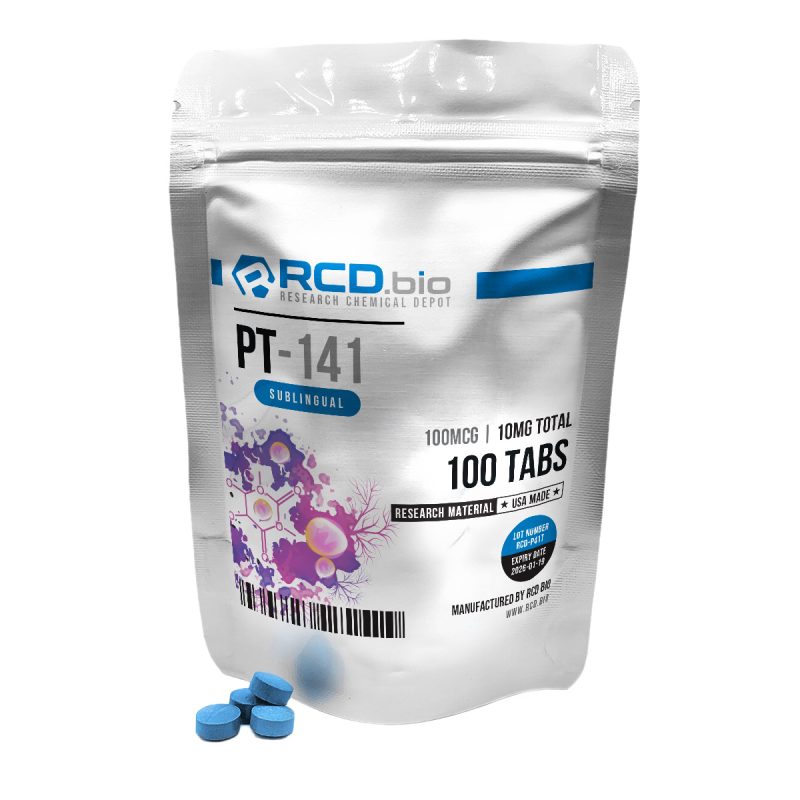
PT-141 (Bremelanotide) Nasal Spray — A synthetic cyclic heptapeptide MC3R/MC4R agonist derived from the alpha-MSH pharmacophore, investigated for central melanocortin receptor signaling and hypothalamic neuronal activation in preclinical rodent model systems.
Melanotan-2 Nasal Spray — A cyclic 7-residue alpha-MSH analog investigated in preclinical rodent model systems for broad-spectrum melanocortin receptor activity across MC1R, MC3R, MC4R, and MC5R subtypes.
Semax Nasal Spray — A synthetic ACTH(4-7) analog investigated in preclinical rodent preparations for BDNF/TrkB pathway modulation and CNS neurotrophin expression via intranasal delivery.
All products listed are for laboratory and research purposes only.
References
- Haskell-Luevano, C., Nikiforovich, G., Sharma, S.D., Yang, Y.K., Dickinson, C., Hruby, V.J., & Gantz, I. (1997). Biological and conformational examination of stereochemical modifications using the template melanotropin peptide, Ac-Nle-c[Asp-His-Phe-Arg-Trp-Ala-Lys]-NH2, on human melanocortin receptors. Journal of Medicinal Chemistry, 40(11), 1738-1748.
https://pubmed.ncbi.nlm.nih.gov/9171884/
- Lim, H.Y., Kim, E., Park, S.H., Hwang, K.H., Kim, D., Jung, Y.-J., Kopalli, S.R., Hong, Y.D., Sung, G.-H., & Cho, J.Y. (2021). Antimelanogenesis effects of Theasinensin A. International Journal of Molecular Sciences, 22(14), 7453.
https://pubmed.ncbi.nlm.nih.gov/34299073/
- Wu, P.-Y., You, Y.-J., Liu, Y.-J., Hou, C.-W., Wu, C.-S., Wen, K.-C., Lin, C.-Y., & Chiang, H.-M. (2018). Sesamol inhibited melanogenesis by regulating melanin-related signal transduction in B16F10 cells. International Journal of Molecular Sciences, 19(4), 1108.
https://pubmed.ncbi.nlm.nih.gov/29642438/
- Wong, C.Y.J., Baldelli, A., Hoyos, C.M., et al. (2024). Insulin delivery to the brain via the nasal route: unraveling the potential for Alzheimer’s Disease therapy. Drug Delivery and Translational Research, 14(7), 1776-1793.
https://pubmed.ncbi.nlm.nih.gov/38441832/
Research Transparency Note: No peer-reviewed publications specific to intranasal delivery of Melanotan-1 (afamelanotide) are available as of June 2026. References 2 and 3 above characterize the MC1R/cAMP/PKA/MITF/tyrosinase signaling pathway using alpha-MSH as the stimulant in B16F10 mouse melanoma cell preparations and are cited as a mechanistic context for the MC1R signal transduction pathway engaged by Melanotan-1. They do not directly study Melanotan-1. The olfactory transport pathway evidence in Reference 4 is class-level and applies to structurally related peptide hormones in rodent models.
Disclaimer
Melanotan-1 Nasal Spray is exclusively for laboratory research purposes. RCDbio products are not intended to diagnose, prevent, treat, or cure any disease or medical condition.
The Food and Drug Administration has not evaluated the statements on our website. This product is not approved for human or veterinary use. Researchers must comply with all applicable local, state, and federal laws and regulations governing the purchase and use of research compounds. By purchasing, you agree to our Terms and Conditions. RCDbio reserves the right to refuse sales to unauthorized individuals.
ATTENTION: All RCDbio products are strictly for LABORATORY AND RESEARCH PURPOSES ONLY. They are not intended for human consumption, veterinary use, or any other non-research application. For queries, complaints, or support, contact support@legacy.rcdbio.co
Reviews
There are no reviews yet