

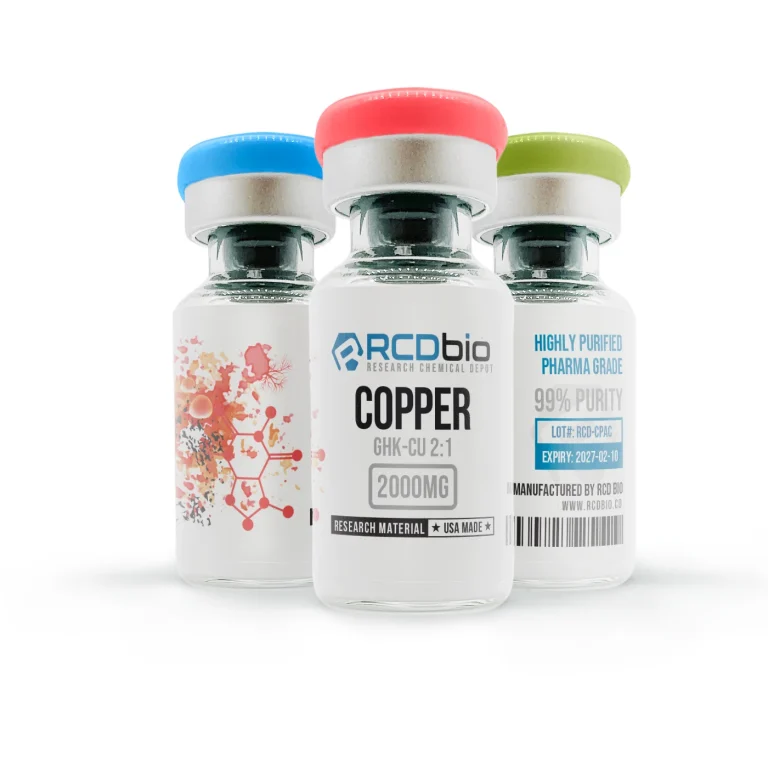
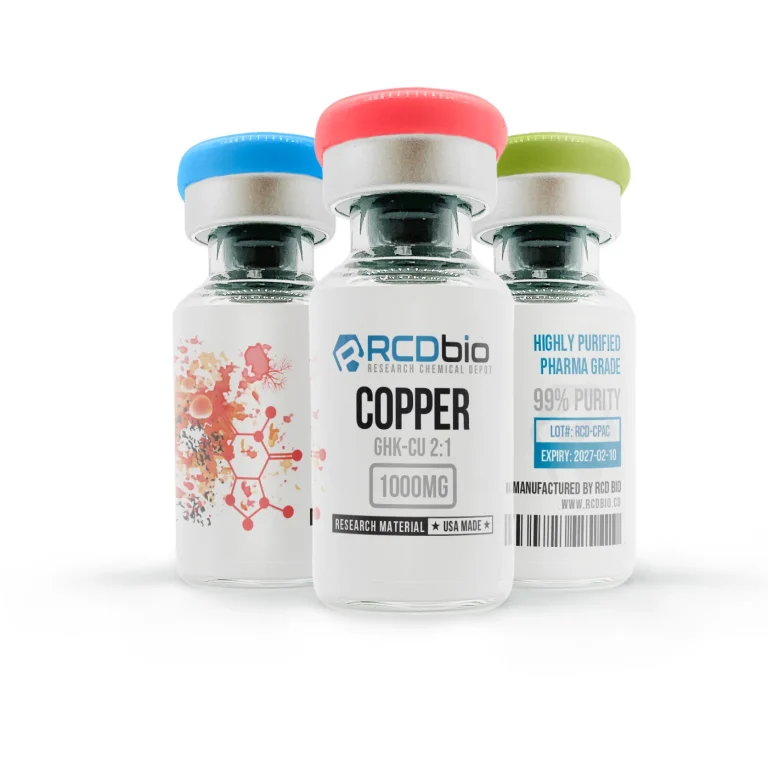
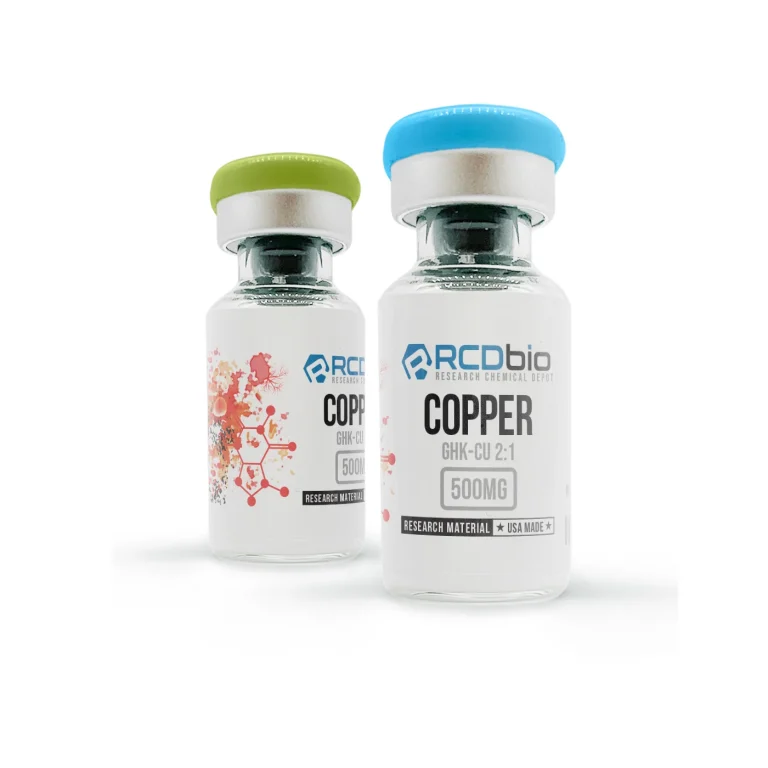
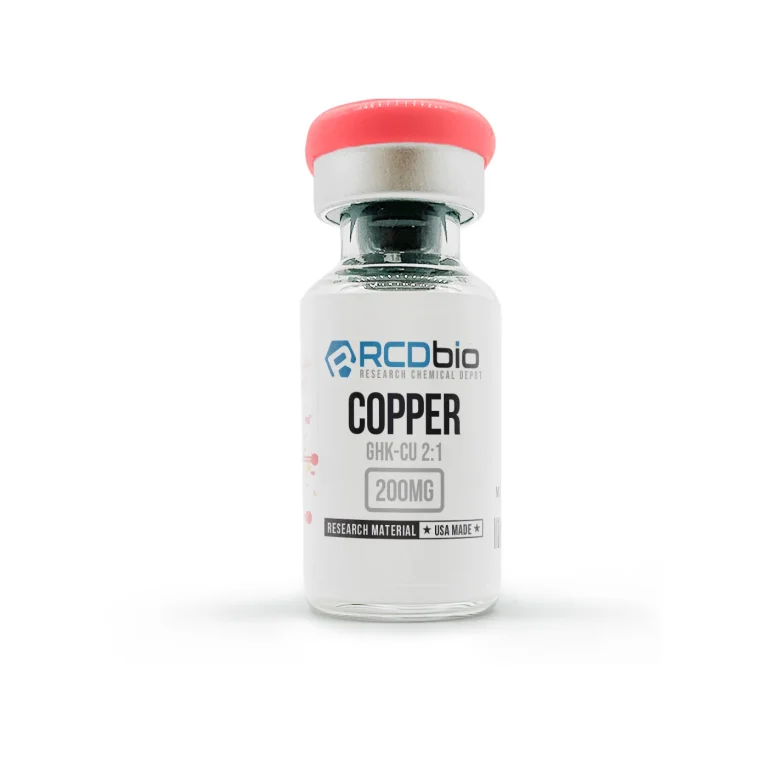
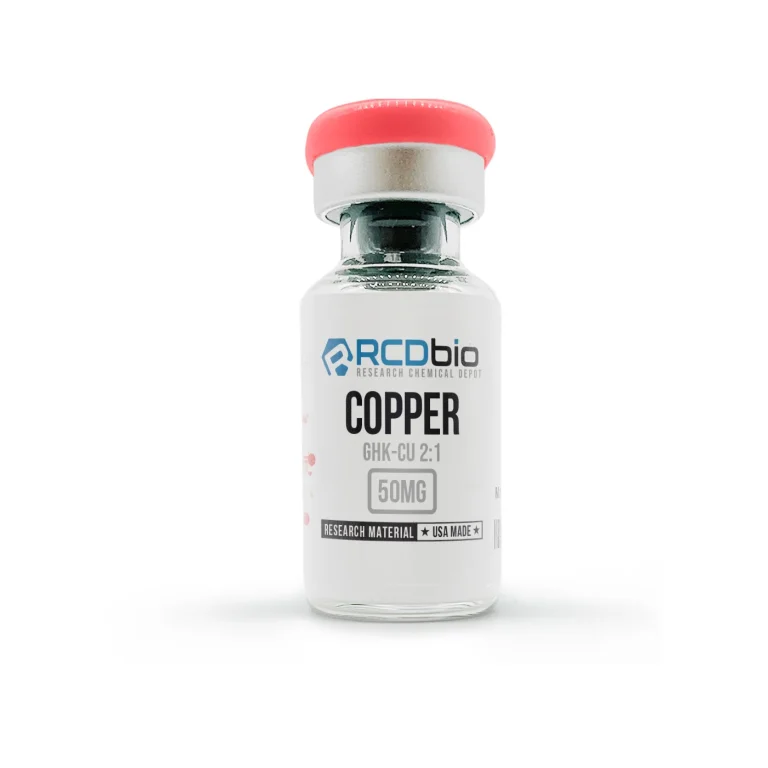
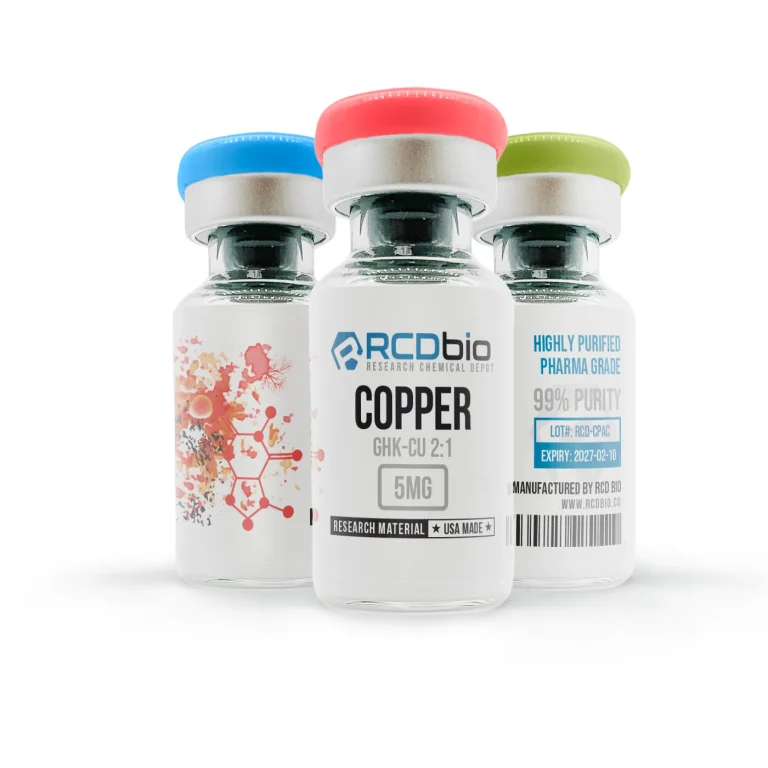
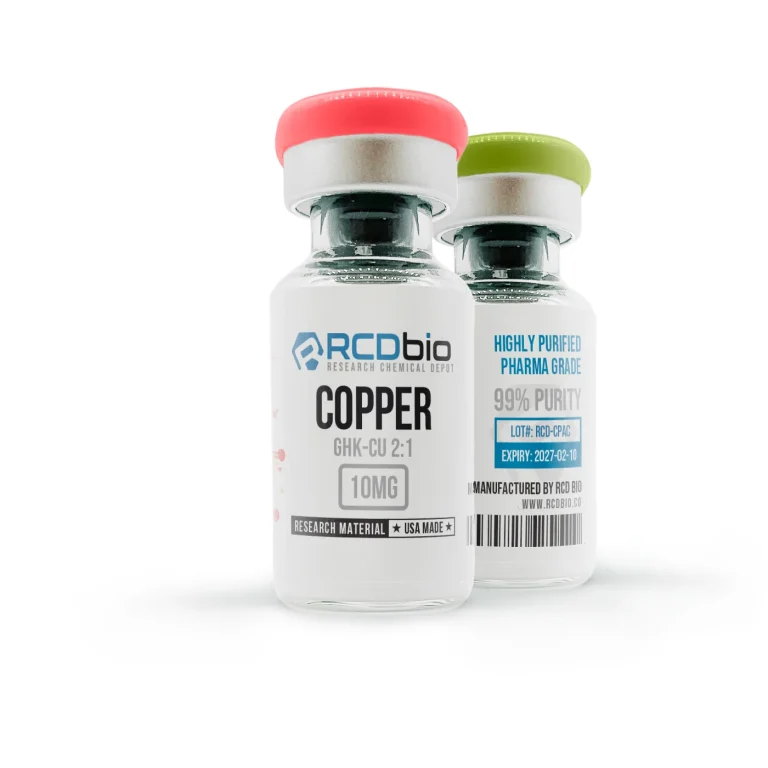
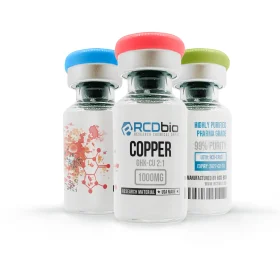
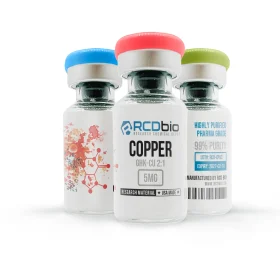
Description
What is GHK-Cu 2:1?
GHK-Cu 2:1 is a research-grade copper-binding peptide preparation consisting of a 2:1 molar mixture of the free glycine-histidine-lysine (GHK) tripeptide and the GHK-Cu 1:1 chelated complex. Unlike the single-compound GHK-Cu 1:1 form — in which each GHK tripeptide is directly bound to one copper(II) ion — GHK-Cu 2:1 is a mixture in which two equivalents of the GHK tripeptide are present per equivalent of copper(II), resulting in approximately 7% copper content by mass compared to approximately 14% in the 1:1 form. The free GHK component retains copper-binding affinity and can compete with the chelated fraction for coordination under experimental conditions. GHK-Cu 2:1 is typically produced via lyophilization rather than the recrystallization methods applicable to the pure 1:1 compound.
In research settings, GHK-Cu 2:1 has been investigated in comparative in vitro and preclinical models alongside GHK-Cu 1:1, primarily to examine the influence of copper coordination stoichiometry on ECM-related signalling profiles and copper reactivity under varying formulation conditions. No peer-reviewed literature has established distinct pharmacological differences between the 1:1 and 2:1 forms; existing research on the GHK-Cu complex in the literature principally pertains to the 1:1 chelated form.
GHK-Cu 2:1 is not approved by the Food and Drug Administration for human or veterinary use, is not a dietary supplement, and is not intended for human consumption or therapeutic application. All RCDbio research compounds are supplied strictly for laboratory and research purposes only.
Chemical Properties
| Property | Detail |
| Product Type | Synthetic Copper-Binding Tripeptide Mixture (2:1 peptide-to-copper molar ratio) |
| Product Name | Copper Peptide GHK-Cu 2:1 |
| Application | Scientific / Research Use Only |
| CAS Number | 89030-95-5 (GHK-Cu 1:1 component); 49557-75-7 (GHK free tripeptide component) |
| Molar Mass | Free GHK component: 340.38 g/mol; GHK-Cu 1:1 component: 401.91 g/mol |
| Chemical Formula | Free GHK: C₁₄H₂₄N₆O₄ / GHK-Cu complex component: C₁₄H₂₄CuN₆O₄ |
| IUPAC Name | (Free GHK): 6-amino-2-[[2-[(2-aminoacetyl)amino]-3-(1H-imidazol-5-yl)propanoyl]amino]hexanoic acid |
| Synonyms | GHK-Cu (2:1); Copper tripeptide-1 (2:1 form); Glycyl-L-histidyl-L-lysine copper complex (2:1) |
| Physical Form | Lyophilized powder; light blue to blue-green in colour (less intense than 1:1 form due to lower copper content) |
| Solubility | Freely soluble in water; soluble in PBS; the free GHK component is fully soluble; insoluble in non-polar organic solvents |
| Storage (Lyophilized) | −20°C; sealed container; protected from light and moisture |
| Storage (Reconstituted) | 4°C; use within 48–72 hours; avoid repeated freeze-thaw cycles |
| PubChem CID | GHK free tripeptide component: 342538 / GHK-Cu 1:1 component: 378611 (no distinct PubChem CID for the 2:1 mixture) |
| Purity | ≥98% (HPLC verified, independent third-party laboratory analysis; COA available per batch) |
| WADA Status | GHK-Cu (in either stoichiometric form) is not explicitly named on the current 2026 WADA Prohibited List. However, WADA employs broad class-based prohibitions that may encompass compounds by mechanism rather than name. Researchers engaged in sport-adjacent studies should verify the current status at GlobalDRO.com before use. |
How Does GHK-Cu 2:1 Work?
GHK-Cu 2:1 operates through the same core molecular mechanisms as the GHK-Cu 1:1 form, as the chelated GHK-Cu component — present at one equivalent per two GHK molecules — is responsible for the copper-mediated signalling activity characterised in the research literature. The free GHK component retains the tripeptide’s intrinsic receptor and ECM interaction profile, though copper coordination is considered integral to the complex’s full activity profile.
Copper-Mediated Extracellular Matrix Pathway
The GHK-Cu 1:1 component within the 2:1 mixture mediates the same ECM modulation pathway characterised for the single compound: interactions with MMP regulatory networks and collagen I/III gene expression in dermal fibroblast preparations [Pickart & Margolina, 2018]. The free GHK fraction may independently interact with fibroblast surface structures, though its activity in the absence of copper coordination has not been fully characterised across experimental systems. The lower copper content of the 2:1 form may be relevant in research protocols sensitive to total copper ion concentration in the experimental environment.
Free GHK Tripeptide Activity in Isolated Systems
In isolated cell systems, the free GHK fraction has been investigated for receptor interactions independent of copper coordination. Data from cell-binding studies suggest that GHK binds to cell-surface proteoglycans and fibronectin in isolated fibroblast preparations, potentially contributing to cellular signalling interactions distinct from but related to the GHK-Cu chelate’s activity profile. The relative contribution of the free and chelated fractions to total observed bioactivity in 2:1 preparations has not been defined in peer-reviewed literature.
Copper Ion Reactivity Modulation
A key research rationale for the 2:1 form is reduced copper ion reactivity relative to the 1:1 compound. The lower effective copper content and the buffering presence of free GHK — which maintains copper-binding affinity — may attenuate pro-oxidant side reactions in cell-based experimental systems operating at low pH or in the presence of other metal-reactive components. This property has been investigated in comparative formulation research examining colour stability and oxidative reactivity profiles of GHK-Cu at different stoichiometric ratios.
Growth Factor and Proteasome Pathway Overlap
The GHK-Cu 1:1 component in the mixture shares mechanistic overlap with findings described for the single 1:1 compound, including data on TGF-β1 and VEGF signalling modulation in fibroblast and endothelial cell preparations [Pickart et al., 2015], and early-stage data on ubiquitin-proteasome system (UPS) interactions in isolated neuronal cell models. These pathway observations are derived from research conducted principally on the 1:1 compound; direct attribution to the 2:1 mixture is inferred from stoichiometric composition and has not been separately characterised in peer-reviewed literature.
Key Research Findings
In preclinical and in vitro research contexts, GHK-Cu (both 1:1 and 2:1 forms, where specified) has been associated with the following observations:
- ECM gene expression: Upregulation of collagen I and III gene expression observed in isolated dermal fibroblast preparations; data principally derived from GHK-Cu 1:1 research [Pickart & Margolina, 2018].
- Copper reactivity profile: GHK-Cu 2:1 characterised as exhibiting lower total copper reactivity than the 1:1 form in comparative formulation studies; relevant in experimental systems sensitive to oxidative copper chemistry.
- Free GHK binding: Free GHK component observed to interact with fibroblast surface proteoglycans in cell-binding assays; copper-independent interaction profile not fully characterised across models.
- MMP modulation: Altered MMP-1 and MMP-2 activity levels observed in in vitro dermal fibroblast models for GHK-Cu; applicable to 2:1 mixture via chelated component [Pickart et al., 2015].
- Stoichiometry comparison: No peer-reviewed literature has established distinct pharmacological differences between 1:1 and 2:1 forms; selection in laboratory settings is primarily driven by experimental design and copper concentration requirements.
All findings listed above are derived from preclinical or in vitro data. No human clinical trial data have been established for GHK-Cu in either stoichiometric form. These observations do not constitute evidence of efficacy or safety in any human condition or organism.
What are the Potential Research Applications of GHK-Cu 2:1?
In controlled laboratory environments, GHK-Cu 2:1 has been investigated for the following research applications. These are observed in preclinical and in vitro contexts only and do not constitute claims of efficacy or safety in any organism.
Comparative Copper Stoichiometry Studies GHK-Cu 2:1 is employed alongside the 1:1 form in comparative in vitro experiments designed to characterise how copper coordination stoichiometry influences cellular signalling, ECM gene expression, and cytotoxicity profiles in isolated cell systems. The lower copper content makes it a useful reference point for studies controlling for total copper ion concentration.
Low-Reactivity Copper Peptide Research Models In experimental systems where copper ion-mediated pro-oxidant effects are a confounding variable — including cell-based oxidative stress assays and pH-variable formulation studies — GHK-Cu 2:1 serves as a reduced-reactivity alternative to the 1:1 form, permitting investigation of GHK peptide-specific interactions with attenuated copper chemistry.
Extracellular Matrix and Fibroblast Signalling Studies GHK-Cu 2:1 shares the ECM research applications of the 1:1 form through its chelated component. It has been employed in fibroblast cell culture studies examining collagen synthesis dynamics, MMP expression, and glycosaminoglycan production profiles in isolated cell systems where copper concentration is a controlled experimental variable.
Free Tripeptide vs. Chelate Activity Profiling The 2:1 mixture’s composition — containing both free GHK and GHK-Cu 1:1 — makes it a useful experimental tool for studies characterising the relative contributions of the free tripeptide vs. the copper-chelated complex to observed bioactivity in cell-based assay systems.
Formulation and Stability Research GHK-Cu 2:1 has been investigated in research settings for its formulation stability characteristics relative to the 1:1 form, including comparative studies on colour stability, pH sensitivity, and oxidative degradation kinetics under accelerated stress conditions.
What are the Potential Side Effects of GHK-Cu 2:1?
Researchers in preclinical and in vitro settings have noted the following observations. Long-term safety and toxicity profiles remain incompletely characterised, and no human safety data have been established.
- Cytotoxicity observed at supraphysiological concentrations in isolated fibroblast cell preparations; comparative cytotoxicity data for the 2:1 form specifically are limited relative to the 1:1 compound
- Disruption of intracellular copper homeostasis possible at elevated molar concentrations in cell-free systems; applicable to both free GHK and GHK-Cu components
- Modulation of MMP activity observed in vitro at higher concentration ranges, consistent with GHK-Cu 1:1 data and attributable to the chelated component
- Potential for free GHK to compete with endogenous copper-binding proteins in cell-based systems at supraphysiological concentrations
- Copper ion-mediated pro-oxidant effects present but attenuated relative to the 1:1 form; model-dependent and not systematically characterised for the 2:1 mixture
No human safety or tolerability data have been established for GHK-Cu in either stoichiometric form. These observations are derived from experimental systems and should not be extrapolated to human or animal outcomes.
Risk & Handling
Handling Precautions
GHK-Cu 2:1 should only be handled by trained laboratory personnel familiar with peptide research compounds and copper-containing materials. Appropriate personal protective equipment is required: nitrile gloves, a laboratory coat, and eye protection at a minimum. When working with the lyophilized powder, use within a fume hood or laminar flow cabinet to avoid inhalation of particulate matter. Avoid aerosol generation during reconstitution. The compound’s blue to blue-green colouration — less intense than the 1:1 form — may stain surfaces and porous materials at higher concentrations.
Exposure Risks
Risk Tier: LOW–MODERATE
GHK-Cu 2:1 shares the general safety profile of the 1:1 form but presents lower total copper ion content per mass unit, which may reduce copper-specific cytotoxic risks in experimental systems. Cytotoxic effects have been observed in isolated cell preparations at supraphysiological concentrations for the GHK-Cu complex class. The free GHK fraction introduces a distinct set of potential interactions with endogenous copper-binding proteins in cell-based research systems. No human safety or tolerability data have been established for GHK-Cu 2:1. Researchers should exercise appropriate caution consistent with handling any bioactive copper-containing compound.
Storage
- Lyophilized form: Store at −20°C in original sealed, light-protected container with desiccant
- Reconstituted form: Store at 4°C; use within 48–72 hours of reconstitution
- Do not subject to repeated freeze-thaw cycles; both the chelated and free tripeptide components may be affected
- Protect from prolonged light exposure; the copper complex component is photosensitive at higher concentrations
- Store away from strong oxidising agents and chelating chemicals that may alter the free-to-chelated GHK ratio in the mixture
Frequently Asked Questions
Q: What is GHK-Cu 2:1, and how does it differ from GHK-Cu 1:1? GHK-Cu 2:1 is a peptide mixture containing two equivalents of the free GHK tripeptide per one equivalent of copper(II), resulting in approximately 7% copper content by mass. GHK-Cu 1:1 is a single defined compound with one GHK chelated to one copper(II) ion and approximately 14% copper content. The 2:1 form is produced via lyophilization and contains a free GHK fraction alongside the chelated complex. No peer-reviewed research has established distinct pharmacological differences between the two forms in preclinical models. Both are intended strictly for laboratory and research purposes only.
Q: What is the half-life of GHK-Cu 2:1 in vitro? Stability data for the 2:1 form specifically are limited. For the GHK-Cu 1:1 chelated component, plasma-based in vitro studies have reported a half-life of approximately 0.5 to 1 hour. The free GHK fraction may exhibit different degradation kinetics under the same conditions, as the tripeptide is susceptible to proteolytic degradation in plasma. These figures are derived from laboratory models and do not represent human pharmacokinetic data.
Q: How should GHK-Cu 2:1 be stored to maintain stability? Lyophilized GHK-Cu 2:1 should be stored at −20°C in a sealed, light-protected container with desiccant. Once reconstituted, the working solution should be stored at 4°C and used within 48–72 hours. Repeated freeze-thaw cycles are not recommended as they may degrade peptide integrity and shift the free-to-chelated ratio within the mixture. Protect from prolonged light exposure and avoid contact with competing chelating agents.
Q: Why does the 2:1 form have lower copper content than the 1:1 form? In GHK-Cu 2:1, only one of the two GHK molecules is chelated to a copper(II) ion — the other is present as the free, unchelated tripeptide. This results in a 2:1 peptide-to-copper molar ratio and approximately 7% copper content by mass, compared to approximately 14% for the 1:1 form. The reduced copper content may be relevant in experimental systems where total copper concentration is a controlled or confounding variable.
Q: What are the known toxicity observations for GHK-Cu in preclinical studies? Preclinical studies using the GHK-Cu complex have reported a generally low acute toxicity profile at concentrations used in standard research protocols. Cytotoxicity has been noted at supraphysiological concentrations in isolated fibroblast and keratinocyte cell systems. Specific toxicity data for the 2:1 form are limited; findings from 1:1 studies are the primary reference. No human safety or tolerability data have been established. Observations should not be extrapolated to human or animal outcomes.
Q: Is GHK-Cu 2:1 recommended over GHK-Cu 1:1 for specific research applications? Selection between the 1:1 and 2:1 forms in laboratory settings is typically driven by experimental design considerations rather than pharmacological differences, as no peer-reviewed literature has established distinct bioactivity differences between the two forms. The 2:1 form may be preferred in experimental systems requiring lower total copper ion concentration, in cell-based assays sensitive to copper-mediated redox chemistry, or in formulation studies examining the influence of free vs. chelated GHK on observed outcomes.
Related Research Compounds
Researchers investigating GHK-Cu 2:1 may also be interested in the following compounds currently available for laboratory research at RCDbio:
- Copper Peptide GHK-Cu 1:1 — The single-compound form of GHK-Cu with one copper(II) ion per GHK tripeptide; the primary reference compound for GHK-Cu research literature and the standard for ECM signalling and metalloenzyme studies.
- Copper Peptide AHK-Cu 1:1 — A structurally related copper-binding tripeptide (alanine-histidine-lysine) investigated in preclinical models for comparative receptor interaction and ECM signalling studies alongside GHK-Cu.
- PAL-GHK Peptide — A palmitoylated analogue of the GHK tripeptide investigated in preclinical cell culture models for lipophilicity-modified peptide membrane interaction studies, relevant to comparative GHK variant research.
All products listed are for laboratory and research purposes only.
References
- Pickart, L., & Margolina, A. (2018). Regenerative and Protective Actions of the GHK-Cu Peptide in the Light of the New Gene Data. International Journal of Molecular Sciences, 19(7), 1987. https://pubmed.ncbi.nlm.nih.gov/29970841/
- Pickart, L., Vasquez-Soltero, J. M., & Margolina, A. (2015). GHK Peptide as a Natural Modulator of Multiple Cellular Pathways in Skin Regeneration. BioMed Research International, 2015, 648108. https://pubmed.ncbi.nlm.nih.gov/26236730/
- Gorouhi, F., & Maibach, H. I. (2009). Role of topical peptides in preventing or treating aged skin. International Journal of Cosmetic Science, 31(5), 327–345. https://pubmed.ncbi.nlm.nih.gov/19570099/
- Canapp, S. O., Jr., Farese, J. P., Schultz, G. S., Gowda, S., Ishak, A. M., Swaim, S. F., Vangilder, J., Lee-Ambrose, L., & Martin, F. G. (2003). The effect of topical tripeptide-copper complex on the healing of ischemic open wounds. Veterinary Surgery, 32(6), 515–523. https://pubmed.ncbi.nlm.nih.gov/14648529/
Disclaimer
Copper Peptide GHK-Cu 2:1 is exclusively for laboratory research purposes. RCDbio products are not intended to diagnose, prevent, treat, or cure any disease or medical condition.
The Food and Drug Administration has not evaluated the statements on our website. This product is not approved for human or veterinary use. Researchers must comply with all applicable local, state, and federal laws and regulations governing the purchase and use of research compounds. By purchasing, you agree to our Terms and Conditions. RCDbio reserves the right to refuse sales to unauthorized individuals.
ATTENTION: All RCDbio products are strictly for LABORATORY AND RESEARCH PURPOSES ONLY. They are not intended for human consumption, veterinary use, or any other non-research application. For queries, complaints, or support, contact support@legacy.rcdbio.co
Reviews
There are no reviews yet