

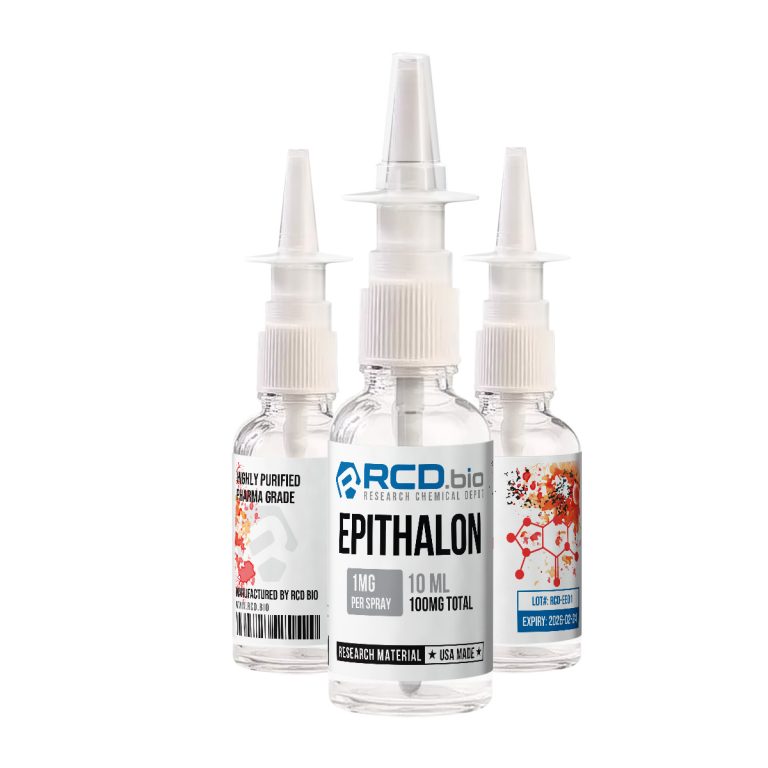
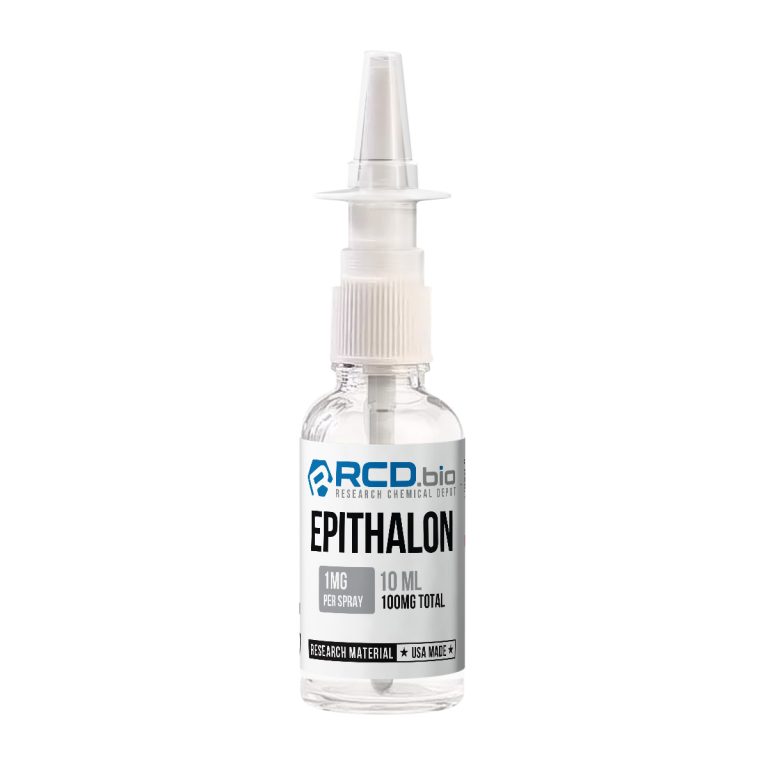
Description
What is Epithalon Nasal Spray?
Epithalon (Epitalon; Epithalone; Ala-Glu-Asp-Gly; AEDG) is a synthetic tetrapeptide consisting of four amino acids in the sequence H-Ala-Glu-Asp-Gly-OH, supplied in the free acid form. It was synthesized by Vladimir Khavinson and colleagues at the St. Petersburg Institute of Bioregulation and Gerontology on the basis of the amino acid composition of Epithalamin, a bovine pineal gland polypeptide extract. Following its synthesis, Epithalon was subsequently identified within the pineal gland polypeptide complex itself. The free acid form (H-Ala-Glu-Asp-Gly-OH) supplied under this product listing is distinct from N-Acetyl Epithalon Amidate (Ac-Ala-Glu-Asp-Gly-NH2), which carries N-terminal acetylation and C-terminal amidation, conferring additional exopeptidase resistance. The free acid form retains the native AEDG sequence without end-capping modifications. Epithalon has not been approved as a registered pharmaceutical in any country and has not been approved by the Food and Drug Administration for any indication.
The compound has been extensively investigated over the past 25 years across in vitro, in vivo, and in silico model systems for its geroprotective, neuroendocrine, antioxidant, antimutagenic, and epigenetic regulatory effects. Research has characterized effects including telomerase activity modulation, melatonin synthesis regulation, DNA major groove binding at telomerase gene promoter sequences, histone interaction relevant to neurogenic gene regulation, and direct modulation of cortical neuron activity following intranasal administration in rat preparations [Araj et al., 2025; PMID 40141333]. The nasal spray formulation is particularly well-suited to Epithalon research because a published compound-specific study has characterized the intranasal route for Epitalon directly in rats, demonstrating 2-2.5-fold increases in cortical neuron discharge frequency within minutes of intranasal dosing [Sibarov et al., 2007; PMID 17955380].
The nasal spray formulation is investigated as a delivery route in preclinical research contexts, based on direct evidence of Epithalon CNS access via intranasal administration in anesthetized Wistar rat preparations [Sibarov et al., 2007; PMID 17955380]. Intranasal delivery has been studied for its potential to bypass hepatic first-pass metabolism and enhance CNS bioavailability relative to systemic routes in preclinical pharmacokinetic models. The nasal mucosa’s proximity to the central nervous system via the olfactory nerve makes it a research-relevant delivery route for CNS-active research compounds.
DISCLAIMER: Epithalon Nasal Spray, as supplied by RCDbio, is not a dietary supplement and has not been approved by the Food and Drug Administration for human use, veterinary use, consumption, or any therapeutic application. This product is not intended for human consumption or therapeutic self-administration. It is supplied exclusively for in vitro and preclinical laboratory research purposes. All RCDbio research compounds are for laboratory and research purposes only.
Chemical Properties of Epithalon
| Property | Details |
| Product Type | Synthetic Tetrapeptide / Pineal-Derived Peptide Bioregulator / Geroprotective Peptide — Free Acid Form |
| Product Name | Epithalon Nasal Spray |
| Application | Scientific / Research Use Only |
| CAS Number | 307297-39-8 |
| Molar Mass | 390.349 g/mol |
| Chemical Formula | C14H22N4O9 |
| IUPAC Name | (4S)-4-[[(2S)-2-aminopropanoyl]amino]-5-[[(2S)-3-carboxy-1-(carboxymethylamino)-1-oxopropan-2-yl]amino]-5-oxopentanoic acid (PubChem CID 219042) |
| Synonyms | Epithalon; Epitalon; Epithalone; AEDG; Ala-Glu-Asp-Gly; H-Ala-Glu-Asp-Gly-OH; BDM-E; L-alanyl-L-alpha-glutamyl-L-alpha-aspartylglycine |
| Physical Form | Lyophilized white powder (compound); supplied as aqueous nasal spray solution |
| Solubility | Soluble in sterile water and 0.9% saline at ≥1 mg/mL |
| Storage (Lyophilized) | -20°C, desiccated, protected from light |
| Storage (Reconstituted / Nasal Spray) | 2-8°C; use within 28 days of first actuation; DO NOT FREEZE; protect from light; keep upright |
| PubChem CID | 219042 (Epithalon free acid, H-Ala-Glu-Asp-Gly-OH) |
| Purity | ≥98% (HPLC verified, independent third-party laboratory analysis; COA available per batch) |
| WADA Status | Epithalon is not explicitly named on the 2026 WADA Prohibited List. As an unapproved pharmacological substance, it may fall under the S0 (Non-Approved Substances) catchall category. Researchers operating within WADA Code contexts should verify current status at GlobalDRO.com prior to any sport-related research application. |
How Does Epithalon Work?
Epithalon has been characterized as a peptide bioregulator with multiple proposed mechanisms of action encompassing direct DNA interaction in the major groove of the double helix, telomerase promoter binding, histone interaction relevant to chromatin remodeling, neuroendocrine modulation of the pineal gland and melatonin synthesis pathway, and direct modulation of cortical neuron activity following intranasal administration. No single confirmed receptor target has been established. The following mechanistic observations are from preclinical and in vitro data only.
DNA Major Groove Binding and Telomerase Promoter Interaction
Using a complementary binding model, the AEDG tetrapeptide was shown to preferentially bind to the base pair sequence ATTTTC in the major groove of the DNA double helix. This sequence and its reverse complement were found repeatedly in the promoter region of the telomerase gene, suggesting that Epithalon may interact directly with telomerase gene regulatory elements at the chromatin level. Statistical information analysis confirmed that regulatory peptides and oligonucleotide sequences share information content characteristics consistent with a molecular recognition mechanism for gene transcription initiation [Khavinson et al., 2005; PMID 15990728].
Epigenetic Gene Regulation via Histone Interaction
In human gingival mesenchymal stem cell (hGMSC) preparations, the AEDG peptide increased the synthesis of neurogenic differentiation markers, including Nestin, GAP43, beta-Tubulin III, and Doublecortin. mRNA expression of these neurogenic differentiation genes was increased by 1.6-1.8 times relative to controls. Molecular modeling showed that the AEDG peptide preferentially binds to H1/6 and H1/3 histones at sites that interact with DNA, suggesting a chromatin-level epigenetic mechanism for gene expression regulation [Khavinson et al., 2020; PMID 32019204].
Geroprotective, Neuroendocrine, and Antioxidant Effects
A comprehensive review of Epitalon research published in 2025 confirmed significant geroprotective and neuroendocrine effects across in vitro, in vivo, and in silico studies over 25 years. Documented biological activities include direct effects on melatonin synthesis, changes in interleukin-2 mRNA levels, modulation of murine thymocyte mitogenic activity, enhancement of telomerase activity, AChE and BuChE activity enhancement, and antioxidant and antimutagenic effects in animal model preparations [Araj et al., 2025; PMID 40141333].
Direct Intranasal CNS Modulation of Cortical Neuron Activity
Intranasal administration of Epitalon (30 ng per animal) in anesthetized Wistar male rats produced significant activation of spontaneous neuron activity in the cerebral cortex within minutes of dosing, with a 2-2.5-fold increase in neuronal discharge frequency. The effect was multiphasic: an initial peak at 5-7 minutes was followed by subsequent peaks at 11-12 and 17-18 minutes. The activity increase occurred through increased discharge frequency of already-active neurons and recruitment of previously silent neurons. The first peak was found to be associated with the direct action of the peptide on cortical cells [Sibarov et al., 2007; PMID 17955380].
Intranasal Delivery & Pharmacokinetics
Olfactory Bulb-Mediated CNS Transport — Compound-Specific Evidence
Unlike the majority of compounds in the RCDbio nasal spray research range, Epithalon has a published compound-specific study directly investigating intranasal delivery and CNS effects. Sibarov and colleagues at the I.P. Pavlov Institute of Physiology, Russian Academy of Sciences, selected intranasal administration of Epitalon as a noninvasive means of applying the agent to the CNS by bypassing the blood-brain barrier. In anesthetized male Wistar rat preparations, extracellular cortical neuron activity was recorded before and for 30 minutes after intranasal Epitalon administration (30 ng per animal). Significant multiphasic activation of neuron discharge frequency was observed within minutes of dosing [Sibarov et al., 2007; PMID 17955380]. This establishes compound-specific preclinical evidence for CNS access of Epithalon via the intranasal route.
Hepatic First-Pass Metabolism Bypass
The intranasal route avoids portal circulation and hepatic first-pass metabolic processing. Epithalon is a small, hydrophilic tetrapeptide in the free acid form. The free amino group at the N-terminus and free carboxyl group at the C-terminus make it susceptible to exopeptidase-mediated degradation in biological fluids, more rapidly than the end-capped N-Acetyl Epithalon Amidate form. Intranasal delivery bypasses the GI proteolytic environment and hepatic metabolism. These observations do not constitute evidence of intranasal efficacy in human subjects.
Nasal Mucosal Absorption
Epithalon has a molar mass of 390.349 g/mol (~0.39 kDa). This molecular weight falls well below the 1 kDa threshold, placing it among the smallest peptides in the RCDbio nasal spray research range. At this size, transcellular lipid-bilayer diffusion and paracellular transport are both plausible and highly favorable absorption mechanisms at the nasal mucosa. However, the free acid form’s susceptibility to nasal mucosal exopeptidase activity means that a portion of the administered dose may be degraded prior to absorption.
Compound-Specific Pharmacokinetics
No formal systemic pharmacokinetic data for Epithalon (plasma half-life, Tmax, Cmax) has been published via any route of administration. The compound-specific intranasal study [Sibarov et al., 2007; PMID 17955380] characterized CNS activity endpoints rather than plasma pharmacokinetic parameters. No human pharmacokinetic data has been published for any route of administration. Researchers should account for the absence of formal pharmacokinetic parameters while noting the available CNS activity data from the intranasal route.
Key Research Findings
Direct Intranasal CNS Activity — Cortical Neuron Activation in Wistar Rat Preparations (Compound-Specific Intranasal Study): Intranasal administration of Epitalon (30 ng per animal) in anesthetized Wistar male rats produced multiphasic significant activation of spontaneous cortical neuron activity with a 2-2.5-fold increase in discharge frequency; initial peak at 5-7 minutes followed by peaks at 11-12 and 17-18 minutes; the first peak was associated with direct peptide action on cortical cells; intranasal administration was specifically selected to bypass the blood-brain barrier noninvasively [Sibarov et al., 2007; PMID 17955380]
DNA Major Groove Binding and Telomerase Promoter Recognition (In Silico / Biopolymer Chemistry Model): Complementary binding modeling identified ATTTTC as a specific base pair sequence for AEDG peptide binding in the major groove of the DNA double helix; this sequence and its reverse complement were found repeatedly in the telomerase gene promoter region; statistical analysis confirmed mutual information content between regulatory peptides and oligonucleotide sequences consistent with gene transcription initiation recognition [Khavinson et al., 2005; PMID 15990728]
Epigenetic Neurogenic Gene Expression Regulation (Human Gingival Mesenchymal Stem Cell Preparation): AEDG peptide increased expression of neurogenic differentiation markers Nestin, GAP43, beta-Tubulin III, and Doublecortin by 1.6-1.8 fold at the mRNA and protein level in hGMSC preparations; molecular modeling confirmed preferential AEDG binding to H1/6 and H1/3 histones at DNA-interacting sites, suggesting histone-mediated epigenetic regulation of neurogenic gene transcription [Khavinson et al., 2020; PMID 32019204]
Comprehensive Review — Geroprotective, Telomerase, and Neuroendocrine Effects (Review of 25 Years of Epitalon Research): Systematic review confirmed significant geroprotective and neuroendocrine effects of Epitalon across in vitro, in vivo, and in silico studies; documented activities include melatonin synthesis modulation, telomerase activity enhancement, interleukin-2 mRNA changes, thymocyte mitogenic activity modulation, AChE/BuChE enhancement, and antioxidant/antimutagenic effects [Araj et al., 2025; PMID 40141333]
Row 1 is the only finding in the RCDbio nasal spray series based on a compound-specific intranasal delivery study for Epithalon itself. Row 2 is a computational binding model, not a wet-lab experimental finding. Rows 3-4 characterize the unmodified AEDG peptide; no study has studied the N-Acetyl Epithalon Amidate form. These observations do not constitute evidence of efficacy or safety for Epithalon nasal spray in any organism. No human clinical data has been established for research-grade Epithalon administered via the intranasal route.
What are the Potential Research Applications?
In controlled laboratory environments, Epithalon nasal spray has been investigated for the following research applications. These are observed in preclinical and in vitro contexts only and do not constitute claims of efficacy or safety in any organism.
Intranasal CNS Delivery and Cortical Neuron Activity Research
Epithalon nasal spray is the only compound in the RCDbio nasal spray range with a published compound-specific intranasal delivery study. Research applications include cortical neuron activity characterization following intranasal Epithalon administration in rodent preparations, multiphasic CNS response profiling via extracellular recording, comparative nasal delivery studies between Epithalon free acid and N-Acetyl Epithalon Amidate forms, and CNS bioavailability investigations via the olfactory route.
Telomerase and Telomere Biology Research
Epithalon is the primary tool compound for investigating AEDG tetrapeptide effects on telomerase activity and telomere-related gene expression in cell preparations. Research applications include telomerase activity assays in somatic cell preparations, telomere length measurement studies, and investigation of AEDG-telomerase promoter DNA binding interactions in molecular biology model systems.
Epigenetic and Neurogenic Gene Regulation Research
The AEDG tetrapeptide’s histone binding activity and chromatin-level gene regulation effects support Epithalon as a tool compound for epigenetic research. Research applications include neurogenic differentiation gene expression profiling in stem cell preparations, chromatin accessibility studies, histone interaction mapping, and comparative epigenetic studies of Epithalon free acid versus N-Acetyl Epithalon Amidate in matched cell preparations.
Neuroendocrine and Pineal Biology Research
Epithalon modulates pineal gland function and melatonin synthesis in preclinical preparations. Research applications include melatonin biosynthesis pathway studies, circadian gene expression analysis, neuroendocrine regulation characterization in rodent model systems, and age-dependent neuroendocrine function studies using the compound as a geroprotective reference tool.
What are the Potential Side Effects?
Researchers in preclinical and in vitro settings have noted the following observations. Long-term safety and toxicity profiles remain incompletely characterized for the research-grade nasal spray formulation.
- Favorable preclinical safety profile in 25-year research history (preclinical): The parent compound Epithalon has been studied across a broad range of preclinical preparations for 25 years without reports of significant acute toxicity; this observation does not constitute a formal toxicology assessment for the nasal spray formulation or for human use
- Cortical neuron activation risk via inadvertent intranasal self-exposure: The compound-specific intranasal study [Sibarov et al., 2007; PMID 17955380] demonstrated that intranasal Epithalon produces rapid and significant cortical neuron activation; inadvertent intranasal self-exposure during laboratory handling carries a documented risk of neuroendocrine and CNS neuronal modulation
- Exopeptidase susceptibility of the free acid form (stability consideration): The unmodified free acid form (H-Ala-Glu-Asp-Gly-OH) is susceptible to aminopeptidase and carboxypeptidase degradation in biological fluids more rapidly than the end-capped N-Acetyl Epithalon Amidate form; this affects formulation stability and in vitro assay compatibility
- Absence of intranasal-specific clinical safety data: No safety or tolerability data for intranasal Epithalon in human subjects has been published in the peer-reviewed literature as of June 2026
- No completed human clinical trials for intranasal Epithalon: No human Phase 1 safety or efficacy trials for synthetic Epithalon administered via the intranasal route have been completed or published as of June 2026
No human safety or tolerability data has been established for Epithalon nasal spray. These observations are derived from experimental systems and should not be extrapolated to human or animal outcomes.
Risk & Handling
Handling Precautions
Standard laboratory PPE is required: nitrile gloves, a laboratory coat, and eye protection. The following nasal spray-specific precautions apply:
- Do not direct the nasal spray actuator toward the face, eyes, or mucous membranes during handling, testing, or transfer. Published preclinical data confirms that intranasal Epithalon produces rapid cortical neuron activation [Sibarov et al., 2007; PMID 17955380]; inadvertent intranasal self-exposure carries a documented risk of CNS neuronal modulation.
- Handle the nasal spray solution in a clean laboratory environment. For aliquoting or analytical sampling, use a laminar flow cabinet.
- The nasal spray solution is an aqueous formulation susceptible to microbial contamination if compromised. Handle under aseptic conditions. Discard if the solution appears cloudy, discolored, or shows particulate matter.
- Avoid aerosol generation during any manipulation of the nasal spray solution.
Exposure Risks
Risk Tier: LOW
Epithalon is a small tetrapeptide with a 25-year preclinical research history and no reports of significant acute toxicity. However, published compound-specific intranasal data confirm rapid CNS neuronal activation following intranasal dosing in preclinical preparations. Inadvertent intranasal self-exposure therefore carries a documented risk of CNS modulation rather than a purely theoretical one. No human safety or tolerability data has been established for Epithalon nasal spray. Researchers should handle this compound with standard laboratory precautions and with particular attention to aerosol avoidance, given the compound’s documented intranasal CNS activity.
Storage
In-use nasal spray: Store at 2-8°C. Use within 28 days of first actuation. Protect from light. Keep upright.
DO NOT FREEZE the ready-to-use nasal spray formulation. Freezing alters pH, buffer stability, excipient integrity, and spray actuation properties.
Lyophilized bulk stock (if applicable): Store at -20°C in sealed, desiccated, light-protected containers. Avoid repeated freeze-thaw cycles.
Discard any solution that appears cloudy, discolored, or shows visible particulate matter.
FAQs
Q: How does intranasal Epithalon reach the CNS in preclinical research models?
A: Unlike most compounds in the RCDbio nasal spray range, Epithalon has a published compound-specific intranasal CNS delivery study. Sibarov and colleagues at the Russian Academy of Sciences specifically selected intranasal administration of Epitalon to bypass the blood-brain barrier noninvasively in rat preparations, and directly measured cortical neuron activity before and after dosing [Sibarov et al., 2007; PMID 17955380]. Intranasal Epitalon (30 ng per animal) produced a 2-2.5-fold increase in cortical discharge frequency within minutes of administration. This is preclinical animal data and does not establish human CNS delivery.
Q: What is the recommended storage and in-use shelf life for Epithalon nasal spray?
A: Sealed product should be stored at 2-8°C, protected from light. Once first actuated, in-use shelf life is 28 days at 2-8°C. DO NOT FREEZE the ready-to-use solution. Lyophilized bulk stock should be stored at -20°C in sealed, desiccated, light-protected conditions. Discard if the solution shows cloudiness, discoloration, or particulate matter.
Q: Is the Epithalon nasal spray formulation suitable for cell culture or in vitro assay systems?
A: The formulation is prepared in isotonic saline (0.9% NaCl, pH 5.5-6.5) without preservatives. The small size (~390 Da) and hydrophilic character of the AEDG tetrapeptide make it generally compatible with aqueous cell culture systems. Dilution into culture medium before application is recommended to normalize pH. Researchers should note that the free acid form is more susceptible to peptidase degradation in serum-containing media than N-Acetyl Epithalon Amidate. Researchers are responsible for confirming compatibility with their assay system.
Q: How does Epithalon (free acid) differ from N-Acetyl Epithalon Amidate?
A: Both compounds share the core AEDG tetrapeptide sequence. Epithalon is the unmodified free acid form (H-Ala-Glu-Asp-Gly-OH; CAS 307297-39-8; MW 390.349 g/mol; PubChem CID 219042). N-Acetyl Epithalon Amidate (Ac-AEDG-NH2; ~431.43 g/mol) adds N-terminal acetylation and C-terminal amidation, conferring exopeptidase resistance. For native sequence mechanistic studies, use Epithalon free acid. For enhanced metabolic stability, N-Acetyl Epithalon Amidate is also available in the RCDbio nasal spray range.
Q: What is the WADA status of Epithalon?
A: Epithalon is not explicitly named on the 2026 WADA Prohibited List. As an unapproved pharmacological substance, it may fall under the S0 catchall category. Researchers should verify current status at GlobalDRO.com. RCDbio products are supplied for laboratory research purposes only.
Q: What is the FDA regulatory status of Epithalon?
A: Epithalon is not FDA-approved for any indication. It was removed from the FDA 503A Category 2 restricted list on April 15, 2026, and is scheduled for PCAC evaluation at the July 23-24, 2026 meeting (Docket No. FDA-2025-N-6895). Removal from Category 2 does not authorize compounding; a separate PCAC review and FDA decision are required. The research-grade nasal spray supplied by RCDbio is for laboratory research use only.
Q: What is the evidence base for Epithalon research and how should it be interpreted?
A: Epithalon research spans 25 years and originates primarily from the Khavinson group at the St. Petersburg Institute of Bioregulation and Gerontology. A comprehensive 2025 review confirmed significant geroprotective, neuroendocrine, antioxidant, and telomerase-related effects [Araj et al., 2025; PMID 40141333]. The evidence base is largely concentrated within a small number of Russian research groups, and independent replication is limited. No completed controlled human efficacy trials have been published. The compound-specific intranasal CNS activity study [Sibarov et al., 2007; PMID 17955380] provides unique mechanistic support for the nasal spray delivery route. Researchers should account for the concentrated evidence base when designing and interpreting laboratory protocols.
Related Research Compounds
Researchers investigating Epithalon nasal spray may also be interested in the following compounds currently available for laboratory research at RCDbio:
N-Acetyl Epithalon Amidate Nasal Spray — The doubly end-capped form of the AEDG tetrapeptide (Ac-AEDG-NH2; ~431.43 g/mol) investigated for improved exopeptidase resistance relative to the free acid form.
Semax Nasal Spray — A synthetic ACTH(4-7) analog investigated in preclinical rodent preparations for BDNF/TrkB pathway modulation and CNS neurotrophin expression via intranasal delivery; shares peptide bioregulator research heritage with the Khavinson research program.
Selank Nasal Spray — A synthetic analog of the immunomodulatory peptide tuftsin investigated in preclinical preparations for GABA-A receptor modulation and BDNF expression via intranasal delivery.
All products listed are for laboratory and research purposes only.
References
- Sibarov, D.A., Vol’nova, A.B., Frolov, D.S., & Nozdrachev, A.D. (2007). Effects of intranasal administration of epitalon on neuron activity in the rat neocortex. Neuroscience and Behavioral Physiology, 37(9), 889-893.
https://pubmed.ncbi.nlm.nih.gov/17955380/
- Khavinson, V., Shataeva, L., & Chernova, A. (2005). DNA double-helix binds regulatory peptides similarly to transcription factors. Neuro Endocrinology Letters, 26(3), 237-241.
https://pubmed.ncbi.nlm.nih.gov/15990728/
- Khavinson, V., Diomede, F., Mironova, E., Linkova, N., Trofimova, S., Trubiani, O., Caputi, S., & Sinjari, B. (2020). AEDG Peptide (Epitalon) Stimulates Gene Expression and Protein Synthesis during Neurogenesis: Possible Epigenetic Mechanism. Molecules, 25(3), 609.
https://pubmed.ncbi.nlm.nih.gov/32019204/
- Araj, S.K., Brzezik, J., Madra-Gackowska, K., & Szeleszczuk, L. (2025). Overview of Epitalon — Highly Bioactive Pineal Tetrapeptide with Promising Properties. International Journal of Molecular Sciences, 26(6), 2691.
https://pubmed.ncbi.nlm.nih.gov/40141333/
Research Transparency Note: Reference 1 (Sibarov et al., 2007; PMID 17955380) is a compound-specific intranasal delivery study characterizing epitalon effects on cortical neuron activity in anesthetized Wistar rats — the only such study in the published literature for this compound, and the only compound-specific intranasal reference in the entire RCDbio nasal spray range. Reference 2 is a computational binding model. Reference 3 characterizes the AEDG peptide in human stem cell preparations. Reference 4 is a comprehensive review from an independent Polish/Warsaw University group. The majority of primary Epithalon research originates from the Khavinson group at the St. Petersburg Institute of Bioregulation and Gerontology; independent replication is limited.
Disclaimer
Epithalon Nasal Spray is exclusively for laboratory research purposes. RCDbio products are not intended to diagnose, prevent, treat, or cure any disease or medical condition.
The Food and Drug Administration has not evaluated the statements on our website. This product is not approved for human or veterinary use. Researchers must comply with all applicable local, state, and federal laws and regulations governing the purchase and use of research compounds. By purchasing, you agree to our Terms and Conditions. RCDbio reserves the right to refuse sales to unauthorized individuals.
ATTENTION: All RCDbio products are strictly for LABORATORY AND RESEARCH PURPOSES ONLY. They are not intended for human consumption, veterinary use, or any other non-research application. For queries, complaints, or support, contact support@legacy.rcdbio.co
Reviews
There are no reviews yet