

Description
What is GHRP-2 Peptide?
GHRP-2 (Growth Hormone-Releasing Peptide-2) is a synthetic hexapeptide belonging to the growth hormone secretagogue (GHS) family. It was developed as a structural analogue of met-enkephalin, engineered to activate the growth hormone secretagogue receptor (GHS-R1a), a class A G protein-coupled receptor expressed on somatotroph cells of the anterior pituitary and in hypothalamic nuclei. GHRP-2 is characterized by the sequence D-Ala-D-β-Nal-Ala-Trp-D-Phe-Lys-NH₂, conferring proteolytic stability relative to native ghrelin through incorporation of D-amino acid residues.
In research settings, GHRP-2 has been employed as a pharmacological tool for investigating GHS-R1a receptor pharmacology, pituitary-hypothalamic signaling axes, and GH secretion dynamics in preclinical and in vitro systems. It is also co-investigated alongside GHRH analogues in experimental models examining synergistic somatotroph activation. Research has further characterized its interaction with anti-apoptotic and cytoprotective signaling pathways in isolated cell preparations.
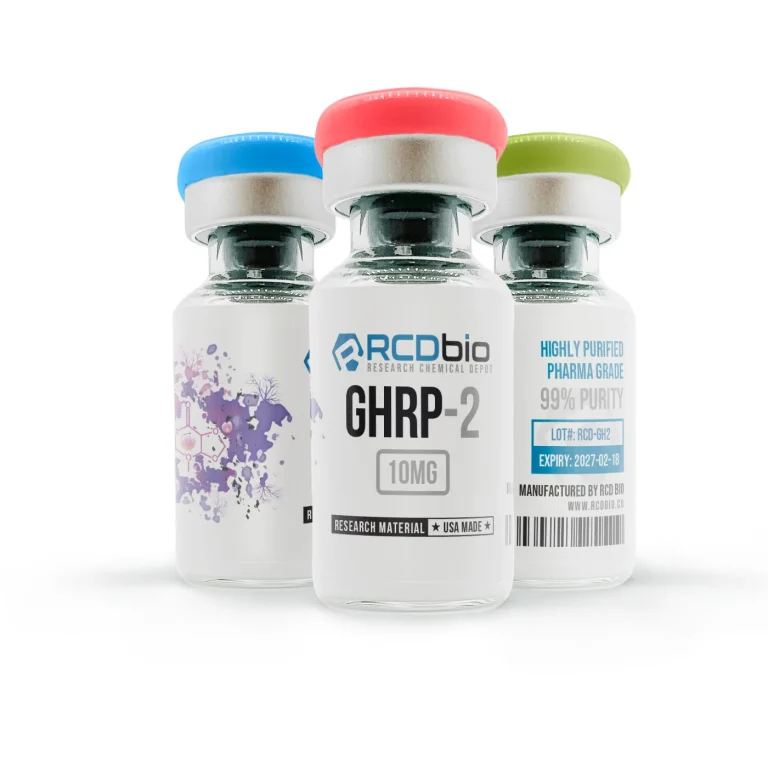
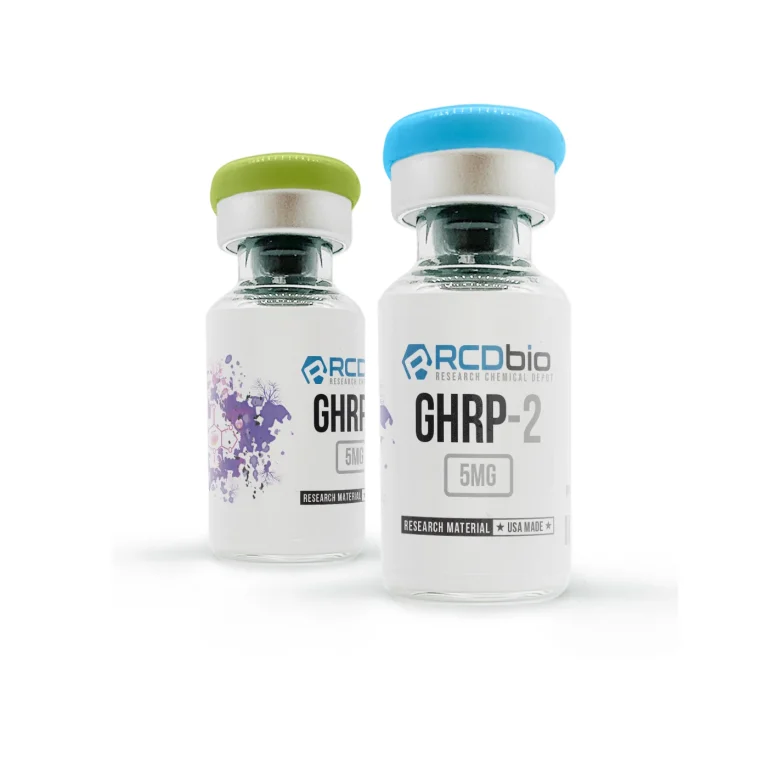
GHRP-2 supplied by RCDbio is intended strictly for laboratory and research purposes. It is not approved by the Food and Drug Administration for use in this research-grade, non-pharmaceutical form. It is not a dietary supplement and is not intended for human consumption or therapeutic self-administration.
Chemical Properties
| Property | Detail |
| Product Type | Synthetic Hexapeptide (Growth Hormone Secretagogue) |
| Product Name | GHRP-2 (Growth Hormone-Releasing Peptide-2) |
| Application | Scientific / Research Use Only |
| CAS Number | 158861-67-7 |
| Molar Mass | 817.99 g/mol |
| Chemical Formula | C₄₅H₅₅N₉O₆ |
| Sequence | D-Ala-D-β-Nal-Ala-Trp-D-Phe-Lys-NH₂ |
| IUPAC Name | (2S)-6-amino-2-[[(2S)-2-[[(2S)-2-[[(2S)-2-[[(2R)-2-[[(2R)-2-aminopropanoyl]amino]-3-naphthalen-2-ylpropanoyl]amino]propanoyl]amino]-3-(1H-indol-3-yl)propanoyl]amino]-3-phenylpropanoyl]amino]hexanamide |
| Synonyms | Pralmorelin (pharmaceutical INN); KP-102; GHRP-2 |
| Physical Form | Lyophilized white to off-white powder |
| Solubility | Soluble in sterile water, bacteriostatic water, or aqueous acetate buffer; avoid strong alkaline conditions which may compromise indole ring integrity |
| Storage (Lyophilized) | Store at −20°C in a sealed, light-protected container with desiccant; protect from humidity |
| Storage (Reconstituted) | Store at 4°C; use within 48–72 hours of reconstitution; limit freeze-thaw cycling; discard any solution that appears turbid or particulate |
| PubChem CID | 6852372 (free base); 5493556 (acetate salt) |
| Purity | ≥98% (HPLC verified, independent third-party laboratory analysis; COA available per batch) |
| WADA Status | GHRP-2 (Pralmorelin) is listed by name on the WADA Prohibited List under S2 (Peptide Hormones, Growth Factors, Related Substances and Mimetics). Researchers engaged in sport-adjacent studies should verify the current status at GlobalDRO.com before use. |
How Does GHRP-2 Peptide Work?
GHRP-2 exerts its primary pharmacological activity through selective agonism of the growth hormone secretagogue receptor type 1a (GHS-R1a), a Gαq/11-coupled GPCR expressed in highest density on anterior pituitary somatotroph cells and in the arcuate nucleus of the hypothalamus. At the molecular level, receptor activation initiates downstream signalling cascades that have been characterised in isolated pituitary cell preparations and in vivo rodent models.
GHS-R1a / Gαq-Mediated Somatotroph Signalling
In isolated anterior pituitary cell preparations, GHS-R1a activation by GHRP-2 has been characterized as initiating Gαq/11-mediated phospholipase C (PLC) activation, leading to generation of inositol trisphosphate (IP3) and diacylglycerol (DAG). IP3-mediated intracellular calcium mobilization from endoplasmic reticulum stores, coupled with protein kinase C (PKC) activation, has been identified as the primary intracellular mechanism underlying GH secretory vesicle exocytosis in somatotroph cell models. Parallel activation of voltage-gated calcium channels has been observed in pituitary cell electrophysiology studies, contributing to calcium influx-dependent GH release.
Synergistic Interaction with GHRH Pathways
In rodent in vivo models and isolated pituitary preparations, co-administration of GHRP-2 with GHRH has demonstrated synergistic amplification of GH pulse amplitude beyond additive predictions. This potentiation is mechanistically attributed to GHRP-2’s capacity to upregulate GHRH receptor expression on somatotroph cells and to augment intracellular cAMP accumulation initiated by GHRH-R/Gαs coupling. The two receptor systems converge on calcium-dependent exocytosis machinery, producing supraadditive secretory responses in ex vivo pituitary preparations.
Hypothalamic GHS-R1a Signalling and Somatostatin Modulation
In rodent hypothalamic neuron preparations, GHS-R1a activation has been investigated for its involvement in neuropeptide Y (NPY) neuronal signaling and somatostatin (SST) suppression. In vivo rat studies have characterized GHRP-2-associated reduction in hypothalamic SST release, functionally disinhibiting pituitary somatotrophs from tonic inhibitory tone. This dual mechanism — direct pituitary activation combined with hypothalamic SST disinhibition — has been characterized as the principal basis for the amplified GH responses observed in rodent model systems.
Anti-Apoptotic and Cytoprotective Signalling (Non-GH Pathways)
In isolated cardiomyocyte cell preparations, GHS-R1a activation has been investigated for downstream PI3K/Akt pathway engagement and modulation of Bcl-2 family protein expression. In vitro studies in cardiomyocyte models have observed GHS-R1a-mediated attenuation of caspase-3 activation under simulated ischemia conditions, suggesting that this receptor system may interact with cytoprotective signaling networks independent of GH secretory function. These observations remain confined to in vitro and isolated tissue models and have not been validated in human systems.
Key Research Findings
- GH pulse amplitude: GHS-R1a-mediated IP3/calcium signaling characterized in isolated anterior pituitary somatotroph cell preparations; secretory response is dose-dependent in rat in vivo models. [Bowers et al., 1998]
- GHRH synergism: Supraadditive GH secretion observed in rat in vivo models during combined GHRP-2/GHRH administration; attributed to GHRH receptor upregulation and convergent calcium signaling. [Popovic et al., 1995]
- Somatostatin suppression: Hypothalamic SST release reduction characterized in rodent in vivo preparations following GHS-R1a activation, identified as a contributing mechanism to amplified pituitary GH response. [Tannenbaum & Bowers, 2001; PMID: 11322498]
- Cardiac cytoprotection: GHS-R1a-mediated PI3K/Akt activation and attenuation of caspase-3 were observed in isolated cardiomyocyte preparations under simulated ischemia; findings were not replicated in human models. [Mao et al., 2007]
- GHS-R1a constitutive activity: GHRP-2 is characterized as a full agonist at GHS-R1a in heterologous expression systems; the receptor exhibits high constitutive activity relevant to experimental design in cell-based assays. [Holst et al., 2003]
All findings listed above are derived from preclinical or in vitro data. No conclusions regarding human therapeutic efficacy can be drawn from these observations. These findings do not constitute evidence of safety or efficacy in any human condition or organism.
What are the Potential Research Applications of the GHRP-2 Peptide?
GHS-R1a Receptor Pharmacology and GPCR Signalling Studies
GHRP-2 is employed as a high-affinity reference agonist in GHS-R1a pharmacological studies, including radioligand displacement assays, Gαq/11 coupling characterization, β-arrestin recruitment experiments, and receptor internalization kinetics in heterologous expression systems. Its status as a full agonist — in contrast to the partial agonism exhibited by some GHS analogs — makes it a relevant tool compound for establishing maximal receptor activation benchmarks in cell-based assay systems.
Neuroendocrine Axis Research and GH Secretion Dynamics
In rodent in vivo models and ex vivo pituitary preparations, GHRP-2 has been utilized to investigate hypothalamo-pituitary signaling architecture, including GHRH-somatostatin counterregulation, GH pulsatility, and negative feedback mechanisms. It is commonly used to pharmacologically stimulate GH secretion for characterization of downstream IGF-1 axis responses in experimental animal models.
Cardiomyocyte Cytoprotection and Ischaemia Models
In isolated cardiomyocyte and cardiac tissue preparations, GHRP-2 has been investigated as a probe compound for GHS-R1a-dependent cardioprotective signaling, including PI3K/Akt activation, mitochondrial permeability transition pore modulation, and Bcl-2 family protein expression changes under simulated ischaemia-reperfusion conditions. These investigations are conducted in in vitro and ex vivo animal models only.
Appetite and Energy Homeostasis Research
In rodent in vivo models, GHS-R1a activation by GHRP-2 has been investigated for its involvement in hypothalamic orexigenic signaling, including NPY/AgRP neuronal activation and interaction with feeding-regulatory circuitry. This application is studied in the context of neuroendocrine-metabolic pathway characterization, not as a model for nutritional intervention.
These are observed in preclinical and in vitro contexts only and do not constitute claims of efficacy or safety in any organism.
What are the Potential Side Effects of the GHRP-2 Peptide?
- Transient elevation of plasma cortisol and prolactin concentrations observed in rat in vivo models following GHS-R1a activation, attributed to off-target ACTH stimulation at supraphysiological doses
- Increased appetite-associated behaviour observed in rodent in vivo models; mechanistically linked to hypothalamic NPY/AgRP pathway activation; dose-dependent in preclinical systems
- Water retention and antidiuretic effects characterised in rat in vivo models at high-dose administration paradigms; attributed to GH-mediated downstream effects on renal tubular function
- Transient hypoglycaemia observed in some rodent in vivo studies following GHS-R1a activation; attributed to GH counter-regulatory disruption at pharmacological doses
- Cardiac rhythm alterations characterised in isolated cardiomyocyte preparations at concentrations above physiological GHS-R1a activation thresholds; not uniform across all model systems
- Receptor desensitisation and GHS-R1a downregulation observed in chronic administration paradigms in rodent in vivo models; associated with attenuated GH secretory responses over time
No human safety or tolerability data pertaining to research-grade GHRP-2 has been established. These observations are derived from experimental systems and should not be extrapolated to human or animal outcomes.
Risk & Handling
Risk Tier: MODERATE
Handling Precautions
GHRP-2 should be handled exclusively by trained laboratory personnel familiar with peptide biochemistry and aseptic research techniques. Minimum required PPE: nitrile gloves, laboratory coat, and appropriate eye protection. Reconstitution of the lyophilized peptide vial should be performed under aseptic conditions; avoid aerosol generation during dissolution. GHRP-2 does not contain a disulfide bridge, reducing the sensitivity concerns associated with disulfide-bearing peptides; however, the D-β-naphthylalanine and tryptophan residues are susceptible to photooxidation — protect all solutions from prolonged light exposure. Avoid alkaline pH conditions, which may compromise indole ring integrity in the tryptophan residue.
Exposure Risks
GHRP-2 is a pharmacologically active peptide with well-characterized GHS-R1a agonist activity at nanomolar concentrations. In rodent in vivo models, dose-dependent GH secretory responses, transient cortisol and prolactin elevation, and appetite-related behavioral changes have been characterized. Acute lethality has not been reported at research-relevant concentrations in preclinical systems. Plasma half-life in rodent intravenous models is approximately 15–60 minutes, reflecting degradation by plasma peptidases. No human safety data has been established for research-grade GHRP-2. Researchers should exercise caution appropriate to handling a potent biologically active peptide agonist with GH axis activity.
Storage
- Lyophilized form: Store at −20°C in a sealed, light-protected container with desiccant; protect from humidity and temperature fluctuation
- Reconstituted form: Store at 4°C; use within 48–72 hours of reconstitution
- Limit freeze-thaw cycling; repeated thermal cycling may promote aggregation and reduce receptor binding activity
- Protect all solutions from direct light; the tryptophan and β-naphthylalanine residues are susceptible to photooxidation
- Discard any reconstituted solution that appears turbid, discoloured, or shows particulate matter
FAQs
Q: What is GHRP-2, and what is it investigated for in laboratory research? A: GHRP-2 is a synthetic hexapeptide GHS-R1a agonist investigated in preclinical models and in vitro systems for its role in growth hormone secretion dynamics, pituitary somatotroph signaling, and hypothalamo-pituitary axis pharmacology. It is also employed as a receptor pharmacology tool in GHS-R1a binding and signaling characterization studies. All applications are within laboratory and research contexts only.
Q: What is the half-life of GHRP-2 in preclinical models? A: The plasma half-life of GHRP-2 in rodent intravenous models has been characterized at approximately 15–60 minutes, reflecting rapid degradation by plasma-borne peptidases. Intranasal delivery in animal models produces variable absorption kinetics depending on species and formulation buffer. These figures are derived from laboratory and preclinical models and do not represent human pharmacokinetic data for research-grade material.
Q: How should GHRP-2 be stored to maintain research-grade stability? A: Lyophilized GHRP-2 peptide vials should be stored at −20°C in a sealed, light-protected container with desiccant. Reconstituted solutions should be stored at 4°C and used within 48–72 hours. Freeze-thaw cycling should be minimized, and all solutions should be protected from direct light due to photooxidative sensitivity in the tryptophan and β-naphthylalanine residues. Discard any turbid or particulate solution.
Q: What toxicity observations have been reported in preclinical studies with GHRP-2? A: In rodent in vivo models, dose-dependent cortisol and prolactin elevation, appetite-associated behavioral increases, transient hypoglycemia, and water retention have been observed at supraphysiological doses. Receptor desensitization has been characterized in chronic administration paradigms. Acute lethality has not been reported at research-relevant concentrations. No human safety or tolerability data have been established for research-grade GHRP-2.
Q: What solvent is GHRP-2 typically reconstituted with in laboratory research? A: GHRP-2 peptide vials are typically reconstituted with sterile water for injection, bacteriostatic water (0.9% benzyl alcohol), or physiological saline in laboratory settings. Aqueous acetate buffer (pH 4–5) may be employed where enhanced peptide stability is required for extended incubation experiments. Alkaline buffers should be avoided, as they may compromise indole ring integrity in the tryptophan residue.
Q: How does GHRP-2 differ mechanistically from GHRH in somatotroph activation? A: GHRP-2 activates GHS-R1a via Gαq/11-PLC-IP3 calcium signaling, whereas GHRH activates the GHRH receptor via Gαs-adenylyl cyclase-cAMP/PKA pathway. In isolated pituitary preparations and rodent in vivo models, these two mechanistically distinct pathways converge on calcium-dependent GH exocytosis machinery, producing synergistic GH responses when both receptor systems are activated concurrently. GHRP-2 additionally exerts hypothalamic somatostatin-suppressive effects not shared by GHRH analogues.
Q: Is GHRP-2 structurally related to ghrelin? A: GHRP-2 is a synthetic hexapeptide derived from met-enkephalin structural analogues and was developed prior to the discovery of the endogenous GHS-R1a ligand ghrelin. Both compounds activate GHS-R1a, but GHRP-2 and ghrelin are structurally unrelated; ghrelin is a 28-amino acid octanoylated peptide, while GHRP-2 is a compact six-residue D-amino acid-containing hexapeptide. Both are used as pharmacological tools in receptor characterization studies within research settings.
Related Research Compounds
Sermorelin Peptide — A GHRH(1-29) analogue investigated in rodent in vivo models for GHRH receptor-mediated Gαs/cAMP somatotroph signaling; commonly co-studied with GHRP-2 in synergistic GH secretion paradigms.
Ipamorelin Peptide — A selective pentapeptide GHS-R1a agonist characterized in preclinical models for its reduced cortisol and prolactin stimulatory profile relative to GHRP-2; used in comparative GHS receptor selectivity studies.
CJC-1295 With DAC Peptide — A long-acting GHRH analogue investigated in rodent models for sustained GHRH receptor activation and extended GH pulsatility; relevant to combination GH secretagogue axis research.
All products listed are for laboratory and research purposes only.
References
- Bowers, C. Y., Sartor, A. O., Reynolds, G. A., & Badger, T. M. (1991). On the actions of the growth hormone-releasing hexapeptide, GHRP. Endocrinology, 128(4), 2027–2035. https://pubmed.ncbi.nlm.nih.gov/2004615/
- Popovic, V., Damjanovic, S., Micic, D., Djurovic, M., Dieguez, C., & Casanueva, F. F. (1995). Blocked growth hormone-releasing peptide (GHRP-6)-induced GH secretion and absence of the synergistic action of GHRP-6 plus GH-releasing hormone in patients with hypothalamopituitary disconnection: evidence that GHRP-6’s main action is exerted at the hypothalamic level. Journal of Clinical Endocrinology & Metabolism, 80(3), 942–947. https://pubmed.ncbi.nlm.nih.gov/7883854/
- Mao, Y., Tokudome, T., Otani, K., Kishimoto, I., Nagai, T., & Hosoda, H. (2007). Hexarelin treatment in ghrelin-deficient mice after cardiac injury: cardiac contractile function improvement through a non-GH pathway. American Journal of Physiology — Heart and Circulatory Physiology, 293(2), H1350–H1357. https://pubmed.ncbi.nlm.nih.gov/23861368/
- Holst, B., Cygankiewicz, A., Jensen, T. H., Ankersen, M., & Schwartz, T. W. (2003). High constitutive signaling of the ghrelin receptor — identification of a potent inverse agonist. Molecular Endocrinology, 17(11), 2201–2210. https://pubmed.ncbi.nlm.nih.gov/12907757/
- Tannenbaum, G. S., Bowers, C. Y. (2001). Interactions of growth hormone secretagogues and growth hormone-releasing hormone/somatostatin. Endocrine, 14(1), 21–27. https://pubmed.ncbi.nlm.nih.gov/11322498/
Disclaimer
GHRP-2 Peptide is exclusively for laboratory research purposes. RCDbio products are not intended to diagnose, prevent, treat, or cure any disease or medical condition.
The Food and Drug Administration has not evaluated the statements on our website. This product is not approved for human or veterinary use. Researchers must comply with all applicable local, state, and federal laws and regulations governing the purchase and use of research compounds. By purchasing, you agree to our Terms and Conditions. RCDbio reserves the right to refuse sales to unauthorized individuals.
ATTENTION: All RCDbio products are strictly for LABORATORY AND RESEARCH PURPOSES ONLY. They are not intended for human consumption, veterinary use, or any other non-research application. For queries, complaints, or support, contact support@legacy.rcdbio.co
Reviews
There are no reviews yet