

Description
What is Oxytocin?
Oxytocin is a synthetic cyclic nonapeptide consisting of nine amino acids – cysteine, tyrosine, isoleucine, glutamine, asparagine, cysteine, proline, leucine, and glycine (with the C-terminus amidated as glycinamide in the mature peptide) – with a disulfide bridge between the cysteine residues at positions 1 and 6. The endogenous peptide was first fully sequenced and synthesized by Vincent du Vigneaud and colleagues in 1953, work for which du Vigneaud received the Nobel Prize in Chemistry in 1955. It is produced in the magnocellular neurons of the hypothalamic supraoptic and paraventricular nuclei and secreted into systemic circulation via the posterior pituitary gland.
In research settings, synthetic oxytocin has been widely employed as a reference ligand and pharmacological tool for investigating the oxytocin receptor (OXTR), a rhodopsin-type (class I/class A) G protein-coupled receptor. It has been investigated in preclinical models and in vitro systems for its roles in uterine smooth muscle contractility, myoepithelial cell function, neuroendocrine signaling cascades, and GPCR pharmacology. Oxytocin research encompasses both peripheral physiological systems and central nervous system pathway investigation in rodent and non-human primate models.
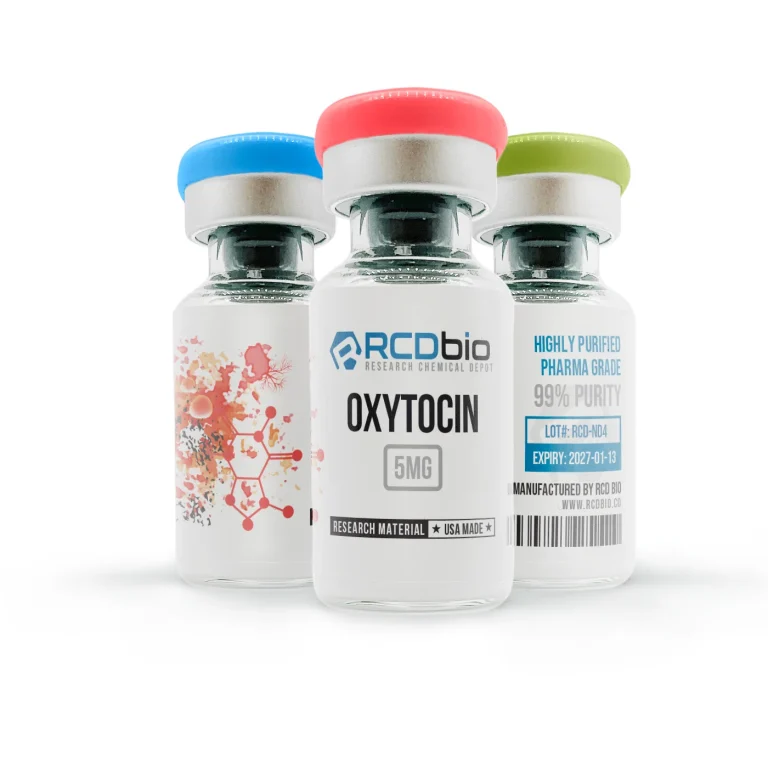
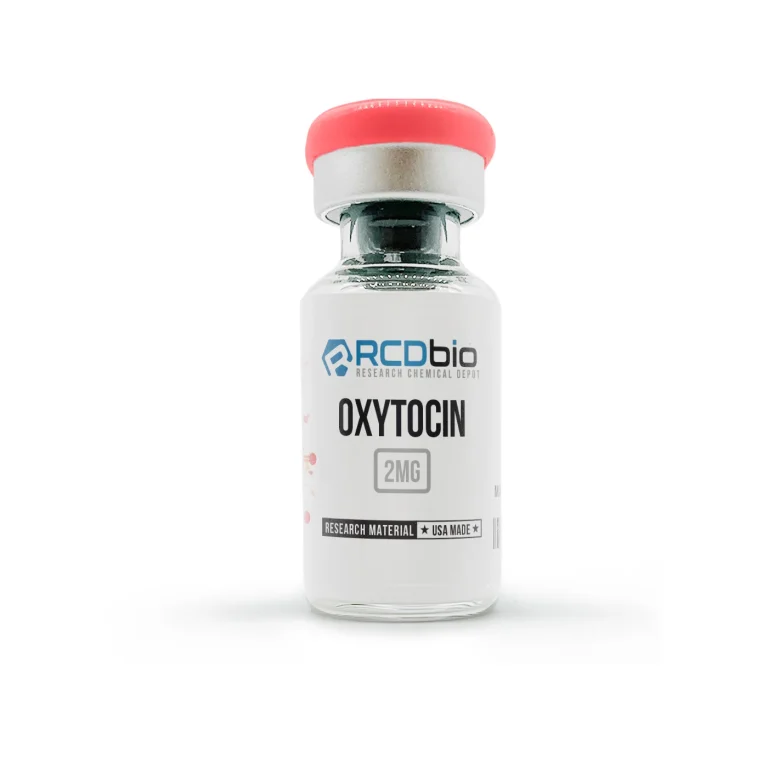
Synthetic oxytocin supplied by RCDbio is intended strictly for laboratory and research purposes. It is not approved by the Food and Drug Administration for use in this research-grade, non-pharmaceutical form. It is not a dietary supplement and is not intended for human consumption or therapeutic self-administration. All RCDbio research compounds are supplied strictly for laboratory and research purposes only.
Chemical Properties
| Property | Detail |
| Product Type | Synthetic Cyclic Nonapeptide |
| Product Name | Oxytocin Peptide |
| Application | Scientific / Research Use Only |
| CAS Number | 50-56-6 |
| Molar Mass | 1007.19 g/mol |
| Chemical Formula | C₄₃H₆₆N₁₂O₁₂S₂ |
| IUPAC Name | 1-({(4R,7S,10S,13S,16S,19R)-19-amino-7-(2-amino-2-oxoethyl)-10-(3-amino-3-oxopropyl)-16-(4-hydroxybenzyl)-13-[(1S)-1-methylpropyl]-6,9,12,15,18-pentaoxo-1,2-dithia-5,8,11,14,17-pentaazacycloicosan-4-yl}carbonyl)-L-prolyl-L-leucylglycinamide |
| Synonyms | OXT; α-Hypophamine; Pitocin (pharmaceutical); Syntocinon (pharmaceutical); α-Oxytocin |
| Physical Form | Lyophilized white to off-white powder |
| Solubility | Freely soluble in water; soluble in dilute acetic acid; the disulfide bridge is sensitive to reducing agents |
| Storage (Lyophilized) | −20°C; sealed container; protected from light, moisture, and reducing agents |
| Storage (Reconstituted) | 4°C; use within 24–48 hours; avoid repeated freeze-thaw cycles; discard if turbid or discoloured |
| PubChem CID | 439302 |
| Purity | ≥98% (HPLC verified, independent third-party laboratory analysis; COA available per batch) |
| WADA Status | Oxytocin is not explicitly prohibited by name on the 2026 WADA Prohibited List. However, as a non-approved research-grade peptide formulation, it falls within the scope of the S0 (Non-Approved Substances) category, which prohibits any unapproved substance with potential pharmacological activity. Researchers engaged in sport-adjacent studies should verify the current status at GlobalDRO.com before use. |
How Does Oxytocin Work?
Oxytocin mediates its effects through binding to the oxytocin receptor (OXTR), a seven-transmembrane G protein-coupled receptor (GPCR) capable of coupling to both Gαq and Gαi protein subunits. The receptor is expressed across multiple tissue types – including uterine myometrium, hypothalamic nuclei, amygdala, nucleus accumbens, and peripheral cardiac and renal tissues – enabling a diverse repertoire of downstream signalling outcomes depending on receptor localisation and cellular context [Jurek & Neumann, 2018].
Gαq-Mediated Phospholipase C / IP3 / Calcium Pathway
In uterine smooth muscle cell preparations, OXTR activation by oxytocin initiates Gαq-mediated signalling, resulting in phospholipase C (PLC) activation and subsequent generation of inositol trisphosphate (IP3) and diacylglycerol (DAG). IP3-mediated calcium release from intracellular stores and activation of protein kinase C (PKC) have been characterized in isolated myometrial cell systems as the primary mechanistic basis for uterine smooth muscle contractility [Gimpl & Fahrenholz, 2001]. Concurrent extracellular calcium influx via TRPV4 channel activation has been described in human myometrial smooth muscle cell preparations.
MAPK / ERK Signalling Pathway
In isolated neuronal and myometrial cell preparations, OXTR activation has been associated with activation of the mitogen-activated protein kinase (MAPK) cascade, including ERK1/2 and ERK5 phosphorylation. Data from phosphoproteomic studies in myometrial cells identified OXT-induced dephosphorylation of eukaryotic translation elongation factor eEF2, mediated via protein kinase C, suggesting a trophic signaling function distinct from contractile pathway activation [Rimoldi et al., 2003].
Amygdala and HPA Axis Modulation
In rodent preclinical models, oxytocin projections from the paraventricular nucleus of the hypothalamus (PVN) to the amygdala have been investigated for their involvement in stress-regulatory and fear-modulating circuitry. In vivo electrophysiology and optogenetic studies in rodents have observed that OXT-mediated OXTR activation in basolateral amygdala preparations is associated with modulation of neuronal excitability and GABAergic transmission, with implications for anxiety-related behavior in animal models [Huber et al., 2005].
Dopaminergic Reward Pathway Interactions
In vitro and preclinical rodent data have characterized interactions between oxytocin and the mesolimbic dopaminergic system, including receptor co-expression in ventral tegmental area (VTA) and nucleus accumbens preparations. OXTR-mediated modulation of dopamine release has been observed in isolated cell culture systems, implicating oxytocin in reward circuit research models.
Key Research Findings
In preclinical and in vitro research contexts, oxytocin has been associated with the following observations:
- Uterine contractility: OXTR-mediated PLC/IP3/calcium signaling observed in isolated human myometrial smooth muscle cell preparations; TRPV4 channel co-activation identified as a mechanistic component [Jurek & Neumann, 2018].
- Amygdala modulation: In rodent in vivo models, PVN-to-amygdala OXT projections are associated with altered neuronal excitability and GABAergic transmission under fear-conditioning paradigms.
- ERK/eEF2 pathway: OXT-induced dephosphorylation of eEF2 via PKC is characterized in myometrial cell preparations, suggesting a trophic signaling function [Rimoldi et al., 2003].
- Social behaviour circuitry: Optogenetic stimulation of hypothalamic OXT neurons in rodent models are observed to modulate social approach behavior in controlled experimental paradigms.
- GPCR pharmacology: OXTR exhibits ligand-biased signaling properties in isolated cell preparations, with differential coupling to Gαq vs. Gαi depending on receptor density and cellular context.
All findings listed above are derived from preclinical or in vitro data. No conclusions regarding human therapeutic efficacy can be drawn from these observations. These findings do not constitute evidence of safety or efficacy in any human condition or organism.
What are the Potential Research Applications of Oxytocin?
In controlled laboratory environments, oxytocin has been investigated for the following research applications. These are observed in preclinical and in vitro contexts only and do not constitute claims of efficacy or safety in any organism.
OXTR Pharmacology and GPCR Signalling Studies Synthetic oxytocin serves as the primary endogenous reference ligand in studies characterizing OXTR binding affinity, receptor activation kinetics, and G protein coupling selectivity. It is employed in radioligand displacement assays, BRET/FRET signaling experiments, and pathway-specific reporter cell systems to investigate Gαq vs. Gαi bias at the OXTR.
Uterine Contractility and Myometrial Research Oxytocin has been extensively employed in isolated myometrial tissue preparations and primary smooth muscle cell culture to characterize the mechanisms of uterine contractile response. Research applications include investigation of the OXTR-PLC-IP3-calcium cascade, PKC activation dynamics, and the role of TRPV4 co-activation in calcium influx under controlled in vitro conditions.
Neuroendocrine and HPA Axis Pathway Research. In rodent in vivo models, oxytocin is employed to probe hypothalamic-pituitary-adrenal (HPA) axis interactions, PVN projection circuitry, and corticotropin-releasing hormone (CRH) co-expression dynamics. Studies employing stereotaxic central infusion in rodent models investigate site-specific receptor-mediated effects on stress-responsive behavior under laboratory conditions.
Social Behaviour and Reward Circuitry Modelling Oxytocin is a principal research tool in preclinical models of social interaction, pair bonding, and maternal behavior. Rodent models – including prairie vole monogamy paradigms, rat maternal behavior protocols, and optogenetic PVN stimulation designs—employ oxytocin as both an endogenous reference and pharmacological probe to characterize social reward circuitry at the cellular level.
Structure-Activity Relationship (SAR) and Analogue Studies. As the reference compound for the oxytocin/vasopressin peptide family, synthetic oxytocin serves as the structural benchmark in SAR investigations examining receptor selectivity, metabolic stability, and signal bias among oxytocin analogues and non-peptide OXTR ligands.
What are the Potential Side Effects of Oxytocin?
Researchers in preclinical and in vitro settings have noted the following observations. Long-term safety and toxicity profiles of research-grade synthetic oxytocin remain incompletely characterized in laboratory contexts, and no human safety data pertaining to self-administered research-grade material has been established.
- Uterine hyperstimulation observed in rodent in vivo models at supraphysiological doses is an expected pharmacological consequence of OXTR activation in myometrial tissue
- Cardiovascular effects, including transient vasodilation and hypotension, were reported in preclinical studies at high systemic concentrations, mediated via vascular smooth muscle OXTR
- Antidiuretic effects noted in rodent models at high concentrations, consistent with structural and pharmacological similarity to vasopressin and partial V1a/V2 receptor cross-reactivity
- Behavioral alterations—including anxiolytic and anxiogenic effects depending on dose, region of administration, and sex – were observed across rodent preclinical models; findings are not uniform
- Rapid degradation by plasma oxytocinases noted in in vitro plasma stability assays; the disulfide bridge is susceptible to reducing agents and oxidative conditions in experimental systems
No human safety or tolerability data pertaining to research-grade oxytocin has been established. These observations are derived from experimental systems and should not be extrapolated to human or animal outcomes.
Risk & Handling
Handling Precautions
Oxytocin should only be handled by trained laboratory personnel familiar with peptide research compounds and neuroendocrine agents. Appropriate personal protective equipment is required: nitrile gloves, a laboratory coat, and eye protection at a minimum. When working with the lyophilized powder, use within a laminar flow cabinet or designated clean area to avoid inhalation of particulate matter. Avoid contact with reducing agents (e.g. DTT, β-mercaptoethanol) during handling, as these can cleave the disulfide bridge critical to the compound’s cyclic structure and in vitro activity. Avoid aerosol generation during reconstitution.
Exposure Risks
Risk Tier: MODERATE
Oxytocin is a potent endogenous nonapeptide with well-characterised pharmacological activity at OXTR in peripheral and central tissues. At research-relevant concentrations, it is not acutely toxic in preclinical systems; however, supraphysiological systemic exposure in rodent models has produced uterine hyperstimulation, cardiovascular effects, and antidiuretic responses. The compound has a plasma half-life of approximately 1–6 minutes in vivo (IV) due to rapid oxytocinase-mediated degradation; however, local tissue effects may persist beyond systemic clearance. Cross-reactivity with vasopressin V1a and V2 receptors at elevated concentrations introduces additional variables in experimental design. No human safety or tolerability data have been established for research-grade oxytocin. Researchers should exercise caution appropriate to handling a potent, biologically active peptide.
Storage
- Lyophilized form: Store at −20°C; sealed, light-protected container with desiccant
- Reconstituted form: Store at 4°C; use within 24–48 hours of reconstitution
- Do not subject to repeated freeze-thaw cycles; the disulfide bridge undergoes progressive oxidative degradation with each cycle
- Do not store in the presence of reducing agents; DTT, β-mercaptoethanol, or TCEP will disrupt the disulfide bond and inactivate the compound
- Discard any reconstituted solution that appears turbid, discoloured, or shows particulate matter
Frequently Asked Questions
Q: What is oxytocin, and what is it investigated for in research? A: Oxytocin is a synthetic cyclic nonapeptide and endogenous GPCR ligand investigated in preclinical and in vitro research contexts for its interactions with the oxytocin receptor (OXTR) across uterine contractility, neuroendocrine signaling, and social behavior circuitry models. Research-grade oxytocin is not approved by the FDA for self-administration and is intended strictly for laboratory and research purposes only.
Q: What is the half-life of oxytocin in preclinical models? A: The plasma half-life of oxytocin in intravenous rodent models is approximately 1–6 minutes, reflecting rapid degradation by plasma oxytocinases and leucyl/cystinyl aminopeptidase. In vitro stability in aqueous solution is considerably longer under low-temperature, reducing agent-free conditions. These figures are derived from laboratory and preclinical models and do not represent human pharmacokinetic data for research-grade material.
Q: How should oxytocin be stored to maintain stability? A: Lyophilized oxytocin should be stored at −20°C in a sealed, light-protected container with desiccant. Once reconstituted, solutions should be stored at 4°C and used within 24–48 hours. Repeated freeze-thaw cycles must be avoided as they progressively degrade the disulfide bridge. Oxytocin must not be stored with or near reducing agents such as DTT or β-mercaptoethanol, as these cleave the disulfide bond critical to the compound’s cyclic structure and bioactivity.
Q: What toxicity observations have been reported for oxytocin in preclinical studies? A: Preclinical rodent studies have reported uterine hyperstimulation, transient cardiovascular effects including vasodilation and heart rate changes, and antidiuretic effects at supraphysiological doses. These are consistent with expected OXTR pharmacology and partial vasopressin receptor cross-reactivity at elevated concentrations. No human safety or tolerability data have been established for research-grade oxytocin. Observations are model-specific and should not be extrapolated to any human outcome.
Q: What is oxytocin typically reconstituted with in laboratory research? A: Oxytocin is commonly reconstituted in sterile water or dilute (0.1–1%) acetic acid to produce working stock solutions. Phosphate-buffered saline (PBS) is also employed in cell-based assays. systems. Reconstitution must be carried out under aseptic conditions by trained personnel. Reducing agents must not be included in the reconstitution buffer or storage vehicle.
Q: Why does oxytocin require protection from reducing agents? A: Oxytocin contains a disulfide bridge between the cysteine residues at positions 1 and 6 of its cyclic ring structure. This bridge is essential for the compound’s three-dimensional conformation and OXTR binding activity. Reducing agents such as DTT, β-mercaptoethanol, or TCEP cleave disulfide bonds, linearizing the peptide and abolishing its receptor binding activity. This sensitivity must be accounted for in all experimental designs, particularly when oxytocin is used alongside cell culture media or buffers containing thiol-based reagents.
Q: How does research-grade oxytocin differ from pharmaceutical oxytocin? A: Pharmaceutical oxytocin (e.g. Pitocin, Syntocinon) is manufactured under GMP conditions with defined formulations, stability data, and clinical indications. Research-grade oxytocin from RCDbio is supplied as a lyophilized peptide for in vitro and preclinical laboratory use under controlled experimental conditions. Research-grade material is not formulated for, or approved for, any human use and should not be administered to humans under any circumstances.
Related Research Compounds
Researchers investigating oxytocin may also be interested in the following compounds currently available for laboratory research at RCDbio:
- Oxytocin Nasal Spray – A nasal spray formulation of oxytocin investigated in preclinical delivery-route comparison studies examining central vs. peripheral OXTR engagement under controlled laboratory conditions.
- Semax Peptide – An ACTH(4-10) analog investigated in preclinical CNS models; commonly employed alongside oxytocin in neuromodulatory and neuroprotective pathway research.
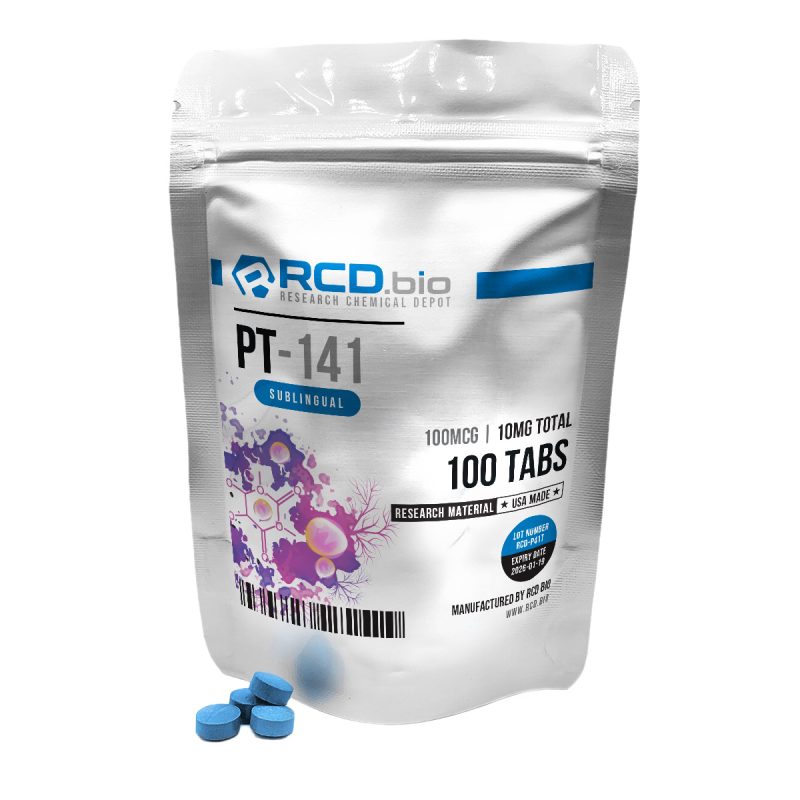
- PT-141 (Bremelanotide) – A melanocortin receptor agonist investigated in preclinical models involving hypothalamic neuroendocrine circuitry, relevant to comparative receptor pharmacology studies.
All products listed are for laboratory and research purposes only.
References
- Jurek, B., & Neumann, I. D. (2018). The Oxytocin Receptor: From Intracellular Signaling to Behavior. Physiological Reviews, 98(3), 1805–1908. https://pubmed.ncbi.nlm.nih.gov/29897293/
- Gimpl, G., & Fahrenholz, F. (2001). The Oxytocin Receptor System: Structure, Function, and Regulation. Physiological Reviews, 81(2), 629–683. https://pubmed.ncbi.nlm.nih.gov/11274341/
- Rimoldi, V., Reversi, A., Taverna, E., Rosa, P., Francolini, M., Cassoni, P., Parenti, M., & Chini, B. (2003). Oxytocin receptor elicits different EGFR/MAPK activation patterns depending on its localization in caveolin-1-enriched domains. Oncogene, 22(38), 6054–6060. https://pubmed.ncbi.nlm.nih.gov/12955081/
- Huber, D., Veinante, P., & Stoop, R. (2005). Vasopressin and oxytocin excite distinct neuronal populations in the central amygdala. Science, 308(5719), 245–248. https://pubmed.ncbi.nlm.nih.gov/15821089/
Disclaimer
Oxytocin Peptide is exclusively for laboratory research purposes. RCDbio products are not intended to diagnose, prevent, treat, or cure any disease or medical condition.
The Food and Drug Administration has not evaluated the statements on our website. This product is not approved for human or veterinary use. Researchers must comply with all applicable local, state, and federal laws and regulations governing the purchase and use of research compounds. By purchasing, you agree to our Terms and Conditions. RCDbio reserves the right to refuse sales to unauthorized individuals.
ATTENTION: All RCDbio products are strictly for LABORATORY AND RESEARCH PURPOSES ONLY. They are not intended for human consumption, veterinary use, or any other non-research application. For queries, complaints, or support, contact support@legacy.rcdbio.co
Reviews
There are no reviews yet