

Description
What is Thymalin?
Thymalin is a synthetic polypeptide complex corresponding to the endogenous thymic hormone thymulin (also designated Facteur Thymique Sérique, or FTS), first characterized in epithelial cell preparations of the thymus by Bach and colleagues in 1977. The compound is classified as a zinc-dependent nonapeptide, with the primary active sequence pGlu-Ala-Lys-Ser-Gln-Gly-Gly-Ser-Asn-OH (pyroGlu at position 1; free carboxyl terminus). Biological activity of the intact nonapeptide is contingent upon stoichiometric coordination with a zinc ion (Zn²⁺); the zinc-free apopeptide form is characterized as biologically inert in standard preclinical assay systems.
In research settings, thymalin has been widely employed as a biochemical tool for investigating intrathymic and extrathymic T-cell differentiation, immune regulatory signaling, and neuroendocrine-immune axis interactions. It has been investigated in isolated cell preparations and rodent preclinical models for its involvement in thymocyte maturation, T-cell subset modulation, and cytokine pathway regulation. Secondary active components of the polypeptide complex — including the dipeptide Glu-Trp (EW) and related short-sequence peptides — have been characterized in vitro for gene expression modulation and cell differentiation effects.
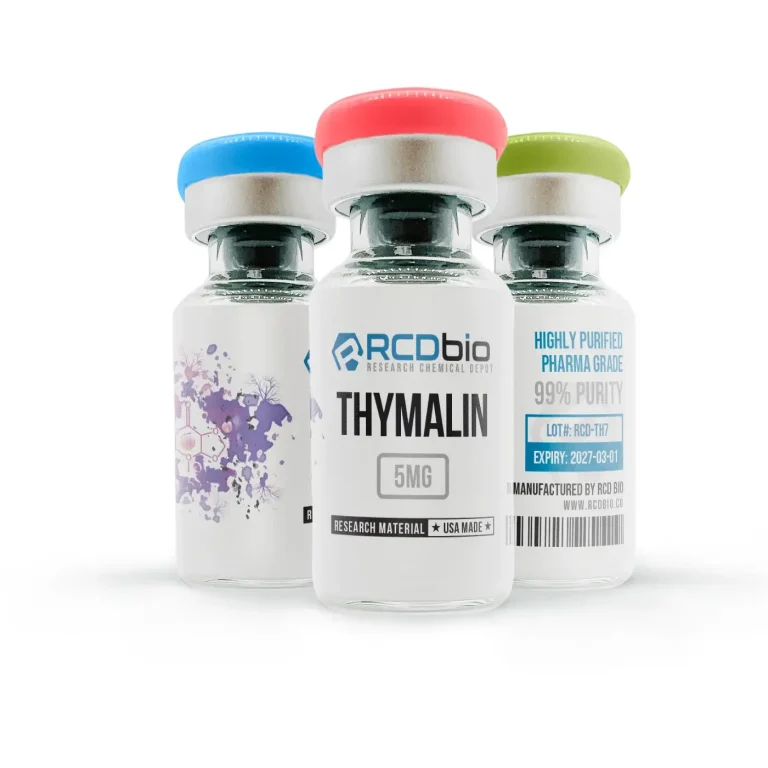
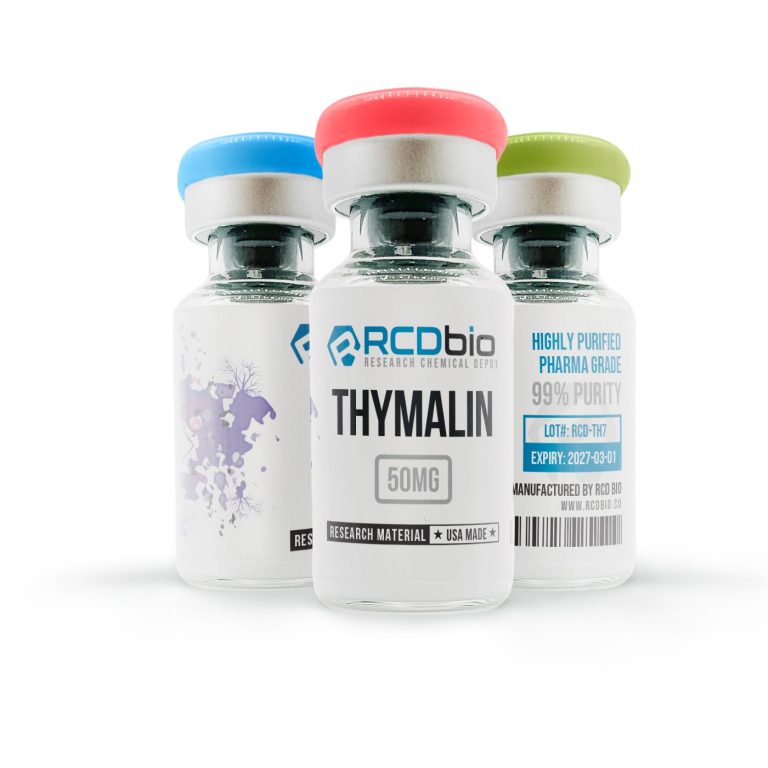
Synthetic thymalin supplied by RCDbio is intended strictly for laboratory and research purposes. It is not approved by the Food and Drug Administration for use in this research-grade, non-pharmaceutical form. It is not a dietary supplement and is not intended for human consumption or therapeutic self-administration.
Chemical Properties
| Property | Detail |
| Product Type | Synthetic Thymic Polypeptide Complex (Thymulin / Nonapeptide) |
| Product Name | Thymalin [Peptide] |
| Application | Scientific / Research Use Only |
| CAS Number | 63958-90-7 (free base); 63958-97-0 (TFA salt form — confirm batch COA for exact salt designation) |
| Molar Mass | 858.864 g/mol (free base, C₃₃H₅₄N₁₂O₁₅) |
| Chemical Formula | C₃₃H₅₄N₁₂O₁₅ (free base); add TFA salt adduct · C₂HF₃O₂ per residual TFA where applicable |
| Sequence | pGlu-Ala-Lys-Ser-Gln-Gly-Gly-Ser-Asn-OH (N-terminal pyroglutamate; free C-terminus asparagine) |
| IUPAC Name | (4S)-4-[[(2S)-2-[[(2S)-6-amino-2-[[(2S)-2-[[(4S)-5-oxopyrrolidine-4-carbonyl]amino]propanoyl]amino]hexanoyl]amino]-3-hydroxypropanoyl]amino]-5-[[(2S)-2-[[(2S)-2-[[2-[[2-[[(2S)-2-amino-2-[(1S)-1-carbamoyl-2-carbamoylethyl]acetyl]amino]acetyl]amino]acetyl]amino]-3-hydroxypropanoyl]amino]-4-carbamoylbutanoyl]amino]-5-oxopentanoic acid (full systematic IUPAC — verify directly from PubChem CID 3085284 for submission) |
| Synonyms | Thymulin; Serum Thymic Factor (STF); Facteur Thymique Sérique (FTS); Nonathymulin; Facteur Thymique (pharmaceutical designations) |
| Physical Form | Lyophilized white to off-white powder |
| Solubility | Soluble in sterile water or bacteriostatic water at ≥1 mg/mL; DMSO or 0.1% TFA may be employed for initial solubility testing. Biological activity is zinc-dependent — research reconstitution protocols requiring active metallopeptide should account for equimolar zinc coordination |
| Storage (Lyophilized) | Store at −20°C in a sealed, light-protected container with desiccant; avoid moisture and repeated temperature fluctuations |
| Storage (Reconstituted) | Store at 4°C; use within 48–72 hours of reconstitution; avoid repeated freeze-thaw cycling; discard any reconstituted solution showing turbidity, particulate matter, or discoloration |
| PubChem CID | 3085284 (thymulin free base; confirmed to resolve to correct compound) |
| Purity | ≥98% (HPLC verified, independent third-party laboratory analysis; COA available per batch) |
| WADA Status | Thymalin/thymulin is not listed by name on the current WADA Prohibited List. However, as a thymic peptide hormone with immunomodulatory and potential growth-factor-adjacent activity, it may fall under the S2 Peptide Hormones, Growth Factors, and Related Substances category depending on context and interpretation. Researchers engaged in sport-adjacent studies should verify the current status at GlobalDRO.com before use. |
How Does Thymalin Work?
Thymalin functions primarily as a zinc-dependent thymic metallopeptide that interacts with surface receptors on thymocytes and peripheral T-lymphocyte precursor populations. The biological activity of the intact nonapeptide is contingent upon Zn²⁺ coordination, which confers the appropriate three-dimensional conformation for receptor binding. The following mechanistic pathways have been characterized in preclinical and in vitro experimental systems.
T-Cell Differentiation and Thymocyte Maturation
In isolated cell preparations and rodent preclinical models, thymulin has been characterized as an inducer of T-cell differentiation across multiple developmental stages, acting on both intrathymic thymocyte populations and extrathymic T-cell precursors. Receptor-mediated signaling initiated by the thymulin-Zn²⁺ metallopeptide complex is associated with the upregulation of T-cell surface differentiation markers, including CD28, a co-stimulatory molecule relevant to T-lymphocyte activation competence. In human hematopoietic stem cell culture preparations, thymalin polypeptide exposure was characterized as suppressing CD44 and CD117 stem cell marker expression (by approximately 2–3-fold) while concurrently upregulating CD28 expression (by approximately 6.8-fold), consistent with differentiation toward mature T-lymphocyte phenotype. [Khavinson et al., 2020]
Cytokine Pathway Modulation
In rodent in vivo and in vitro cell culture models, thymulin has been investigated for its influence on pro-inflammatory cytokine signaling. Preclinical data indicate that thymulin-Zn²⁺ modulates cytokine output in T-cell and macrophage preparations, with observed effects on interleukin and interferon pathway activity. A related synthetic analogue of thymulin (PAT) has been characterized in rodent CNS models as possessing anti-inflammatory activity in astrocyte preparations, with observations suggesting suppression of pro-inflammatory mediator expression in glial cell systems. This mechanistic axis represents a distinct research focus from the primary immunomodulatory activity of the parent compound.
Neuroendocrine Axis Interactions
Thymulin production and secretion by thymic epithelial cells is regulated bidirectionally by the hypothalamo-pituitary axis. In rat anterior pituitary cell culture preparations, thymulin-Zn²⁺ at picomolar concentrations stimulated immunoreactive corticotrophin (ACTH) release, with maximal effects observed at 10 pM concentrations, consistent with a hypophysotropic signaling role. Circadian rhythm modulation of serum thymulin levels and positive correlations with physiological ACTH fluctuations have been characterized in rodent and primate preclinical models. These findings position thymulin as an investigational interface compound between the thymic immune system and neuroendocrine regulatory circuitry. [Goya et al., 1997; Reggiani et al., 2009]
Gene Expression Regulation via Short Peptide Components
The polypeptide complex thymalin contains short active peptides, including the dipeptide Glu-Trp (EW) and lysyl-glutamate (KE), which have been investigated in in vitro cell preparations for gene expression regulatory activity. In cell culture models, these short-sequence peptides have been characterized as binding to specific chromatin-associated DNA regions, with observed effects on gene expression and heat-shock protein synthesis. These epigenetic and transcriptional modulatory observations have been characterized at the cell and molecular level in isolated nuclear preparations and do not represent documented mechanisms in intact animal systems for the polypeptide complex as a whole.
Key Research Findings
- T-cell differentiation (in vitro): Thymalin exposure in human hematopoietic stem cell preparations was associated with a 6.8-fold increase in CD28 expression and 2–3-fold suppression of CD117 and CD44 markers, indicating directed differentiation toward mature T-lymphocyte phenotype. [Khavinson et al., 2020]
- Zinc-dependent receptor activity: Thymulin-Zn²⁺ metallopeptide was characterized as inducing T-cell subset differentiation and enhancing suppressor T-cell function in preclinical rodent and partially thymus-deficient animal models; zinc-free apopeptide was inactive in the same systems. [Bach & Dardenne, 1989]
- Neuroendocrine stimulation: Thymulin-Zn²⁺ at picomolar concentrations (10 pM) stimulated ACTH release from rat anterior pituitary cell preparations, characterizing the compound as a hypophysotropic peptide in isolated neuroendocrine cell systems. [Goya et al., 1997]
- Thymus-HPA axis interactions: In rodent preclinical models, thymulin production was characterized as upregulated by multiple neuroendocrine hormones, including prolactin, growth hormone, and thyroid hormones; thymulin in turn modulated hypothalamo-pituitary-adrenal axis signaling. [Savino & Dardenne, 1999]
- Anti-inflammatory observations (CNS model): A synthetic peptide analog of thymulin (PAT) demonstrated anti-inflammatory and analgesic properties in rodent CNS preclinical models; astrocytes were characterized as the primary cellular target in brain tissue preparations. [Reggiani et al., 2009]
All findings listed above are derived from preclinical or in vitro data. No conclusions regarding human therapeutic efficacy can be drawn from these observations. These findings do not constitute evidence of safety or efficacy in any human condition or organism.
What are the Potential Research Applications of Thymalin?
T-Cell Biology and Thymic Differentiation Studies
Synthetic thymalin serves as an investigational reference compound for characterizing the mechanistic basis of thymulin-receptor-mediated T-cell differentiation. It is employed in cell culture systems to study thymocyte maturation markers, T-cell surface antigen expression kinetics, and CD28-co-stimulatory pathway activation in preclinical immune cell preparations. Thymalin is also utilized in hematopoietic stem cell differentiation research to characterize factors influencing the commitment of progenitor cells to T-lymphocyte lineages.
Neuroendocrine-Immune Axis Research
Thymalin’s characterized interactions with the hypothalamo-pituitary axis make it a relevant tool compound for preclinical investigation of thymo-neuroendocrine communication pathways. It has been employed in rodent pituitary cell culture systems to study ACTH release modulation and in animal models investigating the bidirectional signaling relationship between thymic epithelial cell secretion and pituitary hormone levels. These applications are relevant to preclinical models of neuroendocrine-immune system co-regulation.
Immunosenescence and Aging Research
In preclinical models of thymic involution — a physiological age-associated reduction in thymic mass and hormonal output — synthetic thymalin has been investigated as a tool compound for characterizing the mechanistic basis of age-related immune decline. Preclinical models employing thymalin have examined hematopoietic recovery endpoints, T-cell subset composition, and cytokine profile modulation in aged animal models. These observations are confined to experimental model systems and do not constitute a basis for therapeutic claims.
Cytokine and Inflammatory Pathway Characterization
Thymalin and thymulin analogues have been employed in preclinical rodent models and in vitro cell preparations to investigate their effects on pro-inflammatory cytokine expression and inflammatory mediator output. Astrocyte and glial cell culture preparations have been utilized to characterize the anti-inflammatory signaling properties of thymulin-related peptides, with relevance to CNS-targeted inflammatory pathway research in preclinical systems.
These are observed in preclinical and in vitro contexts only and do not constitute claims of efficacy or safety in any organism.
What are the Potential Side Effects of Thymalin?
- Immunostimulatory overshoot observed in rodent in vivo models at high or repeated doses; described as a consequence of excessive T-cell activation rather than direct toxicity of the compound.
- Neuroendocrine perturbation observed in preclinical models: thymulin at supraphysiological concentrations in rodent pituitary preparations produced dose-dependent stimulation of ACTH release; the downstream consequences of this effect in intact animal models have not been fully characterized.
- No acute systemic toxicity characterized in standard rodent preclinical models at research-relevant dose ranges; thymulin is classified as a natural endogenous hormone-class peptide, and acute lethality data are not available for synthetic research-grade forms.
- Biological inactivity in the absence of zinc: preparation or reconstitution conditions that deplete available Zn²⁺ (e.g., chelating buffers) will result in an inactive apopeptide; this is a formulation consideration rather than a direct adverse effect but is relevant to experimental interpretation.
- Data on chronic toxicity, repeat-dose effects, and immunological sensitization in preclinical models remain limited and have not been systematically characterized for synthetic research-grade thymalin preparations.
No human safety or tolerability data pertaining to research-grade thymalin has been established. These observations are derived from experimental systems and should not be extrapolated to human or animal outcomes.
Risk & Handling
Handling Precautions
Thymalin should be handled exclusively by trained laboratory personnel in a designated research setting. Minimum personal protective equipment includes nitrile gloves, a laboratory coat, and eye protection. Reconstitution of lyophilized powder should be performed to avoid aerosol generation; use of a biosafety cabinet or enclosed reconstitution area is recommended when working with fine lyophilized powders. Researchers should avoid inhalation of dry peptide powder during transfer or weighing operations.
Zinc coordination is essential for biological activity; avoid combining thymalin in solution with chelating agents (e.g., EDTA, EGTA, DTPA) that will sequester available Zn²⁺ and inactivate the metallopeptide. Use low-binding polypropylene or borosilicate glass containers for all reconstituted preparations; avoid polystyrene, which exhibits non-specific peptide adsorption.
Exposure Risks
Risk Tier: LOW to MODERATE
Thymalin/thymulin is an endogenous-class thymic nonapeptide hormone. No acute systemic toxicity has been characterized in standard preclinical models at research-relevant concentrations. Pharmacologically, thymulin-Zn²⁺ is active at picomolar concentrations in isolated pituitary cell preparations; the significance of this sensitivity at research working concentrations in intact animal models has not been fully characterized. No human safety data has been established for research-grade thymalin. Researchers should exercise caution appropriate to handling a biologically active peptide with demonstrated immunomodulatory properties in preclinical systems.
Storage
- Lyophilized form: Store at −20°C in a sealed, light-protected container with desiccant; protect from moisture and atmospheric humidity
- Reconstituted form: Store at 4°C; use within 48–72 hours; do not subject to repeated freeze-thaw cycles
- Zinc coordination: Do not store in buffers containing chelating agents; for activity-dependent experiments, ensure zinc availability in the reconstitution medium
- Discard any reconstituted solution that appears turbid, discolored, or shows visible particulate matter
FAQs
Q: What is thymalin, and what is it investigated for in research? A: Thymalin is a synthetic polypeptide complex corresponding to the endogenous thymic hormone thymulin, a zinc-dependent nonapeptide produced by thymic epithelial cells. In preclinical and in vitro research settings, thymalin is investigated for its role in T-cell differentiation, thymocyte maturation, neuroendocrine-immune axis signaling, and cytokine pathway modulation. It is employed as a reference compound in studies examining the mechanistic basis of thymic immune regulation in isolated cell preparations and animal models.
Q: What is the role of zinc in thymalin’s activity in preclinical models? A: Thymulin the primary active nonapeptide in the thymalin complex requires stoichiometric coordination with the zinc ion (Zn²⁺) for receptor binding activity and biological function. The zinc-free form (apothymulin) is characterized as biologically inactive in standard preclinical assay systems. Zinc coordination confers the appropriate three-dimensional conformation necessary for receptor engagement on thymocyte and peripheral T-cell populations. Researchers reconstituting thymalin for activity-dependent experiments should account for zinc availability in the reconstitution medium and should avoid chelating buffers that deplete free Zn²⁺.
Q: What has been characterized regarding thymalin’s half-life in preclinical models? A: Thymulin in rodent in vivo models is subject to enzymatic degradation by plasma peptidases, resulting in a relatively short circulating half-life; precise half-life data for synthetic research-grade thymalin preparations in standardized in vivo rodent models have not been uniformly established in published preclinical literature. In vitro stability in aqueous reconstitution is influenced by storage temperature, pH, zinc content, and the presence of peptidase activity in the experimental medium. These figures are derived from preclinical model data and do not represent human pharmacokinetic information for research-grade material.
Q: How should research-grade thymalin be reconstituted in laboratory settings? A: In standard laboratory practice, lyophilized thymalin is reconstituted in sterile water or bacteriostatic water. A small volume of DMSO or 0.1% trifluoroacetic acid (TFA) may be employed to assist initial solubilization if aqueous reconstitution is incomplete. For experiments requiring biologically active zinc-metallopeptide, reconstitution medium should contain physiologically compatible zinc concentrations; chelating buffers (EDTA, EGTA) should be avoided, as they sequester Zn²⁺ and inactivate the compound. Reconstituted solutions should be stored in low-binding polypropylene or borosilicate glass vials at 4°C and used within 48–72 hours.
Q: What toxicity observations have been reported in preclinical studies of thymalin? A: In standard rodent preclinical models, thymulin/thymalin has not been characterized as acutely toxic at research-relevant dose ranges. As an endogenous-class thymic hormone, it is not associated with the acute cytotoxicity profiles observed with conventional small-molecule research compounds. At supraphysiological concentrations in isolated pituitary cell preparations, dose-dependent ACTH stimulation has been characterized; the systemic consequences of this effect in intact animal models at high doses are not fully defined. Chronic toxicity data and repeat-dose immunological safety profiling for synthetic research-grade thymalin remain limited in published preclinical literature.
Q: How does research-grade thymalin relate to the pharmaceutical thymulin preparations used in clinical and translational studies? A: Thymalin as originally developed refers to a polypeptide complex of thymic origin containing thymulin (the nonapeptide) along with shorter active dipeptide and tripeptide components, including Glu-Trp (EW, also known as Thymogen), Lys-Glu (KE), and Glu-Asp-Pro (EDP). Pharmaceutical-grade thymalin preparations were developed in the Russian research tradition under controlled manufacturing conditions. Research-grade synthetic thymalin from RCDbio is a laboratory-use compound that is not approved by the FDA in this form and is not equivalent to any approved pharmaceutical product. It is provided exclusively for preclinical and in vitro research and is not intended to replicate or substitute for pharmaceutical preparations.
Q: What is the significance of the pyroglutamate (pyroGlu) N-terminus in the thymulin sequence? A: The N-terminal pyroglutamate (pGlu, or 5-oxoproline) residue at position 1 of the thymulin nonapeptide is a cyclized form of glutamate that arises during synthesis or post-translational processing. This cyclized N-terminus confers resistance to aminopeptidase-mediated cleavage, providing greater in vitro stability relative to linear N-terminal sequences. The pGlu modification is integral to the standard thymulin sequence notation (pGlu-Ala-Lys-Ser-Gln-Gly-Gly-Ser-Asn-OH) and should be confirmed in batch-specific certificates of analysis to verify correct synthetic product identity.
Related Research Compounds
Epithalon Peptide A synthetic tetrapeptide (Ala-Glu-Asp-Gly) derived from the pineal gland peptide complex epithalamin; investigated in preclinical models for telomerase activation and aging-related gene expression changes and is commonly studied alongside thymalin in experimental immunogerontology and longevity peptide research.
Pinealon Peptide A tripeptide (Glu-Asp-Arg) of pineal gland origin investigated in preclinical rodent models for neuroprotective and neuroendocrine regulatory activity; relevant to comparative neuroendocrine-immune axis research where thymic and pineal peptide pathways are studied in parallel.
Livagen Peptide A synthetic tetrapeptide of liver origin investigated in preclinical models for chromatin-associated gene expression regulatory activity; shares mechanistic research relevance with thymalin in the context of short bioregulatory peptide and gene expression research.
All products listed are for laboratory and research purposes only.
References
- Bach JF, Dardenne M. (1989). Thymulin, a zinc-dependent hormone. Medical Oncology and Tumor Pharmacotherapy, 6(1):25–29. https://pubmed.ncbi.nlm.nih.gov/2657247/
- Goya RG, Brown OA, Pléau JM, Dardenne M. (1997). Thymulin and the neuroendocrine system. Peptides, 18(6):951–957. https://pubmed.ncbi.nlm.nih.gov/15003367/
- Reggiani PC, Morel GR, Cónsole GM, Barbeito CG, Rodriguez SS, Brown OA, Bellini MJ, Pléau JM, Dardenne M, Goya RG. (2009). The thymus-neuroendocrine axis: physiology, molecular biology, and therapeutic potential of the thymic peptide thymulin. Annals of the New York Academy of Sciences, 1153:98–106. https://pubmed.ncbi.nlm.nih.gov/19236333/
- Savino W, Dardenne M. (1999). Role of thymic peptides as transmitters between the neuroendocrine and immune systems. Annals of the New York Academy of Sciences, 885:127–140. https://pubmed.ncbi.nlm.nih.gov/10574153/
- Khavinson VKh, Linkova NS, Kvetnoy IM, Polyakova VO, Drobintseva AO, Kvetnaia TV, Ivko OM. (2020). Thymalin: Activation of differentiation of human hematopoietic stem cells. Bulletin of Experimental Biology and Medicine, 170(2):254–257. https://pubmed.ncbi.nlm.nih.gov/33237528/
Disclaimer
Thymalin is exclusively for laboratory research purposes. RCDbio products are not intended to diagnose, prevent, treat, or cure any disease or medical condition.
The Food and Drug Administration has not evaluated the statements on our website. This product is not approved for human or veterinary use. Researchers must comply with all applicable local, state, and federal laws and regulations governing the purchase and use of research compounds. By purchasing, you agree to our Terms and Conditions. RCDbio reserves the right to refuse sales to unauthorized individuals.
ATTENTION: All RCDbio products are strictly for LABORATORY AND RESEARCH PURPOSES ONLY. They are not intended for human consumption, veterinary use, or any other non-research application. For queries, complaints, or support, contact support@legacy.rcdbio.co
Reviews
There are no reviews yet