

Description
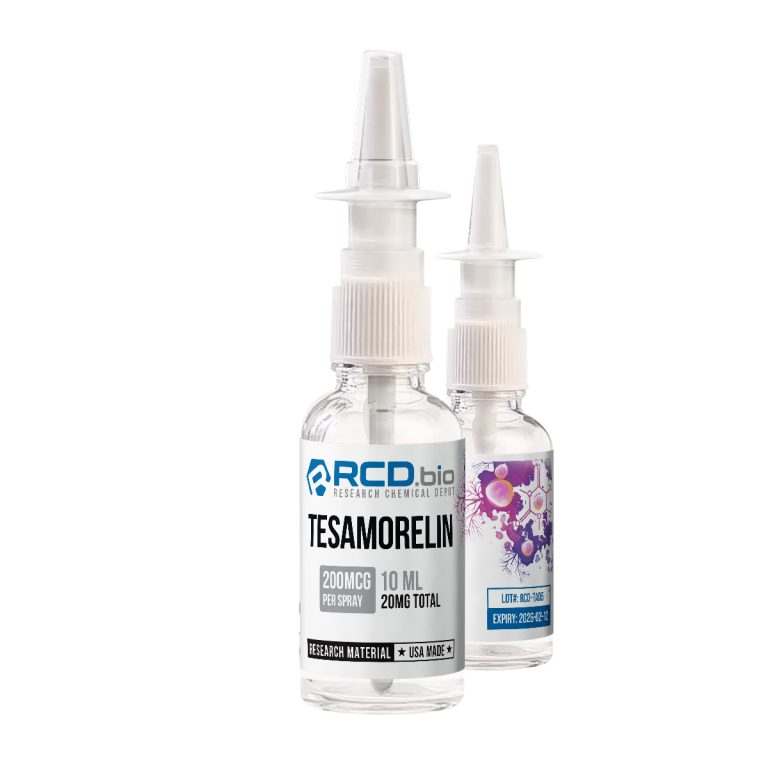
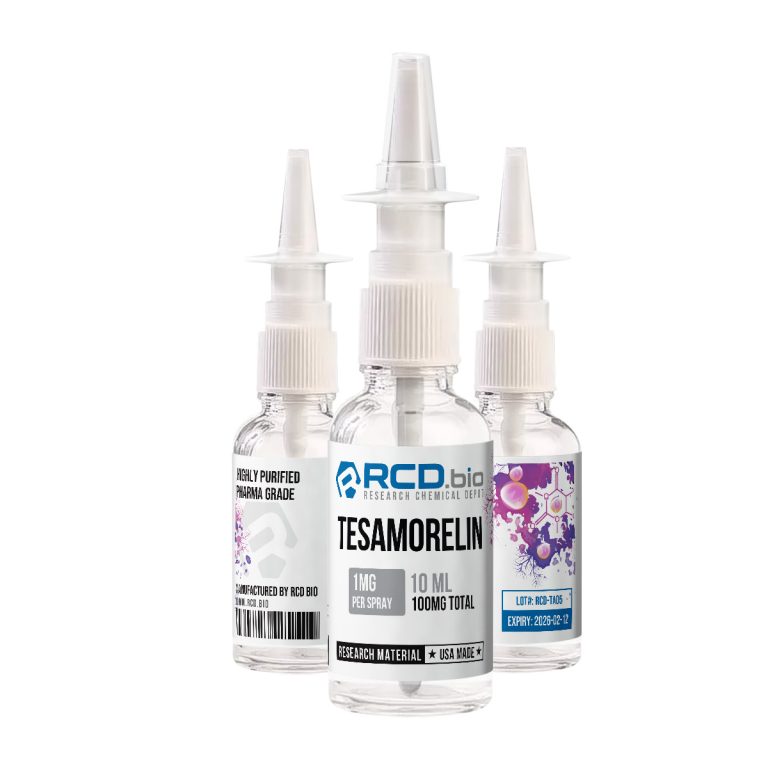
What is Tesamorelin Nasal Spray?
Tesamorelin (previously designated TH9507) is a synthetic 44-amino acid polypeptide analog of human growth hormone-releasing hormone (GHRH) developed by Theratechnologies Inc. (Montreal, Canada). Its structure is based on the full GHRH(1-44) sequence with a single N-terminal modification: a trans-3-hexenoyl (trans-hex-2-enoic acid) moiety covalently attached to the tyrosine residue at position 1. This modification was specifically designed to confer resistance to dipeptidyl peptidase IV (DPP-IV)-mediated proteolytic degradation, which rapidly inactivates native GHRH by cleaving the Tyr-Ala bond at positions 1-2. The modification markedly extends the in vivo half-life of tesamorelin relative to native GHRH(1-44) and native GHRH(1-29) (sermorelin) while preserving full GHRH receptor agonist activity. Tesamorelin stimulates pituitary somatotrophs via the GHRH receptor (GHRH-R) to release growth hormone (GH) in a pulsatile pattern, which in turn stimulates hepatic IGF-1 production.
Tesamorelin holds the distinction of being the only GHRH analog approved by the Food and Drug Administration for any human indication. The FDA has approved three successive tesamorelin formulations for the reduction of excess abdominal fat in HIV-infected adults with lipodystrophy: Egrifta (original 1 mg vial formulation), approved in November 2010; Egrifta SV (2 mg single-vial reformulation), approved in May 2019; and Egrifta WR (11.6 mg weekly-reconstitution format), approved in March 2025. All three approved formulations are administered exclusively via subcutaneous injection. The intranasal route of administration is not an FDA-approved route for tesamorelin. The research-grade nasal spray formulation supplied by RCDbio is not a pharmaceutical product and is not equivalent to any approved Egrifta, Egrifta SV, or Egrifta WR formulation. The approved indication for all three formulations is exclusively the reduction of excess abdominal fat in HIV-infected adults with lipodystrophy — not general weight loss, visceral fat reduction in non-HIV populations, or any other indication.
The compound has been studied in two Phase 3 randomized, double-blind, placebo-controlled clinical trials (LIPO-010 and CTR-1011) enrolling a pooled 806 HIV-infected adults on antiretroviral therapy with excess abdominal fat, producing a mean 15.4% reduction in visceral adipose tissue (VAT) by CT scan at 26 weeks with concurrent improvements in triglycerides and cholesterol-to-HDL ratio [Falutz et al., 2010; PMID 20554713]. A separate randomized controlled trial in HIV-infected patients with non-alcoholic fatty liver disease (NAFLD) demonstrated a 37% relative reduction in hepatic fat fraction at 12 months versus placebo [Stanley et al., 2019; PMID 31611038]. These are human clinical data from the approved subcutaneous injection route for the FDA-approved indication and do not constitute evidence for the intranasal research-grade formulation or for any non-HIV population.
The nasal spray formulation is investigated as a delivery route in preclinical research contexts, based on evidence of olfactory bulb-mediated CNS transport for peptide compounds administered intranasally in rodent models. Intranasal delivery has been studied for its potential to bypass hepatic first-pass metabolism and enhance CNS bioavailability relative to systemic routes in preclinical pharmacokinetic models. The nasal mucosa’s proximity to the central nervous system via the olfactory nerve makes it a research-relevant delivery route for CNS-active research compounds.
DISCLAIMER: Tesamorelin Nasal Spray as supplied by RCDbio is not a dietary supplement and has not been approved by the Food and Drug Administration for human use, veterinary use, consumption, or any therapeutic application via the intranasal route. This product is not intended for human consumption or therapeutic self-administration. It is supplied exclusively for in vitro and preclinical laboratory research purposes. All RCDbio research compounds are for laboratory and research purposes only.
Chemical Properties of Tesamorelin
| Property | Details |
| Product Type | Synthetic GHRH(1-44) Analog / DPP-IV-Resistant Growth Hormone-Releasing Factor / GHRH Receptor Agonist |
| Product Name | Tesamorelin Nasal Spray |
| Application | Scientific / Research Use Only |
| CAS Number | 218949-48-5 (tesamorelin free base) |
| Molar Mass | 5135.86 g/mol |
| Chemical Formula | C221H366N72O67S |
| IUPAC Name | Canonical IUPAC name for the full 44 AA N-terminally modified peptide; defined by the GHRH(1-44) sequence with trans-3-hexenoyl modification at Tyr position 1 |
| Synonyms | Tesamorelin; TH9507; (Hex)hGRF(1-44)-OH; trans-3-hexenoic acid-modified GHRH(1-44); Egrifta (brand name – FDA-approved SC injection, HIV lipodystrophy only, November 2010); Egrifta SV (brand name – FDA-approved May 2019 reformulation, SC only); Egrifta WR (brand name – FDA-approved March 25, 2025, SC only; 11.6 mg/vial reconstituted weekly; daily SC injection of 1.28 mg required). Research-grade nasal spray is not equivalent to any Egrifta formulation. |
| Physical Form | Lyophilized white to off-white powder (compound); supplied as aqueous nasal spray solution |
| Solubility | Soluble in sterile water and 0.9% saline; solubility at research concentrations per product COA |
| Storage (Lyophilized) | -20°C, desiccated, protected from light |
| Storage (Reconstituted / Nasal Spray) | 2-8°C; use within 28 days of first actuation; DO NOT FREEZE; protect from light; keep upright |
| PubChem CID | 16137828 |
| Purity | >=98% (HPLC verified, independent third-party laboratory analysis; COA available per batch) |
| WADA Status | PROHIBITED — 2026 WADA Prohibited List, Class S2 (Peptide Hormones, Growth Factors, Related Substances and Mimetics). Tesamorelin is explicitly named under S2.2.4 (Growth Hormone Releasing Factors – GHRH and its analogues) of the 2026 WADA Prohibited List, prohibited at all times both in and out of competition for all WADA Code signatories. FDA approval for HIV lipodystrophy does not confer an exemption from WADA prohibition; athletes should not assume approved status provides doping protection. No Therapeutic Use Exemption is automatically available. RCDbio products are for laboratory research purposes only. |
How Does Tesamorelin Work?
Tesamorelin acts as a potent agonist at the pituitary GHRH receptor (GHRH-R), a Gs-protein-coupled receptor expressed on somatotroph cells of the anterior pituitary gland. GHRH-R activation increases intracellular cAMP via adenylyl cyclase, activating protein kinase A (PKA) and ultimately stimulating GH synthesis and secretion in a pulsatile pattern. The secreted GH acts on hepatocytes and peripheral tissues to stimulate IGF-1 production, which mediates the majority of GH-dependent metabolic effects, including lipolysis in visceral adipose tissue, preferential mobilization of stored triglycerides in metabolically active visceral fat depots, and anabolic effects on lean tissue. The following mechanistic observations are from published clinical and preclinical data unless otherwise specified; all relate to the approved subcutaneous injection route.
DPP-IV Resistance and GHRH Receptor Agonism
Native GHRH(1-44) is rapidly inactivated by dipeptidyl peptidase IV (DPP-IV), which cleaves the Tyr(1)-Ala(2) bond to generate the inactive fragment GHRH(3-44). Sermorelin, the GHRH(1-29) fragment, is also susceptible to this cleavage. The trans-3-hexenoyl modification at position 1 in tesamorelin sterically blocks DPP-IV access to the N-terminal cleavage site, dramatically reducing proteolytic inactivation and extending the effective half-life relative to native GHRH and sermorelin. Tesamorelin retains full GHRH receptor agonist activity, binding GHRH-R with pharmacologically equivalent affinity to the unmodified GHRH sequence while demonstrating substantially improved in vivo stability.
GH/IGF-1 Axis Stimulation and Pulsatile GH Release Preservation
Unlike pharmacological growth hormone (somatropin/rhGH), tesamorelin acts upstream at the GHRH receptor, stimulating the pituitary’s own somatotrophs to release GH in a physiologically preserved pulsatile pattern rather than as a continuous supraphysiological bolus. This pulsatility maintains a more physiological GH secretion profile and preserves feedback suppression mechanisms. In the Phase 3 pooled analysis (n=806 HIV-infected adults), tesamorelin 2 mg SC daily resulted in a mean IGF-1 elevation of +108 ng/mL versus -7 ng/mL in the placebo group at 26 weeks [Falutz et al., 2010; PMID 20554713].
Visceral Adipose Tissue Reduction and Metabolic Modulation
GH stimulated by tesamorelin activates hormone-sensitive lipase in visceral adipocytes via IGF-1-mediated pathways, preferentially mobilizing stored triglycerides in metabolically active visceral fat depots while largely sparing subcutaneous adipose tissue. In the Phase 3 pooled analysis (806 participants), tesamorelin produced a mean VAT reduction of -24 cm2 (-15.4% treatment effect) versus +2 cm2 in placebo at 26 weeks by CT scan. Subcutaneous abdominal adipose tissue was largely unchanged (-0.6% treatment effect). Concurrent improvements included significant reductions in triglycerides (-12.3% treatment effect) and cholesterol-to-HDL ratio (-7.2% treatment effect) [Falutz et al., 2010; PMID 20554713]. These are human clinical data from the SC approved route in HIV-infected patients; they characterize the mechanism and do not constitute evidence for the intranasal research-grade formulation or non-HIV populations.
Hepatic Fat Reduction — GHRH/GH/IGF-1 Axis in NAFLD Model
In a randomized, double-blind, multicenter clinical trial (n=61 HIV-infected patients with NAFLD; NCT02196831), tesamorelin 2 mg SC daily for 12 months produced a greater reduction in hepatic fat fraction versus placebo: absolute effect size -4.1% (95% CI -7.6 to -0.7, p=0.018), corresponding to a relative reduction of -37% from baseline. After 12 months, 35% of individuals receiving tesamorelin achieved a hepatic fat fraction below 5% versus 4% in the placebo group (p=0.0069) [Stanley et al., 2019; PMID 31611038]. This human RCT data relates to the SC approved route in HIV-infected patients with NAFLD and does not constitute evidence for the intranasal research-grade formulation.
Intranasal Delivery & Pharmacokinetics
Olfactory Bulb-Mediated CNS Transport
When administered intranasally in preclinical rodent model systems, peptide compounds can access the central nervous system through the olfactory nerve (cranial nerve I) pathway. Compounds deposited on the olfactory mucosa are transported along olfactory axons through the cribriform plate to the olfactory bulb, from which access to deeper CNS structures, including the hypothalamus and pituitary, has been characterized in rodent preparations. The olfactory and trigeminal nerve pathways for nose-to-brain peptide transport have been investigated in preclinical studies of peptide and protein delivery [Wong et al., 2024; PMID 38441832]. The hypothalamic localization of GHRH neurons and the pituitary localization of GHRH-R-expressing somatotrophs make nose-to-brain transport a research-relevant delivery route for tesamorelin in preclinical GH axis pharmacology. No compound-specific intranasal CNS delivery data for tesamorelin has been published.
DPP-IV Resistance — Relevance to Intranasal Stability
A key structural advantage of tesamorelin for intranasal research is the trans-3-hexenoyl modification at position 1, which confers resistance to DPP-IV-mediated cleavage. The nasal mucosa expresses DPP-IV, which rapidly inactivates unmodified GHRH analogs such as sermorelin. The tesamorelin modification reduces this susceptibility, making it structurally better suited to nasal mucosal stability than sermorelin or native GHRH. This is a structural-chemical observation and does not constitute evidence of intranasal bioavailability or CNS delivery in any organism.
Nasal Mucosal Absorption
Tesamorelin has a molar mass of 5135.86 g/mol (~5.14 kDa). At this molecular weight, nasal mucosal absorption is substantially more challenging than for smaller peptides in the RCDbio range. Peptides above 3-5 kDa generally require transcytosis or endocytic uptake at the nasal mucosa, and paracellular transport is disfavored. Absorption enhancers, mucoadhesive carriers, or nanoparticle formulations are typically used for peptides in this size range to achieve clinically relevant intranasal bioavailability. The research-grade formulation does not include such enhancers. Specific nasal mucosal permeability data for tesamorelin has not been published.
Compound-Specific Pharmacokinetics
Published tesamorelin pharmacokinetic data relate exclusively to subcutaneous injection. Following SC injection of 2 mg, plasma bioavailability is <=4%, with an elimination half-life of 26-38 minutes via proteolysis and renal excretion. No formal intranasal pharmacokinetic data for tesamorelin has been published as of June 2026. The molecular weight (~5.14 kDa) and the absence of absorption enhancers in the research-grade formulation suggest intranasal bioavailability would be substantially lower than the <=4% SC bioavailability. Researchers should account for the absence of intranasal-specific pharmacokinetic data when designing laboratory protocols.
Key Research Findings
Pooled Phase 3 Analysis — Tesamorelin 2 mg SC Daily vs. Placebo in 806 HIV-Infected Adults with Excess Abdominal Fat (LIPO-010 and CTR-1011 Trials; Human Clinical Data, Approved SC Route): At 26 weeks, tesamorelin produced a mean VAT reduction of -24 cm2 (-15.4% treatment effect) versus +2 cm2 for placebo (p<0.001); subcutaneous adipose tissue largely unaffected (-0.6% treatment effect); triglycerides improved (-12.3% treatment effect); cholesterol-to-HDL ratio improved (-7.2% treatment effect); mean IGF-1 elevated +108 ng/mL versus -7 ng/mL; VAT reductions maintained at 52 weeks in the continued-treatment group [Falutz et al., 2010; PMID 20554713]
VAT Reduction Associated with Improved Metabolic Profile in Phase 3 Responder Analysis (Human Clinical Data, Approved SC Route): Among Phase 3 tesamorelin responders (>=8% VAT reduction), greater reductions in triglycerides, improved adiponectin levels, and preservation of glucose homeostasis were observed at 26 and 52 weeks versus nonresponders; VAT reduction was directly associated with percentage improvements in lipid parameters and glucose homeostasis markers [Stanley, Falutz et al., 2012; PMID 22495074]
Tesamorelin vs. Placebo in HIV-Infected Patients with NAFLD — Hepatic Fat Fraction Reduction (Human RCT, Approved SC Route): In 61 HIV-infected patients with NAFLD, tesamorelin 2 mg SC daily for 12 months produced an absolute hepatic fat fraction reduction of -4.1% (p=0.018) and a relative reduction of -37% from baseline versus placebo; 35% of the tesamorelin group achieved hepatic fat fraction below 5% versus 4% of placebo group (p=0.0069) [Stanley et al., 2019; PMID 31611038]
All findings listed above are from published human clinical trials using subcutaneous injection of FDA-approved tesamorelin formulations in HIV-infected adults. These findings represent the strongest clinical evidence base of any compound in the RCDbio nasal spray research range. However, these data do not constitute evidence for the intranasal research-grade formulation, for non-HIV populations, or for any indication other than the FDA-approved HIV lipodystrophy indication. The research-grade nasal spray is not equivalent to Egrifta, Egrifta SV, or Egrifta WR.
What are the Potential Research Applications?
In controlled laboratory environments, tesamorelin nasal spray has been investigated for the following research applications. These are observed in preclinical and in vitro contexts only and do not constitute claims of efficacy or safety in any organism. The robust clinical evidence base available for tesamorelin SC injection supports its use as a reference GHRH analog in preclinical research, but does not extend to the intranasal research-grade formulation.
GHRH Receptor Pharmacology and Somatotroph Biology Research
Tesamorelin is the only GHRH analog with both FDA approval and large Phase 3 human clinical evidence, making it a reference compound for GHRH-R pharmacology. Research applications include comparative GHRH-R binding studies between tesamorelin and other GHRH analogs (sermorelin, CJC-1295), somatotroph cell preparation GH secretion assays, DPP-IV resistance characterization, and adenylyl cyclase/cAMP pathway activation studies in pituitary somatotroph preparations.
GH/IGF-1 Axis and Visceral Adipose Biology Research
Tesamorelin’s selective visceral adipose tissue activity in human clinical preparations supports investigation of the GH/IGF-1 axis in visceral adipose biology research. Research applications include hormone-sensitive lipase activation assays in visceral adipocyte preparations, IGF-1 signaling pathway characterization, GH-dependent lipolysis studies in matched visceral versus subcutaneous adipocyte preparations, and adipokine regulation studies in GH-axis research model systems.
Intranasal GHRH Analog Delivery and DPP-IV Stability Research
Tesamorelin’s trans-3-hexenoyl DPP-IV-resistant modification provides a structurally unique research tool for investigating the impact of N-terminal modification on nasal mucosal stability versus unmodified GHRH analogs. Research applications include comparative nasal mucosal enzymatic stability studies between tesamorelin, sermorelin, and CJC-1295, and nose-to-brain transport characterization for DPP-IV-resistant GHRH analogs in rodent olfactory model preparations.
Lipid Metabolism and Hepatic Fat Biology Research
The hepatic fat fraction reduction data from the tesamorelin NAFLD RCT support its use as a reference GH/IGF-1 axis tool in preclinical hepatic lipid metabolism research. Research applications include hepatocyte fatty acid oxidation and triglyceride metabolism assays using GH/IGF-1 pathway stimulation, and investigation of GHRH-R axis in non-alcoholic fatty liver disease model systems.
What are the Potential Side Effects?
Researchers in preclinical and in vitro settings have noted the following observations. Long-term safety and tolerability profiles for the research-grade nasal spray formulation have not been established. Safety information from the approved injectable Egrifta formulations is provided as class-level and clinical context; it relates to the SC approved route only and does not extend to the intranasal research-grade formulation.
- GH/IGF-1 axis activation — documented in approved SC clinical data: Common adverse reactions in approved SC clinical use include arthralgia, peripheral edema, myalgia, and paresthesia consistent with GH/IGF-1 elevation; inadvertent intranasal self-exposure carries a theoretical risk of GH/IGF-1 axis activation effects at sufficient absorption concentrations
- Glucose metabolism effects — documented in approved SC clinical data: Tesamorelin may induce or worsen glucose intolerance and diabetes mellitus via GH-mediated insulin resistance; inadvertent intranasal self-exposure at sufficient concentrations carries a risk of transient insulin resistance effects
- Elevated IGF-1 — documented in clinical data: Tesamorelin significantly elevates IGF-1 (mean +108 ng/mL at 26 weeks SC); inadvertent intranasal self-exposure carries a risk of IGF-1 elevation with associated downstream effects on cellular proliferation and metabolism
- Absence of intranasal-specific safety data: No safety or tolerability data specific to the intranasal route of administration for tesamorelin has been published in the peer-reviewed literature as of June 2026
No human safety or tolerability data has been established for tesamorelin nasal spray via the intranasal route. The observations from approved SC formulations should not be directly extrapolated to intranasal route outcomes. These observations are derived from the approved SC clinical context and should not be extrapolated to intranasal route outcomes.
Risk & Handling
Handling Precautions
Standard laboratory PPE is required: nitrile gloves, a laboratory coat, and eye protection. The following nasal spray-specific precautions apply:
- Do not direct the nasal spray actuator toward the face, eyes, or mucous membranes during handling, testing, or transfer. Tesamorelin is a potent GHRH receptor agonist with documented GH/IGF-1 axis activation effects in approved clinical use; inadvertent intranasal self-exposure carries a risk of GH/IGF-1 axis modulation and associated glucose metabolism effects.
- Handle the nasal spray solution in a clean laboratory environment. For aliquoting or analytical sampling, use a laminar flow cabinet.
- The nasal spray solution is an aqueous formulation susceptible to microbial contamination if compromised. Handle under aseptic conditions. Discard if the solution appears cloudy, discolored, or shows particulate matter.
- Avoid aerosol generation during any manipulation of the nasal spray solution.
Exposure Risks
Risk Tier: MODERATE
Tesamorelin has the most robust human clinical safety dataset of any compound in the RCDbio nasal spray range, given its FDA-approved status and Phase 3 clinical trial evidence. However, this safety data applies exclusively to the approved subcutaneous injection route in HIV-infected adults. The GH/IGF-1 axis activation, glucose metabolism effects, and IGF-1 elevation documented in approved clinical use represent documented pharmacological risks that would apply via any route achieving sufficient systemic absorption. The WADA-prohibited status reflects the performance-relevant nature of GH/IGF-1 axis activation. No human safety or tolerability data has been established for tesamorelin nasal spray via the intranasal route.
Storage
In-use nasal spray: Store at 2-8°C. Use within 28 days of first actuation. Protect from light. Keep upright.
DO NOT FREEZE the ready-to-use nasal spray formulation. Freezing alters pH, buffer stability, excipient integrity, and spray actuation properties.
Lyophilized bulk stock (if applicable): Store at -20°C in sealed, desiccated, light-protected containers. Avoid repeated freeze-thaw cycles.
Discard any solution that appears cloudy, discolored, or shows visible particulate matter.
FAQs
Q: How does intranasal tesamorelin access GHRH receptor targets in preclinical research models?
A: Tesamorelin’s GHRH receptor targets are located in the anterior pituitary and on hypothalamic somatotroph feedback pathways. The intranasal route bypasses hepatic first-pass metabolism and provides access to both targets via systemic absorption and olfactory/trigeminal nerve-mediated nose-to-brain transport [Wong et al., 2024; PMID 38441832]. The trans-3-hexenoyl DPP-IV-resistant modification may support improved nasal mucosal stability relative to sermorelin and unmodified GHRH. At ~5.14 kDa, nasal absorption is more challenging than for smaller peptides in this range. No compound-specific intranasal pharmacokinetic data exist for tesamorelin. No human intranasal delivery data has been established.
Q: What is the recommended storage and in-use shelf life for tesamorelin nasal spray?
A: Sealed product should be stored at 2-8°C, protected from light. Once first actuated, in-use shelf life is 28 days at 2-8°C. DO NOT FREEZE the ready-to-use solution. Lyophilized bulk stock should be stored at -20°C in sealed, desiccated, light-protected conditions. Discard if the solution shows cloudiness, discoloration, or particulate matter.
Q: Is the tesamorelin nasal spray formulation suitable for cell culture or in vitro assay systems?
A: The formulation is prepared in isotonic saline (0.9% NaCl, pH 5.0-7.0) without preservatives. Dilution into culture medium before application is recommended to normalize pH and osmolarity. Tesamorelin is a potent GHRH-R agonist; researchers should account for GH/IGF-1 axis activation activity in GHRH-R-expressing somatotroph cell preparations. Researchers are responsible for confirming compatibility with their assay system.
Q: How does tesamorelin differ from sermorelin and CJC-1295 in the context of the RCDbio GHRH nasal spray range?
A: All three are GHRH-R agonists acting via the adenylyl cyclase/cAMP pathway. Sermorelin is GHRH(1-29) with no modification and the shortest half-life (~10-12 minutes); susceptible to DPP-IV cleavage. CJC-1295 is a modified GHRH(1-29) with multiple amino acid substitutions and in the DAC form, albumin-binding technology for extended half-life. Tesamorelin is the full GHRH(1-44) sequence with a trans-3-hexenoyl N-terminal modification; it preserves the full receptor-binding sequence while adding DPP-IV resistance without albumin binding. Tesamorelin is the only GHRH analog with FDA approval and Phase 3 clinical evidence (Falutz et al., 2010; PMID 20554713), providing the most robust clinical reference data in the range.
Q: What is the WADA status of tesamorelin?
A: Tesamorelin is explicitly named under S2.2.4 (Growth Hormone Releasing Factors – GHRH and its analogues) of the 2026 WADA Prohibited List. This prohibition applies both in and out of competition. FDA approval for HIV lipodystrophy does not confer exemption from WADA prohibition; athletes must not assume approved drug status provides doping protection. RCDbio products are supplied for laboratory research purposes only.
Q: What is the FDA regulatory status of tesamorelin?
A: Tesamorelin is FDA-approved under three formulations: Egrifta (1 mg vial, November 2010), Egrifta SV (2 mg vial, May 2019), and Egrifta WR (11.6 mg weekly-reconstitution, March 2025) — all for the reduction of excess abdominal fat in HIV-infected adults with lipodystrophy via subcutaneous injection only. The nasal spray route is not an approved route for tesamorelin. The research-grade nasal spray supplied by RCDbio is not a pharmaceutical product, is not equivalent to any Egrifta formulation, and is supplied exclusively for laboratory research purposes.
Q: How does Tesamorelin’s clinical evidence base compare to other compounds in the RCDbio nasal spray range?
A: Tesamorelin has the strongest clinical evidence base of any compound in the RCDbio nasal spray range: two Phase 3 RCTs with 806 pooled participants (Falutz et al., 2010; PMID 20554713) and an independent NAFLD RCT (Stanley et al., 2019; PMID 31611038). All data applies exclusively to approved SC injection in HIV-infected adults and does not extend to the intranasal research-grade formulation or non-HIV populations. No other compound in the RCDbio nasal spray range has completed large Phase 3 human RCTs.
Related Research Compounds
Researchers investigating tesamorelin nasal spray may also be interested in the following compounds currently available for laboratory research at RCDbio:
Sermorelin Nasal Spray — The native GRF(1-29) GHRH-R agonist for comparison of the shorter GHRH(1-29) fragment versus tesamorelin’s full GHRH(1-44) sequence in matched somatotroph preparations; the absence of DPP-IV-resistant modification enables comparative nasal mucosal stability studies.
CJC-1295 With DAC Nasal Spray— A modified GHRH(1-29) analog with albumin-binding DAC technology for extended half-life; comparison with tesamorelin’s trans-3-hexenoyl stabilization strategy in matched GHRH-R assay preparations is a research-relevant application.
GHRP-2 Nasal Spray — A GHS-R1a agonist acting through the complementary and synergistic ghrelin receptor pathway for combined GHRH-R + GHS-R1a dual-axis GH secretion research in somatotroph preparations.
All products listed are for laboratory and research purposes only.
References
- Falutz, J., Mamputu, J.C., Potvin, D., Moyle, G., Soulban, G., Loughrey, H., Marsolais, C., Turner, R., & Grinspoon, S. (2010). Effects of tesamorelin (TH9507), a growth hormone-releasing factor analog, in human immunodeficiency virus-infected patients with excess abdominal fat: a pooled analysis of two multicenter, double-blind placebo-controlled phase 3 trials with safety extension data. Journal of Clinical Endocrinology and Metabolism, 95(9), 4291-4304.
https://pubmed.ncbi.nlm.nih.gov/20554713/
- Stanley, T.L., Falutz, J., Marsolais, C., Morin, J., Soulban, G., Mamputu, J.C., Assaad, H., Turner, R., & Grinspoon, S.K. (2012). Reduction in visceral adiposity is associated with an improved metabolic profile in HIV-infected patients receiving tesamorelin. Clinical Infectious Diseases, 54(11), 1642-1651.
https://pubmed.ncbi.nlm.nih.gov/22495074/
- Stanley, T.L., Fourman, L.T., Feldpausch, M.N., Purdy, J., Zheng, I., Pan, C.S., Aepfelbacher, J., Buckless, C., Tsao, A., Kellogg, A., Branch, K., Lee, H., Liu, C.Y., Corey, K.E., Chung, R.T., Torriani, M., Kleiner, D.E., Hadigan, C.M., & Grinspoon, S.K. (2019). Effects of tesamorelin on non-alcoholic fatty liver disease in HIV: a randomised, double-blind, multicentre trial. The Lancet. HIV, 6(12), e821-e830.
https://pubmed.ncbi.nlm.nih.gov/31611038/
- Spooner, L.M., & Olin, J.L. (2012). Tesamorelin: a growth hormone-releasing factor analogue for HIV-associated lipodystrophy. Annals of Pharmacotherapy, 46(2), 240-247.
https://pubmed.ncbi.nlm.nih.gov/22298602/
- Wong, C.Y.J., Baldelli, A., Hoyos, C.M., et al. (2024). Insulin delivery to the brain via the nasal route: unraveling the potential for Alzheimer’s Disease therapy. Drug Delivery and Translational Research, 14(7), 1776-1793.
https://pubmed.ncbi.nlm.nih.gov/38441832/
Research Transparency Note: No peer-reviewed publications specific to intranasal delivery of tesamorelin are available as of June 2026. References 1, 2, and 3 are human clinical trial data from the FDA-approved subcutaneous injection route in HIV-infected adults; all relate to the approved indication and route only. Reference 4 is a clinical review of the FDA-approved SC formulation. Reference 5 provides class-level intranasal peptide delivery evidence. The robust clinical evidence base for tesamorelin SC injection is the strongest of any compound in the RCDbio nasal spray range, but does not transfer to the intranasal research-grade formulation, which lacks the pharmaceutical formulation excipients that would be required for clinically meaningful intranasal bioavailability at tesamorelin’s molecular weight of ~5.14 kDa.
Disclaimer
Tesamorelin Nasal Spray is exclusively for laboratory research purposes. RCDbio products are not intended to diagnose, prevent, treat, or cure any disease or medical condition.
The Food and Drug Administration has not evaluated the statements on our website regarding this intranasal research formulation. This product is not approved for human use via the intranasal route. Researchers must comply with all applicable local, state, and federal laws and regulations governing the purchase and use of research compounds. By purchasing, you agree to our Terms and Conditions. RCDbio reserves the right to refuse sales to unauthorized individuals.
ATTENTION: All RCDbio products are strictly for LABORATORY AND RESEARCH PURPOSES ONLY. They are not intended for human consumption, veterinary use, or any other non-research application. For queries, complaints, or support, contact support@legacy.rcdbio.co
Reviews
There are no reviews yet