

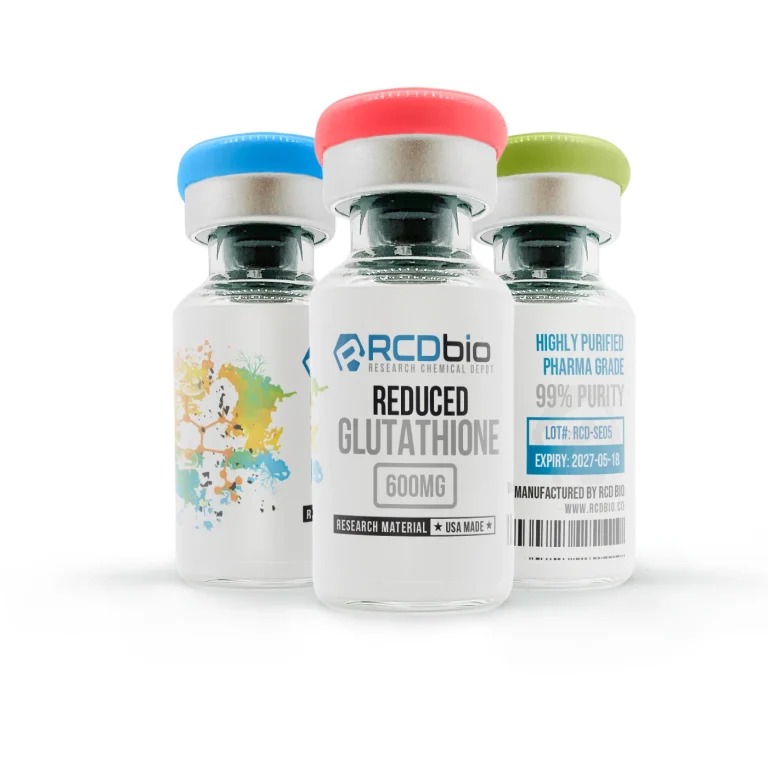
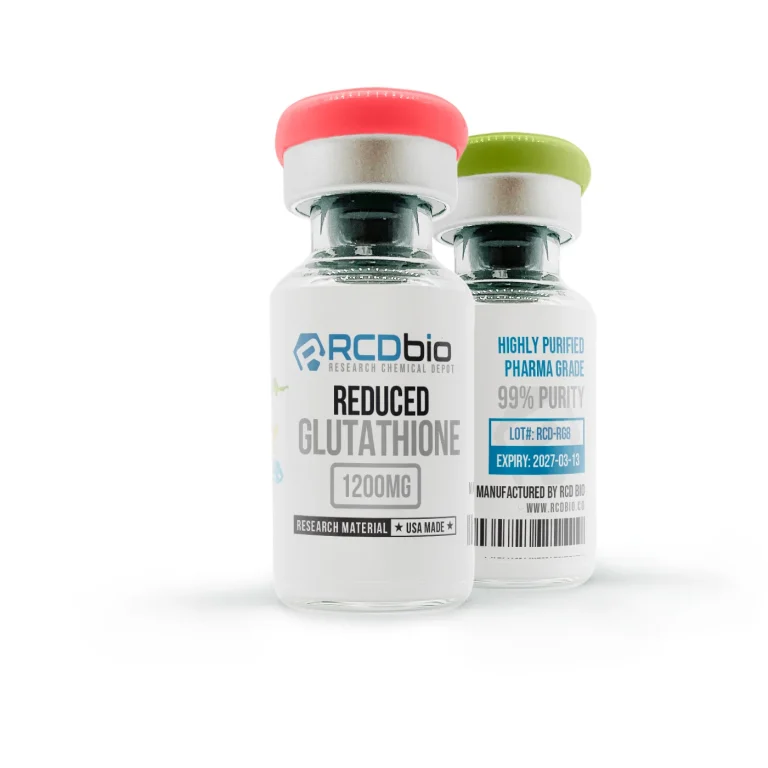
Description
What is Reduced Glutathione?
Reduced Glutathione (GSH) is an endogenous low-molecular-weight tripeptide composed of three amino acids — L-glutamate, L-cysteine, and glycine — linked by a distinctive gamma-peptide bond between the glutamate and cysteine residues. This gamma-glutamyl linkage differentiates GSH from standard peptides and confers resistance to most cytosolic peptidase activity, contributing to its stability within the intracellular environment. The free thiol group (-SH) on the cysteine residue is the primary site of GSH’s redox chemistry and is the defining structural feature responsible for its behavior as the predominant non-protein thiol in aerobic organisms.
In research settings, reduced glutathione has been widely employed as a biochemical tool for investigating cellular redox state, thiol-dependent enzyme kinetics, and electrophile detoxification pathways. It has been investigated in preclinical models and in vitro systems for its roles in glutathione S-transferase (GST) co-substrate activity, glutathione peroxidase (GPx) electron donation, protein glutathionylation, and reactive oxygen species (ROS) attenuation.
Reduced Glutathione supplied by RCDbio is intended strictly for laboratory and research purposes. It is not approved by the Food and Drug Administration for use in this research-grade, non-pharmaceutical form. It is not a dietary supplement and is not intended for human consumption or therapeutic self-administration.
Chemical Properties
| Property | Detail |
| Product Type | Synthetic Endogenous Tripeptide (γ-L-Glutamyl-L-Cysteinylglycine) |
| Product Name | Reduced Glutathione (GSH) |
| Application | Scientific / Research Use Only |
| CAS Number | 70-18-8 (free acid, reduced form) |
| Molar Mass | 307.32 g/mol (free acid) |
| Chemical Formula | C₁₀H₁₇N₃O₆S (free acid) |
| Sequence | γ-Glu-Cys-Gly (γ-glutamyl linkage at N-terminus; free thiol at Cys residue) |
| IUPAC Name | (2S)-2-amino-5-[[(2R)-1-(carboxymethylamino)-1-oxo-3-sulfanylpropan-2-yl]amino]-5-oxopentanoic acid |
| Synonyms | GSH; L-Glutathione, reduced; γ-Glutamylcysteinylglycine; Glutathione-SH; Tathion (pharmaceutical) |
| Physical Form | Lyophilized white to off-white powder |
| Solubility | Freely soluble in water (≥50 mg/mL); insoluble in methanol and diethyl ether; highly susceptible to aerial oxidation — handle under inert atmosphere or reconstitute immediately |
| Storage (Lyophilized) | Store at −20°C in a sealed, light-protected container with desiccant; protect from moisture and atmospheric oxygen |
| Storage (Reconstituted) | Store at 4°C; use within 24–48 hours of reconstitution; do not expose to air during storage; discard any solution showing discoloration or particulate matter |
| PubChem CID | 124886 (free acid, reduced form) |
| Purity | ≥98% (HPLC verified, independent third-party laboratory analysis; COA available per batch) |
| WADA Status | Reduced Glutathione (GSH) is not listed on the WADA Prohibited List. As an endogenous molecule present in all mammalian cells and a standard laboratory reagent, it does not fall within any WADA prohibited category. No sport-adjacent regulatory concern applies. Researchers engaged in sport-adjacent studies should verify the current status at GlobalDRO.com before use. |
How Does Reduced Glutathione Work?
GSH functions as the cell’s primary redox buffer and nucleophilic co-substrate. Its chemistry is anchored to the reactive thiol group of the cysteine residue, which undergoes reversible one- and two-electron oxidation reactions that underpin its participation in multiple enzymatic and non-enzymatic redox pathways. The following mechanistic subheadings describe the principal molecular interactions characterized in preclinical and in vitro systems.
Glutathione S-Transferase (GST) Co-Substrate Activity
In isolated hepatocyte cell preparations and in vitro enzyme assay systems, GSH serves as the obligate nucleophilic co-substrate for the glutathione S-transferase (GST) superfamily. GSTs catalyze the thioether bond formation between the cysteine thiol of GSH and electrophilic xenobiotics and reactive metabolites, facilitating their conjugation and subsequent export. This mechanism has been characterized across Alpha, Mu, Pi, and Sigma GST isoform families in mammalian cell-free systems, with GSTP1 additionally observed to interact directly with signaling kinases including JNK, influencing apoptotic signaling cascades in transformed cell preparations.
Glutathione Peroxidase (GPx) Electron Donation
GSH acts as the direct two-electron donor for glutathione peroxidase (GPx) enzymes during the reduction of hydrogen peroxide (H₂O₂) and lipid hydroperoxides (LOOH) to water and the corresponding alcohols, respectively. In this cycle, two molecules of GSH are oxidized to glutathione disulfide (GSSG), which is subsequently regenerated to GSH by NADPH-dependent glutathione reductase (GR). This GPx/GR redox cycling system has been characterized as the primary enzymatic mechanism for H₂O₂ attenuation in cytosolic, mitochondrial, and plasma membrane-associated compartments in mammalian cell preparations.
Protein S-Glutathionylation
In oxidative microenvironments generated in in vitro cell culture systems and in vivo rodent oxidative challenge models, GSH participates in post-translational modification of protein cysteine residues through S-glutathionylation — the formation of a mixed disulfide bond between protein thiols and GSH. This modification has been characterized as a reversible regulatory switch affecting the activity of metabolic enzymes, signaling kinases, and transcription factors including NF-κB subunit RelA. Glutaredoxins (Grx) catalyze the selective reduction of protein-glutathione mixed disulfides, completing the glutathionylation-deglutathionylation cycle. The net effect on signal transduction, apoptosis, and metabolic flux has been characterized in isolated cell preparations under defined oxidative stress conditions.
Mitochondrial Redox Homeostasis
In isolated mitochondrial preparations and in vivo murine oxidative stress models, the mitochondrial GSH pool (mGSH) — representing 10–15% of total cellular GSH — has been characterized as a critical determinant of mitochondrial membrane integrity and cytochrome c retention. GSH depletion in mitochondrial fractions has been associated with permeability transition pore (mPTP) opening and induction of intrinsic apoptotic signaling in isolated hepatocyte and cardiomyocyte preparations. These observations are derived from in vitro and in vivo rodent model systems and do not represent human mechanistic data for research-grade material.
Key Research Findings
- GSH/GSSG redox cycling: NADPH-dependent glutathione reductase-mediated regeneration of GSH from GSSG characterized in mammalian erythrocyte and hepatocyte in vitro preparations; cycling rate dependent on NADPH availability and GR expression level. [Meister & Anderson, 1983]
- Cardiac oxidative stress attenuation: Modulation of cardiac ROS accumulation and reduction of oxidative byproduct markers observed in murine in vivo models of chemotherapy-associated cardiotoxicity; associated with attenuation of pro-inflammatory cytokine expression in cardiac tissue. [Negm et al., 2025]
- Nigral GSH depletion in neurodegenerative models: Reduced total glutathione concentrations observed in substantia nigra preparations from preclinical Parkinson’s disease models, preceding other biochemical markers; investigated as an early indicator of mitochondrial oxidative vulnerability. [Schulz et al., 2000]
- GST electrophile conjugation: Thioether bond formation between cysteine-SH of GSH and electrophilic substrates characterized across multiple GST isoforms in mammalian in vitro enzyme assay systems; GSTP isoform additionally implicated in modulation of JNK-mediated apoptotic signaling. [Laborde, 2010]
- Protein glutathionylation as regulatory switch: S-glutathionylation of key signaling proteins (including NF-κB, actin, and PKC isoforms) characterized in isolated cell preparations under defined ROS challenge conditions; reversibly mediated by glutaredoxin enzymes in reducing conditions. [Ghezzi, 2013]
All findings listed above are derived from preclinical or in vitro data. No conclusions regarding human therapeutic efficacy can be drawn from these observations. These findings do not constitute evidence of safety or efficacy in any human condition or organism.
What are the Potential Research Applications of Reduced Glutathione?
Oxidative Stress Modeling and ROS Biology
Reduced Glutathione is widely employed in in vitro and in vivo preclinical research as a reference thiol in oxidative stress challenge models. In cell-free and cell-based assay systems, GSH depletion and repletion protocols allow researchers to modulate and quantify the redox state of cellular compartments. It is used in fluorometric and colorimetric assay platforms for measuring GSH/GSSG ratios as indicators of oxidative burden in isolated tissue preparations.
Glutathione S-Transferase (GST) Enzyme Research
In enzyme kinetics and affinity chromatography research, GSH serves as the essential co-substrate and affinity ligand for the GST superfamily. Glutathione-agarose affinity resins loaded with GSH are used for selective purification of GST-fusion recombinant proteins in laboratory workflows. GSH is additionally used as a competitive elution agent in pull-down and co-immunoprecipitation assay designs investigating protein-GST interactions.
Mitochondrial Biology and Apoptosis Research
In isolated mitochondrial fraction preparations and cell permeabilization systems, GSH has been investigated as a modulator of mitochondrial permeability transition and cytochrome c release. Protocols depleting or supplementing mGSH are used to study the contribution of mitochondrial redox state to intrinsic apoptotic pathway activation in hepatocyte, neuronal, and cardiomyocyte in vitro models.
Neurodegenerative Disease Preclinical Models
In rodent preclinical models of Parkinson’s disease and related synucleinopathies, GSH is employed to investigate the relationship between dopaminergic neuronal vulnerability and substantia nigra GSH depletion. In vitro neuronal cell preparation studies use GSH as a reference compound in electrophile challenge assays and in co-treatment protocols designed to probe neuroprotective signaling.
Protein Redox Regulation and Glutathionylation Studies
In isolated cell preparations and cell-free phosphoprotein assay systems, GSH is used as the glutathionylating agent in protocols characterizing S-glutathionylation of target proteins under controlled oxidative conditions. These systems are used to investigate redox-sensitive post-translational regulation of kinases, transcription factors, and metabolic enzymes in vitro.
These are observed in preclinical and in vitro contexts only and do not constitute claims of efficacy or safety in any organism.
What are the Potential Side Effects of Reduced Glutathione?
- Supraphysiological intracellular GSH concentrations introduced exogenously in cell culture systems have been associated with altered redox equilibrium and shifts in the GSH/GSSG ratio; these perturbations can affect downstream redox-sensitive signaling cascades in isolated preparations in a model-dependent manner
- In isolated hepatocyte preparations, high-concentration GSH supplementation has been associated with competition for gamma-glutamyl transpeptidase (GGT) substrate sites, potentially altering GGT-mediated catabolism of other gamma-glutamyl compounds in the experimental system
- Aerial oxidation of GSH in aqueous solution generates GSSG and sulfoxide species; use of oxidized or partially oxidized preparations in biological assay systems may confound mechanistic interpretations; this represents a handling artifact rather than an inherent pharmacological effect of the compound
- In rodent in vivo intravenous models at high-dose concentrations (≥500 mg/kg), transient alterations in systemic sulfhydryl-dependent signaling have been reported; findings are not uniform across species and dose ranges and do not represent data applicable to research-grade research material
No human safety or tolerability data pertaining to research-grade Reduced Glutathione has been established. These observations are derived from experimental systems and should not be extrapolated to human or animal outcomes.
Risk & Handling
Risk Tier: LOW
Reduced Glutathione is an endogenous tripeptide present in all mammalian cells. At research-relevant concentrations, it is not acutely toxic in preclinical systems. No acute lethality, organ-specific toxicity, or dose-limiting adverse effects have been characterized for the compound itself at physiologically or pharmacologically relevant concentrations in preclinical models. No human safety data has been established for research-grade material.
Handling Precautions
Handling of reduced glutathione lyophilized powder and reconstituted solutions must be performed by trained laboratory personnel only. Personal protective equipment (PPE) should include nitrile gloves, a laboratory coat, and eye protection at minimum. Because lyophilized GSH powder is highly susceptible to aerial oxidation, reconstitution should be performed promptly in a nitrogen- or argon-purged environment where feasible, or under a laminar flow biosafety cabinet to minimize atmospheric oxygen exposure. Avoid prolonged contact of lyophilized material with ambient humidity. Do not store reconstituted solutions in open or loosely capped containers.
Exposure Risks
Reduced Glutathione is not acutely hazardous by standard contact or inhalation exposure at research quantities. Fine powder inhalation should be avoided as a general precaution applicable to all lyophilized laboratory materials. No systemic toxicity, sensitization, or genotoxic effects have been identified for the compound in available preclinical literature. No human safety data has been established for research-grade Reduced Glutathione. Researchers should apply standard laboratory practices appropriate for handling a biologically active small molecule.
Storage
- Lyophilized form: Store at −20°C in a sealed, light-protected container with desiccant
- Reconstituted form: Store at 4°C; use within 24–48 hours of reconstitution under reduced oxygen conditions where possible
- Do not subject reconstituted solutions to repeated freeze-thaw cycles; each cycle promotes oxidation of the free thiol and progressive accumulation of GSSG and sulfoxide species
- Do not store reconstituted solutions in the presence of heavy metals (Cu²⁺, Fe²⁺/³⁺), as trace metal contamination catalyzes thiol oxidation
- Discard any reconstituted solution that appears discolored (yellow-amber) or turbid, as these are indicative of significant oxidation or contamination
FAQs
Q: What is Reduced Glutathione and what is it investigated for in research?
A: Reduced Glutathione (GSH) is an endogenous tripeptide (γ-L-glutamyl-L-cysteinylglycine) characterized by a gamma-peptide bond and a free cysteine thiol. In laboratory research, it is investigated as a biochemical tool for studying cellular redox state, oxidative stress signaling, GST enzyme kinetics, and protein glutathionylation. It is supplied by RCDbio for use in preclinical and in vitro research systems only and is not intended for human use or therapeutic self-administration.
Q: How should Reduced Glutathione be stored to maintain stability?
A: Lyophilized Reduced Glutathione should be stored at −20°C in a sealed container with desiccant, protected from light, moisture, and atmospheric oxygen. Once reconstituted, solutions should be stored at 4°C and used within 24–48 hours. Repeated freeze-thaw cycling should be avoided, as each cycle promotes irreversible oxidation of the free thiol to GSSG. Solutions showing yellow-amber discoloration should be discarded, as this indicates significant thiol oxidation.
Q: What is the half-life of Reduced Glutathione in preclinical models?
A: In rodent in vivo intravenous administration models, the plasma half-life of exogenously administered GSH is very short — reported in the range of approximately 1–3 minutes — due to rapid catabolism by plasma gamma-glutamyl transpeptidase (GGT) and dipeptidase enzymes. In cell-free aqueous solution under degassed, low-temperature, metal-free conditions, stability is considerably longer. In vitro stability figures are assay- and condition-dependent and do not represent human pharmacokinetic data for research-grade material.
Q: What is Reduced Glutathione typically reconstituted with in laboratory research?
A: In laboratory settings, Reduced Glutathione is most commonly reconstituted in sterile, degassed deionized water or phosphate-buffered saline (PBS) at a pH of 6.5–7.4. Acidic conditions (pH ≤ 6.0) are preferred for extended in vitro stability, as they slow thiol oxidation kinetics. Reducing agents such as dithiothreitol (DTT) or tris(2-carboxyethyl)phosphine (TCEP) are occasionally included in research buffers to maintain the thiol in its reduced state, though their inclusion should be accounted for in downstream assay interpretation.
Q: What toxicity observations have been reported in preclinical studies of Reduced Glutathione?
A: At research-relevant concentrations, no significant acute toxicity has been characterized for Reduced Glutathione itself in available preclinical literature. High-dose intravenous administration in rodent models (≥500 mg/kg) has been associated with transient shifts in systemic redox parameters, but these observations are at concentrations far above those typically employed in in vitro research contexts. Oxidized GSH preparations (containing GSSG or sulfoxide species) may introduce confounding variables into assay systems; this represents a preparation-quality issue rather than intrinsic compound toxicity.
Q: What is the significance of the gamma-glutamyl bond in GSH for research applications?
A: The gamma-peptide bond linking glutamate to cysteine in GSH is a structurally critical feature that differentiates it from dipeptides assembled by standard alpha-peptide bonds. This bond confers resistance to most intracellular peptidases, allowing GSH to accumulate at millimolar concentrations in the cytoplasm without rapid degradation. In research applications, this structural feature is relevant to assay design: extracellular GSH catabolism proceeds via GGT (which cleaves the gamma-glutamyl bond at the cell surface), while intracellular GSH is protected from non-specific proteolytic degradation. Understanding this distinction is essential for interpreting GSH depletion and repletion kinetics in cell-based research models.
Q: How is Reduced Glutathione used in GST affinity purification research?
A: In recombinant protein research, the GSH–GST interaction is exploited in affinity chromatography workflows for the selective purification of proteins expressed as GST-fusion constructs. Glutathione-agarose resins bind GST-tagged proteins with high selectivity, and bound proteins are subsequently eluted with excess reduced glutathione in a non-denaturing buffer. This technique is employed in structural biology, protein interaction, and enzyme characterization studies and depends on research-grade GSH of defined purity and thiol content for reliable elution efficiency.
Related Research Compounds
N-Acetyl-L-Cysteine (NAC): A membrane-permeable cysteine precursor investigated in preclinical models as an indirect GSH replenishment agent; employed in cell-based oxidative stress models as a comparator thiol supplement in GSH depletion-repletion study designs.
Alpha-Lipoic Acid (ALA): A dithiol cofactor investigated in in vitro and rodent in vivo models for its role in recycling oxidized glutathione (GSSG) to GSH through interactions with the thioredoxin and GSH redox systems; used in mitochondrial redox research as a GSH-supporting co-substrate.
Superoxide Dismutase (SOD): An antioxidant metalloenzyme investigated in parallel with GSH in ROS attenuation studies; employed in cell-free and cell-based assay systems to dissect the relative contributions of enzymatic superoxide dismutation versus GSH-dependent peroxide reduction in composite oxidative stress models.
References
- Schulz JB, Lindenau J, Seyfried J, Dichgans J. Glutathione, oxidative stress and neurodegeneration. Eur J Biochem. 2000;267(16):4904–4911. https://pubmed.ncbi.nlm.nih.gov/10931172/
- Negm A, Mersal EA, Dawood AF, et al. Multifaceted Cardioprotective Potential of Reduced Glutathione Against Doxorubicin-Induced Cardiotoxicity via Modulating Inflammation–Oxidative Stress Axis. Int J Mol Sci. 2025;26(7):3201. https://pubmed.ncbi.nlm.nih.gov/40244032/
- Laborde E. Glutathione transferases as mediators of signaling pathways involved in cell proliferation and cell death. Cell Death Differ. 2010;17(9):1373–1380. https://pubmed.ncbi.nlm.nih.gov/20596078/
- Ghezzi P. Protein glutathionylation in health and disease. Biochim Biophys Acta. 2013;1830(5):3165–3172. https://pubmed.ncbi.nlm.nih.gov/23123268/
- Dalle-Donne I, Rossi R, Colombo G, Giustarini D, Milzani A. Protein S-glutathionylation: a regulatory device from bacteria to humans. Trends Biochem Sci. 2009;34(2):85–96. https://www.sciencedirect.com/science/article/pii/S0968000408002570
ATTENTION
Reduced Glutathione is exclusively for laboratory research purposes. RCDbio products are not intended to diagnose, prevent, treat, or cure any disease or medical condition.
The Food and Drug Administration has not evaluated the statements on our website. This product is not approved for human or veterinary use. Researchers must comply with all applicable local, state, and federal laws and regulations governing the purchase and use of research compounds. By purchasing, you agree to our Terms and Conditions. RCDbio reserves the right to refuse sales to unauthorized individuals.
ATTENTION: All RCDbio products are strictly for LABORATORY AND RESEARCH PURPOSES ONLY. They are not intended for human consumption, veterinary use, or any other non-research application. For queries, complaints, or support, contact support@legacy.rcdbio.co
Reviews
There are no reviews yet