

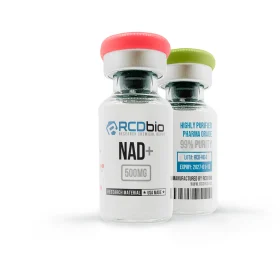
Description
What is NAD+ (Nicotinamide Adenine Dinucleotide)?
Nicotinamide adenine dinucleotide (NAD⁺) is an endogenous dinucleotide coenzyme present in all living cells, composed of two nucleotide units—adenosine monophosphate and nicotinamide mononucleotide—joined through a pyrophosphate linkage. The oxidized form, NAD+, and its reduced counterpart, NADH, constitute a functionally inseparable redox pair that participates in more than 500 enzymatic reactions in cellular metabolism. NAD+ was first characterized as a coenzyme in fermentation pathways in the early twentieth century and has since been established as a central metabolic cofactor in eukaryotic and prokaryotic systems alike.
In research settings, NAD+ has been extensively investigated as a substrate and coenzyme for multiple enzyme classes, including the sirtuin family of NAD+-dependent protein deacylases, poly(ADP-ribose) polymerases (PARPs), and cyclic ADP-ribose synthases such as CD38 and CD157. Its role as the primary electron carrier in mitochondrial respiratory chain function—shuttling hydride equivalents from the tricarboxylic acid (TCA) cycle to Complex I of the electron transport chain—has made it a key compound in preclinical models of energy metabolism, oxidative stress, and cellular senescence research.
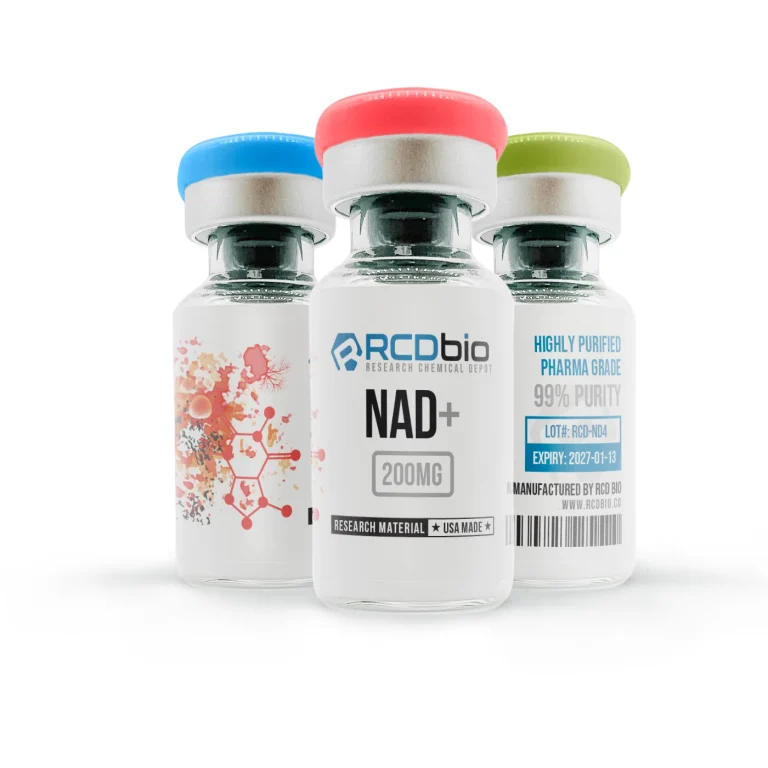
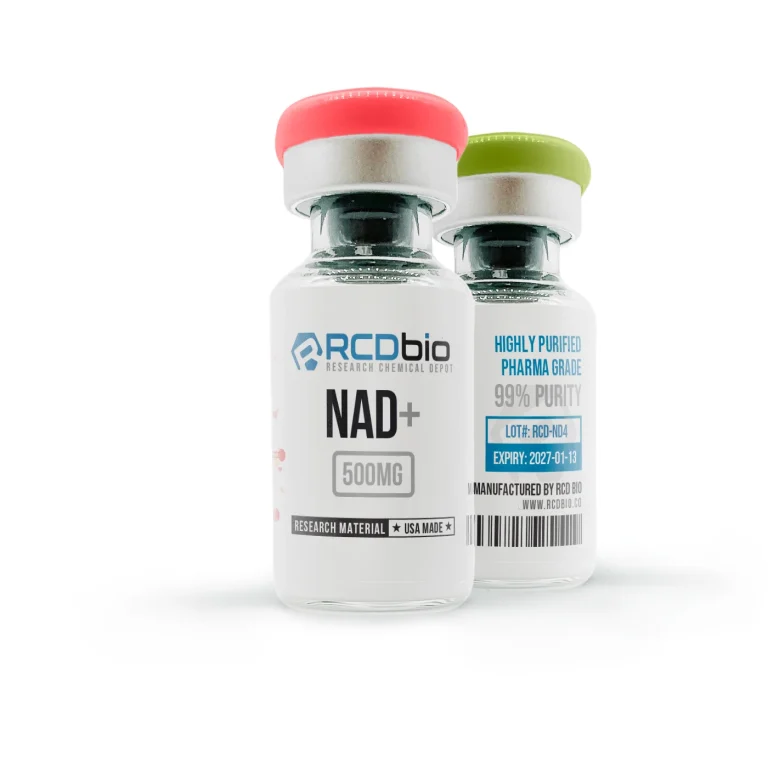
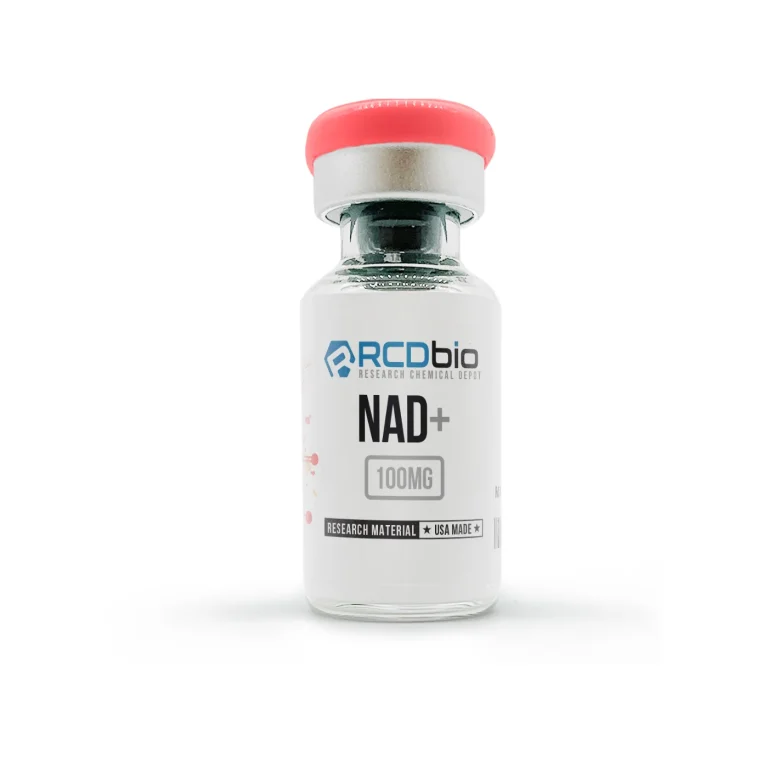
NAD+ supplied by RCDbio is intended strictly for laboratory and research purposes. It is not approved by the Food and Drug Administration for use in this research-grade, non-pharmaceutical form. It is not a dietary supplement and is not intended for human consumption, veterinary use, or therapeutic self-administration.
Chemical Properties
| Property | Detail |
| Product Type | Research-Grade Dinucleotide Coenzyme (Lyophilized Powder) |
| Product Name | NAD+ (Nicotinamide Adenine Dinucleotide) |
| Application | Scientific / Research Use Only |
| CAS Number | 53-84-9 |
| Molar Mass | 663.43 g/mol (free acid, anhydrous basis) |
| Chemical Formula | C₂₁H₂₇N₇O₁₄P₂ |
| Sequence | N/A — non-peptide dinucleotide coenzyme |
| IUPAC Name | [[(2R,3S,4R,5R)-5-(6-aminopurin-9-yl)-3,4-dihydroxyoxolan-2-yl]methoxy-hydroxyphosphoryl] [(2R,3S,4R,5R)-5-(3-carbamoylpyridin-1-ium-1-yl)-3,4-dihydroxyoxolan-2-yl]methyl hydrogen phosphate |
| Synonyms | Nicotinamide adenine dinucleotide; NAD; coenzyme I; DPN (diphosphopyridine nucleotide — historical) |
| Physical Form | Lyophilized white to off-white powder |
| Solubility | Freely soluble in water; soluble in aqueous buffers at physiological pH; insoluble in most organic solvents. Aqueous solutions are susceptible to oxidative degradation and hydrolysis at extremes of pH; prepare under inert gas conditions where possible. |
| Storage (Lyophilized) | Store at −20°C or below; sealed, light-protected container with desiccant; minimize exposure to moisture and atmospheric oxygen |
| Storage (Reconstituted) | Store at 4°C; use within 24–48 hours of reconstitution; do not subject to repeated freeze-thaw cycles; discard any solution that appears discolored or shows particulate matter |
| PubChem CID | 5892 (NAD+ free acid, anhydrous, CAS 53-84-9) |
| Purity | ≥98% (HPLC verified, independent third-party laboratory analysis; COA available per batch) |
| WADA Status | NAD+ is not listed by name on the current WADA Prohibited List. As an endogenous metabolite, it does not currently fall under a defined prohibited category for competitive sports. Researchers engaged in sport-adjacent studies should verify the current status at GlobalDRO.com before use. |
How Does NAD+ Work?
NAD+ functions primarily through its capacity to accept and donate hydride equivalents (H⁻), cycling between its oxidized (NAD+) and reduced (NADH) forms. This redox cycling underpins the compound’s mechanistic involvement across three distinct and independently investigated enzyme systems.
Mitochondrial Electron Transport Chain and Oxidative Phosphorylation
In isolated mitochondrial preparations, NADH serves as the primary electron donor to Complex I (NADH:ubiquinone oxidoreductase) of the inner mitochondrial membrane. In this system, two electrons are transferred from NADH to flavin mononucleotide (FMN) within Complex I and subsequently through a series of iron-sulfur clusters to ubiquinone (Coenzyme Q), which is reduced to ubiquinol. This electron transfer is coupled to translocation of four protons across the inner mitochondrial membrane per NADH molecule oxidized, contributing to the electrochemical gradient that drives ATP synthesis at Complex V. The oxidation of NADH to NAD+ during this process is essential for maintaining the NAD+/NADH ratio that permits ongoing substrate oxidation in TCA cycle enzymes. In cell culture models with experimentally induced electron transport chain deficiency, restoration of cytosolic NAD+ availability has been characterized as a mechanistically distinct intervention from proton gradient manipulation, emphasizing the primacy of the redox ratio in mitochondrial pathogenesis models.
Sirtuin-Mediated Protein Deacylation
Sirtuins (SIRT1–7) are a conserved family of NAD+-dependent protein deacylases that consume one molecule of NAD+ per deacylation cycle, producing nicotinamide and O-acetyl-ADP-ribose as co-products. Nicotinamide generated in this reaction acts as a product inhibitor of sirtuin activity, establishing a feedback-regulated system. In rodent in vivo models and isolated cell preparations, SIRT1 has been characterized as a nuclear deacylase that modulates the acetylation status of transcription factors, including p53, NF-κB, FOXO3a, and PGC-1α, linking NAD⁺ availability to transcriptional regulation of stress response, metabolic adaptation, and cell survival signaling. Mitochondria-localized SIRT3 has been investigated in rodent models for its role in regulating mitochondrial protein acetylation and oxidative phosphorylation efficiency. In aged murine models, elevated expression of the NADase CD38 has been characterized as a primary mechanistic driver of intracellular NAD+ depletion, with downstream reduction in SIRT3-dependent mitochondrial deacetylation activity observed in liver tissue preparations.
PARP-Mediated DNA Damage Response
Poly(ADP-ribose) polymerases (PARPs), particularly PARP1, utilize NAD+ as the sole substrate for synthesis of poly(ADP-ribose) (PAR) chains on nuclear proteins, a post-translational modification central to the DNA damage response (DDR). Following detection of DNA strand breaks, PARP1 undergoes allosteric activation and catalyzes the successive transfer of ADP-ribose units from NAD⁺, consuming substantial quantities of intracellular NAD⁺ under conditions of pronounced genotoxic stress. In human tissue samples, a strong negative correlation between NAD+ levels and accumulating DNA oxidative damage has been characterized, consistent with a model in which age-associated PARP hyperactivation drives progressive NAD+ depletion. In isolated rodent cell systems, this dynamic has been proposed to mechanistically link oxidative nuclear damage with downstream impairment of sirtuin-dependent signaling pathways through NAD+ substrate competition.
NAD+ Biosynthesis and the Salvage Pathway
Intracellular NAD+ is replenished through two principal routes: de novo synthesis from L-tryptophan via the kynurenine pathway, and the salvage pathway from nicotinamide. nicotinic acid, and nicotinamide riboside (NR). The rate-limiting step in the salvage pathway is catalyzed by nicotinamide phosphoribosyltransferase (NAMPT), which converts nicotinamide to nicotinamide mononucleotide (NMN); NMN is then adenylated to NAD+ by NMN adenylyltransferases (NMNATs). In preclinical models, modulation of NAMPT activity through genetic and pharmacological means has been investigated as a tool for probing NAD+ pool dynamics and downstream sirtuin function.
Key Research Findings
- Mitochondrial NAD⁺ and ETC function: In MCART1/SLC25A51-null human cell line models, loss of mitochondrial NAD⁺ import produced large decreases in TCA cycle flux, Complex I activity, and mitochondrial respiration, establishing NAD⁺ availability as a rate-limiting factor in oxidative phosphorylation. [Luengo et al., 2021]
- PARP-mediated NAD⁺ depletion with aging: In human skin tissue samples (n = 49, ages 15–77), NAD⁺ levels showed a strong negative correlation with age (r = −0.706 in males, p = 0.001); PARP hyperactivation from accumulating oxidative DNA damage was characterized as the primary mechanistic driver. [Massudi et al., 2012]
- CD38 NADase and mitochondrial dysfunction: In aged murine liver tissue, elevated CD38 expression and activity were identified as the primary mechanism of age-related NAD+ decline; CD38-knockout mice were protected from mitochondrial dysfunction through preserved SIRT3 activity. [Camacho-Pereira et al., 2016]
- Sirtuin deacylase dependency on NAD+ availability: In rodent models and isolated cell preparations, age-associated reductions in NAD+ availability were characterized as mechanistically sufficient to reduce sirtuin activities and impair nucleus-mitochondria communication, contributing to age-related functional decline. [Imai & Guarente, 2016]
- NAD+ as SIRT1/PARP1 substrate in redox signaling: In rodent in vivo models and human tissue assays, NAD+ was characterized as the obligate substrate for both PARP-mediated poly-ADP-ribosylation and SIRT1-mediated deacetylation of p53 and other nuclear targets, with NAD+ concentrations directly governing competitive flux between these parallel pathways. [Verdin, 2015]
All findings listed above are derived from preclinical or in vitro data. No conclusions regarding human therapeutic efficacy can be drawn from these observations. These findings do not constitute evidence of safety or efficacy in any human condition or organism.
What are the Potential Research Applications of NAD+?
Mitochondrial Metabolism and Bioenergetics Research
NAD⁺ serves as a critical research tool in in vitro and ex vivo models investigating mitochondrial respiratory chain function. As the obligate substrate for Complex I-coupled NADH oxidation: exogenous NAD+ has been applied in isolated mitochondria preparations and intact cell systems to probe the relationship between NAD⁺/NADH ratio and oxidative phosphorylation efficiency. Cell-based models employing NAD+ modulation have been used to investigate mitochondrial membrane potential, ATP synthesis rates, and TCA cycle enzyme activity under conditions of experimentally induced metabolic stress.
Sirtuin Pharmacology and Deacylase Pathway Studies
Research-grade NAD+ is employed as a cosubstrate reference compound in sirtuin activity assays, including fluorometric deacetylase assays, radioligand-based SIRT1/3 activity platforms, and competitive inhibitor screening systems. It has been used in isolated cell preparations to examine the dose-response relationship between NAD+ concentration and SIRT1-mediated deacetylation of p53, PGC-1α, and histone H3 lysine residues. In rodent preclinical models, NAD+ precursor and analog studies routinely employ endpoint NAD+ measurements as a primary mechanistic readout.
PARP Biology and DNA Damage Response Modeling
NAD+ is utilized as the substrate for PARP activity assays in cell-free and intact cell systems. In research models of genotoxic stress, NAD+ availability has been investigated as a limiting variable in the kinetics of poly(ADP-ribose) synthesis and turnover. Competitive substrate dynamics between PARP and sirtuin pathways under conditions of simulated oxidative stress have been examined in isolated nuclear preparations and cell lines using controlled NAD+ concentrations.
Cellular Aging and Senescence Research Platforms
In preclinical models of cellular aging, NAD+ concentration is routinely measured as a biomarker of metabolic homeostasis and used to stratify senescent from non-senescent cell populations. Rodent models of accelerated aging and genetically induced sirtuin depletion have employed exogenous NAD+ and its precursors as tool compounds to probe the causal relationship between NAD+ availability and age-related mitochondrial dysfunction. Studies investigating CD38, NAMPT, and NMNAT enzymatic activity utilize NAD+ as a direct substrate or product in mechanistic assays.
Neurodegenerative Disease Models (Preclinical)
In rodent and cellular models of neurodegeneration, NAD+ metabolism has been investigated in the context of axonal degeneration, neuroinflammation, and mitochondrial failure. SIRT1 and SIRT3 activity in neuronal preparations is dependent on adequate NAD+ availability, and NAD+ has been applied as a research tool to probe these pathways in cell-based models of excitotoxicity and oxidative injury.
These are observed in preclinical and in vitro contexts only and do not constitute claims of efficacy or safety in any organism.
What are the Potential Side Effects of NAD⁺?
- Nausea, flushing, and gastrointestinal discomfort have been reported in clinical investigations of intravenous NAD⁺ administration; these observations were derived from human pharmacological studies and are not applicable to characterization of research-grade lyophilized material under laboratory conditions.
- At supraphysiological concentrations in isolated cell systems, exogenous NAD⁺ has been observed to alter intracellular redox state and influence mitochondrial membrane potential; findings are dependent on cell type, concentration, and experimental conditions.
- In cell-free biochemical assay systems, excess NAD+ has been observed to act as a product inhibitor of NAMPT-catalyzed NMN synthesis at concentrations exceeding physiological ranges; this effect is concentration-dependent and has not been characterized uniformly across all model systems.
- PARP hyperactivation driven by NAD+ substrate availability has been observed in genotoxic stress models to contribute to cell energy depletion and apoptosis-inducing factor (AIF) release in isolated cell preparations; findings are model-specific and not consistent across all cell types.
- No human safety or tolerability data pertaining to research-grade NAD+ supplied as a lyophilized powder has been established. These observations are derived from experimental systems and should not be extrapolated to human or animal outcomes.
Risk & Handling
Risk Tier: LOW
NAD+ is a ubiquitous endogenous coenzyme with no significant acute toxicity documented in preclinical systems at research-relevant concentrations. It is not a controlled substance, does not exhibit cytotoxic activity at physiological or supraphysiological concentrations in standard cell culture models, and has no established mechanism of direct receptor toxicity. The primary laboratory risk associated with this compound is its physicochemical instability under improper storage conditions rather than pharmacological hazard.
Handling Precautions
- Handling must be performed by trained laboratory personnel familiar with standard laboratory safety protocols.
- Personal protective equipment (PPE) at minimum: nitrile or latex gloves, laboratory coat, and eye protection.
- Reconstitution should be performed under laminar flow or in a clean bench environment to prevent particulate contamination and to minimize moisture uptake.
- Avoid generating aerosols during weighing or reconstitution of lyophilized powder; work in a well-ventilated area or with appropriate containment.
- NAD+ is sensitive to oxidative conditions; handling under inert gas (nitrogen or argon) atmosphere is recommended when maximum stability is required.
- Avoid contact with strong oxidizing agents and strongly alkaline or acidic aqueous environments, both of which accelerate hydrolytic degradation.
Exposure Risks
Risk Tier: LOW. NAD+ is an endogenous metabolite with no significant toxicity documented in preclinical systems at research-relevant concentrations. No acute lethal dose data specific to exogenous NAD+ administration in standard rodent models has been identified in the peer-reviewed literature, consistent with its classification as a non-hazardous biological molecule by standard safety frameworks. In vitro cytotoxicity has not been observed at concentrations used in standard biochemical or cell biology applications. No human safety data has been established for research-grade lyophilized NAD+ material. Skin or mucosal contact with powder should be avoided as a precautionary measure consistent with general laboratory practice for any fine chemical.
Storage
- Lyophilized form: Store at −20°C or below; sealed container with desiccant; protect from light and atmospheric moisture
- Reconstituted form: Store at 4°C; use within 24–48 hours of reconstitution; do not freeze reconstituted solutions if repeated use is anticipated
- Do not subject lyophilized material to repeated temperature cycling; moisture condensation degrades potency
- NAD+ in aqueous solution is subject to non-enzymatic hydrolysis at the nicotinamide-ribose glycosidic bond under acidic or alkaline conditions; maintain reconstituted solutions at near-neutral pH and 4°C
- Discard any reconstituted solution that appears yellow-brown, turbid, or shows visible particulate matter
FAQs
Q: What is NAD+ and what is it investigated for in research?
A: Nicotinamide adenine dinucleotide (NAD+) is an endogenous dinucleotide coenzyme investigated in preclinical and in vitro models for its roles in mitochondrial electron transport, sirtuin-mediated protein deacylation, PARP-dependent DNA damage response signaling, and cellular redox homeostasis. It has been characterized as a rate-limiting substrate for both PARP enzymes and the sirtuin family, making it a central node in laboratory investigations of energy metabolism, cellular aging models, and DNA repair pathway research. Research-grade NAD+ from RCDbio is supplied as a lyophilized powder for laboratory use only and is not intended for human consumption or therapeutic application.
Q: What is the stability of NAD+ in aqueous solution under laboratory conditions?
A: In aqueous solution, NAD+ is susceptible to non-enzymatic hydrolysis at the glycosidic bond connecting nicotinamide to ribose, with the rate of degradation increasing significantly at pH values below 5 or above 9 and at elevated temperatures. At neutral pH and 4°C, aqueous NAD+ solutions are generally stable for 24–48 hours for practical laboratory applications. Lyophilized material is considerably more stable under correct storage conditions (−20°C, sealed with desiccant) and maintains integrity for extended periods when protected from moisture and light. These stability parameters are derived from in vitro physicochemical characterization data and do not represent pharmacokinetic data for any biological model.
Q: How should NAD+ be reconstituted for use in laboratory assays?
A: In laboratory research, NAD+ is typically reconstituted in sterile distilled water or a physiologically buffered aqueous vehicle at near-neutral pH (pH 6.8–7.4). Reconstitution in acidic media should be avoided due to accelerated glycosidic bond hydrolysis at low pH. For cell-based assay systems, phosphate-buffered saline (PBS) or HEPES-buffered saline at pH 7.0–7.4 has been used in published laboratory protocols. Reconstituted solutions should be filtered through a 0.22 µm membrane under sterile conditions where application requires it and used promptly. The appropriate concentration and vehicle for any specific assay system must be determined independently by the researcher based on the experimental context.
Q: What toxicity observations have been reported in preclinical studies of NAD+?
A: In standard preclinical toxicological models, NAD+ as an endogenous metabolite has not been associated with significant acute or chronic toxicity at concentrations relevant to laboratory research applications. In isolated cell systems at supraphysiological concentrations, perturbation of intracellular redox balance has been reported as a concentration-dependent in vitro observation. Intravenous NAD+ administration at pharmacological doses in human clinical investigations has been associated with transient flushing, nausea, and gastrointestinal symptoms; these observations are not applicable to characterization of lyophilized research-grade material under laboratory conditions. No human safety or tolerability data has been established for research-grade NAD+.
Q: How does the NAD+/NADH ratio function in preclinical metabolic research models?
A: The NAD+/NADH ratio is used in laboratory models as an indicator of cellular redox state and mitochondrial metabolic activity. A high NAD+/NADH ratio is associated in preclinical systems with active oxidative metabolism, elevated sirtuin activity, and efficient mitochondrial function. A reduced ratio, conversely, has been characterized in preclinical aging and disease models as indicative of impaired mitochondrial respiration, reduced sirtuin signaling, and altered glycolytic flux. In isolated mitochondria and cell line preparations, manipulation of the NAD+/NADH ratio via exogenous NAD+ application or enzymatic means has been employed to probe the causal contribution of redox state to specific downstream signaling outcomes. These findings are derived from in vitro and rodent preclinical systems.
Q: What is the relationship between NAD+ and the sirtuin deacylase family in preclinical models?
A: Sirtuins (SIRT1–7) obligatorily consume NAD+ as a cosubstrate in each catalytic cycle of protein deacylation, releasing nicotinamide as a product inhibitor. In preclinical models, NAD+ availability has been characterized as a rate-limiting determinant of sirtuin activity, particularly under conditions of elevated PARP1 activation or CD38-mediated NAD+ catabolism that reduce substrate availability. In rodent in vivo studies and isolated cell preparations, experimentally reduced NAD⁺ concentrations have been associated with decreased SIRT1-mediated deacetylation of nuclear targets (including p53, FOXO3a, and PGC-1α) and decreased SIRT3-mediated modulation of mitochondrial protein acetylation. These observations are derived from preclinical model systems and do not represent mechanistic conclusions applicable to human biology.
Q: How does research-grade NAD+ differ from pharmaceutical-grade preparations?
A: Research-grade NAD+ as supplied by RCDbio is manufactured for laboratory and analytical applications and has not undergone the formulation, sterility testing, endotoxin testing, or clinical pharmacological evaluation required for pharmaceutical designation. It is not approved by the FDA or any regulatory authority for human administration in any form. Pharmaceutical preparations of NAD+ or its precursors that have undergone regulatory review involve controlled clinical-grade manufacturing processes, defined pharmacokinetic characterization, and established safety profiles distinct from research-grade material. Researchers should not draw equivalency between in vitro or preclinical data generated with research-grade NAD⁺ and any clinical or pharmacological outcome data.
Related Research Compounds
Nicotinamide Mononucleotide (NMN) — NMN is the immediate biosynthetic precursor to NAD+ in the NAMPT-mediated salvage pathway; it has been investigated in rodent preclinical models as a tool compound for probing intracellular NAD+ pool dynamics and downstream sirtuin activity without direct NAD+ administration.
Nicotinamide Riboside (NR) — NR is an alternative NAD+ precursor metabolized through a distinct two-step salvage route via NRK1/2 kinases; it is employed in preclinical cell biology models as a mechanistic comparator to NMN for studying compartment-specific NAD+ replenishment.
Pyrroloquinoline Quinone (PQQ) — PQQ is an orthoquinone redox cofactor investigated in preclinical models for its interactions with mitochondrial biogenesis pathways and NAD+-dependent dehydrogenase activity; it is used as a research tool in oxidative metabolism and electron transport chain studies.
References
- Verdin E. (2015). NAD⁺ in aging, metabolism, and neurodegeneration. Science, 350(6265):1208–1213. https://pubmed.ncbi.nlm.nih.gov/26785480/
- Massudi H, Grant R, Braidy N, Guest J, Farnsworth B, Guillemin GJ. (2012). Age-associated changes in oxidative stress and NAD+ metabolism in human tissue. PLoS ONE, 7(7):e42357. https://pubmed.ncbi.nlm.nih.gov/22848760/
- Camacho-Pereira J, Tarragó MG, Chini CCS, Nin V, Escande C, Warner GM, Puranik AS, Schoon RA, Reid JM, Galina A, Chini EN. (2016). CD38 dictates age-related NAD decline and mitochondrial dysfunction through an SIRT3-dependent mechanism. Cell Metabolism, 23(6):1127–1139. https://pubmed.ncbi.nlm.nih.gov/27304511/
- Imai SI, Guarente L. (2016). It takes two to tango: NAD+ and sirtuins in aging/longevity control. NPJ Aging and Mechanisms of Disease, 2:16017. https://pubmed.ncbi.nlm.nih.gov/28721271/
- Srivastava S. (2016). Emerging therapeutic roles for NAD+ metabolism in mitochondrial and age-related disorders. Clinical and Translational Medicine, 5(1):25. https://pmc.ncbi.nlm.nih.gov/articles/PMC4963347/
Disclaimer
NAD+ (Nicotinamide Adenine Dinucleotide) is exclusively for laboratory research purposes. RCDbio products are not intended to diagnose, prevent, treat, or cure any disease or medical condition.
The Food and Drug Administration has not evaluated the statements on our website. This product is not approved for human or veterinary use. Researchers must comply with all applicable local, state, and federal laws and regulations governing the purchase and use of research compounds. By purchasing, you agree to our Terms and Conditions. RCDbio reserves the right to refuse sales to unauthorized individuals.
ATTENTION: All RCDbio products are strictly for LABORATORY AND RESEARCH PURPOSES ONLY. They are not intended for human consumption, veterinary use, or any other non-research application. For queries, complaints, or support, contact support@legacy.rcdbio.co
Reviews
There are no reviews yet