

Description
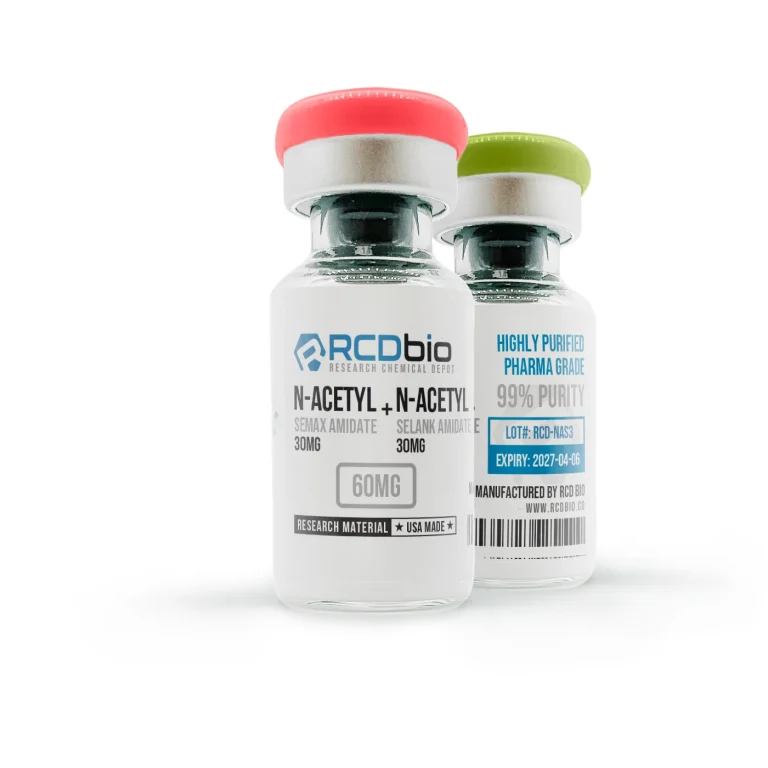
What is the N-Acetyl Semax Amidate + N-Acetyl Selank Amidate Blend?
The N-Acetyl Semax Amidate + N-Acetyl Selank Amidate Blend is a co-lyophilized research preparation combining two structurally distinct synthetic heptapeptides – N-Acetyl Semax Amidate and N-Acetyl Selank Amidate – each supplied as a discrete pharmacological tool compound with characterized neuromodulatory activity in preclinical model systems. Both peptides share the Pro-Gly-Pro (PGP) C-terminal extension motif that confers enhanced metabolic stability relative to their parent sequences. Both carry N-terminal acetylation (Ac-) and C-terminal amidation (-NH₂) modifications that further reduce susceptibility to aminopeptidase and carboxypeptidase degradation, respectively, extending their activity profiles compared to unmodified Semax and Selank.
N-Acetyl Semax Amidate is an acetylated, amidated derivative of Semax – itself a synthetic heptapeptide analog of the adrenocorticotropic hormone fragment ACTH(4–10) – with the sequence Ac-Met-Glu-His-Phe-Pro-Gly-Pro-NH₂. The parent compound Semax was developed at the Institute of Molecular Genetics of the Russian Academy of Sciences as a neuroprotective and nootropic research tool and is registered in Russia for clinical use in ischemic stroke recovery and cognitive impairment. N-Acetyl Semax Amidate is investigated in laboratory settings for its effects on brain-derived neurotrophic factor (BDNF) synthesis, TrkB receptor signaling, and monoaminergic neurotransmitter systems in rodent central nervous system preparations.
N-Acetyl Selank Amidate is an acetylated, amidated derivative of Selank – a synthetic heptapeptide tuftsin analog with the core sequence Thr-Lys-Pro-Arg-Pro-Gly-Pro – developed by the same Institute of Molecular Genetics in cooperation with the V.V. Zakusov Research Institute of Pharmacology of the Russian Academy of Medical Sciences. Selank was constructed by appending the Pro-Gly-Pro stability-conferring tripeptide to tuftsin – the endogenous tetrapeptide (Thr-Lys-Pro-Arg) located at residues 289–292 of the Fc region (CH2 domain) of the immunoglobulin G heavy chain, where it is released by sequential enzymatic cleavage. N-Acetyl Selank Amidate is investigated in laboratory settings for its allosteric modulation of GABAergic neurotransmission gene expression, enkephalin-degrading enzyme inhibition, immunomodulatory cytokine regulation, and BDNF expression in hippocampal model systems.
The two peptides are investigated as complementary neuromodulatory tool compounds that operate through distinct primary receptor systems – the BDNF/TrkB neurotrophin axis for N-Acetyl Semax Amidate and the GABAergic/enkephalinase inhibition axis for N-Acetyl Selank Amidate – making the combination a subject of preclinical interest in studies examining simultaneous excitatory neurotrophin and inhibitory neuromodulatory signaling in central nervous system model preparations.
RCDbio synthetic N-Acetyl Semax Amidate + N-Acetyl Selank Amidate Blend is intended strictly for laboratory and research purposes. It is not approved by the Food and Drug Administration for use in this research-grade, non-pharmaceutical form. It is not a dietary supplement and is not intended for human consumption or therapeutic self-administration.
Chemical Properties
This blend contains two distinct active peptides. Each is characterized separately below.
N-Acetyl Semax Amidate
| Property | Detail |
| Product Type | Synthetic Linear Heptapeptide; ACTH(4–10) Analog; N-terminal Acetyl / C-terminal Amide |
| Product Name | N-Acetyl Semax Amidate (Ac-Semax-NH₂) |
| Application | Scientific / Research Use Only |
| CAS Number | 2920938-90-3 |
| Molar Mass | 855.0 g/mol (C₃₉H₅₄N₁₀O₁₀S, computed by PubChem 2.2) |
| Chemical Formula | C₃₉H₅₄N₁₀O₁₀S |
| Sequence | Ac-Met-Glu-His-Phe-Pro-Gly-Pro-NH₂ (N-terminal acetylation; C-terminal primary amide; all L-stereochemistry) |
| IUPAC Name | N-acetyl-L-methionyl-L-alpha-glutamyl-L-histidyl-L-phenylalanyl-L-prolylglycyl-L-prolinamide |
| Synonyms | Ac-Semax-NH₂; N-Acetyl Semax; Ac-MEHFPGP-NH₂; HY-P3588 (MedChemExpress catalog designation) |
| Physical Form | Lyophilized white to off-white powder |
| Solubility | Soluble in sterile water for injection or bacteriostatic water; also soluble in 0.1–1% aqueous acetic acid; no disulfide bridge; reducing agents do not affect structural integrity |
| Storage (Lyophilized) | Store at −20°C in a sealed, light-protected container with desiccant; protect from moisture and temperature fluctuations |
| Storage (Reconstituted) | Store at 4°C; use within 7–14 days of reconstitution; avoid repeated freeze-thaw cycles; discard turbid or discolored solutions |
| PubChem CID | 172638603 |
| Purity | ≥98% (HPLC verified, independent third-party laboratory analysis; COA available per batch) |
N-Acetyl Selank Amidate
| Property | Detail |
| Product Type | Synthetic Linear Heptapeptide; Tuftsin Analog; N-terminal Acetyl / C-terminal Amide |
| Product Name | N-Acetyl Selank Amidate (Ac-Selank-NH₂) |
| Application | Scientific / Research Use Only |
| CAS Number | No confirmed standalone CAS registry number has been identified in publicly accessible databases for the N-acetyl, C-amide form of Selank at the time of this writing. The CAS 129954-34-3 assigned to parent Selank (free acid, free amine) should not be used for the amidate variant. Researchers should consult the current COA for batch-specific chemical identity verification. |
| Molar Mass | Approximately 793.9 g/mol (C₃₅H₅₉N₁₁O₁₀, based on Ac-Thr-Lys-Pro-Arg-Pro-Gly-Pro-NH₂ composition; calculated from constituent residues; not yet independently confirmed in a PubChem-indexed entry for the amidate form at time of writing) |
| Chemical Formula | C₃₅H₅₉N₁₁O₁₀ (acetyl-amidate form; derived from Selank free base C₃₃H₅₇N₁₁O₉ with +42.04 Da N-acetyl adduct and −0.98 Da C-terminal amidation) |
| Sequence | Ac-Thr-Lys-Pro-Arg-Pro-Gly-Pro-NH₂ (N-terminal acetylation; C-terminal primary amide; all L-stereochemistry) |
| IUPAC Name | (2S)-1-[2-[[(2S)-1-[(2S)-2-[[(2S)-1-[(2S)-2-[[(2S,3R)-2-acetamido-3-hydroxybutanoyl]amino]-6-aminohexanoyl]pyrrolidine-2-carbonyl]amino]-5-(diaminomethylideneamino)pentanoyl]pyrrolidine-2-carbonyl]amino]acetyl]pyrrolidine-2-carboxamide (amidate form; note that PubChem CID 133082488 lists N-acetyl selank as the free acid; the amide form changes the C-terminal carboxylic acid to a primary amide) |
| Synonyms | Ac-Selank-NH₂; NA-Selank Amidate; N-Acetyl Selank; Ac-TKPRPGP-NH₂ |
| Physical Form | Lyophilized white to off-white powder |
| Solubility | Soluble in sterile water for injection or bacteriostatic water; also soluble in 0.1–1% aqueous acetic acid; no disulfide bridge |
| Storage (Lyophilized) | Store at −20°C in a sealed, light-protected container with desiccant; protect from moisture and temperature fluctuations |
| Storage (Reconstituted) | Store at 4°C; use within 7–14 days of reconstitution; avoid repeated freeze-thaw cycles; discard turbid or discolored solutions |
| PubChem CID | 133082488 (N-acetyl selank, free acid form; no confirmed separate CID identified for the C-terminal amidate form at time of writing) |
| Purity | ≥98% (HPLC verified, independent third-party laboratory analysis; COA available per batch) |
Blend-Level Properties
| Property | Detail |
| Blend Composition | Co-lyophilized mixture of N-Acetyl Semax Amidate and N-Acetyl Selank Amidate |
| Physical Form | Lyophilized white to off-white powder |
| WADA Status | Neither N-Acetyl Semax Amidate nor N-Acetyl Selank Amidate appears by name on the current WADA Prohibited List. However, both are synthetic peptide analogs with neuromodulatory activity; they may fall within the S0 Non-Approved Substances category or S2 Peptide Hormones, Growth Factors, Related Substances, and Mimetics depending on jurisdictional interpretation. Researchers engaged in sport-adjacent studies should verify the current status of each component at GlobalDRO.com before use. |
How Does the N-Acetyl Semax Amidate + N-Acetyl Selank Amidate Blend Work?
The two peptides in this blend operate through mechanistically distinct primary signaling pathways that have been characterized separately in preclinical model systems.
N-Acetyl Semax Amidate – BDNF/TrkB Neurotrophin Axis Modulation
BDNF Upregulation and TrkB Receptor Activation
In rodent in vivo model preparations, Semax and its acetylated analog have been characterized to upregulate brain-derived neurotrophic factor (BDNF) in the hippocampus and basal forebrain. Following intranasal administration of Semax at 50 µg/kg in rat preparations, BDNF protein levels were observed to increase up to 1.4-fold in the hippocampus at three hours post-administration, accompanied by a 1.6-fold increase in TrkB receptor tyrosine phosphorylation and a three-fold increase in exon III BDNF mRNA levels. The binding of Semax to rat basal forebrain cell membranes was characterized as time-dependent, specific, and reversible, with tritium-labeled peptide binding studies confirming receptor-level engagement in this brain region. These BDNF/TrkB findings form the mechanistic basis for classifying N-Acetyl Semax Amidate as an indirect neurotrophin axis modulator, consistent with the compound’s proposed role in synaptic plasticity research models.
Serotonergic and Dopaminergic Neurotransmitter System Modulation
In rodent in vivo model preparations, Semax has been characterized to increase serotonin levels in discrete brain regions, with dopamine modulation observed under conditions of pharmacological challenge. Intranasal Semax potentiated the locomotor-stimulating effects of d-amphetamine in rat preparations – an observation attributed to dopaminergic system sensitization in limbic and striatal pathways. The monoaminergic effects are mechanistically distinct from the BDNF/TrkB pathway and have been characterized in combined neurochemical and behavioral model systems to explore nootropic signaling.
N-Terminal Acetylation and C-Terminal Amidation – Pharmacokinetic Enhancement
The N-terminal acetyl group on N-Acetyl Semax Amidate blocks aminopeptidase-mediated N-terminal cleavage, while the C-terminal amide blocks carboxypeptidase-mediated C-terminal degradation. These dual modifications extend plasma stability relative to unmodified Semax and enhance central nervous system membrane permeability, as characterized in peptide degradation kinetic studies using labeled Semax in rat basal forebrain cell and plasma membrane preparations.
N-Acetyl Selank Amidate – GABAergic Modulation and Enkephalinase Inhibition
Allosteric GABAergic Neurotransmission Gene Expression Modulation
In rat frontal cortex and hippocampal preparations, Selank administration has been characterized to alter the mRNA expression of multiple genes involved in GABAergic neurotransmission, including dopamine receptor subtype genes (Drd1a, Drd2, Drd5) and the GABA transporter gene Slc6a13. These gene expression changes are consistent with allosteric modulation of the GABAergic system rather than direct GABA-A receptor binding of the type associated with classical benzodiazepines. The anxiolytic activity profile observed in preclinical behavioral preparations – including attenuation of anxiety-related behaviors comparable in direction to benzodiazepine standards without associated sedation or dependence markers in rodent models – is proposed to arise from this indirect GABAergic modulatory mechanism.
Enkephalin-Degrading Enzyme Inhibition
Selank has been characterized in both ex vivo serum preparations and clinical study designs to inhibit enkephalin-degrading enzymes (enkephalinases) in a dose-dependent manner, with an IC₅₀ of approximately 15 µM in plasma enkephalin hydrolysis assays. Inhibition of enkephalinase activity by Selank was observed to exceed that of the reference peptidase inhibitors bacitracin and puromycin in comparative assays. This mechanism is proposed to sustain endogenous enkephalin signaling – particularly leu-enkephalin – at opioid receptor sites in ways that may contribute to the anxiolytic activity profile observed in rodent behavioral preparations and human clinical study designs. Semax was also identified as a co-inhibitor of enkephalin-degrading enzymes in human serum preparations, representing a mechanistic overlap between the two blend components.
BDNF Expression Modulation in Hippocampal Preparations
In rodent intranasal administration preparations, Selank has been characterized to regulate BDNF expression in the rat hippocampus in vivo. This overlapping BDNF-regulatory activity with N-Acetyl Semax Amidate is a mechanistic rationale for co-investigation of the two peptides in combination, as both compounds converge on neurotrophin axis modulation via distinct upstream signaling mechanisms – ACTH-fragment receptor engagement for Semax and GABAergic/enkephalin system modulation for Selank.
Immunomodulatory Cytokine Gene Expression
As a tuftsin derivative, Selank retains the immunomodulatory activity of its parent scaffold. In preclinical model preparations, Selank has been characterized to alter the expression of genes encoding chemokines, cytokines, and their receptors, representing a neuroimmune modulation dimension of its preclinical research profile that is mechanistically distinct from Semax.
Key Research Findings
- Semax BDNF/TrkB axis: Single intranasal Semax administration (50 µg/kg) produced up to a 1.4-fold increase in hippocampal BDNF protein, a 1.6-fold increase in TrkB tyrosine phosphorylation, and a three-fold increase in exon III BDNF mRNA in rat hippocampal preparations; conditioned avoidance reaction improvement was co-observed. [Dolotov et al., Brain Res, 2006]
- Semax basal forebrain binding and BDNF induction: Specific, reversible binding of tritium-labeled Semax was characterized in rat basal forebrain membrane preparations; BDNF protein levels increased three hours post-administration; Semax was identified as an indirect BDNF synthesis inducer in astrocyte cell cultures from rat basal forebrain. [Dolotov et al., J Neurochem, 2006]
- Selank GABAergic gene expression modulation: Selank administration produced statistically significant changes in the mRNA levels of genes involved in GABAergic neurotransmission – including Drd1a, Drd2, Drd5, and Slc6a13 – in rat frontal cortex at one and three hours post-administration; findings interpreted as allosteric modulation of the GABAergic system without direct GABA-A receptor binding. [Volkova et al., Front Pharmacol, 2016]
- Selank enkephalinase inhibition: Dose-dependent inhibition of enkephalin-degrading enzyme activity characterized in plasma preparations; Selank’s IC₅₀ of 15 µM exceeded reference peptidase inhibitors; corresponding reduction in enkephalin hydrolysis proposed as a mechanism of anxiolytic activity in generalized anxiety model preparations. [Semenova et al., Bull Exp Biol Med, 2001; cross-referenced in Kost et al.]
- Selank GABAergic signaling in neuroblastoma cell preparations: Selank treatment produced changes in GABAergic neurotransmission gene expression in IMR-32 neuroblastoma cell preparations that overlapped with GABA control conditions but were mechanistically distinct from direct receptor engagement; findings confirm an indirect allosteric modulatory mechanism. [Filatova et al., Front Pharmacol, 2017]
All findings listed above are derived from preclinical or in vitro data. No conclusions regarding human therapeutic efficacy can be drawn from these observations. These findings do not constitute evidence of safety or efficacy in any human condition or organism.
What are the Potential Research Applications of the N-Acetyl Semax Amidate + N-Acetyl Selank Amidate Blend?
Neurotrophin Axis Research and BDNF/TrkB Pathway Characterization
N-Acetyl Semax Amidate is employed in laboratory investigations of BDNF synthesis, TrkB receptor phosphorylation kinetics, and downstream CREB/MAPK pathway activation in hippocampal cell preparations, astrocyte cultures, and rodent in vivo models. The blend is used in studies where simultaneous BDNF upregulation and GABAergic system modulation are desired research endpoints, allowing parallel characterization of neurotrophin and inhibitory neurotransmitter axes in the same experimental preparation.
GABAergic Neurotransmission and Anxiolytic Signaling Research
N-Acetyl Selank Amidate is utilized in preclinical investigations of allosteric GABAergic modulation, including gene expression profiling of GABA pathway components in rodent cortical and hippocampal preparations and behavioral anxiety model systems. The combination with N-Acetyl Semax Amidate allows co-investigation of excitatory neurotrophin and inhibitory GABAergic signaling in model systems where both axes are research variables.
Enkephalin System and Opioid Peptide Degradation Research
The enkephalinase inhibition profile of N-Acetyl Selank Amidate is investigated in ex vivo plasma peptidase assays and in vivo rodent models examining the contribution of endogenous enkephalin clearance rates to anxiety and stress response biomarkers. Semax’s co-inhibition of enkephalin-degrading enzymes in human serum preparations makes the blend a compound of interest in studies examining the combined effect of two neuromodulatory peptides on the enkephalinase/leu-enkephalin axis.
Neuroprotection and Ischemic Brain Model Research
Both Semax and Selank have been characterized in rodent ischemia-reperfusion model preparations for neuroprotective signaling. Semax has been observed to upregulate neurotrophic factors including BDNF, NGF, and VEGF-A in ischemic brain tissue, while Selank has been characterized for its effects on hippocampal gene expression under restraint stress conditions. The blend is employed in preclinical model systems examining dual neuroprotective signaling in conditions of acute neurological stress.
Immunomodulatory and Neuroimmune Research
N-Acetyl Selank Amidate retains the immunomodulatory activity of tuftsin and has been characterized to alter cytokine and chemokine gene expression profiles in preclinical immune model preparations. This neuroimmune activity dimension is investigated in research contexts examining the intersection of peptidergic immune modulation and central nervous system function.
These are observed in preclinical and in vitro contexts only and do not constitute claims of efficacy or safety in any organism.
What are the Potential Side Effects of the N-Acetyl Semax Amidate + N-Acetyl Selank Amidate Blend?
- Semax and Selank as individual compounds have been described in Russian clinical study designs as well-tolerated at intranasal doses employed in those study populations; however, these observations reflect pharmaceutical-grade formulations under controlled clinical conditions and cannot be extrapolated to research-grade lyophilized blend material
- No hematologic, hepatotoxic, or nephrotoxic effects have been characterized for either component in published preclinical data at research-relevant concentrations; published preclinical safety data for the specific N-acetyl, amidate-modified forms of each peptide are limited relative to the parent compounds
- The blend’s dual neurochemical activity – BDNF/TrkB axis activation via N-Acetyl Semax Amidate and GABAergic modulation via N-Acetyl Selank Amidate – introduces the possibility of additive or synergistic neurochemical interactions that have not been systematically characterized in published preclinical toxicology literature for this specific combination
- Immunomodulatory effects of N-Acetyl Selank Amidate (cytokine gene expression modulation) represent a pharmacologically active axis that has not been fully characterized in long-duration animal model preparations at doses comparable to research protocols
- No receptor desensitization or tachyphylaxis data has been published specifically for the N-acetyl amidate-modified forms of either compound; desensitization behavior may differ from parent unmodified Semax and Selank sequences due to enhanced receptor residence time conferred by the dual terminal modifications
No human safety or tolerability data pertaining to research-grade N-Acetyl Semax Amidate + N-Acetyl Selank Amidate supplied in co-lyophilized powder form has been established. These observations are derived from experimental systems and should not be extrapolated to human or animal outcomes.
Risk & Handling
Handling Precautions
The lyophilized blend powder should be handled by trained laboratory personnel only. Standard peptide handling precautions apply: nitrile gloves, laboratory coat, and eye protection at minimum. Reconstitution should avoid aerosol generation; a biosafety cabinet is recommended for powder handling. Neither component contains a disulfide bridge; reducing agents are not required. All reconstitution and aliquoting operations should follow institutional SOPs for bioactive peptide handling. Avoid repeated freeze-thaw cycling of reconstituted solutions.
Exposure Risks
Risk Tier: LOW-TO-MODERATE
Both N-Acetyl Semax Amidate and N-Acetyl Selank Amidate are pharmacologically active peptides with characterized central nervous system signaling activity. Published preclinical safety data for both parent compounds (Semax and Selank) have not identified acute toxicity at research-relevant concentrations in rodent model preparations. The dual terminal modifications (N-acetyl, C-amide) extend plasma half-life relative to unmodified parent sequences, which should be factored into exposure risk assessments for laboratory personnel. The immunomodulatory activity of the Selank component represents an additional pharmacological axis that, while not characterized as acutely toxic in preclinical models, warrants consideration in risk assessment for personnel with immune system conditions. No human safety data has been established for research-grade co-lyophilized blend material in non-pharmaceutical form.
Storage
- Lyophilized form: Store at −20°C in a sealed, light-protected container with desiccant; minimize exposure to ambient humidity
- Reconstituted form: Store at 4°C; use within 7–14 days of reconstitution; label reconstitution date and time on each vial
- Avoid repeated freeze-thaw cycles; each cycle risks progressive loss of peptide activity in both components
- No reducing agent sensitivity in either component (no disulfide bridges); however, avoid prolonged exposure to strongly oxidizing conditions
- Discard any reconstituted solution that appears turbid, discolored, or shows visible particulate matter
FAQs
Q: What is the N-Acetyl Semax Amidate + N-Acetyl Selank Amidate Blend and what is it investigated for in research settings? A: This blend combines two synthetic heptapeptides with distinct but complementary mechanistic profiles. N-Acetyl Semax Amidate is an ACTH(4–10) analog investigated for BDNF/TrkB neurotrophin axis modulation and monoaminergic neurotransmitter system effects in preclinical central nervous system model preparations. N-Acetyl Selank Amidate is a tuftsin analog investigated for allosteric GABAergic neurotransmission gene expression modulation, enkephalinase inhibition, and immunomodulatory cytokine regulation. Both are supplied by RCDbio strictly for laboratory and research purposes and are not approved for human use.
Q: What distinguishes N-Acetyl Semax Amidate from unmodified Semax? A: Unmodified Semax carries a free N-terminus and C-terminal carboxylic acid. N-Acetyl Semax Amidate incorporates an N-terminal acetyl group that blocks aminopeptidase-mediated cleavage and a C-terminal primary amide that prevents carboxypeptidase degradation. Together, these modifications extend plasma stability and are proposed to enhance central nervous system membrane permeability relative to the parent compound. These pharmacokinetic differences have been characterized in peptide degradation kinetic studies in rat basal forebrain cell and plasma membrane preparations.
Q: What distinguishes N-Acetyl Selank Amidate from unmodified Selank? A: Selank itself already incorporates the Pro-Gly-Pro C-terminal extension that confers metabolic stability relative to tuftsin. N-Acetyl Selank Amidate adds N-terminal acetylation and C-terminal amidation to further block aminopeptidase and carboxypeptidase degradation at both termini. The amidate modification converts the C-terminal carboxylic acid to a primary amide, changing the molecular formula from C₃₃H₅₇N₁₁O₉ (Selank free acid) to approximately C₃₅H₅₉N₁₁O₁₀ with the N-acetyl adduct. These modifications are characterized as extending plasma half-life and tissue persistence relative to unmodified Selank in laboratory peptide stability assessments.
Q: How should the blend be stored and reconstituted for laboratory use? A: The lyophilized blend should be stored at −20°C in a sealed, desiccated, light-protected container. For reconstitution, sterile water for injection or bacteriostatic water is the standard solvent employed in research settings; 0.1–1% aqueous acetic acid is an alternative for vials where water alone is insufficient. Reconstituted solutions should be stored at 4°C and used within 7–14 days. Avoid repeated freeze-thaw cycles. Neither component contains a disulfide bridge; reducing agent-free conditions are not required. Discard turbid or discolored solutions.
Q: Do the two peptides in this blend have overlapping mechanisms? A: Both N-Acetyl Semax Amidate and N-Acetyl Selank Amidate have been characterized to modulate BDNF expression in hippocampal model systems – representing a mechanistic convergence point. Both compounds have also been characterized to inhibit enkephalin-degrading enzymes in serum preparations (Kost et al., 2001, characterized this for both Semax and Selank). Their primary upstream mechanisms are distinct: Semax acts through ACTH fragment–related binding sites and BDNF/TrkB induction, while Selank acts primarily through allosteric GABAergic gene expression modulation and enkephalinase inhibition. The combination is investigated in research contexts where both neurotrophin and inhibitory neurotransmitter system endpoints are simultaneously relevant.
Q: What toxicity observations have been reported for these compounds in preclinical studies? A: Published preclinical data for Semax and Selank as individual compounds have not characterized acute hepatotoxicity, nephrotoxicity, or hematologic toxicity at research-relevant concentrations in rodent model systems. Clinical study designs in Russia employing intranasal Semax and Selank formulations reported favorable tolerability profiles. No systematic toxicology data has been published specifically for the N-acetyl amidate-modified forms or for the co-lyophilized blend. Long-term chronic exposure data for either modified form is limited in the published literature.
Q: Is the N-Acetyl Semax Amidate + N-Acetyl Selank Amidate Blend subject to WADA regulation? A: Neither compound appears by name on the current WADA Prohibited List. However, both are synthetic neuromodulatory peptides with central nervous system activity; they may fall within the S0 Non-Approved Substances category or S2 Peptide Hormones, Growth Factors, Related Substances, and Mimetics category under certain jurisdictional interpretations. Researchers engaged in sport-adjacent study designs should verify the current regulatory status of each component at GlobalDRO.com before initiating use.
Related Research Compounds
Semax [Peptide] – The unmodified parent heptapeptide (Met-Glu-His-Phe-Pro-Gly-Pro) from which N-Acetyl Semax Amidate is derived; investigated in parallel preclinical preparations to characterize the pharmacokinetic and receptor-level differences conferred by N-terminal acetylation and C-terminal amidation, and used as a reference compound in BDNF/TrkB pathway studies.
Selank [Peptide] – The unmodified parent heptapeptide tuftsin analog (Thr-Lys-Pro-Arg-Pro-Gly-Pro) from which N-Acetyl Selank Amidate is derived; employed in comparative GABAergic gene expression and enkephalinase inhibition studies alongside the amidate-modified form to characterize the metabolic stability and activity duration differences conferred by dual terminal modification.
N-Acetyl Semax Amidate [Peptide] – The standalone N-Acetyl Semax Amidate component available as an individual research vial for study designs requiring characterization of the Semax-derived BDNF/TrkB signaling axis without the concurrent GABAergic and enkephalinase-inhibitory activity contributed by the Selank component.
References
- Dolotov OV, Karpenko EA, Seredenina TS, Inozemtseva LS, Levitskaya NG, Zolotarev YA, Kamensky AA, Grivennikov IA, Engele J, Myasoedov NF. Semax, an analogue of adrenocorticotropin (4–10), binds specifically and increases levels of brain-derived neurotrophic factor protein in rat basal forebrain. J Neurochem. 2006;97 Suppl 1:82–86. https://pubmed.ncbi.nlm.nih.gov/16635254/
- Dolotov OV, Karpenko EA, Inozemtseva LS, Seredenina TS, Levitskaya NG, Rozyczka J, Dubynina EV, Novosadova EV, Andreeva LA, Alfeeva LY, Kamensky AA, Grivennikov IA, Myasoedov NF, Engele J. Semax, an analog of ACTH(4-10) with cognitive effects, regulates BDNF and trkB expression in the rat hippocampus. Brain Res. 2006;1117(1):54–60. https://pubmed.ncbi.nlm.nih.gov/16996037/
- Volkova A, Shadrina M, Kolomin T, Andreeva L, Limborska S, Myasoedov N, Slominsky P. Selank administration affects the expression of some genes involved in GABAergic neurotransmission. Front Pharmacol. 2016 Feb 18;7:31. https://pubmed.ncbi.nlm.nih.gov/26924987/
- Semenova TP, Kozlovskaya MM, Zakharova NM, Kozlovskii II. Inhibitory effect of Selank on enkephalin-degrading enzymes as a possible mechanism of its anxiolytic activity. Bull Exp Biol Med. 2001;132(5):1054–1056. https://pubmed.ncbi.nlm.nih.gov/11550013/
- Filatova E, Kasian A, Kolomin T, Rybalkina E, Alieva A, Andreeva L, Limborska S, Myasoedov N, Pavlova G, Slominsky P, Shadrina M. GABA, Selank, and olanzapine affect the expression of genes involved in GABAergic neurotransmission in IMR-32 cells. Front Pharmacol. 2017 Feb 28;8:89. https://pubmed.ncbi.nlm.nih.gov/28293190/
Disclaimer
This blend is exclusively for laboratory research purposes. RCDbio products are not intended to diagnose, prevent, treat, or cure any disease or medical condition.
The Food and Drug Administration has not evaluated the statements on our website. This product is not approved for human or veterinary use. Researchers must comply with all applicable local, state, and federal laws and regulations governing the purchase and use of research compounds. By purchasing, you agree to our Terms and Conditions. RCDbio reserves the right to refuse sales to unauthorized individuals.
ATTENTION: All RCDbio products are strictly for LABORATORY AND RESEARCH PURPOSES ONLY. They are not intended for human consumption, veterinary use, or any other non-research application. For queries, complaints, or support, contact support@legacy.rcdbio.co
Reviews
There are no reviews yet