

Description
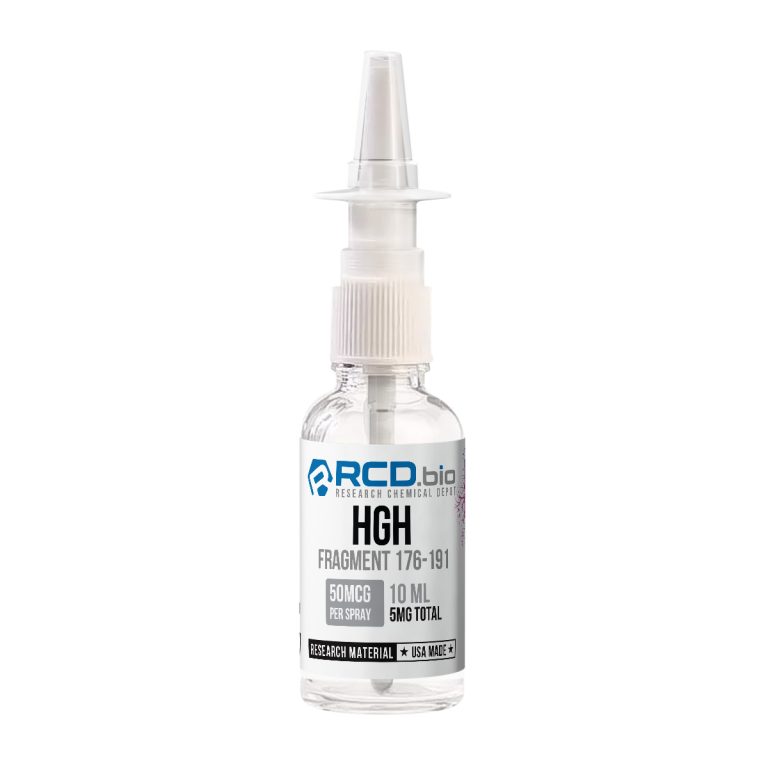
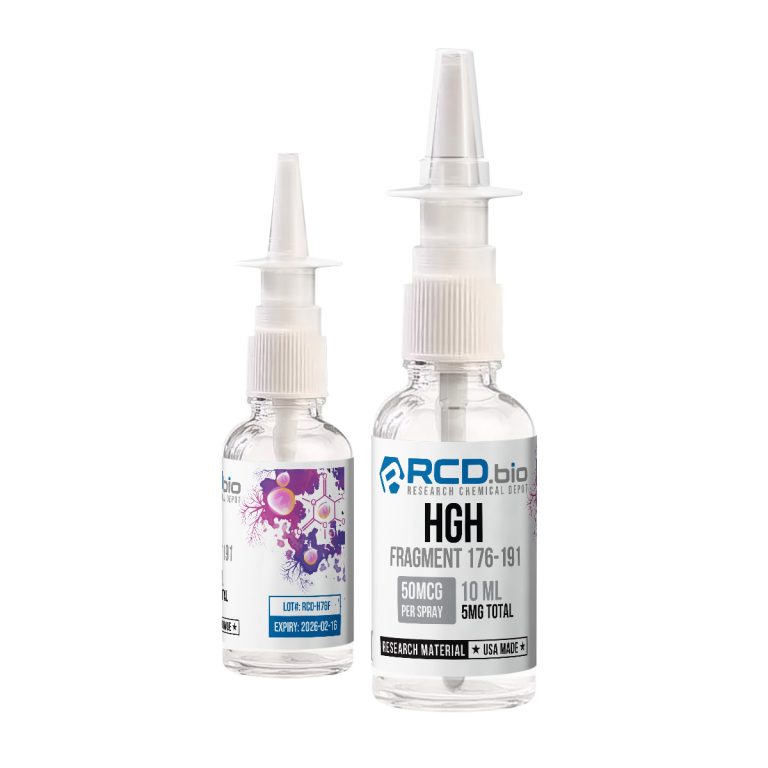
What is HGH Fragment 176-191 Nasal Spray?
HGH Fragment 176-191 (hGH Frag 176-191) is a synthetic 16-amino acid peptide corresponding to residues 176 through 191 of the human growth hormone (hGH) sequence, with a phenylalanine (Phe) residue at the N-terminus. It represents the C-terminal region of the 191-amino acid hGH molecule, constituting less than 10% of the full-length hormone. The peptide contains an internal disulfide bridge between the cysteine residues at positions 7 and 14 within the fragment sequence (corresponding to positions 182 and 189 of native hGH), forming a cyclic structure that is relevant to its conformational stability. HGH Fragment 176-191 was characterized through research at Monash University, Australia, led by FM Ng and colleagues, as the region of hGH responsible for fat metabolic activity. A closely related compound, AOD9604, is a modified form in which the N-terminal phenylalanine is replaced by tyrosine (corresponding to hGH residues 177-191). HGH Fragment 176-191 has not been approved as a registered pharmaceutical in any country and has not been approved by the Food and Drug Administration for any indication.
The compound has been investigated in rodent adipose tissue preparations, in vitro fat cell model systems using cells from rodents, pigs, dogs, and humans, and in silico molecular docking studies for its role in lipolysis stimulation, lipogenesis inhibition, and interaction with lipid metabolism pathways. Research has characterized the fragment as acting independently of the hGH receptor and without stimulating IGF-1 production, distinguishing its mechanism from full-length hGH. The nasal spray formulation is studied as a preclinical research delivery route. Intranasal delivery bypasses hepatic first-pass metabolism relative to systemic routes and provides access to olfactory bulb-mediated CNS transport pathways in preclinical rodent model preparations.
DISCLAIMER: HGH Fragment 176-191 Nasal Spray, as supplied by RCDbio, is not a dietary supplement and has not been approved by the Food and Drug Administration for human use, veterinary use, consumption, or any therapeutic application. This product is not intended for human consumption or therapeutic self-administration. It is supplied exclusively for in vitro and preclinical laboratory research purposes. All RCDbio research compounds are for laboratory and research purposes only.
Chemical Properties of HGH Fragment 176-191
| Property | Details |
| Product Type | Synthetic C-Terminal hGH Peptide Fragment / Lipolytic Peptide / Growth Hormone Analog Fragment |
| Product Name | HGH Fragment 176-191 Nasal Spray |
| Application | Scientific / Research Use Only |
| CAS Number | 66004-57-7 |
| Molar Mass | 1799.10 g/mol. Note: values of 1815.10 g/mol cited in some vendor sources refer to AOD9604 (the Tyr-substituted form, CAS 221231-10-3), not HGH Fragment 176-191. These are chemically distinct compounds with different N-terminal residues and must not be used interchangeably. |
| Chemical Formula | C78H123N23O22S2 |
| IUPAC Name | H-Phe-Leu-Arg-Ile-Val-Gln-Cys(1)-Arg-Ser-Val-Glu-Gly-Ser-Cys(1)-Gly-Phe-OH (cyclic 7→14 disulfide); systematic: L-phenylalanyl-L-leucyl-L-arginyl-L-isoleucyl-L-valyl-L-glutaminyl-L-cysteinyl-L-arginyl-L-seryl-L-valyl-L-alpha-glutamylglycyl-L-seryl-L-cysteinylglycyl-L-phenylalanine cyclic (7→14)-disulfide |
| Synonyms | HGH Fragment 176-191; hGH Frag 176-191; hGH 176-191; Growth Hormone Fragment 176-191; GH Frag 176-191; CL233. |
| Physical Form | Aqueous nasal spray solution (lyophilized peptide reconstituted in sterile buffered solution) |
| Solubility | Soluble in sterile water and 0.9% saline at ≥1 mg/mL |
| Storage (Lyophilized) | −20°C, desiccated, protected from light |
| Storage (Reconstituted / Nasal Spray) | 2–8°C; use within 28 days; protect from light; do not freeze reconstituted solution. The internal disulfide bridge may be susceptible to reduction or conformational disruption under freeze-thaw conditions. |
| PubChem CID | 16131230 (HGH Fragment 176-191, Phe N-terminus). Note: PubChem CID 71300630 refers to AOD9604 (Tyr N-terminus) and must not be used for HGH Fragment 176-191. |
| Purity | ≥98% (HPLC verified, independent third-party laboratory analysis; COA available per batch) |
| WADA Status | PROHIBITED — 2026 WADA Prohibited List, Category S2.2.3 (Growth Hormone, its Analogues and Fragments). HGH 176-191 is explicitly named: “growth hormone fragments, e.g. AOD-9604 and hGH 176-191.” Prohibited both in- and out-of-competition. Verify at GlobalDRO.com. This prohibition applies both in and out of competition for all WADA Code signatories. RCDbio products are for laboratory research purposes only and are not supplied for use in competitive sport contexts. |
How Does HGH Fragment 176-191 Work?
HGH Fragment 176-191 encompasses the C-terminal region of human growth hormone that has been identified as the primary domain responsible for the lipolytic activity of the full-length hormone. Research has characterized this fragment as acting via a mechanism distinct from the hGH receptor, without stimulating IGF-1 production or inducing the insulin-related adverse effects associated with full-length hGH. The peptide contains an internal disulfide bridge forming a cyclic conformation relevant to its biological activity. No single confirmed receptor target has been identified for HGH Fragment 176-191 specifically. The following mechanistic observations are from preclinical and in vitro data only.
hGH Receptor-Independent Lipolytic Activity
AOD9604, the closely related C-terminal hGH fragment with Tyr rather than Phe at position 1, does not compete for hGH receptor binding in transfected BaF-BO3 cell preparations expressing the hGH receptor, as determined by competitive radioligand displacement assay with 125I-hGH. It also does not induce cell proliferation via the hGH receptor, unlike full-length hGH [Heffernan et al., 2001; PMID 11673763]. This indicates that C-terminal hGH fragment lipolytic activity operates via a receptor pathway independent of the canonical hGH receptor, consistent with the concept of hGH behaving as a prohormone with distinct domain-specific activities.
Fat Oxidation and Lipolysis Stimulation Without Hyperglycemia
In chronic 14-day treatment of obese (ob/ob) and lean C57BL/6J mice using mini-osmotic pumps, both hGH and AOD9604 significantly reduced body weight gain in obese mice. This was associated with increased in vivo fat oxidation and elevated plasma glycerol levels (a lipolysis index). Unlike full-length hGH, AOD9604 did not induce hyperglycemia or reduce insulin secretion in these preparations [Heffernan et al., 2001; PMID 11673763]. These observations are from the AOD9604 form (Tyr-hGH 177-191) and are cited as a mechanistic context for the C-terminal hGH fragment class. They do not directly study HGH Fragment 176-191 (Phe-hGH 176-191).
Molecular Docking with Breast Cancer Receptor Targets
In silico molecular docking analysis evaluated the binding affinities of HGH Fragment 176-191 to multiple breast cancer protein targets. Computational docking suggested that addition of the hGH fragment 176-191 peptide to doxorubicin-loaded chitosan nanoparticles could enhance doxorubicin binding to these targets. In vitro viability assay in MCF-7 breast cancer cells confirmed that dual-loaded chitosan nanoparticles (hGH fragment 176-191 plus doxorubicin) demonstrated greater anti-proliferative activity than doxorubicin-loaded chitosan alone [Habibullah et al., 2022; PMID 35783198]. This research application is distinct from the lipid metabolism research context.
Lipogenesis Inhibition
Preclinical fat cell research across multiple species (rodent, porcine, canine, and human adipocyte preparations) has characterized C-terminal hGH fragment effects as including inhibition of lipogenesis in addition to lipolysis stimulation. In obese fat cell preparations specifically, these effects were selective for obese fat cells versus lean fat cells in some model systems. No direct IGF-1 elevation was associated with C-terminal hGH fragment activity in these preparations, consistent with the fragment acting independently of the canonical hGH/IGF-1 growth axis.
Intranasal Delivery & Pharmacokinetics
Olfactory Bulb-Mediated CNS Transport
When administered intranasally in preclinical rodent model systems, peptide compounds can access the central nervous system through the olfactory nerve (cranial nerve I) pathway. Compounds deposited on the olfactory mucosa are transported along olfactory axons through the cribriform plate to the olfactory bulb, from which access to deeper CNS structures has been characterized in rodent preparations. The olfactory and trigeminal nerve pathways for nose-to-brain peptide transport have been investigated in preclinical studies of peptide and protein delivery [Wong et al., 2024; PMID 38441832]. No compound-specific olfactory transport data for HGH Fragment 176-191 has been published. The primary pharmacological research context for this compound is peripheral lipid metabolism in adipose tissue rather than CNS-directed targets.
Hepatic First-Pass Metabolism Bypass
The intranasal route avoids portal circulation and hepatic first-pass metabolic processing. HGH Fragment 176-191 is a 16-amino acid peptide with an internal disulfide bridge. The cyclic disulfide structure may provide partial conformational stability relative to linear peptides of comparable size, and the intranasal route bypasses the proteolytic GI environment. These observations are derived from structural chemistry principles and do not constitute evidence of efficacy via any route in human subjects.
Nasal Mucosal Absorption
HGH Fragment 176-191 has a molar mass of 1799.10 g/mol (approximately 1.80 kDa). This molecular weight falls within the lower 1-5 kDa bracket, indicating paracellular and endocytic uptake mechanisms are the likely predominant absorption pathways at the nasal mucosa. The internal disulfide bridge imposes a cyclic conformational constraint that may affect mucosal permeability relative to fully linear peptides of the same mass. Specific nasal mucosal permeability coefficients for HGH Fragment 176-191 have not been published.
Compound-Specific Pharmacokinetics
No formal intranasal pharmacokinetic data for HGH Fragment 176-191 have been published in the peer-reviewed literature as of June 2026. The plasma half-life of HGH Fragment 176-191 following parenteral administration is approximately 2-3 hours based on analogy with related C-terminal hGH fragments; this value has not been formally characterized via a controlled pharmacokinetic study for the Phe-form specifically. No human pharmacokinetic data exist for HGH Fragment 176-191. Researchers should account for the absence of published intranasal-specific pharmacokinetic parameters when designing laboratory protocols.
Key Research Findings
hGH Receptor-Independent Fat Oxidation and Weight Loss (Obese and Lean C57BL/6J Mouse Preparations): AOD9604 (C-terminal hGH fragment with Tyr N-terminus) reduced body weight gain in obese mice, increased in vivo fat oxidation, and stimulated lipolysis without inducing hyperglycemia, reducing insulin secretion, binding the hGH receptor, or inducing hGH receptor-mediated cell proliferation; this confirmed that C-terminal hGH fragment lipolytic activity operates independently of the canonical hGH receptor pathway [Heffernan et al., 2001; PMID 11673763]
Molecular Docking with Breast Cancer Receptors and Cytotoxicity Enhancement (In Silico / MCF-7 Human Breast Cancer Cell Preparation): In silico docking showed hGH fragment 176-191 binding to multiple breast cancer protein targets; dual-loaded chitosan nanoparticles containing hGH fragment 176-191 plus doxorubicin demonstrated greater anti-proliferative activity against MCF-7 breast cancer cells than doxorubicin-loaded nanoparticles alone [Habibullah et al., 2022; PMID 35783198]
All findings listed above are from preclinical in vivo mouse model systems, in silico computational docking, and human cancer cell line preparations. Row 1 describes AOD9604 (Tyr-hGH 177-191), not HGH Fragment 176-191 (Phe-hGH 176-191) directly. These are distinct compounds sharing C-terminal hGH fragment biology and are cited as a mechanistic context only. Row 2 uses in silico docking and an in vitro human cancer cell line. These observations do not constitute evidence of efficacy or safety for HGH Fragment 176-191 nasal spray in any organism. No human clinical data has been established for research-grade HGH Fragment 176-191 administered via the intranasal route.
What are the Potential Research Applications?
In controlled laboratory environments, HGH Fragment 176-191 nasal spray has been investigated for the following research applications. These are observed in preclinical and in vitro contexts only and do not constitute claims of efficacy or safety in any organism.
Lipolysis and Lipid Metabolism Research
HGH Fragment 176-191 is investigated as a tool compound for studying C-terminal hGH fragment-mediated lipolysis and lipid metabolism pathways in adipocyte preparations and rodent obesity model systems. Research applications include lipolysis rate characterization in adipocyte preparations, comparative fat oxidation studies between hGH and isolated C-terminal fragment, and receptor pathway identification for hGH receptor-independent lipolytic signaling.
Adipocyte Biology and Lipogenesis Inhibition Research
Research applications include comparative studies of HGH Fragment 176-191 effects on lipogenesis versus lipolysis in adipocyte cell preparations from multiple species, investigation of selective effects on obese versus lean adipocytes, and characterization of C-terminal hGH fragment pharmacology in 3T3-L1 and primary adipocyte model systems.
hGH Fragment Structure-Activity Relationship Research
HGH Fragment 176-191 provides a reference compound for C-terminal hGH fragment structure-activity relationship studies. Research applications include comparative pharmacology between HGH Fragment 176-191 (Phe N-terminus) and AOD9604 (Tyr N-terminus), investigation of the disulfide bridge role in biological activity, and hGH domain mapping studies characterizing the lipolytic and growth-promoting regions of the full-length hormone.
Oncology Research and Drug Delivery Research
The molecular docking affinity of HGH Fragment 176-191 for breast cancer receptor targets supports its investigation as a targeting ligand in peptide-drug conjugate and nanoparticle delivery systems. Research applications include comparative binding studies of the fragment at cancer-relevant receptor targets, investigation of hGH fragment-guided drug delivery in in vitro cancer cell models, and characterization of synergistic cytotoxicity in drug-peptide combination nanoparticle preparations.
What are the Potential Side Effects?
Researchers in preclinical and in vitro settings have noted the following observations. Long-term safety and toxicity profiles remain incompletely characterized for the research-grade nasal spray formulation.
- Anti-insulin activity in preclinical rodent preparations (preclinical): HGH Fragment 176-191 demonstrated anti-insulin activity in rats in vivo and in vitro; four related C-terminal hGH fragments (hGH 172-191, 176-191, 177-191, and 178-191) produced short-lived rises in blood glucose and more sustained rises in plasma insulin in preclinical preparations; researchers should account for this metabolic activity when designing protocols involving inadvertent self-exposure
- Growth-promoting activity at higher concentrations (class context): At higher doses, some C-terminal hGH fragments have demonstrated minor growth-promoting activity; HGH Fragment 176-191 at research dose ranges has been characterized as lacking IGF-1 stimulation based on extrapolation from AOD9604 data, but compound-specific IGF-1 response data for the Phe form is limited
- Absence of intranasal-specific safety data: No safety or tolerability data specific to the intranasal route of administration for HGH Fragment 176-191 has been published in the peer-reviewed literature as of June 2026
- No completed human clinical trials for HGH Fragment 176-191: In contrast to AOD9604, which entered human clinical trials with development terminated in 2007, HGH Fragment 176-191 (the Phe form) has not been studied in humans
No human safety or tolerability data have been established for HGH Fragment 176-191 nasal spray. These observations are derived from experimental systems and should not be extrapolated to human or animal outcomes.
Risk & Handling
Handling Precautions
Standard laboratory PPE is required: nitrile gloves, a laboratory coat, and eye protection. The following nasal spray-specific precautions apply:
- Do not direct the nasal spray actuator toward the face, eyes, or mucous membranes during handling, testing, or transfer. CNS-active compounds may produce pharmacological effects via inadvertent intranasal self-exposure.
- Handle the nasal spray solution in a clean laboratory environment. For aliquoting or analytical sampling, use a laminar flow cabinet.
- The nasal spray solution is an aqueous formulation susceptible to microbial contamination if compromised. Handle under aseptic conditions. Discard if the solution appears cloudy, discolored, or shows particulate matter.
- Avoid aerosol generation during any manipulation of the nasal spray solution.
Exposure Risks
Risk Tier: LOW-MODERATE
HGH Fragment 176-191 acts via a lipid metabolism signaling pathway with anti-insulin activity documented in preclinical preparations. Inadvertent intranasal self-exposure carries a theoretical risk of transient metabolic effects, including anti-insulin activity. No human safety or tolerability data have been established for HGH Fragment 176-191 nasal spray. Researchers should handle this compound with precautions appropriate to a metabolically active peptide with documented lipolytic and anti-insulin effects in preclinical preparations.
Storage
In-use nasal spray: Store at 2-8°C. Use within 28 days of first actuation. Protect from light. Keep upright.
DO NOT FREEZE the ready-to-use nasal spray formulation. Freezing alters pH, buffer stability, excipient integrity, and spray actuation properties.
Lyophilized bulk stock (if applicable): Store at -20°C in sealed, desiccated, light-protected containers. Avoid repeated freeze-thaw cycles. The internal disulfide bridge may be susceptible to reduction under repeated freeze-thaw conditions.
Discard and solution that appears cloudy, discolored, or shows visible particulate matter.
FAQs
Q: How does intranasal administration facilitate the delivery of HGH Fragment 176-191 in preclinical research models?
A: Intranasal application bypasses hepatic first-pass metabolism, which is relevant given the peptidase susceptibility of hGH fragment peptides. The olfactory and trigeminal nerve pathways for peptide transport have been characterized for structurally related peptide compounds in rodent models [Wong et al., 2024; PMID 38441832]. The compound’s primary research target is peripheral lipid metabolism in adipose tissue, accessible via systemic absorption following intranasal delivery. No compound-specific olfactory transport data exists for HGH Fragment 176-191. No human delivery data has been established for research-grade HGH Fragment 176-191 nasal spray.
Q: What is the recommended storage and in-use shelf life for HGH Fragment 176-191 nasal spray?
A: Sealed product should be stored at 2-8°C, protected from light. Once first actuated, in-use shelf life is 28 days at 2-8°C. DO NOT FREEZE the ready-to-use solution. The internal disulfide bridge may be susceptible to disruption under repeated freeze-thaw conditions. Lyophilized bulk stock should be stored at -20°C in sealed, desiccated, light-protected conditions. Discard if the solution shows cloudiness, discoloration, or particulate matter.
Q: Is the HGH Fragment 176-191 nasal spray formulation suitable for cell culture or in vitro assay systems?
A: The formulation is prepared in isotonic saline (0.9% NaCl, pH 5.5-6.5) without preservatives. The preservative-free composition reduces cytotoxicity risk in sensitive cell preparations. Researchers should validate the vehicle independently in their specific cell system. The formulation pH (5.5-6.5) is below the typical cell culture range (7.2-7.4); dilution into culture medium before application is recommended. Researchers are responsible for confirming compatibility with their assay system.
Q: How does HGH Fragment 176-191 differ from AOD9604?
A: HGH Fragment 176-191 corresponds to hGH residues 176-191 with phenylalanine (Phe) at the N-terminus (CAS 66004-57-7, MW 1799.10 g/mol). AOD9604 is the modified form with tyrosine (Tyr) replacing Phe at the N-terminal position, corresponding to hGH residues 177-191 (CAS 221231-10-3, MW 1815.10 g/mol). AOD9604 entered human clinical trials with development terminated in 2007 due to insufficient lipolytic efficacy. HGH Fragment 176-191 (the Phe form) has not been studied in humans. They are chemically distinct and should not be used interchangeably in literature references.
Q: What is the WADA status of HGH Fragment 176-191?
A: HGH Fragment 176-191 is explicitly named on the 2026 WADA Prohibited List under Category S2.2.3 (Growth Hormone, its Analogues and Fragments): “growth hormone fragments, e.g. AOD-9604 and hGH 176-191. This prohibition applies both in and out of competition for all WADA Code signatories. RCDbio products are supplied for laboratory research purposes only and are not supplied for use in competitive sport contexts.
Q: What is the FDA regulatory status of HGH Fragment 176-191?
A: HGH Fragment 176-191 is not FDA-approved for any indication. It is not among the 19 peptides on the FDA 503A Category 2 restricted bulk drug substance list. The related compound AOD9604 also failed to obtain FDA approval during its development phase. The research-grade nasal spray supplied by RCDbio is for laboratory research use only.
Q: Is HGH Fragment 176-191 the same compound as the lipolytic fragment described in published literature?
A: This requires careful clarification. The lipolytic fragment characterization in published literature primarily describes AOD9604 (Tyr-hGH 177-191), which was studied by Monash University researchers and entered clinical trials. HGH Fragment 176-191 (Phe-hGH 176-191) shares the same C-terminal hGH sequence basis but the lipolytic pharmacology evidence base is substantially larger for AOD9604. HGH Fragment 176-191 has not been studied in humans. Wikipedia specifically notes that the compound “has erroneously been presented as a lipolytic peptide fragment based on extrapolations of clinical data pertaining to AOD9604.”
Related Research Compounds
Researchers investigating HGH Fragment 176-191 nasal spray may also be interested in the following compounds currently available for laboratory research at RCDbio:
CJC-1295 With DAC Nasal Spray — A long-acting GHRH analog investigated for GHRH-R/cAMP-mediated GH axis modulation via a complementary pathway to C-terminal hGH fragment activity in preclinical somatotroph preparations.
Sermorelin Nasal Spray — The native GRF(1-29) GHRH-R agonist investigated in preclinical somatotroph preparations for short-duration GH-releasing activity via the N-terminal hGH receptor-activating mechanism.
BPC-157 Nasal Spray — A stable gastric pentadecapeptide investigated in preclinical rodent preparations for cytoprotection, angiogenesis, and tissue healing via intranasal delivery.
All products listed are for laboratory and research purposes only.
References
- Heffernan, M.A., Thorburn, A.W., Fam, B., Summers, R., Conway-Campbell, B., Waters, M.J., & Ng, F.M. (2001). Increase of fat oxidation and weight loss in obese mice caused by chronic treatment with human growth hormone or a modified C-terminal fragment. International Journal of Obesity and Related Metabolic Disorders, 25(10), 1442-1449.
https://pubmed.ncbi.nlm.nih.gov/11673763/
- Habibullah, M.M., Mohan, S., Syed, N.K., Makeen, H.A., Jamal, Q.M.S., Alothaid, H., Bantun, F., Alhazmi, A., Hakamy, A., Kaabi, Y.A., Samlan, G., Lohani, M., Thangavel, N., & Al-Kasim, M.A. (2022). Human Growth Hormone Fragment 176-191 Peptide Enhances the Toxicity of Doxorubicin-Loaded Chitosan Nanoparticles Against MCF-7 Breast Cancer Cells. Drug Design, Development and Therapy, 16, 1963-1974.
https://pubmed.ncbi.nlm.nih.gov/35783198/
- Wong, C.Y.J., Baldelli, A., Hoyos, C.M., et al. (2024). Insulin delivery to the brain via the nasal route: unraveling the potential for Alzheimer’s Disease therapy. Drug Delivery and Translational Research, 14(7), 1776-1793.https://pubmed.ncbi.nlm.nih.gov/38441832/
Research Transparency Note: No peer-reviewed publications specific to intranasal delivery of HGH Fragment 176-191 are available as of June 2026. Reference 1 describes AOD9604 (Tyr-hGH 177-191), a chemically distinct but structurally related compound, not HGH Fragment 176-191 (Phe-hGH 176-191) directly. It is cited as a mechanistic context for C-terminal hGH fragment lipid metabolism signaling. Reference 2 uses in silico docking and an in vitro human cancer cell line and does not study intranasal delivery. The olfactory transport pathway evidence in Reference 3 is class-level and applies to structurally related peptide compounds in rodent models. Wikipedia specifically notes that HGH Fragment 176-191 “has erroneously been presented as a lipolytic peptide fragment based on extrapolations of clinical data pertaining to AOD9604.”
Disclaimer
HGH Fragment 176-191 Nasal Spray is exclusively for laboratory research purposes. RCDbio products are not intended to diagnose, prevent, treat, or cure any disease or medical condition.
The Food and Drug Administration has not evaluated the statements on our website. This product is not approved for human or veterinary use. Researchers must comply with all applicable local, state, and federal laws and regulations governing the purchase and use of research compounds. By purchasing, you agree to our Terms and Conditions. RCDbio reserves the right to refuse sales to unauthorized individuals.
ATTENTION: All RCDbio products are strictly for LABORATORY AND RESEARCH PURPOSES ONLY. They are not intended for human consumption, veterinary use, or any other non-research application. For queries, complaints, or support, contact support@legacy.rcdbio.co
Reviews
There are no reviews yet