

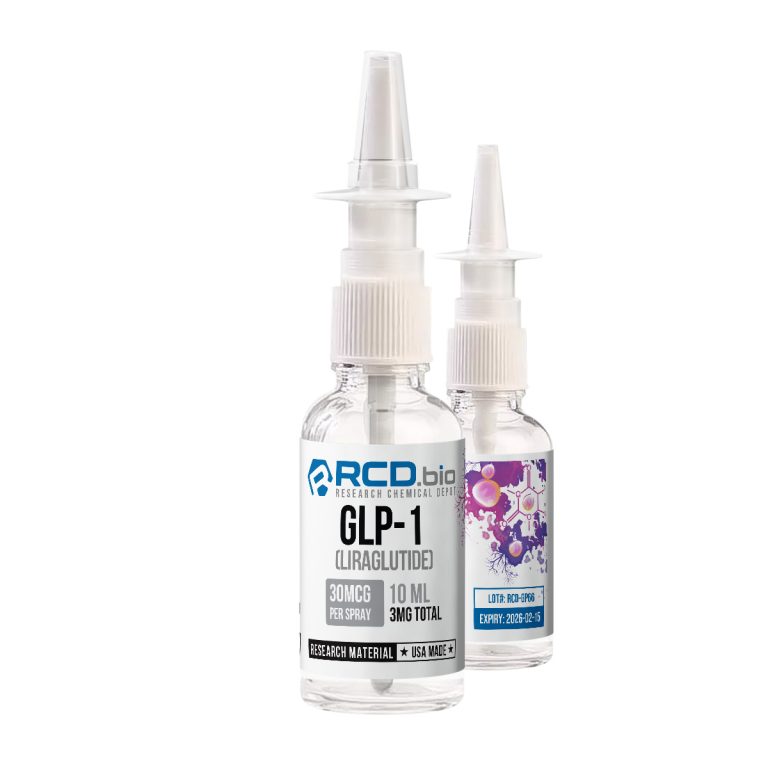
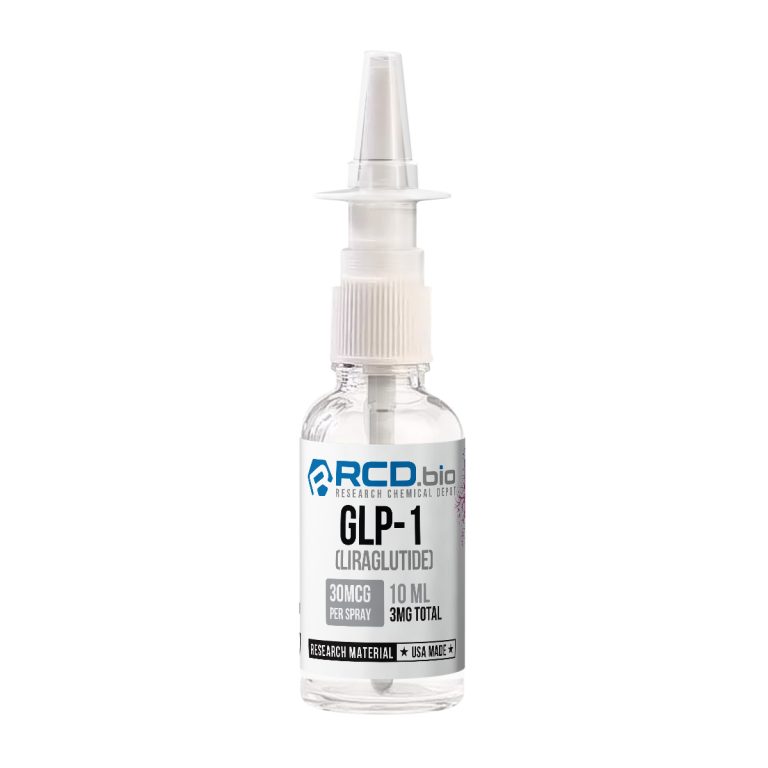
Description
What is Liraglutide (GLP-1) Nasal Spray?
Liraglutide is a synthetic 31-amino acid acylated analog of human glucagon-like peptide-1 (GLP-1), the endogenous incretin hormone produced by intestinal L-cells in response to nutrient ingestion. It was developed by Novo Nordisk and carries two structural modifications relative to native GLP-1(7-37): an Lys34Arg substitution and the addition of a C16 fatty acid chain (palmitic acid) via a glutamic acid linker to Lys26. These modifications confer resistance to dipeptidyl peptidase-IV (DPP-IV)-mediated degradation and promote non-covalent albumin binding, extending the plasma half-life to approximately 13 hours compared to the 1-2 minute half-life of native GLP-1.
Liraglutide (as Victoza and Saxenda) has been approved by the Food and Drug Administration as a subcutaneous injection for two indications: as Victoza (1.8 mg/day), approved January 25, 2010, for glycemic control in adults and pediatric patients aged 10 years and older with type 2 diabetes mellitus, and to reduce the risk of major adverse cardiovascular events in adults with type 2 diabetes and established cardiovascular disease; and as Saxenda (3.0 mg/day), approved December 23, 2014, for chronic weight management in adults and pediatric patients aged 12 years and older. The European Medicines Agency granted approval in July 2009. The research-grade nasal spray formulation supplied by RCDbio is not a pharmaceutical product, is not equivalent to Victoza or Saxenda, and is not approved for any indication or route of administration. Saxenda and Victoza carry a Boxed Warning for the risk of thyroid C-cell tumors; this risk was observed in rodent studies, and it is unknown whether liraglutide causes thyroid C-cell tumors in humans.
The compound has been investigated in alloxan-induced diabetic mouse models, MPTP Parkinson’s disease mouse models, and in vitro cell preparations for GLP-1 receptor-mediated effects on pancreatic beta cell mass, beta cell proliferation and apoptosis, glucose-stimulated insulin secretion, CNS neuroprotective signaling, and hypothalamic satiety pathway modulation. Research models include transgenic mouse preparations using Cre/loxP-based beta cell tracing systems, C57BL/6 mouse preparations, and cell-based GLP-1R expression systems.
The nasal spray formulation is investigated as a delivery route in preclinical research contexts, based on evidence of olfactory bulb-mediated CNS transport for peptide compounds administered intranasally in rodent models. Intranasal delivery has been studied for its potential to bypass hepatic first-pass metabolism and enhance CNS bioavailability relative to systemic routes in preclinical pharmacokinetic models. The nasal mucosa’s proximity to the central nervous system via the olfactory nerve makes it a research-relevant delivery route for CNS-active research compounds.
Liraglutide Nasal Spray, as supplied by RCDbio, is not a dietary supplement, is not approved by the Food and Drug Administration for human or veterinary use via the intranasal route or any route other than the approved subcutaneous injection formulations (Victoza, Saxenda), and is not intended for human consumption or therapeutic self-administration. All RCDbio research compounds are supplied strictly for laboratory and research purposes only.
DISCLAIMER: Liraglutide Nasal Spray has not been approved by the Food and Drug Administration for human use, consumption, or any therapeutic application via the intranasal route. This product is supplied exclusively for in vitro and preclinical laboratory research purposes.
Chemical Properties of Liraglutide
| Property | Details |
| Product Type | Synthetic Acylated GLP-1 Receptor Agonist / Long-Acting GLP-1 Analog / Incretin Mimetic — Research Formulation |
| Product Name | Liraglutide (GLP-1) Nasal Spray |
| Application | Scientific / Research Use Only |
| CAS Number | 204656-20-2 |
| Molar Mass | 3751.262 g/mol |
| Chemical Formula | C172H265N43O51 |
| IUPAC Name | Long-chain acylated 34-residue peptide; canonical IUPAC not condensed due to molecular size; compound defined by CAS 204656-20-2 and PubChem CID 16134956 |
| Synonyms | Liraglutide; NN2211; Victoza (brand — FDA-approved SC injection for T2DM); Saxenda (brand — FDA-approved SC injection for weight management); [Lys34Arg, Lys26(N-epsilon-(gamma-Glu(N-alpha-hexadecanoyl)))]-GLP-1(7-36)-OH |
| Physical Form | Lyophilized white powder (compound); supplied as aqueous nasal spray solution |
| Solubility | Soluble in sterile water and 0.9% saline at ≥1 mg/mL |
| Storage (Lyophilized) | -20°C, desiccated, protected from light |
| Storage (Reconstituted / Nasal Spray) | 2-8°C; use within 28 days of first actuation; DO NOT FREEZE; protect from light; keep upright |
| PubChem CID | 16134956 |
| Purity | ≥98% (HPLC verified, independent third-party laboratory analysis; COA available per batch) |
| WADA Status | Liraglutide is on the 2026 WADA Monitoring List. GLP-1 receptor agonists are not currently prohibited under the 2026 WADA Prohibited List but are under active surveillance with funded detection method development. Monitoring status may change on future prohibited list updates. Researchers operating within WADA Code contexts should verify current status at GlobalDRO.com. |
How Does Liraglutide Work?
Liraglutide acts as an agonist at the GLP-1 receptor (GLP-1R), a class B Gs-protein-coupled receptor expressed on pancreatic beta cells, hypothalamic neurons, and CNS structures, including the brain stem and cortex. Receptor binding activates adenylyl cyclase, elevates intracellular cAMP, and activates protein kinase A (PKA), driving glucose-stimulated insulin secretion in a glucose-dependent manner and suppressing glucagon secretion. The C16 fatty acid modification and Arg34Lys substitution confer DPP-IV resistance and albumin-mediated plasma half-life extension to approximately 13 hours. The following mechanistic observations are from preclinical and in vitro data only unless specifically noted as clinical context from the approved pharmaceutical indications.
GLP-1R/cAMP/PKA Signaling and Glucose-Stimulated Insulin Secretion
Liraglutide binds GLP-1R on pancreatic beta cells and activates Gs-coupled adenylyl cyclase, elevating intracellular cAMP. PKA activation drives insulin secretory granule release exclusively under elevated glucose conditions, providing a glucose-dependent mechanism that reduces hypoglycemia risk compared to insulin and sulfonylureas. Glucagon secretion from alpha cells is suppressed in a glucose-dependent manner. Liraglutide also delays gastric emptying, contributing to postprandial glucose control. These mechanisms underlie the glycemic efficacy established in the Victoza clinical development program.
Beta Cell Mass Preservation and Proliferation
In alloxan-induced diabetic mouse preparations using an inducible Cre/loxP-based beta cell tracing system, chronic liraglutide treatment (once-daily subcutaneous administration for 30 days) resulted in a 2-fold higher pancreatic beta cell mass compared to vehicle controls. Liraglutide increased beta cell proliferation rates, reduced beta cell apoptosis, and decreased oxidative stress in pancreatic islet preparations. Improved glucose tolerance and insulin response were maintained for two weeks after drug withdrawal in these preparations [Tamura et al., 2015; PMID 25938469].
GLP-1R-Mediated Neuroprotection
GLP-1 and its long-acting analogs including liraglutide cross the blood-brain barrier in preclinical preparations. Liraglutide has been shown to act as a growth factor in the CNS, protecting memory formation, reducing apoptosis, enhancing neurogenesis, protecting synaptic function, and reducing oxidative stress and plaque formation in mouse models of Alzheimer’s disease, Parkinson’s disease, amyotrophic lateral sclerosis, and stroke. GLP-1R signaling does not affect blood glucose in non-diabetic preparations, supporting its investigation as a CNS-directed research tool independent of its metabolic applications [Holscher, 2012; PMID 22938097].
MPTP Parkinson’s Disease Model Neuroprotection
In the MPTP mouse model of Parkinson’s disease (20 mg/kg i.p. once-daily for 7 days), liraglutide (25 nmol/kg i.p. once-daily for 14 days) prevented MPTP-induced motor impairment in Rotarod, open-field locomotion, and catalepsy tests. Liraglutide preserved tyrosine hydroxylase (TH) levels in the substantia nigra and basal ganglia, reduced pro-apoptotic BAX signaling, and increased anti-apoptotic Bcl-2 expression in dopaminergic neuron preparations. These effects were superior to exendin-4 at the doses studied in C57BL/6 mouse preparations [Liu et al., 2015; PMID 26141845].
Intranasal Delivery & Pharmacokinetics
Olfactory Bulb-Mediated CNS Transport
When administered intranasally in preclinical rodent model systems, peptide compounds can access the central nervous system through the olfactory nerve (cranial nerve I) pathway. Compounds deposited on the olfactory mucosa are transported along olfactory axons through the cribriform plate to the olfactory bulb, from which access to deeper CNS structures has been characterized in rodent preparations. The olfactory and trigeminal nerve pathways for nose-to-brain peptide transport have been investigated in preclinical studies of peptide and protein delivery [Wong et al., 2024; PMID 38441832]. No compound-specific olfactory transport data for liraglutide nasal spray has been published. Liraglutide’s GLP-1R expression in CNS structures including the hypothalamus, brain stem, and cortex makes intranasal delivery pathway characterization a research-relevant consideration.
Hepatic First-Pass Metabolism Bypass
The intranasal route avoids portal circulation and hepatic first-pass metabolic processing. Native GLP-1 has a plasma half-life of 1-2 minutes due to DPP-IV degradation and renal clearance. Liraglutide’s Arg34Lys substitution and C16 fatty acid modification confer DPP-IV resistance and albumin-mediated plasma protein binding (>98% protein-bound), providing a half-life of approximately 13 hours via subcutaneous injection. The intranasal route bypasses the GI and hepatic enzymatic environment. These observations do not constitute evidence of intranasal efficacy in human subjects.
Nasal Mucosal Absorption
Liraglutide has a molar mass of 3751.262 g/mol (approximately 3.75 kDa). This molecular weight falls within the 1-5 kDa bracket, indicating paracellular and endocytic uptake mechanisms are the likely predominant absorption pathways at the nasal mucosa. The C16 fatty acid acyl chain may enhance membrane partitioning relative to unmodified GLP-1 analogs. Specific nasal mucosal permeability coefficients for liraglutide have not been published for the intranasal route.
Compound-Specific Pharmacokinetics
Approved subcutaneous liraglutide (Victoza/Saxenda) has a plasma half-life of approximately 13 hours, Tmax of 8-12 hours post-injection, and absolute bioavailability of approximately 55% via subcutaneous injection. These values are specific to the approved subcutaneous formulation and cannot be applied to the intranasal research-grade formulation. No published intranasal pharmacokinetic parameters exist for liraglutide as of June 2026. Researchers should account for the absence of intranasal-specific pharmacokinetic data when designing laboratory protocols.
Key Research Findings
Beta Cell Mass, Proliferation, and Apoptosis Reduction (Alloxan-Induced Diabetic Mouse Preparation): Chronic liraglutide treatment in alloxan-induced diabetic mice resulted in a 2-fold increase in pancreatic beta cell mass versus vehicle controls; liraglutide increased beta cell proliferation, reduced apoptosis, decreased oxidative stress in islet preparations, improved glucose tolerance, and produced lasting effects maintained two weeks after drug withdrawal [Tamura et al., 2015; PMID 25938469]
GLP-1R Neuroprotection in MPTP Parkinson’s Disease Mouse Model: Liraglutide (25 nmol/kg) prevented MPTP-induced motor impairment, preserved tyrosine hydroxylase levels in the substantia nigra and basal ganglia, reduced pro-apoptotic BAX signaling, and increased Bcl-2 expression in C57BL/6 mouse preparations; liraglutide and lixisenatide were superior to exendin-4 at the doses studied [Liu et al., 2015; PMID 26141845]
GLP-1 Analog Neuroprotection Review — Blood-Brain Barrier Penetration and CNS Effects (Preclinical Review): GLP-1 and long-acting analogs including liraglutide cross the blood-brain barrier in preclinical preparations and exert neuroprotective effects including reduced apoptosis, enhanced neurogenesis, reduced oxidative stress, and reduced plaque formation in mouse models of Alzheimer’s disease, Parkinson’s disease, ALS, and stroke; GLP-1R signaling does not affect blood glucose in non-diabetic preparations [Holscher, 2012; PMID 22938097]
All findings listed above are from preclinical in vivo mouse model systems and a preclinical review. These observations do not constitute evidence of efficacy or safety for the liraglutide nasal spray formulation in any organism. The approved subcutaneous formulations (Victoza, Saxenda) have an established human clinical evidence base for their approved indications; this evidence does not extend to the unapproved intranasal route. No human clinical data has been established for research-grade liraglutide administered via the intranasal route.
What are the Potential Research Applications?
In controlled laboratory environments, liraglutide nasal spray has been investigated for the following research applications. These are observed in preclinical and in vitro contexts only and do not constitute claims of efficacy or safety in any organism.
GLP-1R Signaling and Beta Cell Biology Research
Liraglutide is a well-characterized GLP-1R reference agonist for studying cAMP/PKA-mediated insulin secretion, beta cell proliferation, and beta cell survival in pancreatic preparations. Research applications include glucose-stimulated insulin secretion assays, beta cell mass and apoptosis characterization, oxidative stress studies in diabetic mouse model preparations, and comparative pharmacology with exenatide and other GLP-1R agonists.
CNS Neuroprotection and Neurodegeneration Research
Liraglutide’s blood-brain barrier penetration and GLP-1R expression in CNS structures support its use as a neuroprotection research tool in preclinical preparations. Research applications include dopaminergic neuron survival studies in MPTP preparations, amyloid and tau pathology studies in Alzheimer’s disease mouse models, neurogenesis and synaptic function characterization, and BAX/Bcl-2 apoptotic pathway studies in CNS injury rodent model systems.
Intranasal GLP-1R Delivery Research
Liraglutide nasal spray is investigated as a delivery format for studying intranasal GLP-1R engagement in preclinical rodent model systems. Research applications include olfactory bulb-mediated GLP-1R activation pathway characterization, comparison of intranasal versus subcutaneous GLP-1R engagement profiles, and nose-to-brain transport pathway studies for acylated GLP-1 analogs in rodent preparations.
Metabolic and Hypothalamic Circuit Research
GLP-1R expression in hypothalamic nuclei involved in energy homeostasis and appetite regulation makes liraglutide a tool compound for studying central metabolic signaling in preclinical preparations. Research applications include hypothalamic GLP-1R pathway characterization, arcuate-hypothalamic satiety circuit studies, and investigation of GLP-1R-mediated effects on body weight regulation and energy expenditure in rodent model systems.
What are the Potential Side Effects?
Researchers in preclinical and in vitro settings have noted the following observations. Safety information from the approved Victoza/Saxenda subcutaneous formulations is provided as class-level context and does not directly translate to the unapproved intranasal research-grade formulation.
- Thyroid C-cell tumor risk (Boxed Warning from approved SC formulations): Liraglutide-induced thyroid C-cell tumors were observed in rodent studies with the approved subcutaneous formulations; Victoza and Saxenda carry a Boxed Warning; it is unknown whether liraglutide causes thyroid tumors in humans; researchers should account for this rodent model finding in study design
- Nausea, vomiting, and GI adverse events (from approved SC formulation clinical data): Nausea, diarrhea, vomiting, and constipation are the most commonly reported adverse events in Victoza/Saxenda clinical trials; relevance to the intranasal research-grade formulation is not characterized
- Pancreatitis risk (from approved SC formulation label): Acute pancreatitis has been reported in association with liraglutide use in approved clinical contexts; relevance to the intranasal research-grade formulation is not characterized
- Hypoglycemia risk (class context): GLP-1R agonists increase insulin secretion in a glucose-dependent manner; hypoglycemia risk is low when used alone but increases in combination with insulin or sulfonylureas; inadvertent intranasal self-exposure carries a low but non-zero theoretical metabolic risk
- Absence of intranasal-specific safety data: No safety or tolerability data specific to the intranasal route of administration for liraglutide has been published in the peer-reviewed literature as of June 2026
No human safety or tolerability data has been established for liraglutide nasal spray via the intranasal route. The observations above are derived from the approved subcutaneous formulation’s clinical safety data and experimental systems and should not be extrapolated to intranasal route outcomes.
Risk & Handling
Handling Precautions
Standard laboratory PPE is required: nitrile gloves, a laboratory coat, and eye protection. The following nasal spray-specific precautions apply:
- Do not direct the nasal spray actuator toward the face, eyes, or mucous membranes during handling, testing, or transfer. CNS-active compounds may produce pharmacological effects via inadvertent intranasal self-exposure.
- Handle the nasal spray solution in a clean laboratory environment. For aliquoting or analytical sampling, use a laminar flow cabinet.
- The nasal spray solution is an aqueous formulation susceptible to microbial contamination if compromised. Handle under aseptic conditions. Discard if the solution appears cloudy, discolored, or shows particulate matter.
- Avoid aerosol generation during any manipulation of the nasal spray solution.
Exposure Risks
Risk Tier: LOW-MODERATE
Liraglutide is a potent GLP-1R agonist with an established clinical safety profile from the approved subcutaneous formulations. Inadvertent intranasal self-exposure carries a theoretical risk of GLP-1R-mediated effects, including glucose-dependent insulin secretion and CNS GLP-1R modulation. The Boxed Warning thyroid C-cell tumor risk is a rodent model finding specific to chronic use; acute inadvertent exposure risk is characterized as low. No human safety or tolerability data has been established for liraglutide nasal spray via the intranasal route. Researchers should handle this compound with precautions appropriate to a potent GLP-1R agonist with documented systemic biological activity.
Storage
In-use nasal spray: Store at 2-8°C. Use within 28 days of first actuation. Protect from light. Keep upright.
DO NOT FREEZE the ready-to-use nasal spray formulation. Freezing alters pH, buffer stability, excipient integrity, and spray actuation properties.
Lyophilized bulk stock (if applicable): Store at -20°C in sealed, desiccated, light-protected containers. Avoid repeated freeze-thaw cycles.
Discard any solution that appears cloudy, discolored, or shows visible particulate matter.
FAQs
Q: How does intranasal administration facilitate CNS delivery of liraglutide in preclinical research models?
A: Intranasal application allows peptide compounds to access the CNS via the olfactory nerve (cranial nerve I) and trigeminal nerve pathways, bypassing the blood-brain barrier. This transport pathway has been characterized for structurally related peptide compounds in rodent models [Wong et al., 2024; PMID 38441832]. Liraglutide already crosses the blood-brain barrier via subcutaneous injection in preclinical preparations; intranasal delivery provides an alternative pathway for CNS-directed research. No compound-specific intranasal olfactory transport data exists for liraglutide. No human CNS delivery data has been established for research-grade liraglutide nasal spray.
Q: What is the recommended storage and in-use shelf life for liraglutide nasal spray?
A: Sealed product should be stored at 2-8°C, protected from light. Once first actuated, in-use shelf life is 28 days at 2-8°C. DO NOT FREEZE the ready-to-use solution. Lyophilized bulk stock should be stored at -20°C in sealed, desiccated, light-protected conditions. Discard if the solution shows cloudiness, discoloration, or particulate matter.
Q: Is the liraglutide nasal spray formulation suitable for cell culture or in vitro assay systems?
A: The formulation is prepared in isotonic saline (0.9% NaCl, pH 7.0-8.0) without preservatives. The pH range (7.0-8.0) is near the typical cell culture range (7.2-7.4). Researchers should validate the vehicle independently in their specific cell system and are responsible for confirming compatibility with their assay system.
Q: How does the liraglutide nasal spray differ from Victoza and Saxenda?
A: Victoza and Saxenda are FDA-approved pharmaceutical products for subcutaneous injection with defined excipient profiles and regulatory oversight. The research-grade liraglutide nasal spray contains the same active compound at a different concentration via an unapproved intranasal delivery route. It is not a pharmaceutical product, is not equivalent to Victoza or Saxenda, and is supplied exclusively for in vitro and preclinical laboratory research purposes. Researchers requiring liraglutide for patient care should obtain Victoza or Saxenda through a licensed prescriber.
Q: What is the FDA approval status of liraglutide, and how does it affect the research-grade product?
A: Liraglutide is FDA-approved as Victoza (SC injection, January 2010) for type 2 diabetes and as Saxenda (SC injection, December 2014) for weight management. Both approvals are for subcutaneous injection only. The research-grade nasal spray is not approved for any indication or route of administration and is supplied exclusively for laboratory research purposes.
Q: What is the WADA status of liraglutide?
A: Liraglutide is on the 2026 WADA Monitoring List but is not currently prohibited. GLP-1 receptor agonists are under active surveillance with funded detection method development. Monitoring status may change on future prohibited list updates. Athletes with a valid prescription for Victoza or Saxenda may currently use liraglutide under physician guidance. Researchers should verify the current status at GlobalDRO.com. RCDbio products are supplied for laboratory research purposes only.
Q: What toxicity observations are relevant to liraglutide research-grade handling?
A: The approved Victoza/Saxenda formulations carry a Boxed Warning for thyroid C-cell tumor risk observed in rodent studies. Nausea, vomiting, and GI adverse events are the most common adverse events in the approved SC formulation’s clinical data. Pancreatitis has been reported in clinical contexts. Inadvertent intranasal self-exposure carries a low theoretical risk of GLP-1R activation effects. No human safety or tolerability data has been established for the intranasal formulation.
Related Research Compounds
Researchers investigating liraglutide nasal spray may also be interested in the following compounds currently available for laboratory research at RCDbio:
Semaglutide Nasal Spray — A next-generation GLP-1 receptor agonist with 94% GLP-1 sequence homology and greater DPP-IV resistance than liraglutide, investigated in preclinical preparations for GLP-1R signaling and metabolic pathway characterization.
Sermorelin Nasal Spray — The native GRF(1-29) GHRH-R agonist investigated in preclinical somatotroph preparations for GH-axis modulation via a complementary metabolic pathway.
BPC-157 Nasal Spray— A stable gastric pentadecapeptide investigated in preclinical rodent preparations for cytoprotection, NO-system modulation, and GI tissue healing via intranasal delivery.
All products listed are for laboratory and research purposes only.
References
- Tamura, K., Minami, K., Kudo, M., Iemoto, K., Takahashi, H., & Seino, S. (2015). Liraglutide improves pancreatic beta cell mass and function in alloxan-induced diabetic mice. PLoS One, 10(5), e0126003.
https://pubmed.ncbi.nlm.nih.gov/25938469
- Liu, W., Jalewa, J., Sharma, M., Li, G., Li, L., & Holscher, C. (2015). Neuroprotective effects of lixisenatide and liraglutide in the 1-methyl-4-phenyl-1,2,3,6-tetrahydropyridine mouse model of Parkinson’s disease. Neuroscience, 303, 42-50.
https://pubmed.ncbi.nlm.nih.gov/26141845/
- Holscher, C. (2012). Potential role of glucagon-like peptide-1 (GLP-1) in neuroprotection. CNS Drugs, 26(10), 871-882.
https://pubmed.ncbi.nlm.nih.gov/22938097/
- Wong, C.Y.J., Baldelli, A., Hoyos, C.M., et al. (2024). Insulin delivery to the brain via the nasal route: unraveling the potential for Alzheimer’s Disease therapy. Drug Delivery and Translational Research, 14(7), 1776-1793.
https://pubmed.ncbi.nlm.nih.gov/38441832/
Research Transparency Note: No peer-reviewed publications specific to intranasal delivery of liraglutide are available as of June 2026. References 1 and 2 are preclinical mouse model studies using subcutaneous administration. Reference 3 is a preclinical review discussing subcutaneous and other systemic routes. The olfactory transport pathway evidence in Reference 4 is class-level. The established human clinical evidence base for liraglutide (Victoza/Saxenda subcutaneous injection) does not extend to or validate the unapproved intranasal route.
Disclaimer
Liraglutide (GLP-1) Nasal Spray is exclusively for laboratory research purposes. RCDbio products are not intended to diagnose, prevent, treat, or cure any disease or medical condition.
The Food and Drug Administration has not evaluated the statements on our website regarding this intranasal research formulation. The research-grade nasal spray product is not approved for human or veterinary use. Researchers must comply with all applicable local, state, and federal laws and regulations governing the purchase and use of research compounds. By purchasing, you agree to our Terms and Conditions. RCDbio reserves the right to refuse sales to unauthorized individuals.
ATTENTION: All RCDbio products are strictly for LABORATORY AND RESEARCH PURPOSES ONLY. They are not intended for human consumption, veterinary use, or any other non-research application. For queries, complaints, or support, contact support@legacy.rcdbio.co
Reviews
There are no reviews yet