

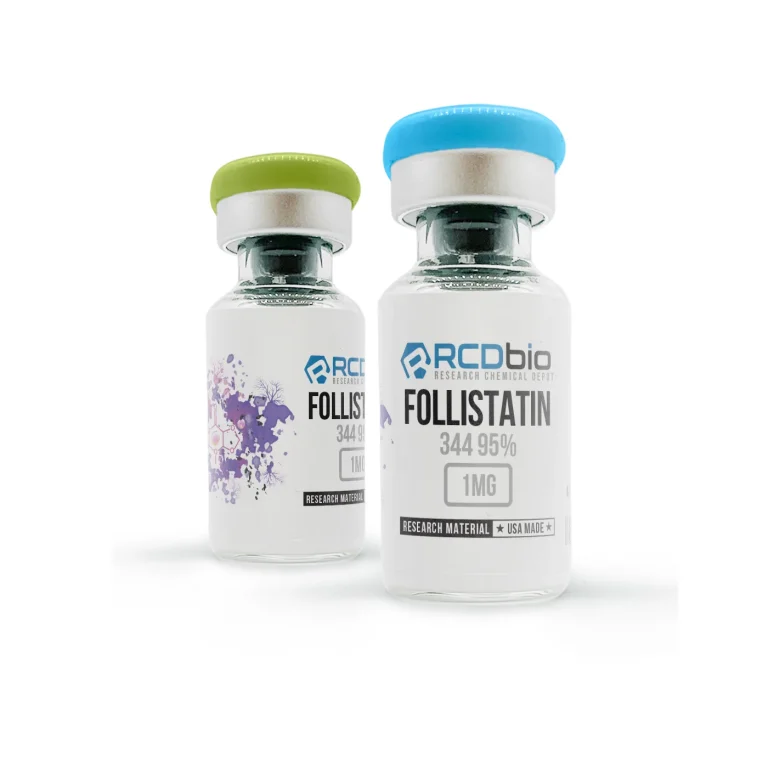
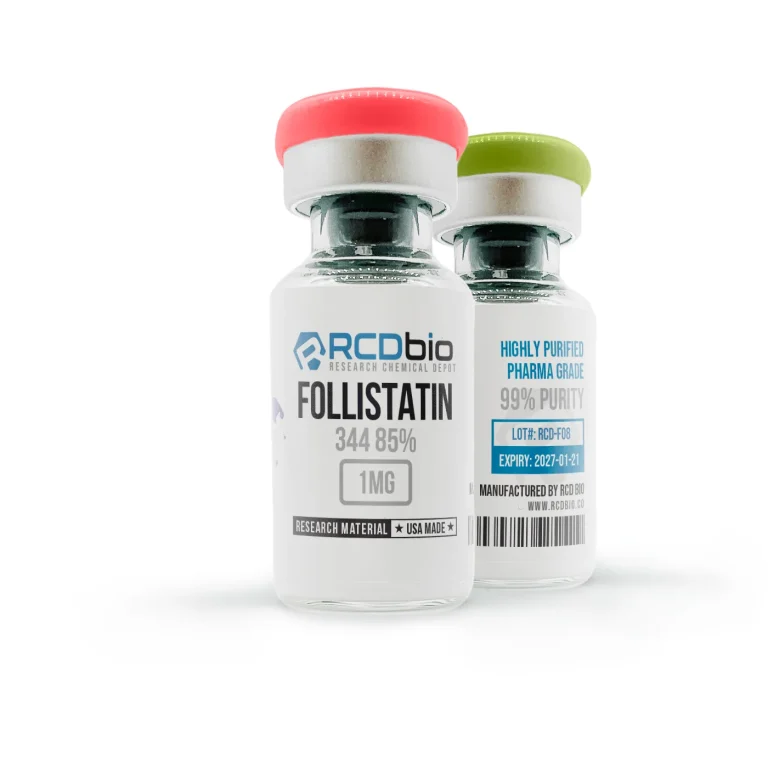

Description
What is Follistatin 344?
Follistatin 344 (FS-344; FST-344) is a 344-amino acid single-chain glycoprotein encoded by the FST gene on human chromosome 5q11.2. It belongs to the activin-binding protein family, originally isolated from porcine ovarian follicular fluid in 1987. The “344” designation refers to the full-length precursor isoform, which undergoes post-translational processing to generate the circulating FS-315 variant bearing a C-terminal acidic tail. A second precursor, FS-317, yields the cell surface–associated FS-288 isoform. The two precursors differ in their heparin-binding properties and tissue distribution profiles, making isoform-specific selection a key design variable in TGF-β superfamily research.
Structurally, Follistatin 344 comprises an N-terminal domain (ND) and three Kazal-type follistatin domains (FSD1–3), each carrying EGF-like and Kazal-like motifs. An unusually high cysteine content enables multiple intramolecular disulfide bonds that compact the protein into a thermally stable, protease-resistant configuration. The FS1 and FS2 domains are principally responsible for binding activin and myostatin, while FSD3 modulates overall binding specificity and affinity.
In preclinical and in vitro research contexts, Follistatin 344 has been investigated as a high-affinity antagonist of multiple members of the transforming growth factor-β (TGF-β) superfamily, including myostatin (GDF-8), activin A, activin B, and select bone morphogenetic proteins (BMPs). By sequestering these ligands extracellularly, Follistatin 344 prevents their engagement with cognate type I/II serine-threonine kinase receptors (ActRIIA, ActRIIB, ALK4/5), thereby blocking downstream SMAD2/3 phosphorylation cascades in experimental systems.
Synthetic Follistatin 344 supplied by RCDbio is intended strictly for laboratory and research purposes. It is not approved by the Food and Drug Administration for use in this research-grade, non-pharmaceutical form. It is not a dietary supplement and is not intended for human consumption or therapeutic self-administration.
Chemical Properties
| Property | Detail |
| Product Type | Recombinant Glycoprotein Peptide (344-amino acid isoform) |
| Product Name | Follistatin 344 (FS-344; FST-344) |
| Application | Scientific / Research Use Only |
| CAS Number | No confirmed CAS number has been assigned to the research-grade recombinant FS-344 form; vendors list various numbers that are not uniformly verified. The endogenous follistatin protein is referenced in literature via UniProt entry P19883 (human FST). |
| Molar Mass | ~35-39 kDa (recombinant human FS-344; precise mass varies by glycosylation state and expression system; unglycosylated polypeptide backbone approximately 35.5–38 kDa) |
| Chemical Formula | Not established for the fully glycosylated recombinant form; the unglycosylated polypeptide backbone formula is reported by some suppliers as C₁₃₅₀H₂₁₅₃N₄₀₅O₄₃₃S₃₉ |
| Sequence | 344-amino acid single-chain glycoprotein; precursor includes N-terminal signal peptide cleaved upon secretion; three follistatin domains (FSD1–3) with EGF-like and Kazal-like motifs; multiple disulfide bonds across cysteine-rich domains |
| IUPAC Name | Not formally assigned; compound does not have a PubChem small-molecule IUPAC entry due to its protein macromolecule classification |
| Synonyms | FST-344; FS-344; Activin-Binding Protein; FSH-Suppressing Protein; Follistatin isoform 1 precursor |
| Physical Form | Lyophilized white to off-white powder |
| Solubility | Soluble in sterile water and buffered aqueous solutions (e.g., phosphate-buffered saline, pH 7.2–7.4); reconstitute with bacteriostatic water for research use; avoid prolonged exposure to reducing agents that may disrupt disulfide-stabilized tertiary structure |
| Storage (Lyophilized) | −20°C or below; sealed, light-protected container; store with desiccant; protect from moisture and freeze-thaw cycling during long-term storage |
| Storage (Reconstituted) | 2–8°C for short-term use (up to 7 days); −80°C for extended storage; aliquot to minimize freeze-thaw cycles; discard any reconstituted solution showing turbidity, particulate matter, or discoloration |
| PubChem CID | 178101631 (reported for research-grade Follistatin 344 by multiple suppliers; note: this CID represents a peptide registry entry, not a small-molecule structure, and should be cross-checked against the UniProt protein database entry P19883 for primary sequence confirmation) |
| Purity | ≥98% (HPLC verified, independent third-party laboratory analysis; COA available per batch) |
| WADA Status | Follistatin is prohibited under the 2026 WADA Prohibited List, Category S4.3 (Activin Receptor IIB Inhibitors – Myostatin-binding proteins), where follistatin is explicitly named as an example. Verify at GlobalDRO.com. Researchers engaged in sport-adjacent studies should verify the current status at GlobalDRO.com before use. |
How Does Follistatin 344 Work?
Follistatin 344 functions as an extracellular ligand trap, neutralizing multiple TGF-β superfamily members through direct, high-affinity protein-protein interactions. Its primary mechanism involves physical sequestration of myostatin (GDF-8) and activin A/B, preventing these growth factor dimers from engaging their receptor complexes. Two molecules of Follistatin 344 have been shown in structural studies to wrap around a single ligand dimer, forming a stable ternary complex with extremely low dissociation constants (Kd ~5.84 × 10⁻¹⁰ M for myostatin binding), effectively rendering the ligand biologically unavailable.
Myostatin (GDF-8) Antagonism and ActRIIB Receptor Blockade
Myostatin normally signals through its high-affinity receptor ActRIIB and a lower-affinity type I receptor (ALK4 or ALK5), activating downstream receptor-associated SMAD2 and SMAD3 (R-SMAD2/3) phosphorylation. In skeletal muscle cell preparations and in vivo rodent models, phosphorylated SMAD2/3 translocates to the nucleus in complex with SMAD4, suppressing transcription of genes required for myoblast proliferation, satellite cell activation, and protein synthesis. In C2C12 myoblast cell systems, follistatin-mediated myostatin sequestration has been observed to prevent this inhibitory SMAD2/3 phosphorylation cascade, with downstream increases in myotube size and fusion index characterized in vitro. Preclinical rodent models employing transgenic follistatin overexpression demonstrate consistent muscle hypertrophy across both normal and dystrophic backgrounds through this ActRIIB-blockade mechanism.
Activin A and Activin B Sequestration
Beyond myostatin, Follistatin 344 binds activin A and activin B with high affinity, sequestering both ligands from their cognate receptors. In pituitary gonadotroph cell models, activin A drives follicle-stimulating hormone (FSH) gene transcription through a SMAD2/3-dependent mechanism; follistatin produced by folliculostellate cells exerts autocrine-paracrine suppression of this activin-mediated FSH stimulation. In vitro cell-based assays demonstrate that FS-344 overexpression suppresses activin-induced SMAD2/3 phosphorylation, attenuating downstream FSH-related gene expression. In muscle tissue, genetic evidence from murine models has shown that follistatin controls skeletal muscle mass through combined inhibition of both myostatin and activin A, implying that the compound’s effect in experimental systems is broader than myostatin antagonism alone.
BMP Pathway Modulation
Follistatin 344 has been documented in biochemical and cell-based assays to inhibit select bone morphogenetic proteins (BMPs), including BMP-2, BMP-4, and BMP-7, through direct binding. BMP signaling proceeds primarily through SMAD1/5/8 phosphorylation rather than the SMAD2/3 axis. In vitro cell culture experiments have observed that follistatin-BMP interactions can modulate osteogenic and chondrogenic differentiation programs, with context-dependent outcomes in different cell lineages. The relative affinity of Follistatin 344 for BMPs is lower than for activin A, making selectivity a relevant experimental variable in BMP-pathway research models.
Hair Follicle and Dermal Tissue Signaling
In skin tissue research systems, follistatin has been identified as an endogenous modulator of activin-mediated signaling in hair follicle development and cycling. Activin expressed in dermal papilla cells influences epithelial-mesenchymal communication required for follicle initiation and anagen progression. Transgenic murine models lacking follistatin expression exhibit altered pelage follicle phenotypes, establishing a functional role for endogenous follistatin in this signaling network. Research applications have employed follistatin constructs to investigate how activin/TGF-β pathway suppression alters follicle cycling kinetics in ex vivo and in vivo dermal preparations.
Key Research Findings
- Myostatin sequestration: Follistatin binding to myostatin (Kd ~5.84 × 10⁻¹⁰ M) prevents ActRIIB receptor activation and downstream SMAD2/3-mediated suppression of myogenesis, characterized in C2C12 cell preparations and rodent in vivo models. [Lee & McPherron, 2001]
- Dual myostatin/activin A inhibition: Genetic evidence from Fst heterozygous murine models demonstrated that follistatin controls skeletal muscle mass through combined antagonism of myostatin and activin A; heterozygous Fst loss produced significant muscle size reduction even in myostatin-null backgrounds. [Lee et al., 2010]
- Muscle hypertrophy in transgenic rodent models: Follistatin overexpression in murine in vivo models produced dose-dependent skeletal muscle mass increases through both myoblast hyperplasia and fiber hypertrophy, with effects exceeding myostatin-knockout phenotypes in some founder lines. [Lee & McPherron, 2001]
- FSH regulatory axis: In anterior pituitary cell models, follistatin-mediated activin A sequestration suppresses SMAD2/3-dependent FSH gene transcription in gonadotroph cell preparations, consistent with its original characterization as an FSH-suppressing protein. [Lee et al., 2010]
- Dermal and follicle signaling: Transgenic murine models with altered follistatin expression display disrupted pelage hair follicle development and cycling, implicating activin/follistatin signaling interactions in epithelial-mesenchymal regulation of the follicular unit. [Nakamura et al., 2003; Cash et al., 2009]
All findings listed above are derived from preclinical or in vitro data. No conclusions regarding human therapeutic efficacy can be drawn from these observations. These findings do not constitute evidence of safety or efficacy in any human condition or organism.
What are the Potential Research Applications of Follistatin 344?
Skeletal Muscle Biology and Myostatin Pathway Research
Follistatin 344 is used extensively in skeletal muscle cell preparations and in vivo rodent systems to investigate myostatin-mediated signaling, ActRIIB receptor pharmacology, and the contribution of SMAD2/3 phosphorylation to myoblast differentiation and satellite cell activation. As a high-affinity myostatin sequestering agent, FS-344 allows researchers to isolate the contribution of the GDF-8/ActRIIB axis to changes in myotube size, fiber cross-sectional area, and protein synthesis rate in controlled experimental settings. These applications extend to muscular dystrophy model systems such as the mdx murine model, where follistatin overexpression has been used to characterize the functional contribution of myostatin inhibition to dystrophic pathology.
TGF-β Superfamily Signaling Dissection
Because Follistatin 344 binds multiple TGF-β family members with differing affinities, it is employed as a pharmacological tool to investigate relative ligand contributions to SMAD2/3-driven transcriptional programs in complex experimental systems. Researchers use it to dissociate activin A and activin B contributions from myostatin-specific effects by combining FS-344 with more selective inhibitors or knockdown approaches. Its dual SMAD2/3 axis (activin/myostatin) versus SMAD1/5/8 axis (BMP) selectivity profile makes it a useful reagent for pathway-attribution experiments in cell culture and ex vivo tissue preparations.
Reproductive Endocrinology and Pituitary Research
The FSH-regulatory axis provides a model system for investigating autocrine-paracrine signaling in anterior pituitary gonadotroph cell preparations. Follistatin 344 is employed in these systems to modulate endogenous activin A signaling, enabling researchers to probe the contributions of follistatin-activin balance to FSH synthesis, LH/FSH ratio dynamics, and gonadotroph cell responsiveness to hypothalamic inputs. Its utility extends to in vitro ovarian cell models investigating follicle development, granulosa cell differentiation, and the paracrine regulation of steroidogenesis.
Dermal Biology and Hair Follicle Signaling
In dermal cell preparations and ex vivo murine skin models, Follistatin 344 is used to investigate how activin sequestration modulates epithelial-mesenchymal signaling in hair follicle cycling. Research in this area examines follicle entry into anagen, dermal papilla cell responsiveness to TGF-β pathway perturbation, and the interaction between activin/follistatin balance and Wnt pathway activity in follicular units.
These are observed in preclinical and in vitro contexts only and do not constitute claims of efficacy or safety in any organism.
What are the Potential Side Effects of Follistatin 344?
- Reproductive axis disruption observed in murine models with systemic follistatin overexpression, including alterations in gonadotroph function and FSH secretion; these effects reflect the compound’s endogenous role in activin A neutralization within the hypothalamic-pituitary-gonadal axis and are dose- and expression-level-dependent.
- Rapid or disproportionate increases in skeletal muscle mass noted in transgenic rodent overexpression models; at extreme expression levels in murine systems, this has been associated with connective tissue and tendon adaptation demands that were not uniformly observed across models.
- Potential for context-dependent effects on tumor biology in cell-line models; activin A functions as a growth suppressor in select cancer cell systems, and its neutralization by follistatin has shown pro-proliferative effects in some tumor cell preparations and anti-metastatic effects in others; outcomes are model-specific and not uniform.
- Altered wound healing dynamics observed in transgenic murine models overexpressing follistatin in epidermal compartments; wound closure kinetics were modified, consistent with disrupted activin signaling in tissue repair networks.
- Potential modulation of BMP-mediated osteogenic and chondrogenic differentiation programs in bone and cartilage cell preparations; data are context-dependent and have not been characterized systematically at research-grade recombinant protein doses.
No human safety or tolerability data pertaining to research-grade Follistatin 344 has been established. These observations are derived from experimental systems and should not be extrapolated to human or animal outcomes.
Risk & Handling
Handling Precautions
Follistatin 344 should be handled exclusively by trained laboratory personnel familiar with the handling of protein-based research compounds. Minimum personal protective equipment includes nitrile gloves, a laboratory coat, and eye protection. Reconstitution of lyophilized powder should be performed in a biosafety cabinet or equivalent controlled environment to prevent aerosol generation and potential inhalation exposure. Because the compound contains multiple disulfide bonds that are critical for its three-dimensional binding conformation, reconstitution buffers containing reducing agents (DTT, β-mercaptoethanol, TCEP) must be avoided, as these will irreversibly disrupt the protein’s structural integrity and binding activity. All reconstitution equipment should be clean, dry, and free of protease contamination to preserve compound activity for downstream experimental use.
Exposure Risks
Risk Tier: MODERATE
Follistatin 344 is a biologically active recombinant glycoprotein with well-characterized pharmacological activity against myostatin, activin A, activin B, and select BMPs. At research-relevant concentrations in cell culture and rodent in vivo models, it has not been associated with acute systemic toxicity. However, systemic exposure in experimental models has been associated with FSH axis modulation and context-dependent alterations in reproductive function consistent with its role as an activin A antagonist. The pharmacokinetic profile of research-grade recombinant FS-344 protein is not well-characterized in vivo; the circulating FS-315 isoform derived from FS-344 post-translational processing has a plasma half-life influenced by its C-terminal acidic tail, which reduces heparin sulfate proteoglycan affinity and results in a more systemic distribution profile than the cell-bound FS-288 isoform. No human safety data has been established for research-grade Follistatin 344. Researchers should exercise caution appropriate to handling a potent, biologically active recombinant protein with multi-ligand neutralization capacity across several TGF-β superfamily signaling axes.
Storage
- Lyophilized form: Store at −20°C or below; sealed, light-protected container; store with desiccant; protect from moisture ingress
- Reconstituted form: Store at 2–8°C for short-term use (up to 7 days); store at −80°C for periods exceeding one week; aliquot prior to freezing to minimize freeze-thaw cycles
- Minimize freeze-thaw cycling; each cycle risks progressive denaturation of disulfide-stabilized tertiary structure and loss of binding activity
- Do not store reconstituted solution in the presence of reducing agents; DTT, β-mercaptoethanol, or TCEP will disrupt disulfide bonds and inactivate the compound
- Discard any reconstituted solution that appears turbid, discolored, or shows particulate matter
FAQs
Q: What is Follistatin 344 and what is it investigated for in preclinical research? A: Follistatin 344 (FS-344; FST-344) is a 344-amino acid recombinant glycoprotein derived from the human FST gene. It is investigated in preclinical models as a high-affinity antagonist of myostatin (GDF-8), activin A, activin B, and select BMPs – members of the TGF-β superfamily that regulate skeletal muscle mass, reproductive hormone signaling, and tissue morphogenesis. Research applications include skeletal muscle biology, TGF-β pathway dissection, reproductive endocrinology, and dermal/follicle signaling in controlled laboratory systems. It is not approved by the FDA for any human use.
Q: What is the difference between Follistatin 344, Follistatin 315, and Follistatin 288? A: FS-344 is the full-length precursor isoform produced from one FST mRNA splice variant. Post-translational cleavage of its C-terminal 29-amino acid extension generates FS-315, the primary circulating isoform in serum. A second mRNA splice variant (FS-317) yields the FS-288 isoform, which lacks the C-terminal acidic tail and therefore retains strong heparin sulfate proteoglycan affinity, restricting it to cell surfaces and local tissue environments. FS-344 and FS-315 have lower heparin affinity than FS-288 and distribute more systemically in preclinical rodent models. These pharmacokinetic differences are experimentally relevant when designing tissue-targeted versus systemic ligand-sequestration studies.
Q: How should Follistatin 344 be stored to maintain stability? A: Lyophilized Follistatin 344 should be stored at −20°C or below in a sealed, desiccated, light-protected container. Once reconstituted, the solution should be kept at 2–8°C and used within 7 days, or aliquoted and stored at −80°C for longer periods. Freeze-thaw cycling should be minimized, as repeated cycling progressively degrades the compound’s disulfide-stabilized tertiary structure. Reducing agents such as DTT, β-mercaptoethanol, or TCEP must not be present in any buffer used for reconstitution or storage, as these will irreversibly inactivate the compound.
Q: What reconstitution solvent is used for Follistatin 344 in laboratory research? A: Follistatin 344 is reconstituted in sterile water or a physiologically compatible buffered aqueous solution such as phosphate-buffered saline (PBS, pH 7.2–7.4) in standard research applications. Bacteriostatic water containing 0.9% benzyl alcohol is commonly employed in preclinical laboratory settings to inhibit microbial growth in reconstituted solutions intended for use over multiple days. Reducing agent–containing buffers must be avoided. Protein-stabilizing additives such as bovine serum albumin (BSA) at 0.1–1% are occasionally used in dilution buffers to minimize non-specific adsorption to vessel surfaces at low protein concentrations.
Q: What toxicity observations have been reported for Follistatin 344 in preclinical models? A: Acute systemic toxicity has not been reported for Follistatin 344 at research-relevant concentrations in rodent preclinical models. Transgenic overexpression studies have produced FSH axis perturbations consistent with systemic activin A neutralization. Context-dependent effects on wound healing dynamics and potential modulation of tumor cell behavior have been observed in isolated cellular model systems. Long-term safety data from repeated administration of research-grade recombinant FS-344 protein in non-transgenic preclinical models remains limited. No human safety data has been established.
Q: What is the relationship between Follistatin 344 and WADA prohibited substance categories? A: Follistatin and related myostatin inhibitors are classified under Section S2 (Peptide Hormones, Growth Factors, Related Substances and Mimetics) of the World Anti-Doping Agency (WADA) Prohibited List. This classification reflects their capacity to modulate endogenous growth-regulatory signaling pathways. Research applications involving sport-adjacent study designs, athlete-derived biological samples, or exercise physiology models should account for this regulatory status. Current status should always be verified at GlobalDRO.com, as WADA revises its prohibited list annually.
Q: Does Follistatin 344 require ethics approval or special permits for research use? A: In vivo research employing Follistatin 344 in animal models requires ethics approval from the appropriate institutional animal care and use committee (IACUC or equivalent body) in accordance with local, state, and federal regulations governing the use of research compounds in animals. In vitro cell-based research does not typically require animal use ethics review but must comply with institutional biosafety protocols applicable to recombinant protein handling. Researchers are responsible for confirming the regulatory status of this compound in their jurisdiction prior to purchase and use.
Related Research Compounds
GDF-8 (Myostatin) Peptide – The primary endogenous ligand targeted by Follistatin 344 in skeletal muscle research; used in cell culture and in vivo systems to establish myostatin-mediated SMAD2/3 signaling baselines against which follistatin antagonism is characterized.
BPC-157 Peptide – A pentadecapeptide investigated in preclinical models for its modulatory effects on growth factor signaling, tissue repair pathways, and VEGF-mediated angiogenesis; studied in parallel with follistatin constructs in muscle and connective tissue recovery research models.
Sermorelin Peptide – A growth hormone-releasing hormone (GHRH) analogue investigated in preclinical and early clinical models for its effects on pituitary somatotroph function; studied alongside myostatin-pathway compounds in metabolic and body composition research designs.
References
- Lee SJ, McPherron AC. Regulation of myostatin activity and muscle growth. Proc Natl Acad Sci U S A. 2001;98(16):9306–9311. https://pubmed.ncbi.nlm.nih.gov/11459935/
- Lee SJ, Lee YS, Zimmers TA, Soleimani A, Matzuk MM, Tsuchida K, Cohn RD, Barton ER. Regulation of muscle mass by follistatin and activins. Mol Endocrinol. 2010;24(10):1998–2008. https://pubmed.ncbi.nlm.nih.gov/20810712/
- Cash JN, Rejon CA, McPherron AC, Bernard DJ, Thompson TB. The structure of myostatin:follistatin 288: insights into receptor utilization and heparin binding. EMBO J. 2009;28(17):2662–2676. https://pmc.ncbi.nlm.nih.gov/articles/PMC2738701/
- Nakamura M, et al. Control of pelage hair follicle development and cycling by complex interactions between follistatin and activin. FASEB J. 2003;17(3):497–499. https://pubmed.ncbi.nlm.nih.gov/12514121/
- Graham MA, et al. The role of activins and follistatins in skin and hair follicle development and function. Cytokine Growth Factor Rev. 2009;20(5–6):439–448. https://pubmed.ncbi.nlm.nih.gov/18922734
Disclaimer
Follistatin 344 is exclusively for laboratory research purposes. RCDbio products are not intended to diagnose, prevent, treat, or cure any disease or medical condition.
The Food and Drug Administration has not evaluated the statements on our website. This product is not approved for human or veterinary use. Researchers must comply with all applicable local, state, and federal laws and regulations governing the purchase and use of research compounds. By purchasing, you agree to our Terms and Conditions. RCDbio reserves the right to refuse sales to unauthorized individuals.
ATTENTION: All RCDbio products are strictly for LABORATORY AND RESEARCH PURPOSES ONLY. They are not intended for human consumption, veterinary use, or any other non-research application. For queries, complaints, or support, contact support@legacy.rcdbio.co
Reviews
There are no reviews yet