

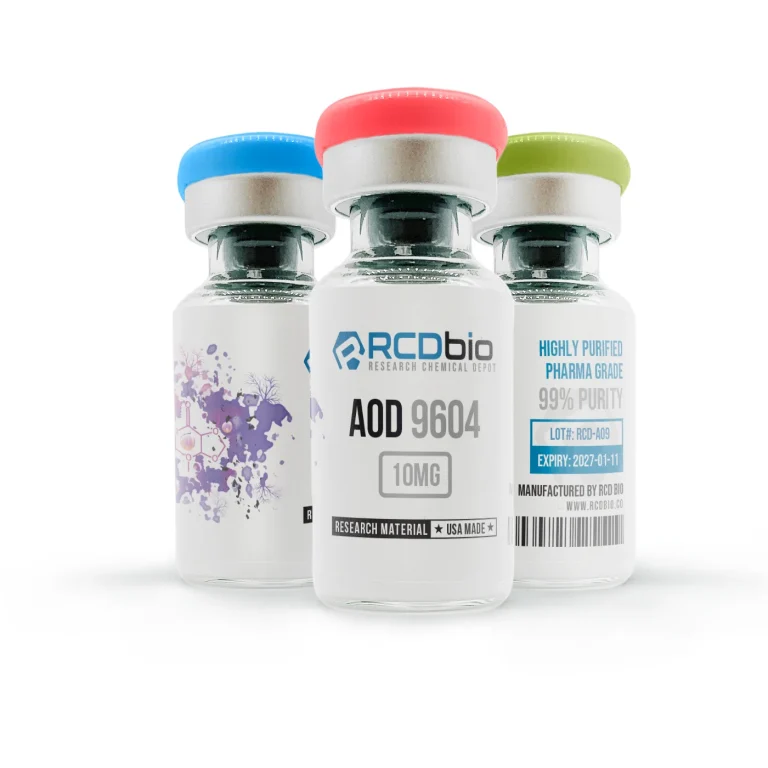
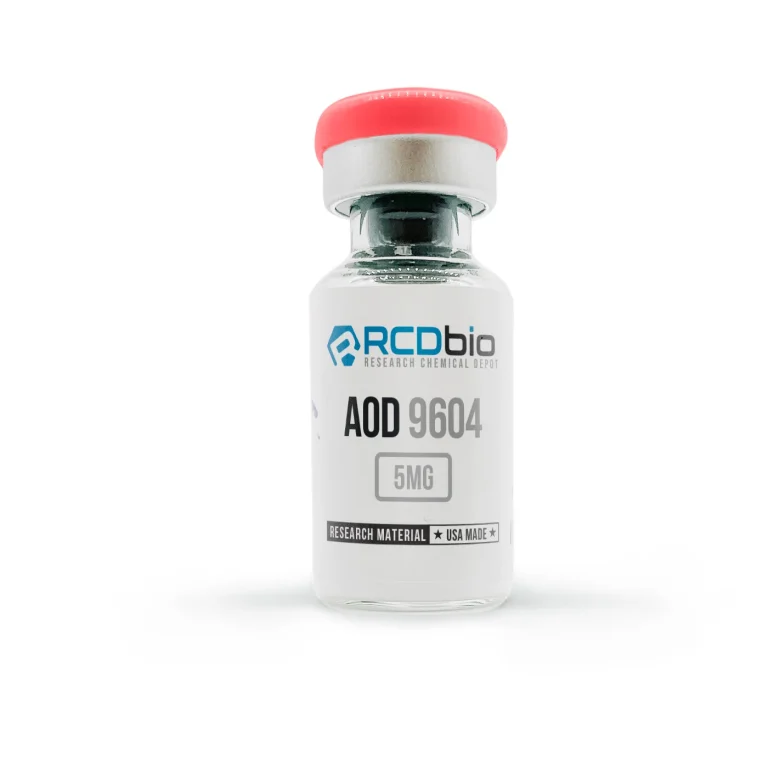
Description
What is AOD 9604?
AOD 9604 is a synthetic hexadecapeptide corresponding to amino acids 176–191 of the C-terminal domain of human growth hormone (hGH), with a single N-terminal tyrosine substitution introduced to enhance structural stability. The compound was developed at Monash University (Melbourne, Australia) during the 1990s as a pharmacological tool to isolate and study the lipolytic domain of hGH independently from its somatogenic and insulin-disrupting properties. The designation “AOD” — Anti-Obesity Drug — reflects the research context in which it was originally investigated; it does not constitute an indication or therapeutic claim.
In research settings, AOD 9604 has been employed as a reference compound in preclinical studies examining adipose tissue metabolism, β3-adrenergic receptor (β3-AR) signaling, and lipid oxidation pathways. It has been investigated in in vivo rodent models for its capacity to stimulate lipolysis and suppress lipogenesis without measurable interaction with the classical hGH receptor and without observed effects on plasma insulin or IGF-1 levels. More recent preclinical work has examined AOD 9604 in the context of articular cartilage biology using rabbit and rodent models.
AOD 9604 supplied by RCDbio is intended strictly for laboratory and research purposes. It is not approved by the Food and Drug Administration for use in this research-grade, non-pharmaceutical form. It is not a dietary supplement and is not intended for human consumption or therapeutic self-administration.
Chemical Properties
| Property | Detail |
| Product Type | Synthetic Hexadecapeptide (modified C-terminal hGH fragment) |
| Product Name | AOD 9604 |
| Application | Scientific / Research Use Only |
| CAS Number | 221231-10-3 |
| Molar Mass | 1815.10 g/mol |
| Chemical Formula | C₇₈H₁₂₃N₂₃O₂₃S₂ |
| Sequence | Tyr-Leu-Arg-Ile-Val-Gln-Cys-Arg-Ser-Val-Glu-Gly-Ser-Cys-Gly-Phe-NH₂ (disulfide bridge: Cys₇–Cys₁₄) |
| IUPAC Name | L-tyrosyl-L-leucyl-L-arginyl-L-isoleucyl-L-valyl-L-glutaminyl-L-cysteinyl-L-arginyl-L-seryl-L-valyl-L-glutamyl-glycyl-L-seryl-L-cysteinyl-glycyl-L-phenylalaninamide (7→14)-disulfide |
| Synonyms | AOD-9604; Tyr-somatostatin (177–191); hGH Fragment 177–191 (Tyr-substituted) |
| Physical Form | Lyophilized white to off-white powder supplied in sealed research vial |
| Solubility | Soluble in sterile water for injection and aqueous buffered solutions at physiological pH; the intramolecular disulfide bridge between Cys₇ and Cys₁₄ is susceptible to reductive cleavage — do not reconstitute in reducing agent–containing buffers |
| Storage (Lyophilized) | −20°C; sealed, light-protected vial with desiccant; stable for extended periods under these conditions |
| Storage (Reconstituted) | 2–8°C; use within 48–72 hours of reconstitution; do not freeze reconstituted solution |
| PubChem CID | 71300630 (free peptide); 156599045 (acetate salt) |
| Purity | ≥98% (HPLC verified, independent third-party laboratory analysis; COA available per batch) |
| WADA Status | AOD 9604 is explicitly named on the 2026 WADA Prohibited List under category S2.2.3 (Growth Hormone Fragments): “growth hormone fragments, e.g. AOD-9604 and hGH 176-191.” The substance is prohibited both in- and out-of-competition. Verify current status at GlobalDRO.com. |
How Does AOD 9604 Work?
AOD 9604 is investigated primarily for its interactions with adrenergic signaling pathways in adipose tissue. Unlike full-length hGH, in vitro receptor binding assays have confirmed that AOD 9604 does not bind to or activate the classical hGH receptor, nor does it stimulate IGF-1 secretion or cell proliferation through GHR-dependent pathways. Its lipolytic activity is therefore attributed to a structurally independent mechanism localized within the C-terminal fragment.
β3-Adrenergic Receptor Pathway
In chronic in vivo studies using obese (ob/ob) and lean C57BL/6J murine models, AOD 9604 administration was associated with upregulation of β3-adrenergic receptor (β3-AR) RNA expression in white adipose tissue (WAT) to levels approaching those observed in lean controls. β3-AR is the primary adrenergic receptor subtype governing lipolysis in rodent adipocytes. In β3-AR knockout murine models, chronic AOD 9604 administration failed to produce the body weight and lipolysis changes observed in wild-type controls, suggesting that β3-AR upregulation contributes to the compound’s lipolytic profile under chronic dosing conditions. In acute administration experiments, however, increases in energy expenditure and fat oxidation were observed even in β3-AR knockout animals, indicating that at least one additional β3-AR–independent mechanism contributes to acute metabolic effects. [Heffernan et al., 2001, PMID 11713213]
Lipogenesis Inhibition
In rodent adipocyte preparations, C-terminal hGH fragments, including AOD 9604, have been investigated for antilipogenic activity. Studies using isolated adipocyte systems characterized suppression of lipogenic enzyme activity, suggesting that AOD 9604 may reduce de novo fatty acid synthesis independently of its lipolytic effects. The mechanistic basis for this antilipogenic activity has not been fully characterized at the molecular level, and findings have not been consistent across all model systems.
hGH Receptor Independence
In vitro radioligand displacement assays using BaF-BO3 cells transfected with the hGH receptor confirmed that AOD 9604 does not compete with ¹²⁵I-hGH for receptor binding and does not stimulate proliferation through the hGH receptor. This receptor independence distinguishes AOD 9604’s metabolic profile from full-length hGH in preclinical research contexts and has made it a useful comparative tool in studies examining GH-mediated versus non-GH-receptor–mediated lipid metabolism. [Heffernan et al., 2001, PMID 11673763]
Cartilage and Connective Tissue Models
Preclinical investigation of AOD 9604 has extended beyond adipose biology. In a collagenase-induced osteoarthritis rabbit model, intra-articular injection of AOD 9604 was associated with reduced cartilage degeneration scores relative to saline controls, as assessed by gross morphological and histopathological grading at eight weeks post-induction. Combined administration with hyaluronic acid produced lower degeneration scores than either compound alone in that model. The mechanism by which AOD 9604 may interact with chondrocyte biology remains under investigation; no receptor-level characterization equivalent to that performed for adipocyte pathways has been established for cartilage systems. [Kwon & Park, 2015, PMID 26275694]
Key Research Findings
- β3-AR upregulation: Chronic AOD 9604 administration in obese C57BL/6J murine models associated with restoration of β3-AR RNA expression in WAT to levels comparable with lean controls; effect absent in β3-AR knockout animals under chronic dosing. [Heffernan et al., 2001]
- hGH receptor independence: In vitro radioligand assays in BaF-BO3/hGHR transfected cell systems confirmed absence of AOD 9604 binding to or proliferative signaling through the classical hGH receptor. [Heffernan et al., 2001]
- Lipid oxidation: Chronic administration in obese (ob/ob) murine models associated with increased in vivo fat oxidation and elevated plasma glycerol (index of lipolysis) without observed effects on plasma insulin or IGF-1 levels. [Heffernan et al., 2001, PMID 11673763]
- Cartilage preservation: Intra-articular AOD 9604 in a collagenase-induced rabbit osteoarthritis model associated with reduced histopathological cartilage degeneration scores versus saline at eight weeks; additive effect observed in combination with hyaluronic acid. [Kwon & Park, 2015]
- Receptor selectivity profile: AOD 9604 does not bind the hGH receptor, does not elevate IGF-1, and does not produce insulin resistance at preclinically studied concentrations — differentiating its metabolic profile from full-length hGH in rodent model systems.
All findings listed above are derived from preclinical or in vitro data. No conclusions regarding human therapeutic efficacy can be drawn from these observations. These findings do not constitute evidence of safety or efficacy in any human condition or organism.
What are the Potential Research Applications of AOD 9604?
Adipose Tissue and Lipolysis Research
AOD 9604 has been employed as a pharmacological tool in studies investigating adrenergic signaling in adipocytes, specifically β3-AR–mediated lipolytic pathways. Its confirmed lack of hGH receptor binding makes it a useful agent for dissecting GH-receptor–independent mechanisms of lipid mobilization in isolated adipocyte preparations and in vivo rodent models. Researchers have used AOD 9604 to study the differential contributions of β3-AR–dependent and –independent mechanisms to fat oxidation and energy expenditure in obese animal systems.
Lipid Metabolism and Obesity Models
In preclinical rodent models of diet-induced and genetic obesity, AOD 9604 has been investigated alongside full-length hGH as a comparator compound for studying metabolic pathways governing body weight and adipose tissue accumulation. Its capacity to increase fat oxidation without observed insulin sensitization or desensitization effects has made it a reference compound in studies examining metabolic syndrome–adjacent pathways in murine systems.
Articular Cartilage and Joint Biology
Emerging preclinical literature has examined AOD 9604 in the context of cartilage regeneration and joint pathology. The rabbit collagenase-induced osteoarthritis model data provides a preliminary signal for interaction with cartilage biology, though the receptor or molecular pathway through which this effect is mediated remains uncharacterized. This application area represents an early-stage research direction and has not been investigated in controlled human experimental systems.
hGH Fragment Pharmacology
As a structurally defined C-terminal fragment of hGH with a single N-terminal tyrosine modification, AOD 9604 serves as a tool compound for structure-activity relationship studies examining the functional domain architecture of growth hormone. Comparison of AOD 9604’s activity profile with that of native hGH fragment 176–191 and full-length hGH in parallel experimental systems has informed the field’s understanding of which molecular regions of hGH mediate specific downstream effects.
These are observed in preclinical and in vitro contexts only and do not constitute claims of efficacy or safety in any organism.
What are the Potential Side Effects of AOD 9604?
- Reduced body weight and adipose tissue mass observed in obese murine in vivo models following chronic administration; this is a pharmacodynamic consequence of the compound’s lipolytic mechanism rather than an off-target toxicity finding
- No significant effects on plasma insulin or IGF-1 levels reported in chronic rodent studies at the doses investigated; however, dose-range safety data across extended timeframes in non-rodent species is limited
- No evidence of hGH receptor–mediated proliferative signaling or somatogenic effects has been characterized in in vitro cell systems at research-relevant concentrations
- Cartilage-associated adverse histopathological findings were not reported in the rabbit intra-articular injection model; however, the experimental design of that study was not structured to assess systemic toxicity
- No human safety or tolerability data pertaining to research-grade AOD 9604 has been established. These observations are derived from experimental systems and should not be extrapolated to human or animal outcomes.
Risk & Handling
Handling Precautions
AOD 9604 lyophilized peptide vials must be handled exclusively by trained laboratory personnel with appropriate competency in peptide handling and sterile reconstitution technique. Minimum personal protective equipment (PPE) includes nitrile gloves, a laboratory coat, and safety glasses or goggles. Reconstitution should be performed within a certified biosafety cabinet or laminar flow hood to maintain sterility and minimize aerosol generation from the lyophilized powder. The intramolecular disulfide bridge between Cys₇ and Cys₁₄ is susceptible to reductive degradation; contact with reducing agents (dithiothreitol, β-mercaptoethanol, TCEP) must be avoided during reconstitution and storage. All laboratory waste should be disposed of in accordance with institutional biosafety protocols governing synthetic peptides.
Exposure Risks
Risk Tier: LOW–MODERATE
AOD 9604 does not bind the hGH receptor and has not demonstrated somatogenic, proliferative, or insulin-modifying activity at preclinically characterized concentrations. Chronic rodent studies have not identified dose-limiting organ toxicity or acute lethality signals at the doses studied. The primary pharmacodynamic effect observed in preclinical systems — β3-AR–mediated lipolysis — could theoretically produce unintended metabolic perturbations under conditions of inadvertent systemic exposure, though no specific toxicology profile for this route has been established. No human safety data has been established for research-grade AOD 9604 in any dosing format. The plasma half-life of analogous C-terminal hGH peptides in rodent models is short (on the order of minutes to low hours), consistent with renal clearance and proteolytic degradation kinetics reported for peptides of comparable molecular weight.
Storage
- Lyophilized vial: Store at −20°C; sealed, light-protected environment with desiccant; stable under these conditions for the manufacturer-indicated shelf life
- Reconstituted solution: Store at 2–8°C; use within 48–72 hours of reconstitution
- Do not freeze reconstituted solution; ice crystal formation disrupts peptide integrity
- Do not subject to repeated freeze-thaw cycling; the Cys₇–Cys₁₄ disulfide bridge undergoes progressive oxidative degradation with each temperature cycle
- Do not store in the presence of reducing agents; DTT, β-mercaptoethanol, or TCEP will cleave the disulfide bond and inactivate the compound
- Discard any reconstituted solution exhibiting turbidity, discoloration, or visible particulate matter; a faint haze upon initial reconstitution is normal for this compound class and does not indicate degradation
FAQs
Q: What is AOD 9604 and what is it investigated for in research? A: AOD 9604 is a synthetic hexadecapeptide derived from the C-terminal region (amino acids 176–191) of human growth hormone, with an N-terminal tyrosine substitution for structural stability. It is investigated in preclinical models for β3-adrenergic receptor–mediated lipolysis, lipogenesis inhibition in adipocyte systems, and the molecular basis of hGH-independent fat oxidation. More recently, it has been examined in cartilage biology models. All research applications are strictly laboratory-based; AOD 9604 is not approved for human use in research-grade form.
Q: What is the half-life of AOD 9604 in preclinical models? A: Precise pharmacokinetic characterization of AOD 9604 in standardized preclinical models is limited in the peer-reviewed literature. Based on structural analogy with short synthetic peptides and the broader hGH C-terminal fragment class, plasma half-life in rodent systems is expected to be in the range of minutes to low hours, consistent with renal clearance and proteolytic degradation kinetics. These figures do not represent human pharmacokinetic data for research-grade material.
Q: How should AOD 9604 vials be stored to maintain stability? A: Lyophilized vials should be stored at −20°C in a sealed, light-protected environment with desiccant. Once reconstituted, the solution should be kept at 2–8°C and used within 48–72 hours; it should not be frozen. The disulfide bridge between Cys₇ and Cys₁₄ is the primary structural vulnerability — exposure to reducing agents, oxidative conditions, or repeated freeze-thaw cycling will degrade the compound. Discard any solution showing turbidity beyond the expected initial haze, discoloration, or particulate matter.
Q: What is AOD 9604 typically reconstituted with in laboratory research? A: Sterile water for injection (WFI) or bacteriostatic water are the most commonly referenced aqueous vehicles for lyophilized peptide vials of this class in preclinical literature. Phosphate-buffered saline (PBS) at physiological pH is also used in some experimental designs. Reducing agent–free buffers must be used in all cases to preserve the integrity of the intramolecular disulfide bridge. Researchers should refer to the batch-specific certificate of analysis for any excipient or reconstitution guidance relevant to their experimental design.
Q: What toxicity observations have been reported in preclinical studies? A: Preclinical studies in rodent models have not identified organ-specific toxicity or acute lethality signals at research-relevant concentrations. No hGH receptor–mediated proliferative or somatogenic toxicity has been characterized in vitro. The compound’s safety profile in non-rodent species and following systemic peptide exposure has not been systematically characterized in peer-reviewed literature. No human safety data has been established for research-grade AOD 9604.
Q: How does AOD 9604 differ structurally from native hGH Fragment 176–191? A: Native hGH fragment 176–191 lacks the N-terminal tyrosine residue present in AOD 9604. The addition of this tyrosine (Tyr⁰) modification was introduced to improve metabolic stability and enhance the peptide’s lipolytic potency in preclinical testing. While both fragments share the core β-hairpin structural motif and the Cys₇–Cys₁₄ disulfide bridge, their pharmacokinetic profiles and relative potency in preclinical lipolysis assays differ. AOD 9604 is the form that advanced into Phase I/II clinical safety investigation under Metabolic Pharmaceuticals; native hGH frag 176–191 has not been studied in human experimental systems.
Q: What is the WADA regulatory status of AOD 9604? A: AOD 9604 is not listed by specific name on the current WADA Prohibited List. However, as a synthetic peptide with structural origin in the hGH molecule, it may be subject to prohibition under the S2 Peptide Hormones, Growth Factors, Related Substances and Mimetics category depending on current interpretive guidance. Researchers in sport-adjacent contexts should independently verify the current status at GlobalDRO.com before initiating studies and should not rely on this document as definitive regulatory guidance.
Related Research Compounds
HGH Fragment 176–191 [Peptide] — The unmodified C-terminal hGH fragment sharing the core 16-amino acid sequence of AOD 9604 without the N-terminal tyrosine substitution; commonly employed as a structural comparator in studies examining the contribution of the Tyr⁰ modification to lipolytic potency and metabolic stability in adipocyte systems. [https://legacy.rcdbio.co/product/hgh-fragment-176-191/]
Ipamorelin [Peptide] — A selective growth hormone secretagogue (GHS) that stimulates endogenous GH release through ghrelin receptor agonism; frequently employed as a comparator in GH-axis–related metabolic research given its mechanistic distinction from direct C-terminal fragment activity. [https://legacy.rcdbio.co/product/ipamorelin-peptide/]
Sermorelin [Peptide] — A synthetic analog of the first 29 amino acids of growth hormone–releasing hormone (GHRH), investigated in preclinical models for hypothalamic–pituitary GH axis stimulation; useful in comparative designs examining upstream GH secretagogue activity versus direct lipolytic fragment activity. [https://legacy.rcdbio.co/product/sermorelin-peptide/]
References
- Heffernan M, Summers RJ, Thorburn A, Ogru E, Gianello R, Jiang WJ, Ng FM. (2001). The effects of human GH and its lipolytic fragment (AOD9604) on lipid metabolism following chronic treatment in obese mice and beta(3)-AR knock-out mice. Endocrinology, 142(12):5182–5189. https://pubmed.ncbi.nlm.nih.gov/11713213/
- Heffernan MA, Thorburn AW, Fam B, Summers R, Conway-Campbell B, Waters MJ, Ng FM. (2001). Increase of fat oxidation and weight loss in obese mice caused by chronic treatment with human growth hormone or a modified C-terminal fragment. Int J Obes Relat Metab Disord, 25(10):1442–1449. https://pubmed.ncbi.nlm.nih.gov/11673763/
- Kwon DR, Park GY. (2015). Effect of intra-articular injection of AOD9604 with or without hyaluronic acid in rabbit osteoarthritis model. Ann Clin Lab Sci, 45(4):426–432. https://pubmed.ncbi.nlm.nih.gov/26275694/
- Stier H, Vos E, Kenley D. (2013). Safety and tolerability of the hexadecapeptide AOD9604 in humans. Journal of Endocrinology and Metabolism, 3(1–2):7–15. https://www.jofem.org/index.php/jofem/article/view/157
- Habibullah MM, Mohan S, Syed NK, et al. (2022). Human growth hormone fragment 176–191 peptide enhances the toxicity of doxorubicin-loaded chitosan nanoparticles against MCF-7 breast cancer cells. Drug Des Devel Ther, 16:1963–1974. https://pubmed.ncbi.nlm.nih.gov/35783198/
Disclaimer
AOD 9604 is exclusively for laboratory research purposes. RCDbio products are not intended to diagnose, prevent, treat, or cure any disease or medical condition.
The Food and Drug Administration has not evaluated the statements on our website. This product is not approved for human or veterinary use. Researchers must comply with all applicable local, state, and federal laws and regulations governing the purchase and use of research compounds. By purchasing, you agree to our Terms and Conditions. RCDbio reserves the right to refuse sales to unauthorized individuals.
ATTENTION: All RCDbio products are strictly for LABORATORY AND RESEARCH PURPOSES ONLY. They are not intended for human consumption, veterinary use, or any other non-research application. For queries, complaints, or support, contact support@legacy.rcdbio.co
Reviews
There are no reviews yet