

Description
What is HNG ([Gly14]-Humanin)?
HNG, commonly designated [Gly14]-Humanin or Humanin-G, is a synthetic 24-amino acid peptidomimetic analog of Humanin – an endogenous mitochondria-derived peptide (MDP) encoded within the 16S ribosomal RNA gene (MT-RNR2) of the human mitochondrial genome. HNG is generated by substituting the serine residue at position 14 with glycine (S14G), a single-residue modification that confers markedly enhanced biological potency relative to the parent peptide in preclinical assay systems – with activity measured at approximately 1,000-fold greater potency than wild-type Humanin in neuroprotective cell-based models.
Humanin itself was first identified in 2001 as a factor capable of suppressing neuronal death associated with familial Alzheimer’s disease gene constructs in F11 neuroblastoma cell preparations. Since its discovery, Humanin and its synthetic analogs – including HNG – have been widely employed as molecular tools for investigating the intersection of mitochondrial signaling, apoptosis regulation, and cellular stress response in laboratory and preclinical systems. In research settings, HNG has been characterized as a BAX-interacting peptide, a ligand for the FPRL1/FPRL2 family of G protein-coupled receptors, and a modulator of the trimeric cytokine receptor complex comprising CNTFRα, WSX-1, and gp130.
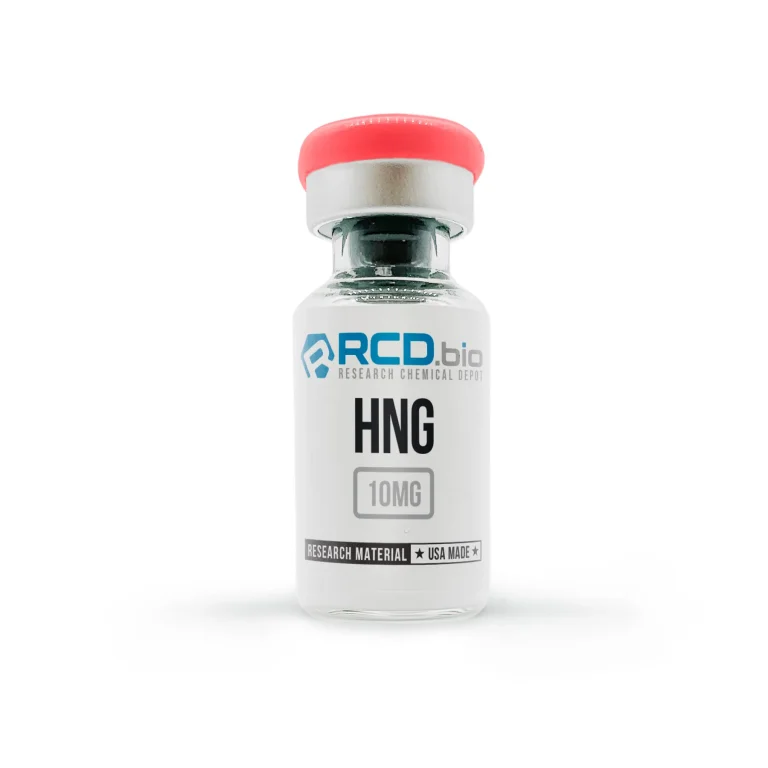
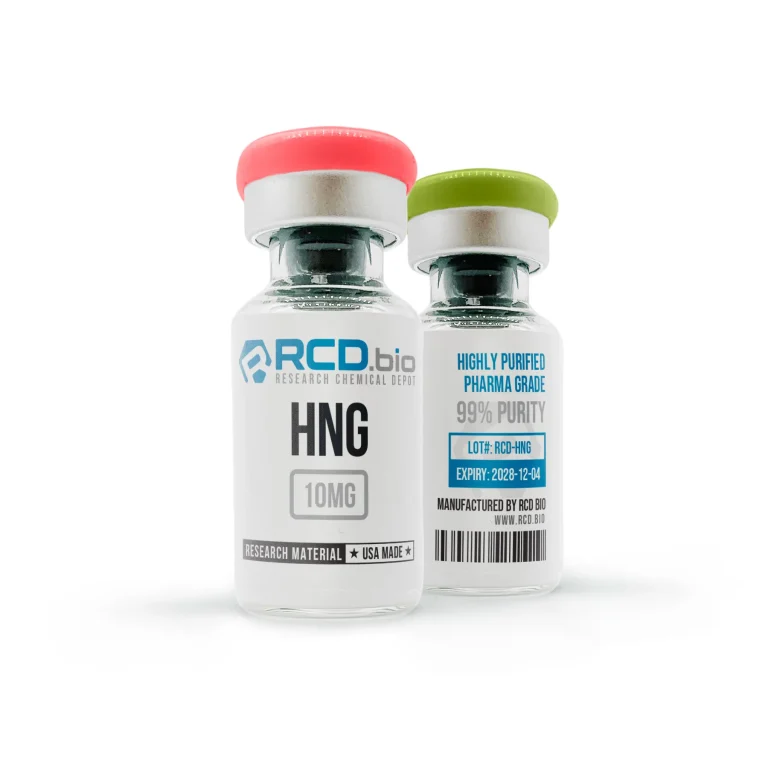
RCDbio supplies HNG as a lyophilized research-grade powder intended strictly for laboratory and research purposes. It is not approved by the Food and Drug Administration for use in this research-grade, non-pharmaceutical form. It is not a dietary supplement and is not intended for human consumption or therapeutic self-administration.
Chemical Properties
| Property | Detail |
| Product Type | Synthetic 24-Amino Acid Mitochondrial-Derived Peptide Analog (Glycine Substitution at Position 14) |
| Product Name | HNG; [Gly14]-Humanin; Humanin-G; S14G-Humanin |
| Application | Scientific / Research Use Only |
| CAS Number | 330936-70-4 (free base / TFA salt form); 330936-69-1 (wild-type Humanin – distinct compound; not HNG) |
| Molar Mass | 2,657.21 g/mol (free base; majority consensus across Alfa Chemistry, ChemicalBook, and Sigma-Aldrich source data; minor variation to 2657.25 g/mol reported at some suppliers due to water content differences in lyophilized material – verify from batch COA) |
| Chemical Formula | C₁₁₈H₂₀₂N₃₄O₃₁S₂ (free base) |
| Sequence | Met-Ala-Pro-Arg-Gly-Phe-Ser-Cys-Leu-Leu-Leu-Leu-Thr-Gly-Glu-Ile-Asp-Leu-Pro-Val-Lys-Arg-Arg-Ala (MAPRGFSCLLLLTGEIDLPVKRRA; S14G substitution bolded) |
| IUPAC Name | L-methionyl-L-alanyl-L-prolyl-L-arginylglycyl-L-phenylalanyl-L-seryl-L-cysteinyl-L-leucyl-L-leucyl-L-leucyl-L-leucyl-L-threonylglycyl-L-α-glutamyl-L-isoleucyl-L-α-aspartyl-L-leucyl-L-prolyl-L-valyl-L-lysyl-L-arginyl-L-arginyl-L-alanine |
| Synonyms | [Gly14]-HN; sHNG; Humanin-G; S14G-Humanin; [Gly¹⁴]-Humanin G (human); GLY14-Humanin |
| Physical Form | Lyophilized white to off-white powder |
| Solubility | Soluble in sterile water or mildly acidic aqueous buffer (pH 4–6); sparingly soluble in physiological saline without acidification. The free cysteine at position 8 (Cys8) is susceptible to oxidation and intermolecular disulfide-mediated dimerization; reconstitution under inert atmosphere or with minimal exposure to oxygen is recommended for extended stability studies. |
| Storage (Lyophilized) | −20°C; sealed, desiccant-containing container; protect from light and moisture; do not expose to repeated temperature fluctuation |
| Storage (Reconstituted) | 4°C; use within 24–48 hours; limit freeze-thaw cycles (maximum 3 recommended); discard any solution appearing turbid, discolored, or containing particulate matter |
| PubChem CID | CAS 330936-70-4 corresponds to [Gly14]-Humanin (HNG); PubChem CID for wild-type Humanin is 16131438 (distinct sequence). HNG-specific CID should be verified via PubChem search of CAS 330936-70-4 at time of use. |
| Purity | ≥98% (HPLC verified, independent third-party laboratory analysis; COA available per batch) |
| WADA Status | HNG is not listed by name on the current WADA Prohibited List. However, as a peptide with demonstrated effects on metabolic and cellular pathways in preclinical models, it may fall under the S0 (Non-Approved Substances) or S2 (Peptide Hormones, Growth Factors, Related Substances and Mimetics) categories depending on regulatory interpretation. Researchers engaged in sport-adjacent studies should verify the current status at GlobalDRO.com before use. |
How Does HNG ([Gly14]-Humanin) Work?
HNG operates through both intracellular and extracellular mechanisms, interacting with distinct molecular targets depending on whether it acts within the cytosol or as a secreted ligand at the cell surface. The S14G substitution does not alter the fundamental receptor-binding profile of the parent peptide but substantially increases potency across characterized assay systems, likely due to conformational stabilization of the active helix domain.
Intracellular BAX Inhibition and Apoptosis Pathway Modulation
Within cytosolic compartments, HNG has been characterized as a direct binding partner of BAX, a pro-apoptotic member of the Bcl-2 family. In isolated neuronal cell preparations and in vitro apoptosis models, HNG interaction with BAX has been associated with reduced translocation of BAX from the cytosol to the outer mitochondrial membrane – a rate-limiting step in the intrinsic caspase cascade. Mechanistic studies in rodent primary cortical neuron preparations and in neuroblastoma cell lines additionally describe HNG binding to Bim and tBid, two BH3-only pro-apoptotic proteins that normally facilitate mitochondrial outer membrane permeabilization. Caspase 3/7 activation profiles observed in HNG-exposed versus vehicle-treated OC (organ of Corti) explant preparations demonstrate measurable attenuation of downstream apoptotic execution.
FPRL1/FPRL2 Receptor-Mediated Extracellular Signaling
As a secreted or exogenously applied peptide, HNG has been investigated as a ligand for formyl peptide receptor-like 1 (FPRL1) and FPRL2 – G protein-coupled receptors involved in chemotaxis and inflammatory signaling. FPRL1/2 engagement by HNG has been associated, in in vitro receptor characterization studies, with modulation of apoptosis signal-regulating kinase (ASK1) and c-Jun N-terminal kinase (JNK) signaling cascades. These pathways are mechanistically relevant to oxidative stress-induced cell death programs and have been characterized in multiple cell culture systems relevant to neuroinflammatory and cardiovascular research models.
JAK2/STAT3 Pathway Activation via Trimeric Cytokine Receptor
A second extracellular signaling axis involves HNG binding to the trimeric receptor complex composed of ciliary neurotrophic factor receptor alpha (CNTFRα), WSX-1, and glycoprotein 130 (gp130). In rodent in vivo and in vitro ischemia models, HNG-mediated engagement of this complex has been characterized by upregulation of JAK2 phosphorylation and downstream STAT3 activation. In a rat global cerebral ischemia/reperfusion (GI/R) model, HNG administration was associated with increased expression of SOCS3, phosphorylated STAT3, and MCL-1 – an anti-apoptotic Bcl-2 family member – in hippocampal CA1 neuronal tissue, as assessed by immunohistochemistry, qRT-PCR, and western blot. [Neuroprotective effect of G14-humanin, PMID 28720038]
IGFBP-3 Binding and Metabolic Signaling Context
Intracellularly, HNG has also been characterized as a binding partner of insulin-like growth factor-binding protein 3 (IGFBP-3). In cell-based assay systems, IGFBP-3 has been associated with modulation of nuclear importin-β trafficking and regulation of apoptotic gene expression programs. HNG binding to IGFBP-3 has been investigated in the context of metabolic signaling, as IGFBP-3 is independently implicated in peripheral insulin signaling in preclinical models. Metabolomic analyses in diet-induced obesity (DIO) murine models administered HNG demonstrated significant alterations in glutathione and sphingolipid metabolic pathways relative to vehicle controls, consistent with modulation of mitochondrial redox and lipid metabolic programs. [Yen et al., 2019, PMID 31172328]
Section 6 – Key Research Findings
- BAX/Caspase inhibition: HNG-mediated BAX downregulation and caspase 3/7 attenuation characterized in gentamicin-exposed mouse organ of Corti explant preparations; BAX protein expression significantly reduced relative to vehicle controls. [Bartoszek et al., cochlear hair cell model]
- Ischemic neuroprotection (STAT3): HNG administration in rat global cerebral ischemia/reperfusion models associated with SOCS3–STAT3–MCL-1 pathway upregulation and reduced hippocampal CA1 neuronal loss at 24 hours post-reperfusion. [PMID 28720038]
- Diabetic cardiomyopathy: HNG treatment in STZ-induced diabetic C57BL/6 mice attenuated myocardial hypertrophy, reduced plasma TNF-α and IL-6, and normalized cardiac injury markers (CK-MB, LDH, AST) versus untreated diabetic controls. [Chen et al., 2022, PMC8806847]
- Metabolomic profile: HNG administration in diet-induced obesity murine models significantly altered plasma glutathione and sphingolipid metabolite concentrations; the authors characterized these as pathways associated with age-related metabolic dysregulation. [Yen et al., 2019, PMID 31172328]
- Neuroprotection vs. OGD/R: HNG at 1 µg/L concentration in SH-SY5Y neuroblastoma cell oxygen-glucose deprivation/reoxygenation (OGD/R) preparations demonstrated significant attenuation of cell viability reduction and apoptosis rate elevation relative to untreated OGD/R controls. [PMID 29043002]
All findings listed above are derived from preclinical or in vitro data. No conclusions regarding human therapeutic efficacy can be drawn from these observations. These findings do not constitute evidence of safety or efficacy in any human condition or organism.
What are the Potential Research Applications of HNG ([Gly14]-Humanin)?
Mitochondrial Biology and MDP Signaling Studies
HNG is employed in preclinical research as a reference tool compound for investigating the broader class of mitochondrial-derived peptides (MDPs), which are encoded within non-canonical mitochondrial open reading frames. In laboratory settings, HNG serves as a higher-potency surrogate for wild-type Humanin in assays designed to probe how mitochondria-encoded peptides regulate cytosolic apoptosis machinery, cell surface cytokine receptor complexes, and intracellular redox homeostasis. Receptor binding characterization studies have utilized HNG to define the pharmacological profile of FPRL1/2 and the CNTFRα/WSX-1/gp130 trimeric receptor in cell-free and cell-based systems.
Apoptosis Pathway and Bcl-2 Family Protein Research
HNG is used in cell biology laboratories as a BAX-pathway interrogation tool. Its well-characterized interaction with BAX, Bim, and tBid in isolated cell preparations makes it applicable to studies investigating mitochondrial outer membrane permeabilization dynamics, caspase activation cascades, and anti-apoptotic Bcl-2 family member competition. In vitro preparations involving neuronal, cardiomyocyte, and germ cell lineages have employed HNG to probe the BAX-dependent apoptotic threshold under chemically or physiologically induced stress conditions.
Neurodegeneration and Ischemia Model Research
In rodent in vivo ischemia/reperfusion models and neuroblastoma cell culture preparations, HNG has been investigated for its effects on JAK2/STAT3 pathway activation, oxidative stress marker profiles, and neuronal survival outcomes. These experimental contexts are relevant to mechanistic studies of ischemic neuronal injury, oxygen-glucose deprivation, and amyloid-beta-associated cytotoxicity. HNG’s substantially higher potency relative to Humanin (approximately 1,000-fold in neuroprotective assay systems) makes it the preferred analog in published preclinical research where lower effective concentrations are methodologically advantageous.
Metabolic and Mitochondrial Stress Research
Preclinical metabolomic and functional studies have employed HNG to investigate the relationship between mitochondria-derived peptide signaling, insulin-sensitization pathways, and systemic metabolic parameters in murine obesity and diabetes models. HNG and related MDPs have been characterized in these contexts as modulators of glutathione redox metabolism, sphingolipid biosynthesis, and markers of glucose-stimulated insulin secretion in isolated pancreatic islet preparations.
These are observed in preclinical and in vitro contexts only and do not constitute claims of efficacy or safety in any organism.
What are the Potential Side Effects of HNG?
- Dimerization-mediated aggregation observed in aqueous HNG preparations under ambient storage conditions; aggregated forms demonstrate altered solubility profiles and potentially modified receptor binding kinetics relative to monomeric species. Relevant to preparation quality in laboratory reconstitution protocols. [Ozgul et al., 2023, PMC10046509]
- Cys8-mediated oxidative dimerization identified in HNG stability studies under non-controlled atmospheric conditions, resulting in modification of the free thiol group; oxidized dimeric species have been characterized as distinct from the active monomeric form. [Ozgul et al., 2023]
- Pro-tumorigenic signal theoretical concern: HNG’s anti-apoptotic mechanism – specifically BAX inhibition and STAT3 pathway activation – raises a theoretical concern in research models involving active malignancy, as these same pathways are implicated in cancer cell survival. This consideration is documented in the research literature and should be noted when designing experimental contexts. No formal oncological toxicology data specific to HNG have been established in any preclinical tumor model as the primary experimental endpoint.
- Insulin-sensitization pathway activity characterized in murine models; potential for relevant interactions in experimental systems involving concurrent glucose-lowering agents or insulin-secretion measurement assays. This is an experimental design consideration rather than a documented adverse effect.
- No chronic exposure toxicology data in any mammalian species have been established for HNG. Long-term systemic effects at any dose range remain uncharacterized.
No human safety or tolerability data pertaining to research-grade HNG have been established. These observations are derived from experimental systems and should not be extrapolated to human or animal outcomes.
Risk & Handling
Handling Precautions
HNG should be handled exclusively by trained laboratory personnel familiar with peptide reconstitution and standard preclinical research compound protocols. Minimum PPE: nitrile gloves, laboratory coat, and eye protection. Reconstitution of lyophilized HNG should be performed using aseptic technique in a laminar flow hood or biosafety cabinet to avoid particulate contamination and minimize atmospheric oxidation exposure. Aerosol generation during reconstitution should be avoided. The free cysteine residue at position 8 (Cys8) renders HNG susceptible to oxidative dimerization; reconstitution solutions should not be prepared in the presence of oxidizing agents, and contact with metal surfaces capable of catalyzing thiol oxidation should be minimized.
Exposure Risks
Risk Tier: MODERATE
HNG is a pharmacologically active peptide with well-characterized receptor-level activity at FPRL1/2 and the CNTFRα/WSX-1/gp130 trimeric complex in preclinical systems. At research-relevant concentrations used in published in vitro studies (typically 1–100 nM range), it is not acutely toxic in standard cell viability assays. In vivo rodent studies have administered HNG at doses of 4 mg/kg by intraperitoneal injection without reported acute toxicity at those doses. However, no systematic dose-escalation toxicology studies have been conducted in any mammalian species, and no chronic exposure data exist. The anti-apoptotic mechanism profile – particularly BAX inhibition and STAT3 activation – raises theoretical concerns in research systems involving malignant cell lines. No human safety data have been established for research-grade HNG. Researchers should exercise caution appropriate to handling a potent, biologically active, receptor-interacting peptide of unknown chronic toxicity.
Storage
- Lyophilized form: Store at −20°C in a sealed container with desiccant; protect from light and moisture; do not leave unsealed at room temperature
- Reconstituted form: Store at 4°C; use within 24–48 hours of reconstitution
- Limit freeze-thaw cycles to a maximum of three; repeated cycling promotes Cys8 oxidative dimerization and potential peptide degradation
- Do not store in the presence of oxidizing agents or metal-chelating species that may catalyze thiol modification
- Discard any reconstituted solution that appears turbid, discolored, or shows particulate matter
FAQs
Q: What is HNG and what is it investigated for in research? A: HNG, also designated [Gly14]-Humanin or S14G-Humanin, is a synthetic 24-amino acid analog of Humanin – a mitochondria-encoded peptide from the MT-RNR2 gene. It is generated by substituting glycine for serine at position 14, which confers approximately 1,000-fold greater potency than the parent peptide in neuroprotective cell-based assay systems. In laboratory research, HNG is investigated for its interactions with BAX and other pro-apoptotic proteins, its activity at FPRL1/FPRL2 receptors, its modulation of the JAK2/STAT3 pathway via the CNTFRα/WSX-1/gp130 complex, and its effects on metabolic parameters in murine obesity and ischemia models. All investigations are conducted in preclinical or in vitro contexts.
Q: What is the half-life of HNG in preclinical models? A: Formal pharmacokinetic characterization of HNG is limited in the published literature. Stability studies by Ozgul and colleagues (2023) characterized the in vitro degradation profile of HNG under aqueous conditions and identified principal degradation products including oxidized dimeric species and N-terminal fragments. In vivo half-life data specific to HNG in rodent systemic circulation have not been comprehensively published. The presence of a free cysteine at position 8 introduces a principal stability liability (oxidative dimerization) that distinguishes HNG from more metabolically stable analogs. These figures are derived from laboratory and preclinical models and do not represent human pharmacokinetic data for research-grade material.
Q: How should HNG be stored to maintain stability? A: Lyophilized HNG should be stored at −20°C in a sealed, desiccant-containing container protected from light and moisture. Upon reconstitution, the solution should be stored at 4°C and used within 24–48 hours. Freeze-thaw cycles should be limited to a maximum of three, as each cycle increases the risk of Cys8-mediated oxidative dimerization, which has been characterized as a primary degradation pathway in stability studies. Solutions should not be stored in contact with oxidizing agents or metal surfaces that could catalyze thiol modification.
Q: What toxicity observations have been reported in preclinical studies involving HNG? A: No systematic acute or chronic toxicity studies specifically designed to characterize HNG lethality or organ-specific toxicity profiles have been published in peer-reviewed literature as of the current available data. In vivo rodent studies employing HNG at doses of approximately 4 mg/kg by intraperitoneal injection over multi-month dosing schedules did not report acute adverse events in the published methods. Theoretical toxicological considerations include the anti-apoptotic mechanism profile (BAX inhibition, STAT3 activation), which has been noted in the research literature as a potential concern in experimental systems involving actively proliferating or malignant cell populations. No human safety or tolerability data for research-grade HNG have been established.
Q: What is HNG typically reconstituted with in laboratory research? A: In published preclinical and in vitro studies, HNG is most commonly reconstituted in sterile water or mildly acidic aqueous buffer (approximately pH 4–6) to promote initial dissolution. For cell culture applications, the reconstituted stock is typically further diluted in cell culture media or physiological saline prior to use. Due to the susceptibility of the Cys8 thiol group to oxidative dimerization, reconstitution under minimal oxygen exposure is recommended when maximal monomeric purity is required for the experimental design. Reconstitution under reducing conditions (e.g., DTT or β-mercaptoethanol) is generally avoided as these agents may disrupt disulfide-mediated structural features relevant to receptor binding.
Q: How does HNG differ from wild-type Humanin and other analogs such as HNGF6A? A: Wild-type Humanin (CAS 330936-69-1) contains serine at position 14; HNG carries a single S14G substitution that produces approximately 1,000-fold greater potency in neuroprotective cell-based assay systems without substantially altering the receptor-binding profile. HNGF6A carries a second substitution (F6A) in addition to S14G, which eliminates IGFBP-3 binding while retaining most other activities; this allows researchers to dissociate IGFBP-3-dependent from IGFBP-3-independent signaling contributions in experimental designs. HNG retains both IGFBP-3 binding and FPRL1/CNTFRα-complex activity, making it the more broadly applicable research analog when all signaling pathways are under investigation.
Q: Is HNG the same compound as the Humanin listed in nasal spray formulations? A: No. RCDbio supplies HNG as a lyophilized peptide powder in research vial format – a bulk research-grade material intended for laboratory reconstitution and use in in vitro or in vivo preclinical experiments. Nasal spray or other compounded formulations are separate, distinct products with different preparation methods, delivery matrices, and regulatory considerations. Research-grade lyophilized HNG is not a pharmaceutical product, has not been evaluated by the FDA for any route of administration, and is not intended for human use in any form.
Related Research Compounds
Humanin (Wild-Type, 24-aa) – The parent mitochondria-encoded peptide from which HNG is derived; carries serine at position 14. Used as a reference compound in studies requiring direct comparison with the native endogenous peptide sequence and its receptor pharmacology.
MOTS-c – A distinct mitochondrial-derived peptide encoded within the 12S ribosomal RNA gene (MT-RNR1) of the mitochondrial genome; investigated in preclinical models for AMPK pathway activation, skeletal muscle glucose uptake regulation, and exercise-mimetic metabolic effects – representing a mechanistically adjacent but receptor-distinct MDP with active research applications.
Epitalon (Epithalon) – A synthetic tetrapeptide (Ala-Glu-Asp-Gly) investigated in preclinical models for telomerase activation, pineal gland regulation, and antioxidant enzyme modulation; represents a complementary research tool for studies interrogating peptide-mediated cellular longevity signaling at a distinct molecular target class.
References
- Gao G, Fan H, Zhang X, Zhang F, Wu H, Qi F, Zhao L, Li Y. Neuroprotective effect of G14-humanin on global cerebral ischemia/reperfusion by activation of SOCS3–STAT3–MCL-1 signal transduction pathway in rats. Neurological Research. 2017;39(10):895–903. PMID 28720038. https://pubmed.ncbi.nlm.nih.gov/28720038/
- Gao GS, Li Y, Zhai H, Bi JW, Zhang FS, Zhang XY, Fan SH. Humanin analogue, S14G-humanin, has neuroprotective effects against oxygen glucose deprivation/reoxygenation by reactivating Jak2/Stat3 signaling through the PI3K/AKT pathway. Experimental and Therapeutic Medicine. 2017;14(4):3926–3934. PMID 29043002. https://pubmed.ncbi.nlm.nih.gov/29043002/
- Mehta HH, Xiao J, Ramirez R, Miller B, Kim SJ, Cohen P, Yen K. Metabolomic profile of diet-induced obesity mice in response to humanin and small humanin-like peptide 2 treatment. Metabolomics. 2019;15(6):88. PMID 31172328. https://pubmed.ncbi.nlm.nih.gov/31172328/
- Chen X, Yun C, Zheng H, Chen X, Han Q, Pan H, Wang Y, Zhong J. The protective effects of S14G-humanin (HNG) against streptozotocin (STZ)-induced cardiac dysfunction. Bioengineered. 2022;13(1):1–12. PMC8806847. https://pmc.ncbi.nlm.nih.gov/articles/PMC8806847/
- Ozgul M, Nesburn AB, Nasralla N, Katz B, Taylan E, Kuppermann BD, Kenney MC. Stability determination of intact Humanin-G with characterizations of oxidation and dimerization patterns. Biomolecules. 2023;13(3):515. PMC10046509. https://www.ncbi.nlm.nih.gov/pmc/articles/PMC10046509/
Disclaimer
HNG ([Gly14]-Humanin) is exclusively for laboratory research purposes. RCDbio products are not intended to diagnose, prevent, treat, or cure any disease or medical condition.
The Food and Drug Administration has not evaluated the statements on our website. This product is not approved for human or veterinary use. Researchers must comply with all applicable local, state, and federal laws and regulations governing the purchase and use of research compounds. By purchasing, you agree to our Terms and Conditions. RCDbio reserves the right to refuse sales to unauthorized individuals.
ATTENTION: All RCDbio products are strictly for LABORATORY AND RESEARCH PURPOSES ONLY. They are not intended for human consumption, veterinary use, or any other non-research application. For queries, complaints, or support, contact support@legacy.rcdbio.co
Reviews
There are no reviews yet