

Description
What is PE-22-28?
PE-22-28 is a synthetic heptapeptide developed as an optimized analog of spadin, a naturally occurring peptide derived from the propeptide of sortilin (NTSR3). Spadin was first characterized in 2010 by Mazella and colleagues as a selective antagonist of the TREK-1 two-pore domain potassium channel (K2P channel) with observed antidepressant-like properties in rodent preclinical models. PE-22-28 was subsequently designed in 2017 as a minimal pharmacophore fragment of spadin, retaining TREK-1 inhibitory activity at substantially improved potency and extended in vivo stability.
In laboratory settings, PE-22-28 has been investigated for its interactions with TREK-1 (TWIK-related potassium channel 1), a background leak potassium channel broadly expressed in cortical neurons, hippocampal pyramidal neurons, and other CNS cell types. Preclinical studies have characterized PE-22-28 for its involvement in TREK-1-mediated regulation of resting membrane potential, downstream BDNF/TrkB/CREB signaling cascades, hippocampal neurogenesis, and synaptogenesis in rodent in vitro and in vivo model systems.
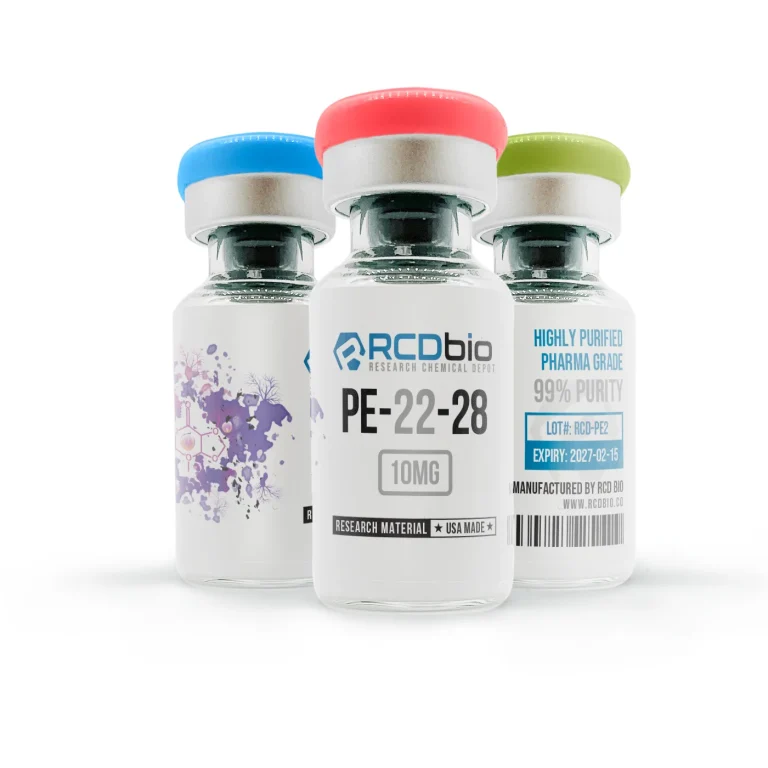
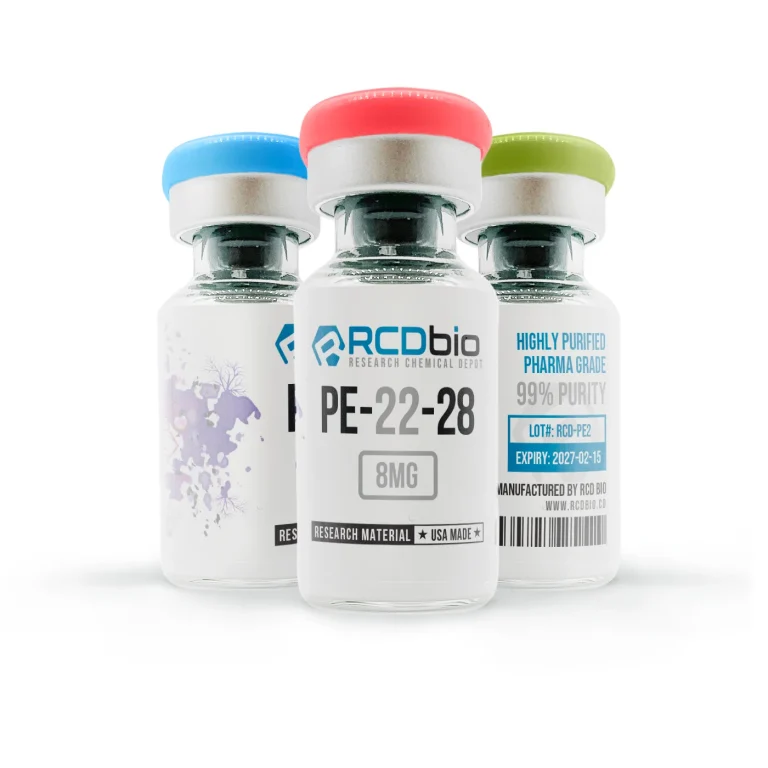
PE-22-28 supplied by RCDbio is intended strictly for laboratory and research purposes. It is not approved by the Food and Drug Administration for use in this research-grade, non-pharmaceutical form. It is not a dietary supplement and is not intended for human consumption or therapeutic self-administration.
Chemical Properties
| Property | Detail |
| Product Type | Synthetic Heptapeptide |
| Product Name | PE-22-28 |
| Application | Scientific / Research Use Only |
| CAS Number | 1801959-12-5 |
| Molar Mass | 793.91 g/mol |
| Chemical Formula | C36H55N11O8 |
| Sequence | H-Gly-Val-Ser-Trp-Gly-Leu-Arg-OH |
| IUPAC Name | (2S)-2-[[(2S)-2-[[(2S)-2-[[2-[[(2S)-2-[[(2S)-2-[[(2S)-2-amino-3-hydroxypropanoyl]amino]-3-(1H-indol-3-yl)propanoyl]amino]acetyl]amino]-4-methylpentanoyl]amino]-3-methylbutanoyl]amino]-5-guanidinopentanoyl]amino]-acetic acid (Note: Full IUPAC name reflects H-Gly-Val-Ser-Trp-Gly-Leu-Arg-OH in N→C orientation) |
| Synonyms | PE 22-28; Spadin heptapeptide analog; sortilin propeptide fragment (residues 22–28) |
| Physical Form | Lyophilized white to off-white powder |
| Solubility | Soluble in sterile water or aqueous buffer (PBS, pH 7.4); solubility enhanced at neutral to mildly acidic pH. Avoid prolonged exposure to alkaline conditions. |
| Storage (Lyophilized) | Store at −20°C in a sealed, light-protected container with desiccant. Stable for up to 24 months under recommended conditions. Protect from moisture on removal from freezer; allow vial to equilibrate to room temperature before opening. |
| Storage (Reconstituted) | Store at 4°C; use within 48–72 hours of reconstitution. Avoid repeated freeze-thaw cycles, which may cause aggregation and loss of activity. Discard any reconstituted solution showing turbidity, discoloration, or visible particulate matter. |
| PubChem CID | Consult PubChem for current record; CAS 218949-48-5 references the parent heptapeptide |
| Purity | ≥98% (HPLC verified, independent third-party laboratory analysis; COA available per batch) |
| WADA Status | PE-22-28 is not listed by name on the current WADA Prohibited List. However, as a synthetic peptide with CNS activity and potential effects on neurological function, it may fall under the S0 Non-Approved Substances or S2 Peptide Hormones categories depending on context. Researchers engaged in sport-adjacent studies should verify the current status at GlobalDRO.com before use. |
How Does PE-22-28 Work?
PE-22-28 exerts its primary laboratory-characterized effects through selective inhibition of TREK-1 (TWIK-related potassium channel 1), a member of the two-pore domain (K2P) family of leak potassium channels. In neuronal systems, TREK-1 contributes to background potassium conductance that stabilizes resting membrane potential. The mechanistic actions of PE-22-28 observed in preclinical models involve several interconnected pathways.
TREK-1 Channel Inhibition
In vitro patch-clamp studies using hTREK-1/HEK293 cell preparations demonstrated that PE-22-28 selectively inhibits human TREK-1 current with an IC50 of approximately 0.12 nM — representing a roughly 300- to 500-fold improvement in potency over parent compound spadin (IC50 40–60 nM). Selectivity profiling confirmed that PE-22-28 did not significantly inhibit the related K2P channels TREK-2, TRAAK, TRESK, or TASK-1 in the same in vitro preparation, nor did it affect hERG channel currents. In neuronal preparations, TREK-1 inhibition by PE-22-28 has been hypothesized to reduce background potassium conductance, resulting in a modest membrane depolarization that facilitates downstream excitatory signaling cascades relevant to neuroplasticity research.
BDNF/TrkB/CREB Signaling
In vivo administration of spadin — the parent compound from which PE-22-28 is derived — was observed to produce a rapid increase in both mRNA expression and protein levels of brain-derived neurotrophic factor (BDNF) in mouse hippocampal tissue in intravenous murine models. BDNF upregulation was associated with downstream activation of the TrkB (tropomyosin receptor kinase B) receptor and phosphorylation of CREB (cAMP response element-binding protein), a transcription factor implicated in plasticity-related gene expression. These findings, established with spadin in rodent models, are referenced in the context of PE-22-28 research given the shared TREK-1 target and structural lineage.
Hippocampal Neurogenesis and Synaptogenesis
In mouse in vivo models, sub-chronic administration of PE-22-28 (3.0–4.0 μg/kg, intraperitoneal, 4 days) was observed to significantly increase BrdU-positive cell counts in the hippocampus — a marker of proliferating neural progenitor cells — consistent with a neurogenic response. In parallel, PE-22-28 and its analogs enhanced PSD-95 expression levels in mouse cortical neuron preparations, a marker of postsynaptic density maturation used to characterize synaptogenesis. These findings are derived from rodent preclinical models and in vitro cortical neuron systems only.
Serotonergic Circuit Modulation
In anesthetized rodent electrophysiology models, spadin treatment was associated with an increase in 5-HT neuron firing rate in the dorsal raphe nucleus (DRN). Because TREK-1 channels are expressed in DRN serotonergic neurons and modulate resting membrane potential in those cell types, TREK-1 inhibition has been proposed as a mechanistic route through which spadin-class peptides may influence serotonergic circuit activity in rodent models. This observation was established with spadin in the founding 2010 preclinical study and is cited as pharmacological context for PE-22-28’s receptor target.
Key Research Findings
- TREK-1 inhibition potency: PE-22-28 inhibited hTREK-1 current in HEK293 cell preparations with an IC50 of 0.12 nM, representing substantially improved potency over parent spadin (IC50 40–60 nM) without significant activity at TREK-2, TRAAK, TRESK, or TASK-1. [Djillani et al., 2017]
- Antidepressant-like behavioral effects: In murine forced swimming tests and learned helplessness models, sub-chronic PE-22-28 treatment (3.0-4.0 μg/kg, i.p.) produced a statistically significant reduction in immobility time compared to saline controls; it was effective at approximately 30-fold lower dose than spadin. [Djillani et al., 2017]
- Hippocampal neurogenesis: Four-day sub-chronic treatment with PE-22-28 in murine models significantly elevated BrdU-positive cell counts in the hippocampus, consistent with increased neural progenitor proliferation at the dose range studied. [Djillani et al., 2017]
- Synaptogenesis markers: In mouse cortical neuron preparations, PE-22-28 exposure elevated PSD-95 protein expression at 36 hours to approximately twice the level measured at 5 hours post-treatment, indicating a time-dependent effect on postsynaptic density maturation. [Djillani et al., 2017]
- Extended in vivo stability: The action duration of PE-22-28 analogs in rodent behavioral models extended to 21–23 hours, compared to approximately 7 hours for parent spadin, as measured by the forced swimming test across multiple post-injection time points. [Djillani et al., 2017]
All findings listed above are derived from preclinical or in vitro data. No conclusions regarding human therapeutic efficacy can be drawn from these observations. These findings do not constitute evidence of safety or efficacy in any human condition or organism.
What are the Potential Research Applications of PE-22-28?
TREK-1 Ion Channel Pharmacology
PE-22-28 serves as a high-potency, selective pharmacological tool for investigating TREK-1 channel function in neuronal cell systems. Its sub-nanomolar IC50 for hTREK-1 inhibition and established selectivity over related K2P channels (TREK-2, TRAAK, TRESK, TASK-1) make it a useful reference compound for studies of background K⁺ conductance, resting membrane potential regulation, and TREK-1’s contribution to neuronal excitability in cortical and hippocampal preparations. Researchers investigating K2P channel pharmacology may employ PE-22-28 as a tool to selectively suppress TREK-1 activity while isolating other conductance pathways.
Hippocampal Neurogenesis Modeling
PE-22-28 has been investigated in murine in vivo models as a neurogenesis-promoting compound, with BrdU labeling evidence suggesting increased neural progenitor cell proliferation in the hippocampal dentate gyrus following sub-chronic treatment. This profile may make PE-22-28 a useful tool compound in research systems examining adult hippocampal neurogenesis, the molecular conditions that regulate it, and the relationship between neurogenesis markers and TREK-1 channel activity in preclinical models.
Synaptogenesis and Plasticity Research
In mouse cortical neuron in vitro systems, PE-22-28 and its analogs elevated PSD-95 protein expression — a postsynaptic density scaffold protein considered a marker of excitatory synaptogenesis. Researchers investigating synaptic remodeling, dendritic spine maturation, and plasticity-associated molecular events in neuronal cultures may find PE-22-28 useful as a tool to probe the intersection of K2P channel activity and synaptogenic signaling cascades.
BDNF/TrkB Pathway Interrogation
Based on the established mechanistic context from parent compound spadin preclinical studies, TREK-1 inhibition by spadin-class peptides in rodent in vivo models has been associated with downstream upregulation of BDNF mRNA and protein in hippocampal tissue and with CREB phosphorylation. PE-22-28 is therefore applicable to research investigating the relationship between K2P channel activity, neurotrophic factor expression, and CREB-dependent gene transcription in rodent and cell culture model systems.
Preclinical Behavioral Neuroscience Models
In murine models of forced swimming, learned helplessness, and novelty-suppressed feeding, PE-22-28 produced statistically significant behavioral changes at doses substantially lower than spadin. As a tool compound, PE-22-28 may support research programs investigating the pharmacology of TREK-1 antagonism in preclinical behavioral model systems, including studies on the temporal onset and duration of behavioral effects relative to TREK-1 occupancy and downstream neurochemical changes.
These are observed in preclinical and in vitro contexts only and do not constitute claims of efficacy or safety in any organism.
What are the Potential Side Effects of PE-22-28?
Preclinical and mechanistic data on the adverse-effect profile of PE-22-28 specifically are limited; the following observations are drawn from the spadin/PE-22-28 preclinical literature:
- Cardiac safety — no adverse effects observed in spadin models: In rodent studies of parent compound spadin, TREK-1 inhibition did not produce measurable effects on systolic blood pressure, cardiac pulse rate, or hERG/IKr/IKs channel currents in cardiac preparations; PE-22-28 similarly showed no hERG inhibition in patch-clamp studies. These observations are derived from rodent models at research doses and do not constitute human cardiac safety data.
- Pain sensitivity — no significant effect observed in spadin models: TREK-1 channel deletion in genetic mouse models is known to increase pain sensitivity, raising the theoretical concern that pharmacological TREK-1 blockade could produce similar effects. In rodent studies, spadin treatment did not significantly alter pain perception endpoints; however, this finding cannot be extrapolated to PE-22-28 specifically or to non-rodent organisms.
- Seizure threshold — no modification in spadin models: In rodent kainate-induced seizure models, spadin administration did not modify seizure incidence or severity. As with other observations from the spadin literature, caution is warranted in applying these findings to PE-22-28 in the absence of compound-specific data.
- No ischemia exacerbation in spadin models: Three-week spadin treatment did not modify infarct size in focal ischemia rodent models, suggesting TREK-1 inhibition at these doses did not interfere with TREK-1’s endogenous neuroprotective role in ischemic contexts. Compound-specific data for PE-22-28 are not available in the published literature.
- Limited chronic toxicity data: No published chronic toxicity studies for PE-22-28 itself have been identified. Absence of observed toxicity in short-duration rodent behavioral studies does not constitute evidence of long-term safety.
No human safety or tolerability data pertaining to research-grade PE-22-28 have been established. These observations are derived from experimental systems and should not be extrapolated to human or animal outcomes.
Risk & Handling
Handling Precautions
PE-22-28 should be handled exclusively by trained laboratory personnel with appropriate qualifications for working with biologically active synthetic peptides. Minimum required personal protective equipment includes nitrile gloves, laboratory coat, and eye protection. Lyophilized powder should be reconstituted in a biosafety cabinet or well-ventilated laboratory environment to avoid generation of airborne particulate. Avoid inhalation of powder during weighing or transfer operations. As PE-22-28 is a CNS-active compound with sub-nanomolar potency at TREK-1 channels, dermal or mucosal exposure to reconstituted solutions should be avoided. All waste solutions and contaminated materials should be disposed of in accordance with applicable institutional biosafety protocols and local regulations governing biologically active research compounds.
Exposure Risks
Risk Tier: MODERATE
PE-22-28 is a pharmacologically active synthetic peptide with demonstrated sub-nanomolar potency at hTREK-1 channels in cell-based preparations. In rodent in vivo studies, effective behavioral doses were in the range of 3.0–4.0 μg/kg (intraperitoneal), indicating substantial biological activity at low systemic concentrations. No acute lethality data are available for PE-22-28 at research doses. Short-duration rodent behavioral studies did not report gross toxicity at effective doses; however, comprehensive toxicological characterization of PE-22-28 has not been published. Plasma half-life data specific to PE-22-28 have not been formally published; based on forced swimming test time-course data in rodent models, the effective action window of PE-22-28 analogs extended up to 21–23 hours, suggesting greater in vivo stability than parent spadin. No human safety data have been established for research-grade PE-22-28. Researchers should exercise caution appropriate to handling a potent, CNS-active, biologically active peptide.
Storage
- Lyophilized form: Store at -20°C in a sealed, light-protected container with desiccant
- Reconstituted form: Store at 4°C; use within 48–72 hours of reconstitution
- Do not subject to repeated freeze-thaw cycles; reconstituted peptide solutions may aggregate upon successive freezing and thawing, reducing effective concentration
- Protect lyophilized powder from moisture during handling; allow sealed vial to reach room temperature before opening to avoid condensation on the powder
- Discard any reconstituted solution that appears turbid, discolored, or shows visible particulate matter
FAQs
Q: What is PE-22-28 and what is it investigated for in preclinical research?
A: PE-22-28 is a synthetic heptapeptide (Gly-Val-Ser-Trp-Gly-Leu-Arg) developed as an optimized analog of spadin, a sortilin propeptide-derived peptide first described as a TREK-1 potassium channel blocker in 2010. In preclinical research, PE-22-28 is primarily investigated for its selective inhibition of TREK-1 (TWIK-related potassium channel 1) in neuronal cell systems, and for downstream effects on hippocampal neurogenesis, PSD-95 expression, and BDNF/CREB signaling cascades as characterized in rodent in vivo and cortical neuron in vitro models. All applications are strictly for laboratory research and do not represent clinical or therapeutic uses.
Q: What is the potency of PE-22-28 at TREK-1 compared to parent compound spadin?
A: In patch-clamp studies using hTREK-1/HEK293 cell preparations, PE-22-28 demonstrated an IC50 of approximately 0.12 nM for TREK-1 current inhibition, compared to an IC50 of 40–60 nM for spadin (PE-12-28). This represents a roughly 300- to 500-fold improvement in potency. Selectivity profiling in the same study confirmed no significant inhibitory activity against the related K2P channels TREK-2, TRAAK, TRESK, or TASK-1, and no effect on hERG channel currents. These figures are derived from heterologous expression cell line data and do not represent in vivo receptor occupancy estimates.
Q: What is the in vivo stability and action duration of PE-22-28 in preclinical models?
A: Based on forced swimming test time-course experiments in murine models, the effective action duration of PE-22-28 analogs extended to approximately 21–23 hours following intraperitoneal administration. Parent compound spadin showed an effective action window of approximately 7 hours under the same conditions. The extended stability of PE-22-28 was attributed to its shorter sequence, which reduces susceptibility to the serum protease degradation that limits spadin’s in vivo half-life. These figures are derived from rodent behavioral models and do not represent human pharmacokinetic data for research-grade material.
Q: How should PE-22-28 be reconstituted for laboratory use?
A: In research settings, PE-22-28 lyophilized powder is typically reconstituted in sterile water (for injection-grade quality, research use only) or an appropriate aqueous buffer such as phosphate-buffered saline (PBS, pH 7.4). The peptide exhibits good aqueous solubility at neutral to mildly acidic pH. Researchers should prepare working solutions at the intended concentration and store reconstituted material at 4°C for short-term use. Avoid repeated freeze-thaw cycles of reconstituted solutions. All reconstitution procedures should be performed by trained laboratory personnel under appropriate biosafety conditions.
Q: How should PE-22-28 be stored to maintain stability?
A: Lyophilized PE-22-28 should be stored at −20°C in a sealed, desiccated, and light-protected container. The lyophilized powder is stable for up to 24 months under these conditions. Allow the sealed vial to reach room temperature before opening to prevent moisture condensation on the powder. Reconstituted solutions should be held at 4°C and used within 48–72 hours; repeated freeze-thaw cycles of reconstituted material should be avoided, as these may result in aggregation and reduced biological activity in research assays.
Q: What toxicity observations have been reported for PE-22-28 or parent compound spadin in preclinical studies?
A: Published toxicity data specific to PE-22-28 are limited. In short-duration rodent behavioral studies, no gross toxicity was observed at effective intraperitoneal doses (3.0–4.0 μg/kg). For the parent compound spadin, preclinical investigations demonstrated no adverse effects on cardiac electrophysiology (no hERG, IKr, or IKs inhibition), no modification of pain sensitivity or kainate-induced seizure thresholds, and no exacerbation of focal ischemia infarct size at therapeutic doses in rodent models. These findings cannot be extrapolated to PE-22-28 specifically, to other species, or to any human population. No human safety data have been established for research-grade PE-22-28.
Q: How does PE-22-28 differ structurally from spadin?
A: Spadin (PE-12-28) is a 17-amino-acid peptide derived from the propeptide of sortilin. PE-22-28 represents residues 22 through 28 of that propeptide — a 7-amino-acid sequence (Gly-Val-Ser-Trp-Gly-Leu-Arg) identified through systematic screening of spadin blood degradation products. The shortened sequence was found to retain TREK-1 inhibitory activity with substantially improved potency and extended in vivo stability relative to the full-length spadin sequence. N- and C-terminal modifications of PE-22-28 were also evaluated in patch-clamp studies; some modifications maintained TREK-1 activity while others abolished it, suggesting the heptapeptide core is the minimal active sequence. These structural differences are characterized in in vitro and rodent preclinical model contexts.
Related Research Compounds
Spadin (PE-12-28) — The 17-amino-acid sortilin propeptide from which PE-22-28 is derived; the founding TREK-1 antagonist in this compound class, characterized in rodent models for antidepressant-like behavioral effects and hippocampal neurogenesis, with lower TREK-1 potency and shorter in vivo stability compared to PE-22-28.
DSIP (Delta Sleep-Inducing Peptide) — A neuropeptide investigated in preclinical models for hypothalamic signaling modulation and CNS regulatory functions, representing a structurally distinct class of short neuroactive peptides studied in overlapping neurological research contexts.
Colivelin — A chimeric neuroprotective peptide derived from Activity-Dependent Neuroprotective Protein (ADNP) and Humanin, investigated in preclinical models for STAT3-mediated neuroprotection and amyloid-related neurotoxicity in in vitro neuronal model systems.
References
- Djillani A, Pietri M, Moreno S, Heurteaux C, Mazella J, Borsotto M. (2017). Shortened Spadin Analogs Display Better TREK-1 Inhibition, In Vivo Stability and Antidepressant Activity. Frontiers in Pharmacology, 8:643. https://pubmed.ncbi.nlm.nih.gov/28955242/
- Mazella J, Pétrault O, Lucas G, Deval E, Béraud-Dufour S, Gandin C, et al. (2010). Spadin, a Sortilin-Derived Peptide, Targeting Rodent TREK-1 Channels: A New Concept in the Antidepressant Drug Design. PLoS Biology, 8(4):e1000355. https://pubmed.ncbi.nlm.nih.gov/20405001/
- Devader C, Khayachi A, Veyssière J, Moha Ou Maati H, Roulot M, Moreno S, et al. (2015). In vitro and in vivo regulation of synaptogenesis by the novel antidepressant spadin. British Journal of Pharmacology, 172(10):2604–2617. https://pubmed.ncbi.nlm.nih.gov/25598009/
- Moha Ou Maati H, Veyssière J, Labbal F, Coppola T, Gandin C, Widmann C, et al. (2012). Spadin as a new antidepressant: absence of TREK-1-related side effects. Neuropharmacology, 62(1):278–288. https://pubmed.ncbi.nlm.nih.gov/21807005/
- Djillani A, Pietri M, Mazella J, Heurteaux C, Borsotto M. (2019). Fighting against depression with TREK-1 blockers: Past and future. A focus on spadin. Pharmacology & Therapeutics, 194:185–198. https://pubmed.ncbi.nlm.nih.gov/30291907/
Disclaimer
PE-22-28 is exclusively for laboratory research purposes. RCDbio products are not intended to diagnose, prevent, treat, or cure any disease or medical condition.
The Food and Drug Administration has not evaluated the statements on our website. This product is not approved for human or veterinary use. Researchers must comply with all applicable local, state, and federal laws and regulations governing the purchase and use of research compounds. By purchasing, you agree to our Terms and Conditions. RCDbio reserves the right to refuse sales to unauthorized individuals.
ATTENTION: All RCDbio products are strictly for LABORATORY AND RESEARCH PURPOSES ONLY. They are not intended for human consumption, veterinary use, or any other non-research application. For queries, complaints, or support, contact support@legacy.rcdbio.co
Reviews
There are no reviews yet