

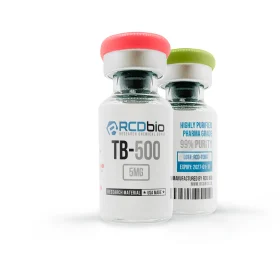
Description
What is TB-500 (Thymosin Beta-4)?
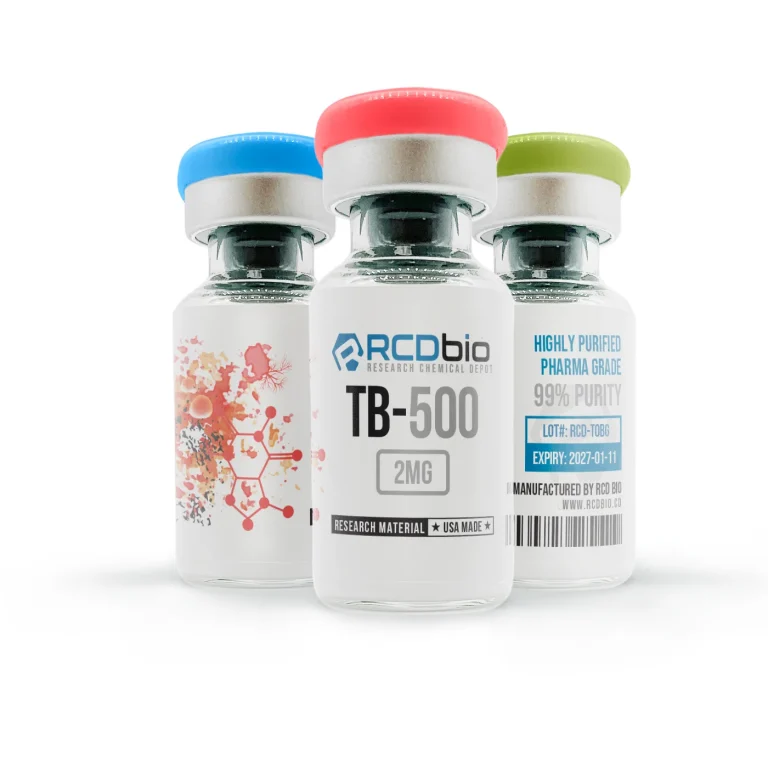
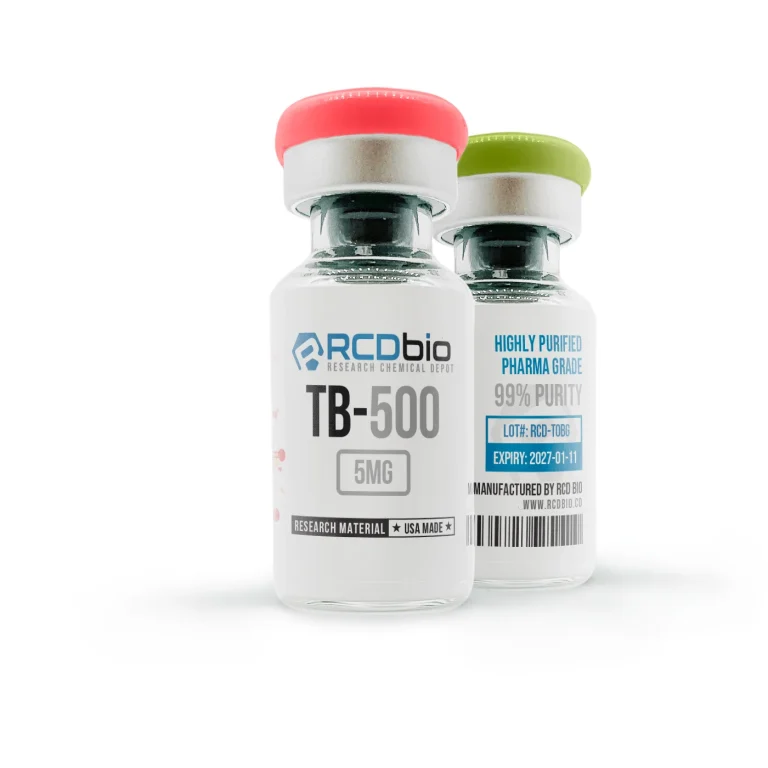
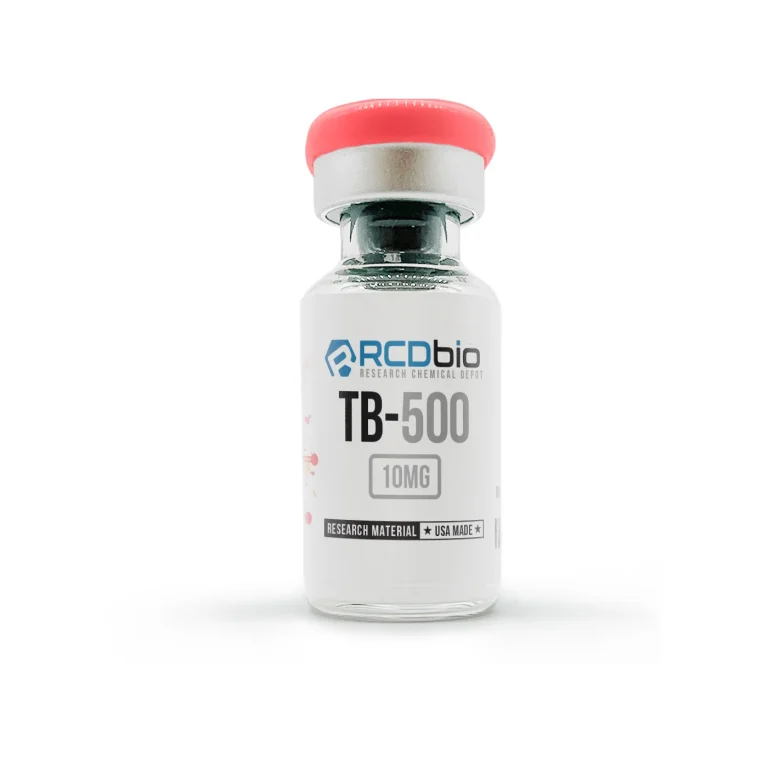
TB-500 is the research designation for synthetic Thymosin Beta-4 (Tβ4), a 43-amino acid, N-terminally acetylated peptide belonging to the beta-thymosin family — a group of 16 structurally related actin-binding proteins characterised by high evolutionary conservation and near-ubiquitous intracellular distribution across mammalian tissues and circulating cells. The term TB-500 was originally applied by researchers to distinguish synthetic Tβ4 preparations from biological tissue extracts, and has been adopted widely in the research peptide market to refer to the full 43-amino acid synthetic Tβ4 sequence. As noted in the BPC-157 + TB-500 Blend product description, some suppliers use the TB-500 designation for the shorter 7-amino-acid active actin-binding fragment (Ac-LKKTETQ; CAS 885340-08-9; MW 889.018 g/mol); the present RCDbio product is the full 43-amino-acid Thymosin Beta-4 sequence.
Thymosin Beta-4 is the most abundant beta-thymosin in most human and animal cells. It was first isolated from thymic tissue during systematic fractionation of thymosin — a preparation thought to contain T cell maturation factors — but its primary biological function proved to be cytoskeletal rather than immunological. Tβ4’s defining biochemical property is the sequestration of monomeric G-actin (globular actin): it binds G-actin at an approximate dissociation constant KD of 0.5–2 μM, maintaining an available pool of free G-actin monomers that can be rapidly recruited to growing actin filament (F-actin) barbed ends. This G-actin sequestration function governs cell migration, cell morphology, cytokinesis, and the directed cellular responses to injury that underlie tissue repair processes.
TB-500 is not approved by the Food and Drug Administration for human or veterinary use. It is explicitly prohibited by WADA under S2. It is not a dietary supplement and is not intended for human consumption or self-administration. All RCDbio research compounds are supplied strictly for laboratory and research purposes only.
Chemical Properties
| Property | Detail |
| Product Type | Synthetic 43-Amino Acid G-Actin Sequestering Peptide / Beta-Thymosin Family Research Compound |
| Product Name | TB-500 (Thymosin Beta-4) |
| Application | Scientific / Research Use Only |
| CAS Number | 77591-33-4 |
| Molar Mass | 4963.4408 g/mol |
| Chemical Formula | C212H350N56O78S |
| PubChem CID | 16132341 |
| IUPAC Name | Full canonical IUPAC available at PubChem CID 16132341 |
| Amino Acid Count | 43 amino acids; N-terminally acetylated serine (Ac-Ser at position 1) |
| Sequence | Ac-Ser-Asp-Lys-Pro-Asp-Met-Ala-Glu-Ile-Glu-Lys-Phe-Asp-Lys-Ser-Lys-Leu-Lys-Lys-Thr-Glu-Thr-Gln-Glu-Lys-Asn-Pro-Leu-Pro-Ser-Lys-Glu-Thr-Ile-Glu-Gln-Glu-Lys-Gln-Ala-Gly-Glu-Ser |
| Actin-Binding Domain | Residues 17–23 (Ac-LKKTETQ; the active fragment corresponding to CAS 885340-08-9) — the G-actin binding pharmacophore within the full 43-AA sequence |
| G-Actin KD | ~0.5–2 μM (G-actin binding; full Tβ4) |
| Isoelectric Point (pI) | 5.1 |
| Molecular Weight (kDa) | ~4.9 kDa (water-soluble; does not bind extracellular matrix) |
| Synonyms | Thymosin Beta-4; Tβ4; Tb4; FX (early designation); TMSB4X gene product |
| Physical Form | Lyophilized white to off-white powder |
| Solubility | Freely soluble in water; soluble in PBS and standard aqueous buffers |
| Storage (Lyophilized) | −20°C; sealed container; protected from light and moisture |
| Storage (Reconstituted) | 4°C; use within 48–72 hours; avoid repeated freeze-thaw cycles |
| Purity | ≥98% (HPLC verified, independent third-party laboratory analysis) |
| WADA Status | Thymosin Beta-4 is explicitly prohibited at all times under S2.3 (Growth Factors and Growth Factor Modulators) of the 2026 WADA Prohibited List, where “Thymosin-β4 and its derivatives e.g. TB-500” are explicitly named. Verify at GlobalDRO.com. |
How Does TB-500 Work?
TB-500’s biological activities are mediated through multiple intersecting mechanisms anchored in G-actin sequestration and cytoskeletal dynamics, with secondary activities in angiogenesis, anti-inflammation, and cardioprotection.
G-Actin Sequestration and Cytoskeletal Regulation
Tβ4 maintains a large intracellular pool of sequestered G-actin monomers available for rapid actin filament nucleation and elongation. Cells maintain a ~100-fold excess of unpolymerised G-actin relative to free G-actin thermodynamics would predict, due largely to Tβ4 sequestration. By controlling the concentration of free G-actin available for profilin-mediated delivery to barbed ends, Tβ4 governs the rate and directionality of actin filament growth — directly controlling lamellipodia formation, cell polarity, and directed migration in fibroblasts, keratinocytes, and endothelial cells [Huff et al., 2001]. This cytoskeletal control is the mechanistic basis for Tβ4’s roles in wound closure, immune cell trafficking, and tissue repair.
Cell Migration and Wound Healing Pathway
The functional consequence of G-actin pool regulation is directed cell migration. In wound healing preparations, elevated extracellular Tβ4 — released from platelets and other cells at injury sites — signals surrounding cells to migrate into the wound bed. In corneal epithelial cell preparations, Tβ4 accelerated wound closure by promoting directed lamellipodia formation and cell migration toward the denuded area [Sosne et al., 2001]. In dermal wound preparations, Tβ4 stimulated keratinocyte and fibroblast migration, angiogenesis, and collagen deposition [Malinda et al., 1999].
Angiogenesis and Endothelial Cell Biology
Thymosin Beta-4 promotes angiogenesis in preclinical preparations through its actin-dependent effects on endothelial cell migration, tube formation, and sprouting. The LKKTETQ actin-binding domain (Ac-LKKTETQ; residues 17–23) specifically promotes angiogenesis when isolated as a peptide [Philp et al., 2004]. In rodent wound model preparations, Tβ4 increased new blood vessel formation alongside keratinocyte migration, contributing to vascularisation of healing tissue.
Anti-Inflammatory and NF-κB Pathway Effects
TB-500 reduces NF-κB pathway activation and decreases IL-6 and TNF-α levels in isolated cell and preclinical inflammatory model preparations. The N-terminal tetrapeptide Ac-SDKP (residues 1–4 of Tβ4, released from Tβ4 by prolyl oligopeptidase cleavage) has been independently characterised as an anti-inflammatory and anti-fibrotic fragment in renal and cardiac fibrosis model systems — indicating that Tβ4 carries multiple bioactive sequence segments beyond the actin-binding domain.
Cardioprotective Activity
In rodent cardiac ischaemia-reperfusion model preparations, TB-500 improved mitochondrial function, reduced oxidative stress markers, and promoted cardiomyocyte survival. In post-MI rat models, Tβ4 promoted activation of cardiac progenitor cells and epicardial cells, potentially contributing to myocardial repair [Goldstein et al., 2007]. These cardioprotective observations have generated interest in Tβ4 as a reference compound for studying peptide-mediated cardiac repair pathways.
Key Research Findings
In preclinical and in vitro research contexts, TB-500 has been associated with the following observations:
- G-actin sequestration: Tβ4 is the major cellular G-actin sequestering protein, maintaining unpolymerised actin pools in mammalian cells at approximately 100-fold excess; KD for G-actin binding ~0.5–2 μM [Huff et al., 2001].
- Wound healing acceleration: Tβ4 accelerated corneal epithelial wound closure in rabbit models; promoted keratinocyte and fibroblast migration in dermal wound model preparations [Malinda et al., 1999].
- Angiogenesis promotion: Tβ4 and its LKKTETQ actin-binding fragment promoted endothelial cell tube formation and in vivo angiogenesis in dermal wound model preparations [Philp et al., 2004].
- Cardioprotective activity: In post-MI rodent model preparations, Tβ4 promoted cardiac progenitor cell activation and reduced infarct-related fibrosis [Goldstein et al., 2007].
- Anti-inflammatory activity: Tβ4 reduced NF-κB activation, IL-6, and TNF-α in inflammatory cell and tissue preparations; Ac-SDKP, an anti-fibrotic fragment released by prolyl oligopeptidase cleavage in vivo.
All findings listed above are derived from preclinical in vitro and in vivo data. No regulatory-grade human clinical trial data have been established for TB-500. These observations do not constitute evidence of efficacy or safety in any human condition or organism.
What are the Potential Research Applications?
Actin Cytoskeletal Biology and Cell Migration Research TB-500 is employed as the primary physiological G-actin sequestering peptide reference compound for studying actin dynamics, G-actin/F-actin equilibrium, lamellipodia formation, and directed cell migration in fibroblast, keratinocyte, and endothelial cell model systems.
Wound Healing and Tissue Repair Pathway Studies In dermal wound model preparations, corneal epithelial wound models, and rodent in vivo wound healing systems, TB-500 is investigated for effects on cell migration velocity, wound closure kinetics, vascular density at wound sites, and ECM deposition.
Angiogenesis and Endothelial Biology Research TB-500 is employed in endothelial cell tube formation assays, in vitro scratch assays, and rodent angiogenesis model preparations to characterise LKKTETQ-domain-dependent and full-sequence Tβ4 angiogenic mechanisms and their relationship to actin dynamics.
Cardioprotection and Cardiac Repair Research. In cardiac ischaemia-reperfusion rodent model systems, TB-500 is investigated for its effects on cardiomyocyte survival, cardiac progenitor cell activation, mitochondrial function restoration, and modulation of anti-fibrotic pathways.
Beta-Thymosin SAR and Active Fragment Studies TB-500 (full 43-AA sequence) is employed alongside isolated active fragments — Ac-LKKTETQ (actin-binding domain) and Ac-SDKP (anti-inflammatory N-terminal tetrapeptide) — in comparative SAR investigations characterising which sequence segments mediate each biological activity.
What are the Potential Side Effects?
- Generally well-tolerated profile in preclinical rodent studies and limited human studies of Tβ4 protein preparations at research-relevant doses; no significant acute toxicity reported
- The Met residue at position 6 of the sequence is susceptible to oxidative modification under aerobic storage conditions — relevant to preparation quality control
- WADA S2 explicit prohibition — researchers in sport-adjacent contexts must account for this status
- No human safety or tolerability data have been established for research-grade TB-500 outside approved study contexts
Risk & Handling
Handling Precautions
TB-500 should only be handled by trained laboratory personnel. Appropriate PPE required: nitrile gloves, lab coat, eye protection. Use in a laminar flow cabinet. Avoid aerosol generation during reconstitution.
Exposure Risks
Risk Tier: LOW–MODERATE
TB-500 has a generally well-tolerated profile in published preclinical studies. Its cell migration, angiogenic, and cardioprotective pathway activities mean accidental systemic exposure may produce pharmacological effects in tissues expressing LKKTETQ binding partners and actin-regulating signalling systems. No human safety data has been established.
Storage
- Lyophilized: −20°C; sealed; light-protected; desiccated
- Reconstituted: 4°C; 48–72 hours; avoid freeze-thaw; Met6 oxidation risk
- Protect from atmospheric oxygen and UV light
Frequently Asked Questions
Q: What is TB-500, and how does it differ from the TB-500 fragment? A: TB-500 (Thymosin Beta-4; CAS 77591-33-4; 43 AA; MW 4963.44 g/mol) is the full synthetic Tβ4 sequence. The “TB-500 fragment” designation is used by some suppliers for the 7-amino acid active actin-binding domain fragment alone (Ac-LKKTETQ; CAS 885340-08-9; MW 889 g/mol; residues 17–23 of the full sequence). The two compounds differ significantly in molecular weight and pharmacokinetics. Researchers should verify from the product COA which form is supplied.
Q: What is Thymosin Beta-4’s primary mechanism? A: The primary characterised mechanism is G-actin sequestration — Tβ4 binds monomeric G-actin at KD ~0.5–2 μM, maintaining a large intracellular pool of polymerisation-competent G-actin monomers available for directed actin filament growth. This cytoskeletal control governs cell migration, lamellipodia formation, and the directed cellular movement required for wound closure and tissue repair in preclinical model systems.
Q: What is the WADA status of TB-500? A: Thymosin Beta-4 is explicitly named and prohibited at all times under S2.3 (Growth Factors and Growth Factor Modulators) of the 2026 WADA Prohibited List. Verify at GlobalDRO.com prior to any sport-adjacent research use.
Q: How should TB-500 be stored? A: Lyophilized TB-500 should be stored at −20°C in a sealed, light-protected container with desiccant. Once reconstituted, store at 4°C and use within 48–72 hours. The Met6 residue is susceptible to oxidative modification — minimise oxygen exposure. Avoid repeated freeze-thaw cycles.
Q: What is the Ac-SDKP tetrapeptide, and how does it relate to TB-500? A: Ac-SDKP (N-acetyl-seryl-aspartyl-lysyl-proline) represents residues 1–4 of Tβ4’s N-terminus and is released in vivo by prolyl oligopeptidase cleavage of the full Tβ4 sequence. It has been independently characterised as an anti-fibrotic and anti-inflammatory fragment in renal and cardiac fibrosis model preparations — representing a secondary bioactive sequence within the full TB-500 structure.
Related Research Compounds
- BPC-157 + TB-500 Blend — The combination research preparation of BPC-157 and TB-500 for investigating complementary angiogenic and actin-regulatory pathway interactions in tissue repair model systems.
- GHK-Cu 1:1 — A copper-chelated tripeptide investigated for ECM remodelling, collagen synthesis, and MMP regulation; shares the wound healing and tissue repair research context with TB-500.
All products listed are for laboratory and research purposes only.
References
- Huff, T., Müller, C. S. G., Otto, A. M., Netzker, R., & Hannappel, E. (2001). β-Thymosins, small acidic peptides with multiple functions. International Journal of Biochemistry and Cell Biology, 33(3), 205–220. https://pubmed.ncbi.nlm.nih.gov/11311859/
- Malinda, K. M., Goldstein, A. L., & Kleinman, H. K. (1999). Thymosin beta 4 stimulates directional migration of human umbilical vein endothelial cells. FASEB Journal, 13(2), 227–231. https://pubmed.ncbi.nlm.nih.gov/10051593/
- Philp, D., Huff, T., Gho, Y. S., Hannappel, E., & Kleinman, H. K. (2004). The actin binding site on thymosin beta4 promotes angiogenesis. FASEB Journal, 18(3), 445–446. https://pubmed.ncbi.nlm.nih.gov/14715705/
- Goldstein, A. L., & Kleinman, H. K. (2007). Minireview: Reexamination and new perspectives on the role of thymosin beta4 in tissue repair and regeneration. Annals of the New York Academy of Sciences, 1112, 18–27. https://pubmed.ncbi.nlm.nih.gov/17600278/
Disclaimer
TB-500 (Thymosin Beta-4) is exclusively for laboratory research purposes. RCDbio products are not intended to diagnose, prevent, treat, or cure any disease or medical condition.
The Food and Drug Administration has not approved TB-500 for any indication. This product is not approved for human or veterinary use. Researchers must comply with all applicable local, state, and federal laws and regulations governing the purchase and use of research compounds. By purchasing, you agree to our Terms and Conditions. RCDbio reserves the right to refuse sales to unauthorized individuals.
ATTENTION: All RCDbio products are strictly for LABORATORY AND RESEARCH PURPOSES ONLY. They are not intended for human consumption, veterinary use, or any other non-research application. For queries, complaints, or support, contact support@legacy.rcdbio.co
Reviews
There are no reviews yet