

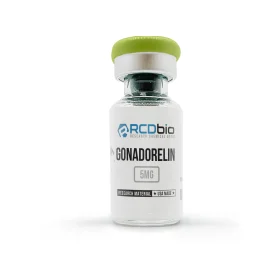
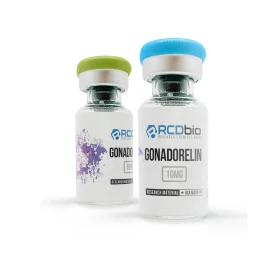
Description
What is Gonadorelin?
Gonadorelin is a synthetic decapeptide structurally identical to endogenous gonadotropin-releasing hormone (GnRH), also designated GnRH-I or luteinizing hormone-releasing hormone (LHRH). The compound was first characterized from porcine hypothalamic tissue by the Nobel laureate Andrew V. Schally and colleagues in 1971, representing one of the earliest defined hypothalamic releasing hormones. The sequence — pyroGlu-His-Trp-Ser-Tyr-Gly-Leu-Arg-Pro-Gly-NH₂ — is conserved across vertebrate species and constitutes the canonical endogenous ligand for the gonadotropin-releasing hormone receptor (GnRHR), a class A rhodopsin-type G protein-coupled receptor expressed on anterior pituitary gonadotroph cells.
In research settings, synthetic gonadorelin serves as the primary endogenous reference ligand for characterizing GnRHR binding affinity, receptor activation kinetics, Gαq/11 coupling efficiency, and downstream phospholipid signaling cascades in pituitary gonadotroph cell preparations and in vivo rodent models. It has been employed in preclinical systems to investigate the hypothalamic-pituitary-gonadal (HPG) axis, pulse-frequency-dependent differential regulation of gonadotropin subunit gene expression, and GnRHR expression in reproductive tract tissue-derived cell lines.
Pharmaceutical-grade gonadorelin is approved by the Food and Drug Administration under trade names including Factrel and Lutrepulse for specific diagnostic and therapeutic indications. The research-grade lyophilized peptide supplied by RCDbio is not approved by the Food and Drug Administration for use in this research-grade, non-pharmaceutical form. It is intended strictly for laboratory and research purposes. It is not a dietary supplement and is not intended for human consumption or therapeutic self-administration.
Chemical Properties
| Property | Detail |
| Product Type | Synthetic Decapeptide |
| Product Name | Gonadorelin (GnRH-I / LHRH) |
| Application | Scientific / Research Use Only |
| CAS Number | 33515-09-2 (free base); 34973-08-5 (monoacetate); 71447-49-9 (diacetate); 51952-41-1 (hydrochloride) |
| Molar Mass | 1,182.311 g/mol (free base); 1,242.34 g/mol (monoacetate, C₅₅H₇₅N₁₇O₁₃ · C₂H₄O₂) |
| Chemical Formula | C₅₅H₇₅N₁₇O₁₃ (free base); C₅₅H₇₅N₁₇O₁₃ · C₂H₄O₂ (monoacetate) |
| Sequence | pyroGlu-His-Trp-Ser-Tyr-Gly-Leu-Arg-Pro-Gly-NH₂ |
| IUPAC Name | (2S)-N-[(2S)-1-[[(2S)-1-[[(2S)-1-[[(2S)-1-[[2-[[(2S)-1-[[(2S)-1-[(2S)-2-[(2-amino-2-oxoethyl)carbamoyl]pyrrolidin-1-yl]-5-(diaminomethylideneamino)-1-oxopentan-2-yl]amino]-4-methyl-1-oxopentan-2-yl]amino]-2-oxoethyl]amino]-3-(4-hydroxyphenyl)-1-oxopropan-2-yl]amino]-3-hydroxy-1-oxopropan-2-yl]amino]-3-(1H-indol-3-yl)-1-oxopropan-2-yl]amino]-3-(1H-imidazol-5-yl)-1-oxopropan-2-yl]-5-oxopyrrolidine-2-carboxamide |
| Synonyms | GnRH-I, LHRH, Gonadorelin acetate, Gonadorelin hydrochloride; pharmaceutical forms: Factrel (hydrochloride), Lutrepulse (acetate); these are FDA-approved pharmaceutical formulations distinct from research-grade material |
| Physical Form | Lyophilized white to off-white powder |
| Solubility | Freely soluble in water and 0.9% saline; soluble in dilute acetic acid (0.1%); avoid exposure to strongly alkaline conditions; does not contain disulfide bridges and is not sensitive to reducing agents |
| Storage (Lyophilized) | Store at -20°C in sealed, light-protected container with desiccant; minimize freeze-thaw cycling of the stock vial |
| Storage (Reconstituted) | Store at 4°C; use within 24–48 hours of reconstitution; do not subject to repeated freeze-thaw cycles; discard any reconstituted solution that appears turbid, discolored, or shows particulate matter |
| PubChem CID | 638793 (free base) — verified against PubChem.ncbi.nlm.nih.gov; acetate salt CID not listed pending separate verification |
| Purity | ≥98% (HPLC verified, independent third-party laboratory analysis; COA available per batch) |
| WADA Status | Gonadorelin is not listed by name on the current WADA Prohibited List; however, as a peptide hormone affecting the HPG axis, it may fall under the S2 Peptide Hormones, Growth Factors, Related Substances, and Mimetics category. Researchers engaged in sport-adjacent studies should verify the current status at GlobalDRO.com before use. |
How Does Gonadorelin Work?
Gonadorelin exerts its primary pharmacological effects through binding to GnRHR, a class A (rhodopsin-type) G protein-coupled receptor located on the plasma membrane of anterior pituitary gonadotroph cells. GnRHR is distinguished from most other GPCRs by the absence of a C-terminal cytoplasmic tail, a structural feature that confers markedly reduced susceptibility to agonist-induced desensitization, beta-arrestin recruitment, and receptor internalization. This unique topology is mechanistically significant for pulse-frequency decoding behavior observed in gonadotroph cell preparations.
Gαq/11-Mediated Phospholipid Signaling In isolated pituitary gonadotroph cell preparations and LβT2 gonadotrope cell line systems, gonadorelin-mediated GnRHR activation initiates Gαq/11 coupling, leading to phospholipase C-beta (PLCβ) activation and subsequent hydrolysis of phosphatidylinositol 4,5-bisphosphate (PIP₂). The products — inositol 1,4,5-trisphosphate (IP₃) and diacylglycerol (DAG) — trigger intracellular calcium release from the endoplasmic reticulum via IP₃ receptors and activate protein kinase C (PKC) isoforms, respectively. These events have been characterized as the primary mechanistic basis for gonadotropin exocytosis in gonadotroph cell models. Voltage-gated calcium channel activation also contributes to oscillatory calcium signaling in pituitary gonadotroph preparations, generating periodic changes in membrane electrical activity that accompany IP₃-mediated calcium transients.
Pulse-Frequency-Dependent Differential Gonadotropin Regulation In pituitary gonadotroph cell systems (αT3-1 and LβT2 cell lines), the frequency of pulsatile GnRHR activation has been characterized as the mechanistic basis for differential LHβ and FSHβ subunit gene transcription. Rapid pulse intervals (approximately every 60 minutes) preferentially activate ERK1/2, Egr-1 transcription factor expression, and LHβ promoter activity; slower pulse intervals favor FSHβ subunit gene transcription, mediated in part by ERK5 and JNK pathway contributions. Dual-specificity phosphatase (DUSP) regulation of MAPK activity through negative feedback loops has been identified in gonadotroph cell models as the mechanistic basis for frequency-selective signal decoding. This pulse-frequency dependency does not involve receptor desensitization, consistent with the absent C-terminal tail of mammalian GnRHR.
Mitogen-Activated Protein Kinase (MAPK) Pathway Activation GnRHR activation by gonadorelin initiates activation of multiple MAPK pathways in pituitary gonadotroph cell preparations, including ERK1/2, JNK, p38, and ERK5. PKC is the principal mediator of ERK1/2 activation in αT3-1 and LβT2 gonadotrope cell lines. These MAPK activations have been characterized in gonadotroph cell systems as contributing combinatorially to transcriptional control of gonadotropin subunit gene expression, including the common alpha-subunit (CGA), LHβ, and FSHβ. Calmodulin, calmodulin-dependent protein kinases, and the calcium-dependent transcription factor NFAT have also been identified in pituitary cell preparations as downstream transducers of calcium-dependent transcriptional responses to GnRHR activation.
Extrapituitary GnRHR-Mediated Signaling in Cancer Cell Preparations GnRHR expression has been identified in cell lines derived from endometrial, ovarian, prostate, and breast cancers. In contrast to pituitary gonadotroph signaling (which proceeds via Gαq/11), GnRHR in these tumor-derived cell lines has been characterized as coupling predominantly to Gαi. Gαi-mediated GnRHR activation in endometrial and ovarian cancer cell preparations activates a phosphotyrosine phosphatase (PTP), which counteracts EGF-receptor autophosphorylation and inhibits downstream mitogenic signal transduction cascades. This antiproliferative signal transduction mechanism, observed in isolated cancer cell lines, is distinct from the gonadotropin-secretory pathway and is under active preclinical investigation.
Key Research Findings
- GnRHR Gαq/11 signaling: IP₃-dependent oscillatory calcium signaling and PKC activation characterized in isolated pituitary gonadotroph preparations; GnRHR resistance to desensitization attributed to absent C-terminal tail. [Shacham et al., 2001]
- Pulse-frequency decoding: In LβT2 gonadotrope cell line studies, high-frequency GnRHR pulsatile activation preferentially stimulates LHβ transcription via ERK1/2/Egr-1; low-frequency activation favors FSHβ via ERK5 and JNK; DUSP negative feedback is identified as the mechanistic basis for frequency discrimination. [Thompson et al., 2013]
- GnRHR density and pituitary sensitivity: In rat anterior pituitary gonadotroph preparations, GnRHR membrane density has been characterized as the primary determinant of pituitary sensitivity to GnRH; density is regulated by gonadal steroids, inhibin, activin, and GnRH itself in a feedback-dependent manner. [Hapgood et al., 2005]
- Extrapituitary antiproliferative signaling: In human endometrial and ovarian cancer cell line preparations, tumor GnRHR couples to Gαi; Gαi activation of PTP counteracts EGF-receptor-mediated mitogenic signal transduction, observed as dose- and time-dependent inhibition of proliferation in vitro. [Gründker et al., 2001]
- GnRH in normal and malignant cell research: Pulsatile GnRH delivery in pump-delivery rodent and primate model systems is required for sustained gonadotropin synthesis and release; continuous GnRH exposure produces gonadotropin suppression via receptor downregulation, studied in primate HPG axis models. [Limonta et al., 2003]
All findings listed above are derived from preclinical or in vitro data. No conclusions regarding human therapeutic efficacy can be drawn from these observations. These findings do not constitute evidence of safety or efficacy in any human condition or organism.
What are the Potential Research Applications of gonadorelin?
GnRHR Pharmacology and GPCR Signaling Studies Synthetic gonadorelin serves as the primary endogenous reference ligand for characterizing GnRHR binding kinetics, Gαq/11 coupling selectivity, and downstream IP₃/calcium/PKC signaling in isolated pituitary gonadotroph preparations. It is employed in radioligand displacement assays, inositol phosphate accumulation studies, BRET/FRET experiments, and pathway-selective reporter cell systems to investigate G protein bias, receptor trafficking, and calcium oscillation patterns in gonadotrope cell lines. Its structural properties make it suitable for comparative studies against GnRH analogs with modified desensitization or internalization profiles.
HPG Axis Regulatory Research In in vivo rodent and primate model systems, gonadorelin has been investigated as a tool for characterizing the mechanistic basis of pulsatile hypothalamic-pituitary-gonadal axis signaling. Studies utilizing pump-delivery gonadorelin administration in rodent models have characterized the requirements for LH and FSH secretion frequency and amplitude, the role of gonadal steroid feedback on GnRHR density, and the endocrine consequences of continuous versus pulsatile GnRH exposure. These models are used to investigate central reproductive regulatory mechanisms and conditions associated with dysregulation of pulsatile GnRH release.
Pulse-Frequency Signal Decoding Research Gonadorelin is used in αT3-1 and LβT2 gonadotrope cell line preparations to investigate the mechanisms by which changing GnRH pulse frequency selectively controls LHβ and FSHβ gene transcription. Research in this area employs microfluidic pulsatile delivery systems, live-cell imaging of MAPK activation dynamics, and computational modeling to characterize ERK1/2, ERK5, JNK, and p38 pathway contributions to frequency decoding. This application area is relevant to the broader investigation of how pulsatile GPCR signaling encodes distinct transcriptional programs in a single cell type.
Extrapituitary GnRHR Research in Oncology Cell Models Gonadorelin and its structural analogs are used as reference compounds in cell line studies characterizing GnRHR expression and signaling in endometrial, ovarian, prostate, and breast cancer cell preparations. Research has investigated GnRHR-coupled Gαi activation, PTP-mediated counteraction of EGF receptor signaling, and dose-dependent effects on cell proliferation markers in vitro. This area of investigation is relevant to research into GnRHR as a potential molecular target in reproductive tract cancer biology.
These research applications are observed in preclinical and in vitro contexts only and do not constitute claims of efficacy or safety in any organism.
What are the Potential Side Effects of Gonadorelin?
The following adverse observations are derived from preclinical and in vitro data. No human safety data has been established for research-grade gonadorelin.
- Gonadotropin suppression: In rodent in vivo models, continuous (non-pulsatile) GnRHR stimulation results in GnRHR downregulation and marked suppression of LH and FSH secretion — an expected pharmacological consequence of sustained GPCR occupancy distinct from pulsatile stimulation; observed in primate HPG axis models as well.
- Sex steroid suppression: Secondary to gonadotropin suppression, continuous gonadorelin exposure in animal models results in reduction of gonadal steroid output; characterized in rodent and primate in vivo models and not uniformly replicated across all species.
- Injection site reactions: In rodent in vivo administration models, subcutaneous or intravenous dosing has been associated with local tissue responses; no systemic toxicity is associated with the peptide structure itself at research-relevant concentrations.
- Cardiovascular observations: At supraphysiological concentrations in isolated cell and animal preparations, changes in heart rate and blood pressure have been noted incidentally in some studies; these are not primary pharmacological targets of GnRHR, and data are not uniform across models.
- Histamine release (rare): Rapid intravenous bolus delivery in animal models has been associated with transient histamine-mediated reactions in some preparations; it is considered a delivery rate artifact rather than a receptor-mediated effect.
No human safety or tolerability data pertaining to research-grade gonadorelin has been established. These observations are derived from experimental systems and should not be extrapolated to human or animal outcomes.
Risk & Handling
Risk Tier: MODERATE
Handling Precautions
Gonadorelin lyophilized powder should be handled by trained laboratory personnel only. Minimum personal protective equipment: nitrile gloves, laboratory coat, and eye protection. Reconstitution should be performed using sterile technique to prevent contamination of the peptide solution. Avoid aerosol generation during reconstitution. Gonadorelin does not contain a disulfide bridge and is not sensitive to reducing agents; standard aqueous reconstitution conditions are appropriate. Because gonadorelin is pharmacologically active at GnRHR in reproductive cell systems, researchers should minimize dermal or mucosal contact with reconstituted solutions.
Exposure Risks
Gonadorelin is a potent, pharmacologically active endogenous peptide hormone with well-characterized activity at GnRHR in pituitary and extrapituitary systems. At research-relevant concentrations, it is not acutely cytotoxic in preclinical preparations; however, continuous or supraphysiological exposure in rodent and primate in vivo models produces GnRHR downregulation and secondary sex steroid suppression as an expected consequence of sustained receptor occupancy. The plasma half-life of gonadorelin in rodent intravenous models is approximately 2–10 minutes, reflecting rapid enzymatic degradation by peptidases in plasma and tissues; lyophilized stability in sealed, desiccated storage is considerably longer. No human safety data has been established for research-grade gonadorelin. Researchers should exercise caution appropriate to handling a potent biologically active endogenous peptide with HPG axis activity.
Storage
- Lyophilized form: Store at −20°C; sealed, light-protected container with desiccant; minimize repeated opening of stock vial
- Reconstituted form: Store at 4°C; use within 24–48 hours of reconstitution
- Freeze-thaw guidance: Minimize freeze-thaw cycles; while gonadorelin does not contain disulfide bridges, repeated thermal cycling may contribute to peptide aggregation and loss of potency
- Solvent compatibility: Sterile water for injection or 0.9% NaCl preferred; 0.1% acetic acid may be used as a co-solvent if needed for solubility; avoid strongly alkaline conditions
- Discard criteria: Discard any reconstituted solution that appears turbid, discolored, or shows particulate matter
FAQs
Q: What is gonadorelin, and what is it investigated for in preclinical research? A: Gonadorelin is a synthetic decapeptide structurally identical to endogenous gonadotropin-releasing hormone (GnRH-I/LHRH). In laboratory settings, it is investigated as the primary reference ligand for the GnRH receptor (GnRHR), a class A GPCR expressed on pituitary gonadotroph cells. Research applications include characterization of Gαq/11-mediated phospholipid signaling, pulse-frequency-dependent regulation of LH and FSH subunit gene expression in gonadotrope cell line preparations, and GnRHR signaling in reproductive tract cancer cell lines. These investigations are conducted in in vitro cell systems and in vivo rodent and primate models.
Q: What is the half-life of gonadorelin in preclinical models? A: In rodent intravenous models, the plasma half-life of gonadorelin is approximately 2–10 minutes, reflecting rapid degradation by endopeptidases, including neutral endopeptidase (neprilysin) and post-proline cleaving enzyme in plasma and peripheral tissues. In vitro stability in lyophilized form under desiccated, sub-zero storage is considerably longer. These figures are derived from laboratory and preclinical models and do not represent human pharmacokinetic data for research-grade material.
Q: How should gonadorelin be stored to maintain stability? A: Lyophilized gonadorelin should be stored at −20°C in a sealed, light-protected container with desiccant. Repeated opening of the stock vial should be minimized to avoid moisture ingress. Once reconstituted, solutions should be stored at 4°C and used within 24–48 hours. Gonadorelin does not contain disulfide bridges and is not reducing agent-sensitive, but peptide aggregation may occur with repeated freeze-thaw cycling of reconstituted material.
Q: What toxicity observations have been reported in preclinical studies? A: Gonadorelin has not demonstrated significant intrinsic cytotoxicity at research-relevant concentrations in in vitro cell preparations. In rodent and primate in vivo models, the primary pharmacological consequence of continuous (non-pulsatile) administration is GnRHR downregulation, leading to suppression of LH, FSH, and downstream gonadal steroid output — an on-target receptor-mediated effect rather than a direct toxic mechanism. Rapid intravenous bolus delivery in some animal models has been associated with transient histamine-related reactions attributed to delivery rate rather than receptor pharmacology. No chronic toxicity, organ-specific damage, or lethality data has been reported at laboratory research concentrations in preclinical preparations.
Q: What is gonadorelin typically reconstituted with in laboratory research? A: Gonadorelin is typically reconstituted in sterile water for injection or 0.9% sodium chloride solution in laboratory settings. A small amount of 0.1% acetic acid may be added as a co-solvent if initial solubility is limited. The resulting solution should be clear and colorless; turbid or particulate-containing solutions should be discarded. Unlike disulfide-containing peptides, gonadorelin does not require reducing-agent-free conditions and is compatible with standard aqueous laboratory buffers.
Q: How does pulsatile versus continuous GnRHR stimulation affect downstream signaling in preclinical systems? A: In gonadotroph cell line preparations (αT3-1, LβT2) and in vivo rodent models, pulsatile GnRHR stimulation at physiologically relevant frequencies sustains LH and FSH synthesis and secretion, with pulse frequency encoding differential gonadotropin subunit gene expression. Continuous GnRHR stimulation, by contrast, results in GnRHR downregulation and desensitization of downstream signaling, leading to marked suppression of gonadotropin output — a phenomenon well-characterized in primate HPG axis models. This pulse-frequency dependency is mechanistically attributable to the absent C-terminal tail of mammalian GnRHR and the resulting resistance to beta-arrestin recruitment and internalization.
Q: How does research-grade gonadorelin differ from its pharmaceutical forms? A: The pharmaceutical forms of gonadorelin — Factrel (gonadorelin hydrochloride) and Lutrepulse (gonadorelin acetate) — are FDA-approved, sterile, pharmaceutical-grade formulations manufactured under Current Good Manufacturing Practice (cGMP) conditions for specific diagnostic and therapeutic indications. Research-grade gonadorelin supplied by RCDbio is a lyophilized peptide intended for in vitro laboratory research and preclinical in vivo animal studies only. It is not manufactured under pharmaceutical cGMP standards and is not approved by the FDA for use in any clinical, diagnostic, or therapeutic application in this form.
Related Research Compounds
Kisspeptin-10 [Peptide] — A C-terminal decapeptide fragment of kisspeptin-54 that acts as the primary upstream regulator of hypothalamic GnRH neurons via the KISS1R receptor; investigated in rodent and primate models as a regulator of GnRH pulse generation and HPG axis activity upstream of GnRHR.
Sermorelin [Peptide] — A synthetic 29-amino acid analogue of growth hormone-releasing hormone (GHRH) that acts on GHRH receptors in pituitary somatotroph cells; investigated in rodent models for pulsatile GH secretion mechanisms and as a reference compound in pituitary GPCR pharmacology studies alongside GnRH signaling research.
CJC-1295 With DAC [Peptide] — A GHRH analogue with extended plasma half-life via drug affinity complex (DAC) technology; employed in preclinical in vivo rodent models for investigating sustained pituitary GPCR activation and GH secretory dynamics in parallel with GnRH pulse-dependent studies.
References
- Shacham S, Harris D, Ben-Shlomo H, Cohen I, Bonfil D, Przedecki F, Lewy H, Ashkenazi IE, Seger R, Naor Z. (2001). Mechanism of GnRH receptor signaling on gonadotropin release and gene expression in pituitary gonadotrophs. Vitamins and Hormones, 63:63–90. https://pubmed.ncbi.nlm.nih.gov/11358118/
- Hapgood JP, Sadie H, van Biljon W, Ronacher K. (2005). Regulation of expression of mammalian gonadotrophin-releasing hormone receptor genes. Journal of Neuroendocrinology, 17(10):619–638. https://pubmed.ncbi.nlm.nih.gov/16159375/
- Thompson IR, Kaiser UB. (2014). GnRH pulse frequency-dependent differential regulation of LH and FSH gene expression. Molecular and Cellular Endocrinology, 385(1–2):28–35. https://pubmed.ncbi.nlm.nih.gov/24056171/
- Gründker C, Völker P, Günthert AR, Emons G. (2001). Antiproliferative signaling of luteinizing hormone-releasing hormone in human endometrial and ovarian cancer cells through G protein alpha(I)-mediated activation of phosphotyrosine phosphatase. Endocrinology, 142(6):2369–2380. https://pubmed.ncbi.nlm.nih.gov/11356684/
- Limonta P, Moretti RM, Montagnani Marelli M, Motta M. (2003). The biology of gonadotropin hormone-releasing hormone: role in the control of tumor growth and progression in humans. Frontiers in Neuroendocrinology, 24(4):279–295. https://pubmed.ncbi.nlm.nih.gov/14726258/
Disclaimer
Gonadorelin is exclusively for laboratory research purposes. RCDbio products are not intended to diagnose, prevent, treat, or cure any disease or medical condition.
The Food and Drug Administration has not evaluated the statements on our website. This product is not approved for human or veterinary use. Researchers must comply with all applicable local, state, and federal laws and regulations governing the purchase and use of research compounds. By purchasing, you agree to our Terms and Conditions. RCDbio reserves the right to refuse sales to unauthorized individuals.
ATTENTION: All RCDbio products are strictly for LABORATORY AND RESEARCH PURPOSES ONLY. They are not intended for human consumption, veterinary use, or any other non-research application. For queries, complaints, or support, contact support@legacy.rcdbio.co
Reviews
There are no reviews yet