

Description
What is AICAR?
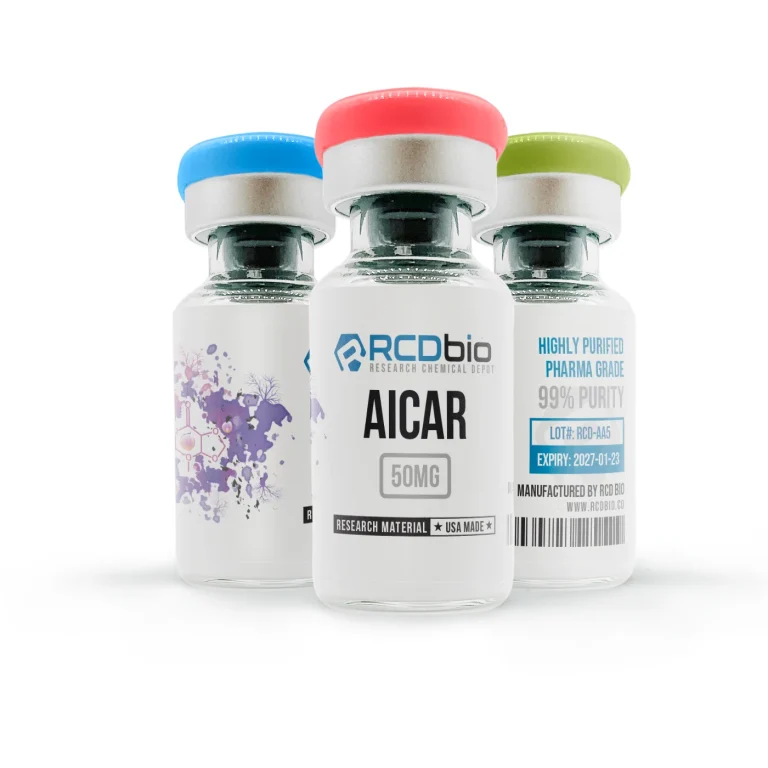
AICAR (5-aminoimidazole-4-carboxamide-1-β-D-ribofuranoside), also known by its INN Acadesine, is a synthetic purine nucleoside analog that occurs endogenously as an intermediate in the de novo biosynthesis of inosine monophosphate (IMP). The compound is structurally related to adenosine and serves as a cell-permeable precursor to 5-aminoimidazole-4-carboxamide ribonucleotide (ZMP), its intracellular monophosphorylated metabolite. ZMP is an AMP structural analog capable of engaging the regulatory γ-subunit of AMP-activated protein kinase (AMPK), a serine/threonine kinase that functions as a central cellular energy sensor.
In research settings, AICAR has been widely employed as a pharmacological tool compound for studying AMPK-dependent and AMPK-independent intracellular signaling pathways. Preclinical models have investigated its roles in skeletal muscle glucose transport, fatty acid oxidation, mitochondrial biogenesis, inflammatory cascade modulation, and cellular energy homeostasis. It has additionally been examined in oncology-focused in vitro systems for its cytostatic and cytotoxic properties across multiple cancer cell line preparations.
Synthetic AICAR supplied by RCDbio is intended strictly for laboratory and research purposes. It is not approved by the Food and Drug Administration for use in this research-grade, non-pharmaceutical form. It is not a dietary supplement and is not intended for human consumption or therapeutic self-administration.
Chemical Properties
| Property | Detail |
| Product Type | Synthetic Purine Nucleoside Analog (Lyophilized Powder) |
| Product Name | AICAR (Acadesine) |
| Application | Scientific / Research Use Only |
| CAS Number | 2627-69-2 (free base) |
| Molar Mass | 258.23 g/mol (free base) |
| Chemical Formula | C₉H₁₄N₄O₅ |
| Sequence | N/A — small molecule nucleoside analog; not a peptide |
| IUPAC Name | 5-amino-1-[(2R,3R,4S,5R)-3,4-dihydroxy-5-(hydroxymethyl)oxolan-2-yl]-1H-imidazole-4-carboxamide |
| Synonyms | Acadesine (INN); AICA-riboside; 5-Aminoimidazole-4-carboxamide-1-β-D-ribofuranoside; NSC 105823; GP 1-110; ZMP precursor |
| Physical Form | Lyophilized white to off-white powder |
| Solubility | Freely soluble in water (≥50 mg/mL); soluble in DMSO; sparingly soluble in ethanol. Light-sensitive; air oxidation may produce impurities — handle under inert or low-oxygen conditions where possible |
| Storage (Lyophilized) | Store at -20°C in a sealed, light-protected container with desiccant; protect from moisture and repeated temperature cycling |
| Storage (Reconstituted) | Store at 4°C; use within 48–72 hours of reconstitution; do not subject to repeated freeze-thaw cycles; discard any reconstituted solution that appears discolored, turbid, or contains particulate matter |
| PubChem CID | 17513 (free base, confirmed) |
| Purity | ≥98% (HPLC verified, independent third-party laboratory analysis; COA available per batch) |
| WADA Status | Prohibited. AICAR is explicitly named under Section S4 — Hormone and Metabolic Modulators on the WADA Prohibited List as an AMPK activator, prohibited at all times in and out of competition. This prohibition has been in effect since 2009. Researchers engaged in sport-adjacent studies should verify the current status at GlobalDRO.com before use. |
How Does AICAR Work?
AICAR exerts its primary pharmacological effects through intracellular conversion to ZMP, which mimics the structure and binding properties of adenosine monophosphate (AMP) and engages the γ-regulatory subunit of AMPK. Once inside the cell — taken up via adenosine transporter proteins — AICAR is phosphorylated by adenosine kinase (ADK) into ZMP. From this point, multiple downstream mechanistic pathways have been characterized in preclinical and in vitro systems.
AMPK γ-Subunit Engagement and Allosteric Activation
ZMP binds the CBS (cystathionine-β-synthase) repeat domains of the AMPKγ subunit, producing allosteric activation of the AMPK heterotrimer (α/β/γ) in a manner analogous to AMP. In isolated skeletal muscle cell preparations and rodent in vivo models, this engagement has been characterized as resulting in phosphorylation of the AMPKα catalytic subunit at Thr172 via the upstream kinase LKB1. Activated AMPK subsequently phosphorylates a range of downstream substrates — including acetyl-CoA carboxylase (ACC), hormone-sensitive lipase (HSL), and the GLUT4-regulating Akt substrate AS160 — modulating fatty acid oxidation and glucose transporter trafficking in experimental murine models.
PGC-1α Transcriptional Activation and Mitochondrial Biogenesis
In skeletal muscle cell systems, AICAR-induced AMPK activation has been linked to transcriptional upregulation of the PGC-1α (peroxisome proliferator-activated receptor γ coactivator 1-alpha) promoter via GATA/EBox binding site engagement. Gel-shift and ChIP analyses in myocyte preparations identified USF-1 as a participating transcription factor in this mechanistic cascade. This promoter activation has been characterized as correlating with increased PGC-1α mRNA expression and subsequent signaling associated with mitochondrial biogenesis in preclinical murine skeletal muscle models.
GLUT4 Translocation and Glucose Transport
AMPK activation by AICAR in rodent skeletal muscle preparations has been associated with increased phosphorylation of AS160 (TBC1D4), a GAP (GTPase-activating protein) that regulates Rab-GTPase-dependent GLUT4 vesicle trafficking to the plasma membrane. In isolated rat epitrochlearis muscle incubation experiments, AICAR has been observed to promote GLUT4 translocation and 3-O-methylglucose uptake in a manner attenuated in AMPKα2-knockout and kinase-dead murine models, identifying AMPK as the primary mediating kinase for this effect.
AMPK-Independent Pathway Activation
Research in AMPKα1/α2 double-knockout murine embryonic fibroblast preparations has identified ZMP-mediated transcriptional effects independent of AMPK catalytic subunit activity. These include upregulation of the large tumor suppressor kinases LATS1 and LATS2 and downstream Hippo pathway engagement, characterized by increased phosphorylation of YAP1 and TAZ in MEF-dKO cell systems. Additionally, in prostate cancer cell line preparations (LNCaP, PC-3, PC-82), AICAR has been associated with cyclophilin-D (CYPD)-dependent programmed necrosis mediated by reactive oxygen species (ROS) accumulation independently of AMPKα activity. These findings indicate that ZMP has mechanistic targets beyond AMPK that vary by cellular context.
Adenosine Receptor-Mediated Effects in Neuronal Systems
In rat hippocampal CA1 region preparations, AICAR has been characterized as competing with adenosine for nucleoside transporter-mediated cellular uptake. This competition produces an increase in extracellular adenosine concentrations and subsequent adenosine receptor activation. This mechanism has been proposed as a contributing factor in the neuroprotective observations associated with AICA-riboside in CNS model systems, alongside or independently of direct AMPK activation.
Key Research Findings
- AMPK-dependent glucose uptake: AICAR-induced AMPK activation associated with GLUT4 translocation via AS160 phosphorylation; attenuated in AMPKα2-knockout murine skeletal muscle preparations. [Mu et al., 2001; Treebak et al., 2006]
- Mitochondrial biogenesis: AICAR-induced PGC-1α promoter activation via GATA/EBox binding site characterized in isolated myocyte cell systems; USF-1 identified as participating transcription factor by ChIP analysis. [Irrcher et al., 2008]
- γ3-AMPK and membrane cholesterol in aged muscle: Prior AICAR treatment associated with elevated γ3-AMPK activation and reduced membrane cholesterol content in epitrochlearis preparations from 26-month-old male rats. [Wang et al., 2022]
- AMPK-independent tumor suppressor activation: ZMP-mediated LATS1/2 upregulation and Hippo pathway activation characterized in AMPKα1/α2 double-knockout MEF preparations; YAP1 and TAZ downstream repression observed. [Grégoire et al., 2018]
- Prostate cancer cell necrosis: AICAR-induced programmed necrosis in LNCaP, PC-3, and PC-82 cell lines characterized as cyclophilin-D- and ROS-dependent; independent of AMPKα knockdown. [Xie et al., 2016]
All findings listed above are derived from preclinical or in vitro data. No conclusions regarding human therapeutic efficacy can be drawn from these observations. These findings do not constitute evidence of safety or efficacy in any human condition or organism.
What Are the Potential Research Applications of AICAR?
AMPK Signaling and Cellular Energy Homeostasis Studies
AICAR serves as the primary pharmacological reference tool in experiments designed to characterize AMPK activation kinetics, substrate phosphorylation hierarchies, and the functional distinctions between AMPKα1 and AMPKα2 isoforms. It is employed in rodent in vivo models and isolated tissue preparations to investigate how cellular energy deficits are sensed and transduced into downstream metabolic responses. Its cell permeability and well-characterized conversion to ZMP make it suitable as a positive control reagent in AMPK pathway reporter assays and kinase cascade experiments.
Skeletal Muscle Metabolism and Glucose Transport Modeling
In isolated muscle incubation systems and murine in vivo models, AICAR has been used to examine the mechanisms linking AMPK activation to GLUT4-mediated glucose uptake. Research employing AICAR has investigated AS160 phosphorylation, GLUT4 vesicle trafficking dynamics, and the differential contributions of AMPK versus contraction-stimulated signaling to glucose transport. These experimental systems are used to model metabolic dysregulation states such as insulin-independent glucose uptake in skeletal muscle preparations.
Mitochondrial Biogenesis and PGC-1α Pathway Research
Preclinical murine models have utilized AICAR to probe the transcriptional regulatory mechanisms governing PGC-1α expression and downstream mitochondrial biogenesis. Research in this area has employed chromatin immunoprecipitation, promoter-reporter assays, and RNA quantification in isolated myocyte preparations to characterize AMPK-dependent transcriptional activation at specific promoter binding sites.
Oncology-Focused In Vitro Cell Signaling Studies
In cancer biology research, AICAR has been investigated in multiple human tumor cell line preparations — including prostate, gallbladder, and B-cell malignancy lines — for its cytostatic and cytotoxic properties. These studies have characterized both AMPK-dependent and AMPK-independent mechanisms of cell growth inhibition, including ER stress-mediated apoptosis (caspase-12, CHOP activation in gallbladder cancer cell lines), ROS-dependent programmed necrosis (prostate cancer preparations), and Hippo pathway activation (MEF knockout preparations). These findings are observed in preclinical and in vitro contexts only and do not constitute claims of efficacy or safety in any organism.
Inflammatory Pathway Modulation Research
AICAR has been investigated in rodent in vivo and in vitro models for AMPK-mediated modulation of proinflammatory cytokine production, including NF-κB pathway inhibition and attenuation of inflammatory mediator release. These effects have been characterized in experimental autoimmune encephalomyelitis (EAE) murine models and in isolated cell preparations. These findings do not constitute evidence of therapeutic anti-inflammatory efficacy in any organism.
What Are the Potential Side Effects of AICAR?
The following observations are derived from preclinical in vitro and in vivo research data. They are not established safety findings in any human subject population.
- Hypoglycemia observed in rodent in vivo models at research-relevant doses; attributable to AMPK-mediated GLUT4-dependent glucose uptake in skeletal muscle — a dose-dependent and pharmacologically expected consequence of AMPK activation
- Hyperuricemia observed in a Phase I/II CLL clinical trial cohort (Van Den Neste et al., 2013) at intravenous doses of 50–315 mg/kg; required prophylactic allopurinol in the trial protocol — findings cannot be extrapolated to in vitro or lower-dose laboratory use
- AMPK-independent cytotoxicity characterized in multiple cancer cell line preparations at millimolar concentrations; mechanism involves ROS generation and cyclophilin-D-dependent mitochondrial permeability transition pore opening
- Neurological effects noted in USADA regulatory review: excessive or tissue-inappropriate AMPK activation has been associated in animal model literature with neurodegeneration — findings model context-dependent
- Interference with purine biosynthesis is an inherent mechanistic consequence of ZMP accumulation; in isolated cell systems, this may alter nucleotide pool ratios and affect cell division kinetics at supraphysiological concentrations
- Cardiovascular effects including transient blood pressure changes have been observed in rodent models at intravenous doses; mechanism is proposed to involve adenosine receptor activation secondary to nucleoside transporter competition
No human safety or tolerability data pertaining to research-grade AICAR has been established. These observations are derived from experimental systems and should not be extrapolated to human or animal outcomes.
Risk & Handling
Risk Tier: MODERATE
AICAR is a pharmacologically active purine nucleoside analog with well-characterized AMPK agonist activity in intact cellular systems. At research-relevant in vitro concentrations, it is not acutely lethal in preclinical models; however, dose-dependent glucose-lowering effects have been observed in rodent in vivo models as a direct pharmacological consequence of AMPK-mediated GLUT4 translocation. AMPK-independent cytotoxic effects at high concentrations have been characterized in cancer cell line preparations via ROS and mitochondrial permeability mechanisms. No human safety data has been established for research-grade AICAR. Researchers should exercise caution appropriate to handling a cell-permeable, biologically active nucleoside analog with multi-pathway mechanistic activity.
Handling Precautions
- Handle under controlled laboratory conditions by trained personnel only
- Minimum PPE: nitrile gloves, laboratory coat, and eye protection throughout all handling operations
- Use a fume hood or biosafety cabinet when weighing, reconstituting, or otherwise manipulating lyophilized powder to prevent inadvertent aerosol generation or inhalation of airborne particulate
- AICAR is light-sensitive and susceptible to air oxidation; minimize exposure to direct light and open-air conditions during preparation and handling
- Store desiccant with lyophilized product at all times; moisture uptake reduces stability and purity
Exposure Risks
Systemic or mucosal exposure in laboratory settings should be avoided. The compound is cell-permeable and phosphorylated intracellularly to ZMP by adenosine kinase — exposure to significant quantities through skin contact, inhalation, or inadvertent ingestion carries the potential for AMPK activation and glucose-lowering effects analogous to those documented in rodent in vivo studies. Acute oral toxicity data in rodent models indicates a low acute lethality profile at single doses, but chronic exposure data and dose-limiting toxicity thresholds in the laboratory context are not fully characterized. No human safety data has been established.
Storage
- Lyophilized form: Store at −20°C in a sealed, light-protected container with desiccant; keep away from moisture, UV light, and repeated thermal cycling
- Reconstituted form: Store at 4°C; use within 48–72 hours; do not subject to repeated freeze-thaw cycles
- Do not store reconstituted solutions in the presence of strong oxidizing agents
- Discard any reconstituted solution that appears discolored, turbid, or contains visible particulate matter
- Product is air and light sensitive; impurities can form through air oxidation or microbial exposure in improperly sealed containers
FAQs
Q: What is AICAR, and what is it investigated for in preclinical research? A: AICAR (5-aminoimidazole-4-carboxamide-1-β-D-ribofuranoside), also known as Acadesine, is a synthetic purine nucleoside analog investigated in preclinical models and in vitro systems as a pharmacological tool compound for studying AMPK-dependent and AMPK-independent cellular signaling pathways. Research areas include skeletal muscle glucose transport, fatty acid oxidation, mitochondrial biogenesis, and cellular energy homeostasis. AICAR is supplied by RCDbio exclusively for laboratory research use and is not approved by the FDA for human use in research-grade form.
Q: What is the half-life of AICAR in preclinical models? A: In rodent in vivo models, AICAR and its intracellular metabolite ZMP exhibit relatively rapid clearance. Plasma half-life in murine models following intravenous administration has been characterized in the range of approximately 10–30 minutes, reflecting uptake by nucleoside transporters and intracellular phosphorylation to ZMP. In isolated cell preparations, ZMP accumulation has been observed to persist beyond the timeframe of extracellular AICAR exposure due to limited dephosphorylation. These figures are derived from laboratory and preclinical models and do not represent human pharmacokinetic data for research-grade material.
Q: How should AICAR be stored to maintain research-grade stability? A: Lyophilized AICAR should be stored at −20°C in a sealed, light-protected container with desiccant. The compound is sensitive to air oxidation and moisture, both of which can generate impurities and reduce purity below the ≥98% HPLC specification. Reconstituted solutions should be stored at 4°C and used within 48–72 hours. Repeated freeze-thaw cycles should be avoided. Any reconstituted solution that appears turbid, discolored, or contains particulate matter should be discarded.
Q: What toxicity observations have been reported in preclinical studies involving AICAR? A: In rodent in vivo models, AICAR at research doses has produced dose-dependent blood glucose reductions as an expected pharmacological consequence of AMPK-mediated GLUT4 translocation. In a Phase I/II clinical investigation of intravenous Acadesine in B-cell CLL patients at doses of 50–315 mg/kg, grade ≥2 hyperuricemia was the most commonly observed adverse event. In vitro, millimolar concentrations in cancer cell line preparations have demonstrated cytotoxicity via ROS-dependent and ER stress-mediated mechanisms. USADA and preclinical literature have noted that excessive or tissue-inappropriate AMPK activation may be associated with neurodegeneration in animal model contexts. No human safety or tolerability data for research-grade AICAR has been established.
Q: What is AICAR typically reconstituted with in laboratory research? A: AICAR is freely soluble in water at concentrations of ≥50 mg/mL, making sterile water or phosphate-buffered saline (PBS) the most commonly used reconstitution solvents in published preclinical literature. DMSO is also documented as a compatible vehicle, though aqueous vehicles are preferred when cellular toxicity from the solvent is a confounding variable in experimental design. Researchers should confirm solubility and stability in their specific experimental vehicle prior to use in biological assays.
Q: Does AICAR have WADA prohibited substance status, and what does that mean for sport science research? A: Yes. AICAR is explicitly named under Section S4 (Hormone and Metabolic Modulators) of the WADA Prohibited List as an AMPK activator, prohibited at all times both in and out of competition. This classification has been in effect since 2009. Researchers engaged in exercise physiology, sport science, or performance biology studies involving AICAR should be aware that this compound carries prohibited substance status under the global anti-doping framework. Verify the current status at GlobalDRO.com before use in any sport-adjacent research context.
Q: What is ZMP, and how does it relate to AICAR’s mechanism of action? A: ZMP (5-aminoimidazole-4-carboxamide ribonucleotide) is the intracellular monophosphorylated metabolite of AICAR and the proximate mechanistic effector of its AMPK-activating properties. Following cellular uptake via adenosine transporters, AICAR is phosphorylated by adenosine kinase (ADK) to ZMP. ZMP is a structural analog of AMP and engages the CBS repeat domains on the AMPKγ subunit, producing allosteric activation of the AMPK heterotrimer. The conversion efficiency — and therefore the magnitude of AMPK activation by AICAR — is directly related to cellular ADK expression levels, a variable that should be characterized in any experimental system in which AICAR is used as an AMPK probe compound.
Related Research Compounds
Cardarine GW-501516 (Powder) — A synthetic PPARδ agonist investigated in preclinical murine models for its effects on fatty acid oxidation and skeletal muscle fiber adaptation, sharing metabolic pathway overlap with AICAR at the level of mitochondrial biogenesis and oxidative substrate utilization.
MOTS-C (Nasal Spray) — A mitochondria-derived peptide explicitly named alongside AICAR on the WADA Prohibited List as an AMPK activator; investigated in preclinical models for its role in cellular energy sensing via AMPK engagement and metabolic regulation in skeletal muscle preparations.
[Metformin (investigational, external reference)] — Biguanide AMPK activator widely used as a pharmacological comparator in AICAR mechanism-of-action studies; frequently employed as a positive control in parallel with AICAR in in vitro metabolic and oncology research designs.
References
- Irrcher I, Ljubicic V, Hood DA. Interactions between ROS and AMP kinase activity in the regulation of PGC-1α transcription in skeletal muscle cells. American Journal of Physiology – Cell Physiology. 2009 Jan;296(1):C116-23. https://pubmed.ncbi.nlm.nih.gov/19005163/
- Xie M, et al. AICAR induces AMPK-independent programmed necrosis in prostate cancer cells. Oncotarget. 2016 Jun 7;7(26):40388–40399. https://pubmed.ncbi.nlm.nih.gov/27103440/
- Grégoire M, et al. AICAR Antiproliferative Properties Involve the AMPK-Independent Activation of the Tumor Suppressors LATS 1 and 2. Nutrients. 2018 Apr 28;10(5):530. https://pubmed.ncbi.nlm.nih.gov/29710861/
- Višnjić D, Lalić H, Dembitz V, Tomić B, Smoljo T. AICAr, a Widely Used AMPK Activator with Important AMPK-Independent Effects: A Systematic Review. Cells. 2021 May 4;10(5):1095. https://pubmed.ncbi.nlm.nih.gov/34064363/
- Wang H, Zheng A, Arias EB, Cartee GD. Prior AICAR induces elevated glucose uptake concomitant with greater γ3-AMPK activation and reduced membrane cholesterol in skeletal muscle from 26-month-old rats. FACETS. 2022;7:774–791. https://doi.org/10.1139/facets-2021-0166
Disclaimer
AICAR is exclusively for laboratory research purposes. RCDbio products are not intended to diagnose, prevent, treat, or cure any disease or medical condition.
The Food and Drug Administration has not evaluated the statements on our website. This product is not approved for human or veterinary use. Researchers must comply with all applicable local, state, and federal laws and regulations governing the purchase and use of research compounds. By purchasing, you agree to our Terms and Conditions. RCDbio reserves the right to refuse sales to unauthorized individuals.
ATTENTION: All RCDbio products are strictly for LABORATORY AND RESEARCH PURPOSES ONLY. They are not intended for human consumption, veterinary use, or any other non-research application. For queries, complaints, or support, contact support@legacy.rcdbio.co
Reviews
There are no reviews yet