

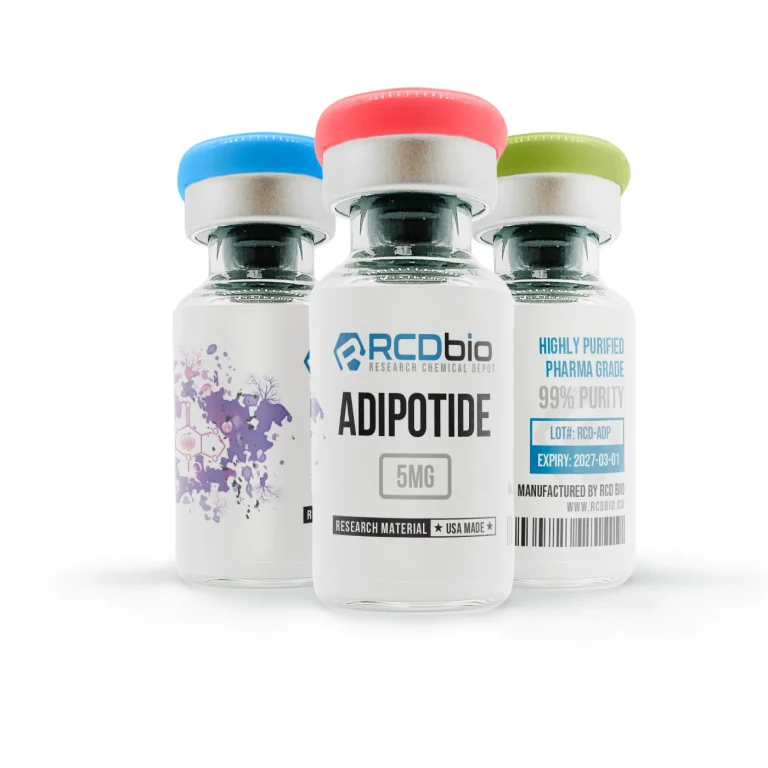
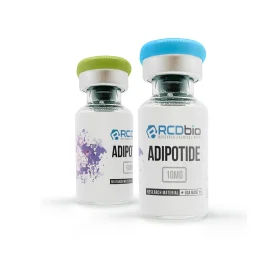
Description
What is Adipotide?
Adipotide (also designated FTPP — Fat-Targeted Proapoptotic Peptide — and Prohibitin-Targeting Peptide 1, or TP01) is a synthetic chimeric peptidomimetic developed for preclinical investigation of targeted apoptosis in white adipose tissue (WAT) vasculature. The compound was originally characterized through in vivo phage-display screening in obese murine models by Kolonin, Pasqualini, Arap, and colleagues (Nature Medicine, 2004) and has since been studied in rodent and non-human primate preclinical settings.
Structurally, Adipotide is a bipartite molecule: a WAT-homing sequence (CKGGRAKDC) fused via a glycine linker to a proapoptotic effector domain (D(KLAKLAK)₂). It has been investigated in preclinical models and in vitro systems for its interactions with the prohibitin (PHB) and annexin A2 (ANXA2) receptor complex expressed on WAT endothelial cell surfaces and for the downstream apoptotic signaling cascades initiated following receptor-mediated internalization.
Adipotide is not approved by the Food and Drug Administration for human or veterinary use. It is not a dietary supplement or consumer product. RCDbio supplies Adipotide as a lyophilized peptide intended exclusively for laboratory and research purposes only. A Phase I clinical trial (NCT01262664) was initiated in 2012 and subsequently terminated due to nephrotoxicity findings; clinical development was permanently discontinued in 2019. The compound nonetheless remains a subject of active basic research as a prototype for receptor-targeted proapoptotic peptide strategies.
Chemical Properties
| Property | Detail |
| Product Type | Synthetic chimeric peptidomimetic |
| Product Name | Adipotide |
| Application | Scientific / Research Use Only |
| CAS Number | 859216-15-2 |
| Molar Mass | 2,557.22 g/mol |
| Chemical Formula | C₁₁₁H₂₀₆N₃₆O₂₈S₂ |
| Sequence | CKGGRAKDC-GG-D(KLAKLAK)₂ |
| IUPAC Name | L-cysteinyl-L-lysyl-glycyl-glycyl-L-arginyl-L-alanyl-L-lysyl-L-α-aspartyl-L-cysteinyl-glycyl-glycyl-D-lysyl-D-leucyl-D-alanyl-D-lysyl-D-leucyl-D-alanyl-D-lysyl-D-lysyl-D-leucyl-D-alanyl-D-lysyl-D-leucyl-D-alanyl-D-lysine |
| Synonyms | FTPP; Prohibitin-TP01; TP01; Prohibitin-Targeting Peptide 1 |
| Physical Form | Lyophilized white to off-white powder |
| Solubility | Soluble in sterile water or PBS; no disulfide sensitivity — stability concerns relate to freeze-thaw cycling and peptide aggregation rather than reducing agent exposure |
| Storage (Lyophilized) | −20°C or below; sealed airtight container with desiccant; protected from light and moisture |
| Storage (Reconstituted) | 4°C for short-term use (48–72 hours); aliquot and freeze at −20°C for extended storage; avoid repeated freeze-thaw cycles; discard if turbid or discolored. |
| PubChem CID | 163360068 |
| Purity | ≥98% (HPLC verified, independent third-party laboratory analysis; COA available per batch) |
| WADA Status | Adipotide is not currently listed by name on the WADA Prohibited List. As a non-approved synthetic peptidomimetic with potential pharmacological activity, it falls within the scope of the S0 (Non-Approved Substances) category. Researchers engaged in sport-adjacent studies should verify the current status at GlobalDRO.com before use. |
How Does Adipotide Work?
Adipotide is a bipartite chimeric molecule composed of two functionally distinct peptide domains joined by a short glycine linker (GG). The compound’s selectivity in preclinical models derives from the differential expression of its target receptor complex in white adipose tissue vasculature relative to other vascular beds.
Homing Domain: CKGGRAKDC
The N-terminal homing sequence (CKGGRAKDC) has been observed to interact selectively with a trimolecular receptor complex — prohibitin (PHB), annexin A2 (ANXA2), and the fatty acid transporter CD36 — expressed on the luminal surface of endothelial cells within white adipose tissue vasculature. This complex was characterized in both murine and human WAT vascular preparations (Salameh et al., 2016). Mechanistically, PHB and ANXA2 together facilitate fatty acid transport from the vascular endothelium into adipocytes; disruption of this interaction via CKGGRAKDC binding has been shown to impair fatty acid uptake efficiency in cell culture systems. Receptor expression appears to be enriched in WAT endothelium relative to other vascular beds, which has been proposed as the basis for tissue selectivity observed in preclinical models.
Proapoptotic Domain: D(KLAKLAK)₂
The C-terminal proapoptotic sequence D(KLAKLAK)₂ is a cationic, amphipathic peptide motif composed of D-amino acids. Following receptor-mediated internalization of the intact chimeric molecule, this domain is theorized to interact with mitochondrial membranes within the targeted endothelial cells, initiating disruption of mitochondrial membrane integrity and downstream apoptotic signaling cascades. The use of D-amino acid residues in this domain confers resistance to proteolytic degradation under physiological conditions relative to all-L-amino acid equivalents.
Downstream Effects in Preclinical Models
In experimental systems where endothelial apoptosis is initiated within WAT vasculature, the resulting reduction in microvascular density has been associated with diminished nutrient and oxygen delivery to adipocytes, secondary adipocyte apoptosis, and progressive reduction of white adipose depot volume. Obese murine and primate model data also indicate rapid modulation of glucose tolerance parameters investigated independently of adipose mass changes (Kim et al., 2012; PMID: 22733798).
Key Research Findings
- WAT vascular targeting: CKGGRAKDC phage homing to white adipose tissue vasculature was demonstrated to depend on endothelial PHB/ANXA2 expression; peptide recovery was significantly reduced in ANX2-null murine WAT preparations. [Salameh et al., 2016; PMID: 27468426]
- Adipose mass reduction: In obese murine models maintained on high-fat diet, administration of the proapoptotic peptide was observed to reverse diet-induced obesity over 27 days with no significant change in energy expenditure. [Kim et al., 2010; PMID: 20103704]
- Primate body composition: In a 28-day study in obese rhesus macaques (n=10), treated animals demonstrated approximately 10.6% body weight reduction alongside reductions in abdominal circumference and BMI; dose-dependent renal tubular changes were concurrently documented. [Barnhart et al., 2011]
- Glucose metabolism modulation: Rapid improvement in glucose tolerance observed in obese C57BL/6 murine models within days 2–3 of peptide exposure, independently of body weight and food intake changes; serum insulin and triglycerides reduced relative to vehicle controls. [Kim et al., 2012]
- Prohibitin receptor biology: PHB is characterized as a pleiotropic membrane protein with roles in adipose-immune interaction, mitochondrial scaffolding, and membrane signaling, providing broader mechanistic context for Adipotide’s receptor target. [Mishra et al., 2016; PMID: 27312736]
All findings listed above are derived from preclinical or in vitro data. No conclusions regarding human therapeutic efficacy can be drawn from these observations. These findings do not constitute evidence of safety or efficacy in any human condition or organism.
What are the Potential Research Applications of Adipotide?
Adipotide has been investigated and proposed as a research tool in the following scientific contexts. These are observed in preclinical and in vitro contexts only and do not constitute claims of efficacy or safety in any organism.
Adipose Tissue Vascular Biology Adipotide is employed as an experimental tool for investigating PHB/ANXA2/CD36 receptor complex dynamics in white adipose tissue preparations, including fatty acid transport efficiency, receptor co-localisation, and ANX2-null comparative models.
Targeted Proapoptotic Peptide Platforms Adipotide’s bipartite architecture is studied as a prototype for chimeric “homing peptide + proapoptotic effector” constructs in the context of receptor-mediated internalization, intracellular delivery, and vascular compartment targeting — with parallel research extending to oncology applications.
Metabolic Disease Models Adipotide has been employed in obese rodent models for preclinical investigation of glucose tolerance parameters, insulin sensitivity markers, serum triglyceride levels, and adipokine signaling, with particular interest in effects observed independently of adipose mass reduction.
Angiogenesis and Vascular Biology Research The compound’s mechanism of action is investigated in studies of WAT-specific vascular remodeling, endothelial apoptosis signaling pathways, and the relationship between microvascular density and adipose depot maintenance under controlled experimental conditions.
Adipose Depot Heterogeneity Studies Preclinical research has investigated whether Adipotide’s interaction profile differs across visceral versus subcutaneous adipose depots based on differences in vasculature density and PHB/ANXA2 expression levels.
What are the Potential Side Effects of Adipotide?
The following adverse observations derive exclusively from preclinical animal studies. No human safety data has been established, and the risk profile in human subjects is unknown.
- Nephrotoxicity: Dose-dependent renal tubular changes were the primary dose-limiting finding in obese rhesus macaque models (Barnhart et al., 2011); this observation was the direct contributor to termination of clinical development
- Renal function parameters: Elevations in markers consistent with renal tubular stress documented in primate studies; reversibility reported at lower dose ranges, though comprehensive characterisation was not completed prior to programme discontinuation
- Off-target vascular effects: Receptor selectivity for WAT endothelium versus other vascular beds has not been fully characterised across all preclinical systems; potential for off-target endothelial interaction in non-adipose tissues remains an open research question
- Food intake modulation: Reduced caloric intake was observed alongside adipose reduction in rodent models and may represent an independent pharmacological effect rather than a consequence of vascular ablation alone (Kim et al., 2010)
- Inconsistency across model systems: Effect magnitude, tissue specificity, and adverse event profiles vary by species, dose, and experimental design; findings are not uniform across all preclinical models
No human safety or tolerability data pertaining to research-grade Adipotide has been established. These observations are derived from experimental systems and should not be extrapolated to human or animal outcomes.
Risk & Handling
Handling Precautions
Adipotide should be handled exclusively by trained laboratory personnel operating under applicable institutional safety protocols. Required PPE includes nitrile gloves, a laboratory coat, and eye protection at all times during handling. Reconstitution of lyophilized powder should be performed in a fume hood or biosafety cabinet to prevent aerosol generation. No aerosol-generating procedures should be conducted outside of appropriate containment. The proapoptotic domain (D(KLAKLAK)₂) confers cytotoxic activity via mitochondrial membrane disruption; accidental systemic exposure through skin abrasion, mucosal contact, or parenteral routes should be treated as a serious exposure event. Pipettes and vessels in contact with reconstituted solutions should be decontaminated prior to disposal in accordance with institutional guidelines.
Exposure Risks
Risk Tier: HIGH
Adipotide has demonstrated dose-dependent renal tubular toxicity in non-human primate preclinical models (Barnhart et al., 2011). The compound’s proapoptotic domain interacts with mitochondrial membranes; cytotoxic risk via dermal or mucosal absorption cannot be excluded, and systemic exposure through accidental parenteral routes should be considered a serious hazard. No human safety data has been established. Chronic toxicity data and long-term exposure profiles are absent from the published literature. In the event of skin or eye contact, flush immediately with copious water and seek medical assessment. All handling procedures should be conducted with full awareness of the compound’s proapoptotic mechanism and established nephrotoxicity profile in animal models.
Storage
- Lyophilized form: Store at −20°C or below; sealed, airtight container with desiccant; protected from light and moisture
- Reconstituted form: Store at 4°C; use within 48–72 hours of reconstitution
- Do not subject to repeated freeze-thaw cycles; each cycle progressively degrades peptide integrity
- Pre-aliquot reconstituted stock prior to freezing to minimise freeze-thaw exposure
- Discard any reconstituted solution that appears turbid, discoloured, or shows particulate matter
- Packaging should remain sealed until point of use
FAQs
Q: What is adipotide, and what is it investigated for in research? A: Adipotide (FTPP) is a synthetic chimeric peptidomimetic investigated in preclinical models for targeted apoptosis of white adipose tissue vasculature via interaction with a PHB/ANXA2/CD36 receptor complex on WAT endothelial cells. Research applications include adipose vascular biology, metabolic disease models, and targeted proapoptotic peptide platform development. It is not approved by the FDA for human or veterinary use and is supplied by RCDbio strictly for laboratory and research purposes only.
Q: What is the reported half-life of Adipotide in preclinical models? A: Comprehensive plasma half-life data specific to Adipotide in standardized preclinical models has not been published. The D-amino acid composition of the proapoptotic domain (D(KLAKLAK)₂) is theorized to confer partial resistance to proteolytic degradation relative to all-L-amino acid sequences, potentially extending circulation time relative to fully L-configured peptides. Researchers should consult current peer-reviewed pharmacokinetic literature for model-specific data prior to experimental design. These figures do not represent human pharmacokinetic data for research-grade material.
Q: How should lyophilized Adipotide be stored to maintain stability? A: Lyophilized Adipotide should be stored at −20°C or below in a sealed, light-protected container with desiccant. Exposure to ambient humidity, heat, or UV light should be avoided. Do not open storage containers in humid environments. These conditions are applicable until the point of reconstitution.
Q: What toxicity observations have been reported in preclinical Adipotide research? A: Dose-dependent renal tubular changes were documented in obese rhesus macaque models in the key primate study (Barnhart et al., 2011; PMID: 22072637). These findings were characterized as the primary dose-limiting toxicity and contributed to the permanent discontinuation of clinical development in 2019. No human safety data has been established. The risk tier for laboratory handling is classified as HIGH.
Q: What is Adipotide typically reconstituted with in laboratory research? A: Adipotide is commonly reconstituted in sterile water or phosphate-buffered saline (PBS) to produce working stock solutions for experimental use. Reconstitution must be carried out under aseptic conditions by trained laboratory personnel. Pre-aliquoting prior to storage is recommended to minimize repeated freeze-thaw cycles, which degrade peptide integrity over time.
Q: What is the solution stability of reconstituted Adipotide? A: Reconstituted Adipotide solutions should be stored at 4°C and used within 48–72 hours where possible. For longer-term storage, pre-aliquoted samples may be stored at −20°C. Repeated freeze-thaw cycles degrade peptide integrity and should be minimised. Discard any reconstituted solution that appears turbid, discoloured, or shows particulate matter.
Q: What receptors does Adipotide interact with at the cellular level? A: Adipotide’s CKGGRAKDC homing domain has been observed to interact with a trimolecular complex of prohibitin (PHB), annexin A2 (ANXA2), and the fatty acid transporter CD36 expressed on the luminal surface of white adipose tissue endothelial cells. This interaction has been characterised in both murine and human WAT vascular preparations. CKGGRAKDC peptide homing efficiency was demonstrated to depend on ANX2 expression in comparative studies using ANX2-null murine models (Salameh et al., 2016; PMID: 27468426).
Related Research Compounds
Researchers investigating white adipose tissue biology, vascular-targeted apoptosis, or metabolic signaling may also find the following compounds of mechanistic relevance for laboratory research:
HGH Fragment 176-191 — A C-terminal fragment of growth hormone investigated in preclinical models for its interaction with adipose tissue lipolytic signaling pathways, representing an orthogonal approach to adipose biology research.
Semaglutide Peptide — A GLP-1 receptor agonist peptidomimetic studied in preclinical metabolic disease models, including glucose homeostasis and body weight regulation parameters, providing a mechanistically distinct reference compound for obesity biology research.
Tirzepatide Peptide — A dual GIP/GLP-1 receptor agonist investigated in preclinical settings for metabolic and adipose tissue regulation, offering complementary mechanistic context for researchers studying obesity-associated metabolic pathways.
All products listed are for laboratory and research purposes only.
References
- Kolonin MG, Saha PK, Chan L, Pasqualini R, Arap W. (2004). Reversal of obesity by targeted ablation of adipose tissue. Nature Medicine, 10(6):625–632. https://pubmed.ncbi.nlm.nih.gov/15133506/
- Barnhart KF, Christianson DR, Hanley PW, Driessen WH, Bernacky BJ, Baze WB, Wen S, Tian M, Ma J, Kolonin MG, Saha PK, Do KA, Hulvat JF, Gelovani JG, Chan L, Arap W, Pasqualini R. (2011). A peptidomimetic targeting white fat causes weight loss and improved insulin resistance in obese monkeys. Science Translational Medicine, 3(108):108ra112. https://pubmed.ncbi.nlm.nih.gov/22072637/
- Kim DH, Woods SC, Seeley RJ. (2010). Peptide designed to elicit apoptosis in adipose tissue endothelium reduces food intake and body weight. Diabetes, 59(4):907–915. https://pubmed.ncbi.nlm.nih.gov/20103704/
- Kim DH, Sartor MA, Bain JR, Sandoval D, Stevens RD, Medvedovic M, Newgard CB, Woods SC, Seeley RJ. (2012). Rapid and weight-independent improvement of glucose tolerance induced by a peptide designed to elicit apoptosis in adipose tissue endothelium. Diabetes, 61(9):2299–2310. https://pubmed.ncbi.nlm.nih.gov/22733798/
- Salameh A, Daquinag AC, Staquicini DI, An Z, Bhatt DL, Kolonin MG, Pasqualini R, Arap W. (2016). Prohibitin/annexin 2 interaction regulates fatty acid transport in adipose tissue. JCI Insight, 1(10):e86351. https://pubmed.ncbi.nlm.nih.gov/27468426/
- Mishra S, Ande SR, Bhatt DL. (2016). Prohibitin in adipose and immune functions. Adipocyte, 5(3):309–316. https://pubmed.ncbi.nlm.nih.gov/27312736/
Disclaimer
Adipotide is exclusively for laboratory research purposes. RCDbio products are not intended to diagnose, prevent, treat, or cure any disease or medical condition.
The Food and Drug Administration has not evaluated the statements on our website. This product is not approved for human or veterinary use. Researchers must comply with all applicable local, state, and federal laws and regulations governing the purchase and use of research compounds. By purchasing, you agree to our Terms and Conditions. RCDbio reserves the right to refuse sales to unauthorized individuals.
ATTENTION: All RCDbio products are strictly for LABORATORY AND RESEARCH PURPOSES ONLY. They are not intended for human consumption, veterinary use, or any other non-research application. For queries, complaints, or support, contact support@legacy.rcdbio.co
Reviews
There are no reviews yet