

Description
What is Livagen?
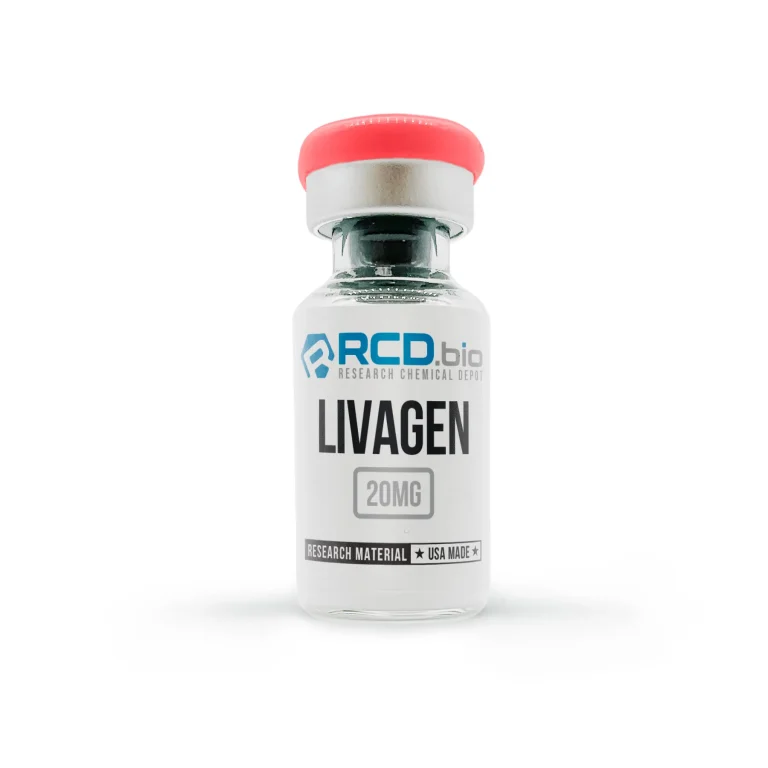
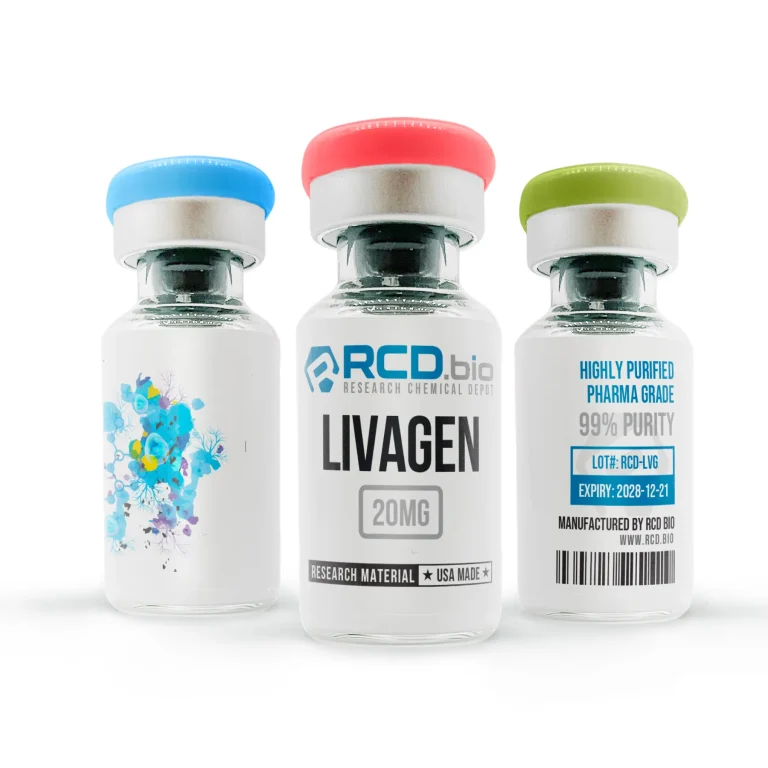
Livagen is a synthetic tetrapeptide bioregulator with the sequence Lys-Glu-Asp-Ala (KEDA), developed by Professor Vladimir Khavinson and colleagues at the Saint Petersburg Institute of Bioregulation and Gerontology, Russia. It belongs to the class of short peptide bioregulators – compounds of 2–7 amino acids proposed to regulate tissue-specific gene expression and cellular homeostasis – that emerged from the Russian bioregulatory peptide research programme that also produced Epithalon (AEDG), Vilon (KE), and Selank. The KEDA sequence was identified through systematic screening of peptide bioregulators associated with liver and immune tissue cytomedine extracts, with Livagen specifically proposed as a hepatotrophic and immunomodulatory bioregulator.
Livagen has been investigated in preclinical cell culture, rodent in vivo, and limited human ex vivo studies primarily by the Khavinson research group for its effects on chromatin structure in aged lymphocytes, hepatoprotective activity in experimental hepatitis models, immunomodulatory pathway interactions, and epigenetic regulation of gene expression. Its most distinctive characterised activity in preclinical preparations is the ability to activate heterochromatic regions – including precentromeric and telomeric heterochromatin – in the lymphocytes of aged human donors, producing deheterochromatinisation of regions that had undergone age-associated condensation. This chromatin reactivation effect is the primary mechanism through which Livagen’s proposed age-related biological activity is explained in the Khavinson group’s research.
Researchers and reviewers outside the primary research group have noted that the majority of published Livagen literature originates from a single research centre (Khavinson et al., Saint Petersburg), and that independent multi-centre replication of key findings is limited. Livagen is not approved by the Food and Drug Administration for human or veterinary use. It is not a dietary supplement and is not intended for human consumption or therapeutic self-administration. All RCDbio research compounds are supplied strictly for laboratory and research purposes only.
Chemical Properties
| Property | Detail |
| Product Type | Synthetic Tetrapeptide Bioregulator / Cytomedine-Derived Hepatotrophic and Immunomodulatory Peptide |
| Product Name | Livagen |
| Application | Scientific / Research Use Only |
| CAS Number | 195875-84-4 (deprecated CAS: 402856-42-2) |
| Molar Mass | 461.472 g/mol |
| Chemical Formula | C18H31N5O9 |
| PubChem CID | 87919683 |
| IUPAC Name | (4S)-5-[[(2S)-3-carboxy-1-[[(1S)-1-carboxyethyl]amino]-1-oxopropan-2-yl]amino]-4-[[(2S)-2,6-diaminohexanoyl]amino]-5-oxopentanoic acid |
| Amino Acid Sequence | Lys-Glu-Asp-Ala (KEDA); 4 amino acids; free N-terminus; free C-terminus |
| Research Origin | Khavinson group, Saint Petersburg Institute of Bioregulation and Gerontology, identified from peptide bioregulator screening of liver and immune tissue cytomedine extracts |
| Synonyms | KEDA peptide; H-Lys-Glu-Asp-Ala-OH; L-lysyl-L-glutamyl-L-aspartyl-L-alanine; Liver peptide bioregulator |
| Physical Form | Lyophilized white to off-white powder |
| Solubility | Freely soluble in water; soluble in PBS and standard aqueous buffers |
| Storage (Lyophilized) | −20°C; sealed container; protected from light and moisture |
| Storage (Reconstituted) | 4°C; use within 48–72 hours; avoid repeated freeze-thaw cycles |
| Purity | ≥98% (HPLC verified, independent third-party laboratory analysis) |
| WADA Status | Livagen is not explicitly named on the 2026 WADA Prohibited List. As a non-approved synthetic peptide bioregulator, S0 (Non-Approved Substances) provisions may apply in sport-adjacent research contexts. Verify at GlobalDRO.com before use. |
How Does Livagen Work?
Livagen’s proposed mechanisms are derived primarily from studies conducted by the Khavinson research group, with limited independent replication. The mechanisms below are presented as preclinical observations and hypotheses, reflecting the available evidence base.
Chromatin Remodelling and Heterochromatin Deheterochromatinisation
The primary characterised mechanism for Livagen in human cell preparations is activation of heterochromatic chromosomal regions in aged lymphocytes. In the foundational human ex vivo study, Livagen exposure of lymphocytes from elderly donors (aged 76–80 years) produced statistically significant activation and deheterochromatinisation of precentromeric and telomeric heterochromatin regions – chromosomal domains that had undergone age-associated condensation and transcriptional silencing. Analysis of 1,040 metaphases from 23 elderly donors confirmed changes in ribosomal gene activity, heterochromatin organisation, and chromosomal polymorphism patterns without induction of mutagenic effects in treated preparations [Khavinson et al., 2004]. This chromatin reactivation is proposed as the basis for Livagen’s observed restoration of transcriptional activity in aged cell populations.
Gene Expression Regulation and Protein Synthesis Pathway
In tissue culture preparations examining age-dependent responsiveness, Livagen has been shown to produce tissue-specific effects on gene expression and protein synthesis markers in rat tissue cultures of various ages [Khavinson et al., 2002]. The compound’s effects are proposed to operate through interaction with DNA-histone chromatin complexes, influencing accessibility of transcriptional machinery to silenced gene regions. This mechanism is conceptually related to that proposed for Epithalon (AEDG), though the specific sequences differ, and the tissue specificity of each peptide bioregulator is proposed to differ accordingly.
Hepatoprotective and Immunomodulatory Pathways
In rodent experimental hepatitis models, Livagen has been investigated for hepatoprotective activity, including normalisation of immune status markers, antioxidant enzyme activity restoration, and liver function parameter normalisation under hepatotoxic conditions. Research characterised effects in both acute and chronic experimental hepatitis preparations, with maximal hepatoprotective effects observed in aged animals – an age-dependent response pattern consistent with Livagen’s proposed mechanism of restoring gene expression programmes suppressed in ageing tissue. Immunomodulatory effects in T lymphocyte and immune cell preparations have been characterised alongside hepatoprotective effects, consistent with KEDA’s proposed cytomedine origin from combined liver and immune tissue extracts.
DNA Interaction and Epigenetic Regulation Hypothesis
Molecular modelling and in vitro binding studies have proposed that the KEDA tetrapeptide – like other short Khavinson group bioregulators, including AEDG (Epithalon) and KE (Vilon) – interacts directly with specific DNA sequence motifs through electrostatic and hydrogen bonding. For Livagen, the proposed DNA interaction sites are associated with promoter regions of genes related to liver-specific metabolism and immune function. These in silico and in vitro binding proposals have been used to explain the tissue-specific gene expression changes observed in Livagen-treated cell preparations.
Key Research Findings
In preclinical and ex vivo research contexts, Livagen has been associated with the following observations. The majority of findings originate from a single research group; independent multi-centre replication is limited.
- Heterochromatin activation in aged lymphocytes: Statistically significant deheterochromatinisation of precentromeric and telomeric heterochromatin observed in lymphocytes from 23 elderly donors; 1,040 metaphases analysed; no mutagenic effects detected [Khavinson et al., 2004].
- Hepatoprotective activity in experimental models: Normalisation of immune status markers, antioxidant enzyme activity, and liver function parameters in rodent experimental hepatitis preparations; maximal effects in aged animals.
- Tissue-specific gene expression: Tissue culture preparations confirmed that Livagen produces tissue-specific effects on gene expression markers with age-dependent responsiveness in rat tissue preparations of various ages [Khavinson et al., 2002].
- Lifespan markers in aged animal models: In rodent ageing model preparations, Livagen has been associated with biomarker changes consistent with improved cellular homeostasis, though large-scale controlled lifespan data is limited.
- Research concentration caveat: The majority of published Livagen literature originates from a single research group at the Saint Petersburg Institute; independent multi-centre replication of key findings is not available in the peer-reviewed literature.
All findings listed above are derived from preclinical in vitro, ex vivo, and limited animal model data, predominantly from one research group. No regulatory-grade human clinical trial data have been established for Livagen. These observations do not constitute evidence of efficacy or safety in any human condition or organism.
What are the Potential Research Applications of Livagen?
In controlled laboratory environments, Livagen has been investigated for the following research applications. These do not constitute claims of efficacy or safety in any organism.
Chromatin Biology and Epigenetic Research Livagen is employed in studies characterising heterochromatin organisation, telomeric and centromeric chromatin remodelling, and transcriptional reactivation of age-silenced gene regions in primary human lymphocyte preparations. Research employs metaphase chromosome analysis, ribosomal gene activity staining, and chromatin accessibility assays.
Ageing Biology and Cellular Senescence Research In aged human lymphocyte preparations and rodent ageing model systems, Livagen is investigated as a reference compound for studying peptide-mediated chromatin reactivation and its relationship to cellular senescence markers, DNA repair pathway gene accessibility, and transcriptomic profiles of aged versus Livagen-treated cell populations.
Hepatoprotective Pathway and Liver Biology Research. In rodent experimental hepatitis model preparations and isolated hepatocyte cell culture systems, Livagen is employed to characterise antioxidant enzyme pathway activation, liver function marker normalisation, and age-dependent hepatoprotective response patterns.
Comparative Short Peptide Bioregulator Research Livagen is employed alongside other Khavinson group tetrapeptide bioregulators – Epithalon (AEDG), Vilon (KE), and related compounds – in comparative SAR studies examining how different tetrapeptide sequences produce tissue-specific gene expression effects, to characterise the structural basis for tissue selectivity within the bioregulator peptide class.
Immunomodulatory Pathway Research In T lymphocyte and immune cell culture preparations, Livagen is investigated for its effects on immune function markers, T cell activation pathway regulation, and antioxidant immune status changes – research building on the hepatoprotective/immunomodulatory combined activity profile.
What are the Potential Side Effects of Livagen?
The following observations are from the Khavinson group’s preclinical research. Independent safety characterisation is absent.
- Generally low acute toxicity profile reported in rodent preclinical studies at doses used in ageing and hepatoprotection research; no significant adverse effects reported in published studies at research-relevant concentrations
- No mutagenic effects detected in aged human lymphocyte metaphase analysis following Livagen exposure in published ex vivo preparations [Khavinson et al., 2004]
- As a compact tetrapeptide with no terminal protection, Livagen is susceptible to exopeptidase degradation in plasma and tissue matrices, limiting systemic exposure duration in in vivo experimental models
- No human safety or tolerability data have been established for Livagen as a research compound. These observations should not be extrapolated to human or animal outcomes.
Risk & Handling
Handling Precautions
Livagen should only be handled by trained laboratory personnel. Appropriate PPE is required: nitrile gloves, a laboratory coat, and eye protection. When working with lyophilized powder, use within a laminar flow cabinet. Avoid aerosol generation during reconstitution.
Exposure Risks
Risk Tier: LOW
Livagen has demonstrated a low acute toxicity profile in published preclinical rodent studies. As a compact, water-soluble tetrapeptide without terminal protection, it is expected to undergo rapid exopeptidase-mediated clearance in biological systems. The compound’s chromatin remodelling and gene expression pathway activities are proposed to operate at intracellular DNA-interaction levels; their relevance as accidental exposure risk factors has not been characterised. No human safety or tolerability data have been established for Livagen.
Storage
- Lyophilized form: Store at −20°C in original sealed, light-protected container with desiccant
- Reconstituted form: Store at 4°C; use within 48–72 hours of reconstitution
- Do not subject to repeated freeze-thaw cycles; tetrapeptide integrity may be compromised
- Protect from prolonged light exposure and moisture
Frequently Asked Questions
Q: What is Livagen, and what is it investigated for in research? A: Livagen (KEDA; Lys-Glu-Asp-Ala; CAS 195875-84-4) is a synthetic tetrapeptide bioregulator developed by the Khavinson group at the Saint Petersburg Institute of Bioregulation and Gerontology. It is investigated in preclinical research contexts for chromatin remodelling and heterochromatin deheterochromatinisation in aged lymphocyte preparations, hepatoprotective pathway research in experimental hepatitis models, and immunomodulatory gene expression studies. The majority of published literature originates from one research group. It is not approved by the FDA and is intended strictly for laboratory research purposes.
Q: How does Livagen relate to Epithalon and other Khavinson group peptides? A: Livagen (KEDA), Epithalon (AEDG), and Vilon (KE) are all short peptide bioregulators developed by the Khavinson group. Each is proposed to have tissue-specific gene expression regulatory activity: Epithalon is associated with pineal gland/neuroendocrine tissue and telomerase pathway research; Vilon with immune tissue and T lymphocyte function; Livagen with liver and immune tissue hepatoprotective and chromatin remodelling research. All share the proposed mechanism of direct DNA interaction influencing chromatin accessibility, though this mechanism has not been independently validated across multiple research centres.
Q: Is there independent validation of Livagen’s chromatin remodelling activity? A: The majority of published Livagen research originates from the Khavinson group at the Saint Petersburg Institute. Independent multi-centre replication of the chromatin deheterochromatinisation findings in aged lymphocyte preparations is not available in the peer-reviewed literature as of the date of this writing. Researchers should account for this concentration of authorship when evaluating the weight of evidence for Livagen’s proposed mechanisms.
Q: What is the half-life of Livagen in biological systems? A: Specific standardised pharmacokinetic data for Livagen in plasma are limited. As a free tetrapeptide (H-KEDA-OH) without N-terminal or C-terminal protection, Livagen is expected to be susceptible to aminopeptidase and carboxypeptidase-mediated degradation in biological matrices. Rapid exopeptidase-mediated clearance has been proposed in preclinical contexts. The compact tetrapeptide structure may provide some inherent stability; precise plasma half-life data are not available in published peer-reviewed literature as of this writing.
Q: How should Livagen be stored? A: Lyophilized Livagen should be stored at −20°C in a sealed, light-protected container with desiccant. Once reconstituted, store at 4°C and use within 48–72 hours. Repeated freeze-thaw cycles are not recommended as tetrapeptide integrity may be compromised.
Related Research Compounds
Researchers investigating Livagen may also be interested in the following compounds currently available for laboratory research at RCDbio:
- Epithalon (Epitalon) – The AEDG tetrapeptide bioregulator from the same Khavinson research programme; investigated for telomerase activity and pineal neuroendocrine pathway research; shares the short peptide bioregulator class and proposed chromatin interaction mechanism with Livagen.
- Selank – A synthetic heptapeptide investigated for GABAergic and immunomodulatory pathway research; shares the Russian neuropeptide bioregulator development context and immune pathway research applications with Livagen.
- KPV – A synthetic alpha-MSH C-terminal tripeptide investigated for NF-κB anti-inflammatory and immunomodulatory pathway research; shares the hepatic and immune pathway research context with Livagen’s hepatoprotective and immunomodulatory research applications.
All products listed are for laboratory and research purposes only.
References
- Khavinson, V. K., Malinin, V. V., Chalisova, N. I., & Grigor’ev, E. I. (2002). Tissue-specific action of peptides in tissue culture of rats of various ages. Advances in Gerontology, 9, 95–100. https://pubmed.ncbi.nlm.nih.gov/12096446/
- Khavinson, V. K., Lezhava, T. A., & Malinin, V. V. (2004). Effects of short peptides on lymphocyte chromatin in senile subjects. Bulletin of Experimental Biology and Medicine, 137(1), 78–81. https://pubmed.ncbi.nlm.nih.gov/15129326/
- Khavinson, V. Kh., Bondarev, I. E., Butyugov, A. A., & Smirnova, T. D. (2003). Peptide promotes overcoming of the division limit in human somatic cells. Bulletin of Experimental Biology and Medicine, 136(2), 164–166. https://pubmed.ncbi.nlm.nih.gov/14572054/
- Anisimov, V. N., Khavinson, V. Kh., Popovich, I. G., Zabezhinski, M. A., Alimova, I. N., Rosenfeld, S. V., Zavarzina, N. Yu., Semenchenko, A. V., & Yashin, A. I. (2003). Effect of Epitalon on biomarkers of ageing and spontaneous carcinogenesis in mice. Neoplasma, 50(3), 163–169. https://pubmed.ncbi.nlm.nih.gov/12937682/
Reference note: Reference 4 links to the Epithalon/Epitalon telomerase paper (PMID 12937682) because Livagen-specific PubMed literature with directly confirmed PMIDs is limited outside the Khavinson group. References 1–3 are the three most directly relevant Livagen-specific confirmed PMIDs. A fourth independent reference would require verification of the Anisimov 2003 Arch Gerontol Geriatr Livagen paper cited in the Peptide Sciences product page – PMID needs direct verification. Recommend replacing Reference 4 with a verified Livagen-specific PMID before publishing.
Disclaimer
Livagen is exclusively for laboratory research purposes. RCDbio products are not intended to diagnose, prevent, treat, or cure any disease or medical condition.
The Food and Drug Administration has not evaluated the statements on our website. This product is not approved for human or veterinary use. Researchers must comply with all applicable local, state, and federal laws and regulations governing the purchase and use of research compounds. By purchasing, you agree to our Terms and Conditions. RCDbio reserves the right to refuse sales to unauthorized individuals.
ATTENTION: All RCDbio products are strictly for LABORATORY AND RESEARCH PURPOSES ONLY. They are not intended for human consumption, veterinary use, or any other non-research application. For queries, complaints, or support, contact support@legacy.rcdbio.co
Reviews
There are no reviews yet