

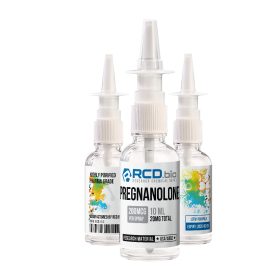
Description
What is Pregnenolone Nasal Spray?
Pregnanolone (3alpha-hydroxy-5beta-pregnan-20-one; eltanolone; 3alpha,5beta-THP; 3alpha,5beta-tetrahydro progesterone; CAS 128-20-1; MW 318.501 g/mol; C₂₁H₃₄O₂; PubChem CID 31402) is an endogenous inhibitory pregnane neurosteroid produced in humans from progesterone via two sequential enzymatic reductions. In the first step, progesterone is reduced by 5beta-reductase (AKR1D1) at the C-5 position to produce 5beta-dihydroprogesterone (5beta-DHP); in the second step, 3alpha-hydroxysteroid dehydrogenase (3alpha-HSD) reduces 5beta-DHP at the C-3 position to produce pregnenolone. Pregnanolone is synthesized in the adrenal cortex, gonads, liver, and, critically, in the brain itself, where it is classified as a neurosteroid: a steroid synthesized de novo in neural tissue from cholesterol or from circulating steroid precursors and acting directly on neuroreceptors. Pregnanolone acts as a positive allosteric modulator (PAM) of the GABA type-A receptor (GABA-AR), the primary mediator of inhibitory neurotransmission in the mammalian central nervous system, producing CNS depressant effects including sedative, anxiolytic, anesthetic, and anticonvulsant activity in preclinical model systems [Gee et al., 1995; PMID 8581984].
Pregnanolone is closely related to allopregnanolone (brexanolone), its 5α stereoisomer. Although both neurosteroids share the same molecular formula and act as positive allosteric modulators of GABA-A receptors, they differ in the stereochemical configuration at the C-5 position. Pregnanolone has a 5β configuration that produces a bent steroid structure, whereas allopregnanolone has a 5α configuration that results in a flatter structure. This seemingly small difference alters receptor affinity, pharmacological potency, and other physicochemical properties.
Pregnanolone should also be distinguished from epipregnanolone and isopregnanolone, which are 3β epimers. Unlike pregnenolone and allopregnanolone, these compounds act as negative allosteric modulators of GABA-A receptors and produce opposing effects on GABAergic signaling.
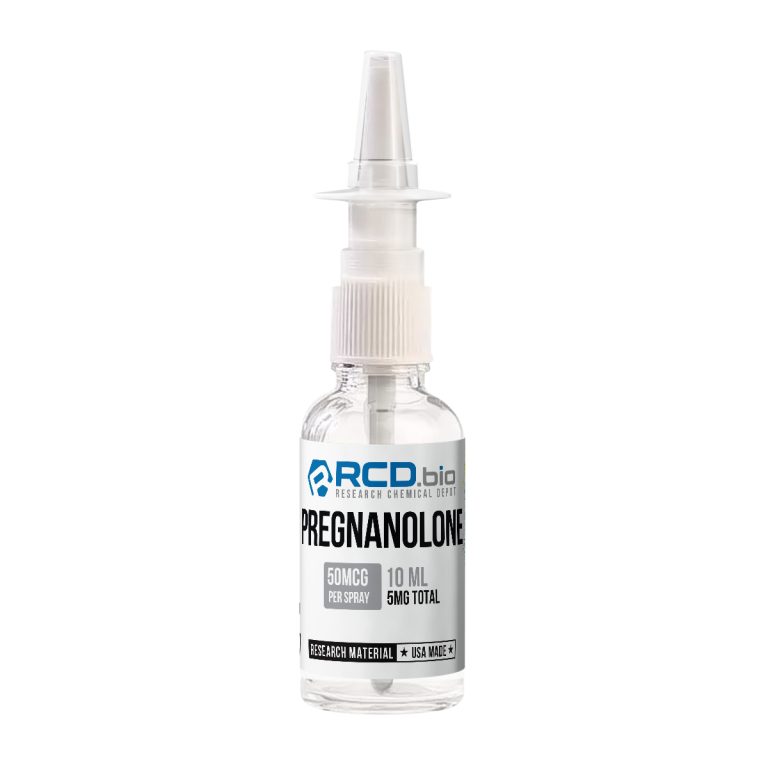
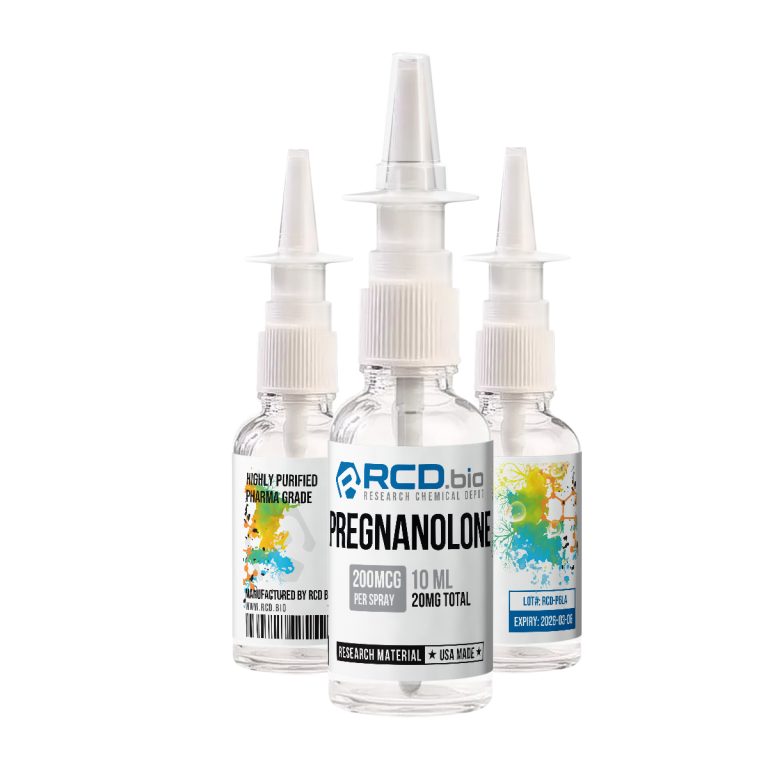
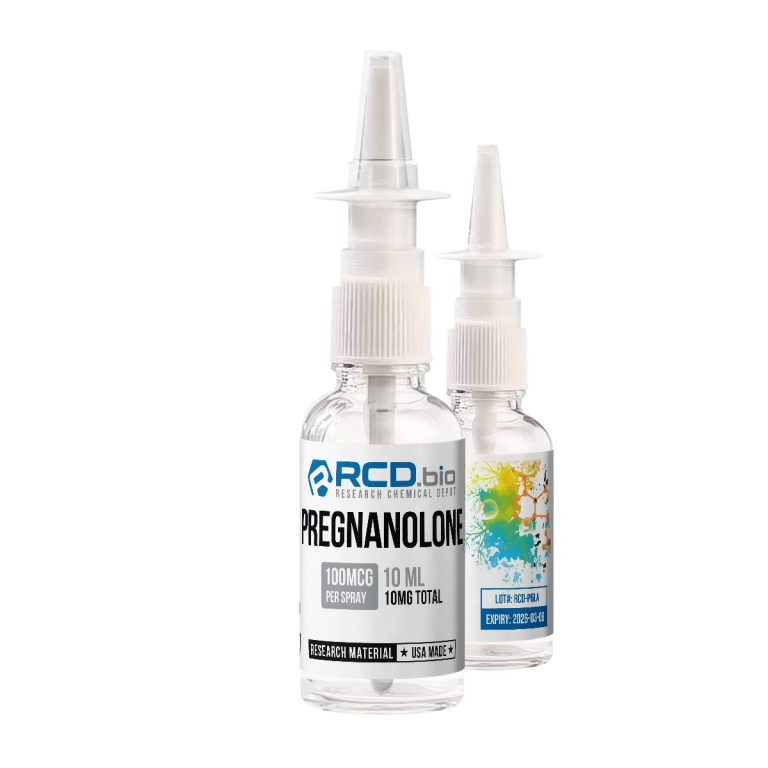
The RCDbio research-grade pregnenolone nasal spray contains the 3α-hydroxy, 5β stereoisomer (CAS 128-20-1). Researchers should verify this identity using the certificate of analysis (COA), as stereochemical differences can significantly affect experimental outcomes.
The nasal spray formulation is investigated as a delivery route in preclinical research contexts, based on evidence of olfactory bulb-mediated CNS transport for neurosteroid compounds administered intranasally. Intranasal delivery of the closely related neurosteroid allopregnanolone has been characterized in preclinical mouse model preparations, demonstrating rapid CNS delivery with Tmax of approximately 5 minutes in brain and preferential accumulation in the olfactory bulb, conferring GABA-AR-mediated anticonvulsant activity [Zolkowska et al., 2021; PMID 33405197]. This allopregnanolone intranasal data is cited as class-level evidence for pregnane neurosteroid intranasal delivery and does not constitute compound-specific intranasal pharmacokinetic or bioavailability data for pregnanolone (5beta epimer) specifically.
DISCLAIMER: Pregnanolone Nasal Spray as supplied by RCDbio is not a dietary supplement and has not been approved by the Food and Drug Administration for human use, veterinary use, consumption, or any therapeutic application. This product is not intended for human consumption or therapeutic self-administration. It is supplied exclusively for in vitro and preclinical laboratory research purposes. All RCDbio research compounds are for laboratory and research purposes only.
Chemical Properties of Pregnenolone
| Property | Details |
| Product Type | Endogenous Inhibitory Pregnane Neurosteroid / GABA-A Receptor Positive Allosteric Modulator (PAM) / Progesterone Metabolite / 5beta-Reduced Pregnane Neurosteroid |
| Product Name | Pregnanolone Nasal Spray |
| Application | Scientific / Research Use Only |
| CAS Number | 128-20-1 (pregnanolone; 3alpha-hydroxy-5beta-pregnan-20-one; eltanolone). |
| Molar Mass | 318.501 g/mol |
| Chemical Formula | C21H34O2 |
| IUPAC Name | (3R,5S,8R,9S,10S,13S,14S,17S)-3-hydroxy-10,13-dimethylhexadecahydro-1H-cyclopenta[a]phenanthren-17-yl)ethanone; also described as 3alpha-hydroxy-5beta-pregnan-20-one (PubChem CID 31402) |
| Synonyms | Pregnanolone; Eltanolone (INN; former clinical development name); 3alpha,5beta-THP; 3alpha,5beta-tetrahydro progesterone; 5beta-pregnan-3alpha-ol-20-one; NSC 82867; SKF 6455; U-2340 |
| Physical Form | White to off-white lyophilized powder; supplied as aqueous nasal spray solution. Pregnanolone is highly lipophilic (log P approximately 3.5); aqueous solubility is limited and requires a solubilizing excipient (e.g., cyclodextrin or polyethylene glycol) for adequate nasal spray concentration. Formulation details per COA. |
| Solubility | Poorly water-soluble due to high lipophilicity (log P approximately 3.5); solubilized in the nasal spray formulation via cyclodextrin complexation or equivalent pharmaceutical solubilizer per product specification; verify from COA |
| Storage (Lyophilized) | -20°C; sealed container; protected from light and moisture; under inert atmosphere if possible given oxidative susceptibility of the 3alpha-hydroxyl group |
| Storage (Reconstituted / Nasal Spray) | 2-8°C; use within 28 days of first actuation; DO NOT FREEZE; protect from light; keep upright |
| PubChem CID | 31402 |
| Purity | >=98% (HPLC verified, independent third-party laboratory analysis; COA available per batch; stereochemical configuration confirmed by optical rotation or chiral HPLC) |
| WADA Status | Pregnanolone is not explicitly named on the 2026 WADA Prohibited List. As an endogenous progesterone metabolite present in all humans, it does not fall within currently named prohibited substance categories. Researchers operating within WADA Code contexts should verify current status at GlobalDRO.com prior to use. RCDbio products are for laboratory research purposes only. |
How Does Pregnenolone Work?
Pregnanolone’s primary mechanism of action is positive allosteric modulation of the GABA type-A receptor (GABA-AR). GABA-AR is a pentameric ligand-gated ion channel that mediates the inhibitory action of gamma-aminobutyric acid (GABA), the principal inhibitory neurotransmitter in the mammalian CNS. GABA binds to orthosteric sites at the alpha/beta subunit interfaces and opens the integral chloride channel, increasing chloride ion conductance into the neuron, hyperpolarizing the membrane potential, and reducing neuronal excitability. Neurosteroids such as pregnanolone act at distinct allosteric sites on the GABA-AR, separate from the GABA orthosteric site, the benzodiazepine binding site, and the barbiturate binding site, to potentiate the receptor’s response to GABA and, at high concentrations, to activate the receptor directly in the absence of GABA. The following mechanistic observations are from in vitro and preclinical data unless otherwise specified.
GABA-AR Positive Allosteric Modulation — Primary Mechanism
Pregnanolone binds to specific neurosteroid binding sites on the GABA-AR, distinct from the orthosteric GABA site and the benzodiazepine binding site. At low concentrations (nanomolar range), pregnanolone potentiates GABA-induced chloride conductance — enhancing the chloride ion flux through the channel in response to GABA without activating the channel in the absence of GABA. At higher concentrations (micromolar range), pregnenolone can directly gate the channel independent of GABA. This potentiation increases the inhibitory tone of GABAergic neurotransmission, producing CNS depressant effects including sedation, anxiolysis, anticonvulsant activity, and, at sufficient concentrations, anesthesia. Pregnanolone enhances flunitrazepam binding to GABA-AR in rat brain homogenate preparations with an EC50 of approximately 237 nM, reflecting its sub-micromolar potency as a GABA-AR PAM [Gee et al., 1995; PMID 8581984].
Neurosteroid Binding Sites on GABA-AR — Distinct from Benzodiazepine and Barbiturate Sites
The neurosteroid binding sites on GABA-AR are located within the transmembrane domains of the receptor, distinct from the extracellular benzodiazepine site at the alpha/gamma subunit interface and the barbiturate/general anesthetic sites. The 3alpha-OH and 3beta-OH epimers (e.g., pregnanolone versus epipregnanolone) bind to an overlapping but distinct subset of neurosteroid sites and produce opposite functional effects: 3alpha-OH neurosteroids (pregnanolone, allopregnanolone) are GABA-AR positive allosteric modulators; 3beta-OH neurosteroids (epipregnanolone, allopregnanolone) are negative allosteric modulators that inhibit GABA-induced chloride flux and can reverse the effects of PAMs [Wang et al., 2022; PMID 34856904]. The net effect of endogenous neurosteroid tone on GABA-AR function represents the combined action at these overlapping sites.
Stereochemistry and Pharmacological Profile: 5beta Versus 5alpha
The 5beta configuration of pregnanolone produces a cis A/B ring junction in the steroid nucleus, a bent ring system contrasting with the trans (flat) ring system of allopregnanolone (5alpha). This structural difference affects receptor binding geometry, lipophilicity, plasma protein binding, and CNS penetration. Both pregnanolone and allopregnanolone are GABA-AR PAMs with broadly similar activity profiles, sedative, anxiolytic, anticonvulsant, and anesthetic, but differ in potency, pharmacokinetic parameters, and selectivity across GABA-AR subunit compositions. Pregnanolone has been reported to inhibit GABA-C (rho1 subunit-containing) receptor currents in Xenopus oocyte preparations, acting as a negative modulator of this receptor subtype. [Gee et al., 1995; PMID 8581984]. This dual PAM (GABA-A)/NAM (GABA-C) profile is also reported for allopregnanolone and represents a pharmacologically important distinction from benzodiazepines, which do not substantially affect GABA-C receptors.
Sedative, Anxiolytic, Anticonvulsant, and Anesthetic Effects
The GABA-AR PAM activity of pregnanolone translates into behavioral pharmacology profiles in preclinical model systems consistent with CNS depressant activity. Pregnenolone increases the number of entries into and time spent in the open arms of the elevated plus maze in mice at 20 mg/kg, indicating anxiolytic activity in this model. It has demonstrated anticonvulsant activity against pentylenetetrazole (PTZ)-induced seizures in preclinical rodent model preparations consistent with GABA-AR-mediated inhibition of neuronal excitability. It produces anesthesia in rats at sufficient concentrations. These are preclinical model observations; they do not constitute evidence of efficacy for the research-grade nasal spray formulation in any organism.
Intranasal Delivery & Pharmacokinetics
Olfactory Bulb-Mediated CNS Transport
When administered intranasally in preclinical rodent model systems, compounds can access the central nervous system through the olfactory nerve (cranial nerve I) and trigeminal nerve pathways. The high lipophilicity of pregnenolone (log P approximately 3.5) is a pharmacokinetically favorable property for nasal mucosal absorption via transcellular diffusion across the lipid bilayer of nasal epithelial cells. Class-level evidence for pregnane neurosteroid intranasal CNS delivery is provided by the allopregnanolone intranasal study in mice (Zolkowska et al., 2021; PMID 33405197), which demonstrated Tmax approximately 5 minutes in brain, olfactory bulb Cmax of approximately 16,000 ng/mg (substantially higher than 670 ng/mg in the rest of the brain), and rapid functional anticonvulsant activity within 10-15 minutes of nasal delivery — evidence for direct nose-to-brain transport rather than systemic redistribution alone. Allopregnanolone (5alpha epimer) and pregnenolone (5beta epimer) share the pregnane neurosteroid class but differ in stereochemistry; intranasal delivery kinetics for the 5beta epimer have not been specifically characterized as of June 2026.
Lipophilicity and Nasal Mucosal Absorption
Pregnanolone’s high lipophilicity (log P approximately 3.5) makes transcellular passive diffusion across the nasal mucosa the expected primary absorption pathway, in contrast to the hydrophilic peptide and dinucleotide compounds in this range for which paracellular transport is dominant. Lipophilic steroids are known to cross mucosal surfaces rapidly via transcellular diffusion when delivered as nasal sprays, and — unlike the hydrophilic compounds in this range — pregnanolone does not require specialized transporter-mediated uptake for mucosal absorption. The high lipophilicity also means pregnanolone readily crosses the blood-brain barrier following systemic absorption, making CNS delivery achievable via both the direct nose-to-brain olfactory pathway and systemic absorption.
Cyclodextrin Formulation Requirement
Pregnanolone’s poor aqueous solubility requires cyclodextrin complexation (sulfobutylether-beta-cyclodextrin, SBECD; or hydroxypropyl-beta-cyclodextrin, HPBCD) to achieve adequate solubility in the nasal spray vehicle. This is consistent with the allopregnanolone intranasal research formulation, which used 40% SBECD as the solubilizing vehicle in the Zolkowska et al. study. Researchers should confirm the cyclodextrin type and concentration from the RCDbio COA and account for the cyclodextrin vehicle’s potential effects on nasal mucosal tolerance, absorption rate, and cyclodextrin-mediated release kinetics when designing protocols.
Compound-Specific Pharmacokinetics
No formal intranasal pharmacokinetic data (Tmax, Cmax, brain bioavailability, elimination half-life via intranasal route) have been published for pregnenolone (5beta epimer) via nasal spray as of June 2026. The intravenous half-life of pregnanolone is reported as 0.9-3.5 hours, consistent with the rapid hepatic metabolism of pregnanolone via glucuronidation and sulfation. Following intranasal administration, direct nose-to-brain delivery via the olfactory pathway may extend the effective CNS window relative to IV due to the partial bypass of systemic metabolism. Researchers should account for the absence of compound-specific intranasal pharmacokinetic data when designing laboratory protocols.
Key Research Findings
Neurosteroids as GABA-A Receptor Positive Allosteric Modulators, Epalon Pharmacology and Therapeutic Potential (Review, Crit Rev Neurobiol, 1995): A class of neuroactive steroids devoid of conventional steroid hormone activity, including pregnanolone, acts via a unique allosteric site on the GABA-AR complex (a ligand-gated chloride channel) to potentiate GABA-induced chloride conductance; pregnanolone enhances flunitrazepam binding at EC50 approximately 237 nM in rat brain homogenate; the epalon class demonstrates anxiolytic, anticonvulsant, and sedative-hypnotic properties comparable to benzodiazepines and barbiturates but acting through a distinct neurosteroid binding site; pregnenolone and related epalons were proposed as a novel therapeutic class [Gee et al., 1995; PMID 8581984]
Neurosteroid Modulation of GABA-A Receptors by Independent Action at Multiple Specific Binding Sites, 3alpha Versus 3beta Epimer Pharmacology (Review/Perspective, Curr Neuropharmacol, 2022): The 3alpha-OH and 3beta-OH epimers of pregnane neurosteroids bind to an overlapping subset of specific sites on GABA-AR and produce opposite functional effects, 3alpha-OH neurosteroids (including pregnanolone) are positive allosteric modulators; 3beta-OH neurosteroids are negative allosteric modulators; a model is provided to explain how the net effect on GABA-AR function is determined by the sum of independent actions at multiple binding sites; pregnanolone is specifically examined in the context of the dual-site PAM/NAM model [Wang et al., 2022; PMID 34856904]
Intranasal Allopregnanolone Confers Rapid Seizure Protection: Evidence for Direct Nose-to-Brain Delivery (Preclinical Mouse Study — Class-Level Evidence for Pregnane Neurosteroid Intranasal Delivery; Allopregnanolone is 5alpha Epimer, Not Pregnenolone): Intranasal allopregnanolone in mice produced Tmax approximately 5 minutes in brain, with olfactory bulb Cmax of approximately 16,000 ng/mg versus 670 ng/mg in remainder of brain, confirming direct nose-to-brain delivery; rapidly elevated PTZ seizure threshold with ED50 5.6 mg/kg; caused minimal sedation or motor toxicity relative to equivalent benzodiazepine doses; effect peaked at 15 minutes and persisted for up to 6 hours; this is the first published study demonstrating rapid functional CNS activity of a nose-to-brain-delivered steroid; all data relate to allopregnanolone (CAS 516-54-1; 5alpha epimer) and constitute class-level evidence for pregnane neurosteroid intranasal delivery, NOT compound-specific data for pregnanolone (CAS 128-20-1; 5beta epimer) [Zolkowska et al., 2021; PMID 33405197]
Row 1 establishes pregnanolone’s GABA-AR PAM mechanism and pharmacological class identity using in vitro rat brain preparations. Row 2 provides the current mechanistic framework for neurosteroid epimer pharmacology at GABA-AR and specifically examines pregnanolone in the multi-site PAM/NAM binding model. Row 3 is the primary evidence for pregnane neurosteroid intranasal nose-to-brain delivery — it uses allopregnanolone (5alpha epimer), not pregnenolone (5beta epimer); it is cited as class-level evidence for the intranasal research context of pregnane neurosteroids and does not constitute compound-specific data for pregnanolone nasal spray. No published peer-reviewed study has specifically characterized the intranasal pharmacokinetics or CNS delivery of pregnanolone (5beta epimer) as of June 2026.
What are the Potential Research Applications?
In controlled laboratory environments, pregnanolone nasal spray has been investigated for the following research applications. These are observed in preclinical and in vitro contexts only and do not constitute claims of efficacy or safety in any organism.
GABA-A Receptor Pharmacology and Neurosteroid Binding Site Research
Pregnanolone is a well-characterized GABA-AR PAM with documented neurosteroid binding site pharmacology, making it a research tool for investigating endogenous neurosteroid GABA-AR modulation. Research applications include GABA-AR chloride flux potentiation assays at defined pregnanolone concentrations, comparison of 5alpha (allopregnanolone) versus 5beta (pregnanolone) epimer potency at GABA-AR in matched receptor preparations, 3alpha-OH versus 3beta-OH epimer competition at the neurosteroid binding site, characterization of pregnanolone activity at delta-subunit-containing GABA-AR preparations (extrasynaptic receptors relevant to tonic inhibition), and comparative PAM studies contrasting pregnanolone versus benzodiazepine and barbiturate modulators at matched GABA-AR preparations.
Anxiolytic and Sedative-Hypnotic Research
The GABA-AR PAM mechanism of pregnanolone supports investigation in anxiety and sleep model systems. Research applications include elevated plus maze, open field, and light-dark box behavioral assays in rodent preparations, comparison of anxiolytic efficacy and side effect profile between pregnanolone and benzodiazepines in matched preclinical model systems, sleep EEG characterization of pregnanolone-induced sleep architecture in rodent preparations, and dose-response studies of sedative versus anxiolytic effects in rodent behavioral pharmacology model systems.
Anticonvulsant and Epilepsy Model Research
Pregnanolone has documented anticonvulsant activity via GABA-AR potentiation. Research applications include PTZ-induced seizure threshold assays, catamenial epilepsy model preparations investigating neurosteroid fluctuation and seizure susceptibility, comparison of pregnanolone versus allopregnanolone anticonvulsant potency in matched seizure model preparations, benzodiazepine-refractory seizure model research, and investigation of GABA-AR neurosteroid site modulation in status epilepticus model preparations.
Intranasal Neurosteroid CNS Delivery Research
Class-level evidence for nose-to-brain neurosteroid delivery [Zolkowska et al., 2021; PMID 33405197] supports investigation of the intranasal route for pregnanolone CNS delivery research. Research applications include nose-to-brain transport characterization of pregnanolone versus allopregnanolone in matched rodent intranasal preparations, comparative olfactory bulb accumulation kinetics for 5alpha versus 5beta pregnane neurosteroids, cyclodextrin formulation optimization for pregnanolone intranasal bioavailability, and intranasal pharmacokinetic profiling of pregnanolone in rodent model systems.
Neurosteroid Biosynthesis and Progesterone Metabolism Research
Pregnanolone occupies a defined position in the progesterone metabolic cascade (progesterone → 5beta-DHP → pregnanolone), making it a research tool for mapping neurosteroid biosynthesis. Research applications include 5beta-reductase and 3alpha-HSD enzyme activity characterization, comparative neurosteroid biosynthesis studies across brain regions, gonadal cycle-associated neurosteroid fluctuation characterization, and HPA axis neurosteroid response studies under stress model conditions.
What are the Potential Side Effects?
Researchers in preclinical and in vitro settings have noted the following observations. Long-term safety and toxicity profiles remain incompletely characterized for the research-grade nasal spray formulation.
- CNS depressant effects via GABA-AR potentiation — documented in preclinical model systems: Pregnenolone produces sedation, motor impairment, and loss of righting reflex at sufficient concentrations in rodent model preparations; inadvertent intranasal self-exposure at research concentrations carries a risk of GABA-AR-mediated CNS depression — including sedation, cognitive impairment, and motor incoordination — at concentrations achieving systemic absorption
- No completed human clinical trials for pregnanolone via the intranasal route: Pregnanolone (eltanolone) was evaluated as an IV anesthetic in Phase 2/3 clinical trials in the 1990s — that program was discontinued; no safety data for the intranasal route have been established in any published human clinical study as of June 2026; IV clinical anesthetic data do not transfer directly to intranasal route outcomes
- Stereochemical purity requirement — research safety consideration: Pregnanolone (3alpha-OH, 5beta; CAS 128-20-1) is a GABA-AR PAM; the 3beta-OH epimers (epipregnanolone, allopregnanolone; CAS 128-21-2 and CAS 516-55-2) are GABA-AR NAMs with opposite functional effects; stereochemical impurity in the research-grade formulation could confound GABA-AR assay results and produce unexpected pharmacological effects; confirm chiral purity from COA before use
- Nasal mucosal irritation and cyclodextrin vehicle effects: The cyclodextrin vehicle required for pregnanolone solubilization may produce mild nasal mucosal irritation at high concentrations; the cyclodextrin itself does not have pharmacological activity at GABA-AR but may affect nasal mucosal permeability and drug absorption rate; no published data characterizes nasal mucosal tolerance of the pregnanolone cyclodextrin nasal spray formulation
- WADA-relevant activity — CNS depressant pharmacology: Although pregnanolone is not currently named on the 2026 WADA Prohibited List, its GABA-AR-mediated CNS depressant and sedative activity is pharmacologically relevant in competitive sports contexts; researchers in sport-adjacent contexts should verify current status at GlobalDRO.com
No human safety or tolerability data has been established for pregnanolone nasal spray via the intranasal route. These observations are derived from preclinical model systems and class-level clinical context and should not be extrapolated to human or animal outcomes.
Risk & Handling
Handling Precautions
Standard laboratory PPE is required: nitrile gloves, a laboratory coat, and eye protection. The following nasal spray-specific and compound-specific precautions apply:
- Do not direct the nasal spray actuator toward the face, eyes, or mucous membranes during handling, testing, or transfer. Pregnanolone is a potent GABA-AR positive allosteric modulator producing CNS depressant effects including sedation, motor impairment, and loss of righting reflex in preclinical model systems; inadvertent intranasal self-exposure carries a meaningful risk of acute CNS depression with motor and cognitive impairment. This risk is substantially higher than for the peptide and dinucleotide compounds in this range given pregnancy’s potent CNS pharmacological activity.
- Handle the nasal spray solution in a clean laboratory environment. For aliquoting or analytical sampling, use a laminar flow cabinet. Minimize exposure to air due to pregnanolone’s susceptibility to oxidation at the 3alpha-hydroxyl group.
- The nasal spray solution is susceptible to microbial contamination. Handle under aseptic conditions. Discard if the solution appears cloudy, discolored, or shows particulate matter.
- Avoid aerosol generation during any manipulation of the nasal spray solution.
Exposure Risks
Risk Tier: MODERATE
Pregnanolone is a potent GABA-AR positive allosteric modulator with documented CNS depressant pharmacology in preclinical preparations. Unlike the peptide and NAD+ compounds in this range, which have limited CNS access or indirect mechanisms, pregnanolone at sufficient concentrations directly potentiates GABA-AR to produce sedation, motor impairment, anxiolysis, and anesthesia. The risk of inadvertent intranasal self-exposure is meaningfully higher than for other compounds in this range due to pregnanolone’s high lipophilicity (rapid absorption via transcellular diffusion at the nasal mucosa), its potent CNS depressant mechanism of action, and the absence of published human safety data for any intranasal exposure. Researchers should treat this compound with precautions appropriate to a CNS-active neurosteroid with GABA-AR agonist-type activity.
Storage
In-use nasal spray: Store at 2-8°C. Use within 28 days of first actuation. Protect from light. Keep upright.
DO NOT FREEZE the ready-to-use nasal spray formulation. Freezing may disrupt cyclodextrin complexation, alter pH, and compromise spray actuation properties.
Lyophilized bulk stock (if applicable): Store at -20°C in sealed, desiccated, light-protected containers under inert atmosphere. The 3alpha-hydroxyl group is susceptible to oxidation; minimize air and moisture exposure.
Discard any solution that appears cloudy, discolored, or shows visible particulate matter.
FAQs
Q: How does intranasal pregnanolone access GABA-A receptor targets in preclinical models?
A: Pregnanolone’s high lipophilicity (log P approximately 3.5) favors rapid transcellular absorption across the nasal epithelium, in contrast to the hydrophilic peptides in this range that rely on paracellular transport. Once absorbed, its lipophilicity also permits ready blood-brain barrier transit. Class-level evidence from intranasal allopregnanolone (5alpha epimer) studies in mice demonstrates rapid CNS delivery with Tmax approximately 5 minutes, preferential olfactory bulb accumulation, and direct nose-to-brain transport [Zolkowska et al., 2021; PMID 33405197]. No compound-specific intranasal data for pregnanolone (5beta epimer) has been published as of June 2026. Researchers should account for the 5beta versus 5alpha stereochemical difference in interpreting allopregnanolone intranasal data in the context of pregnanolone protocols.
Q: What is the recommended storage and in-use shelf life for pregnenolone nasal spray?
A: Sealed product should be stored at 2-8°C, protected from light. Once first actuated, in-use shelf life is 28 days at 2-8°C. DO NOT FREEZE, freezing may disrupt cyclodextrin complexation and alter pH. Lyophilized bulk stock should be stored at -20°C in sealed, desiccated, light-protected conditions under an inert atmosphere. The 3alpha-hydroxyl group is susceptible to oxidation; reseal immediately after use. Discard if the solution shows cloudiness, discoloration, or particulate matter.
Q: Is the pregnanolone nasal spray formulation suitable for cell culture or in vitro assay systems?
A: The formulation contains cyclodextrin as a solubilizer; cyclodextrin at low concentrations is generally tolerated in cell culture systems but should be diluted before addition to cell preparations. Pregnanolone is a potent GABA-AR PAM; all cell preparations expressing GABA-AR subunits will show pregnenolone-dependent potentiation of chloride conductance. Researchers designing GABA-AR binding, flux, or electrophysiology assays should account for this mechanism and include appropriate vehicle (cyclodextrin vehicle without pregnanolone) controls. Researchers are responsible for confirming compatibility with their specific assay system.
Q: How does pregnanolone differ from allopregnanolone (brexanolone), and why does stereochemistry matter?
A: Pregnanolone (CAS 128-20-1) has the 3alpha-OH, 5beta configuration (cis A/B ring junction; bent ring system). Allopregnanolone (CAS 516-54-1; brexanolone) has the 3alpha-OH, 5alpha configuration (trans A/B ring junction; flat ring system). Both are GABA-AR PAMs with broadly similar anxiolytic, anticonvulsant, and sedative activity profiles, but they differ in receptor binding affinity, lipophilicity, metabolic half-life, and pharmacokinetics. The 3alpha-OH configuration is essential for PAM activity — the 3beta epimers (epipregnanolone, isopregnanolone) are GABA-AR negative allosteric modulators. Allopregnanolone (Zulresso) was FDA-approved for postpartum depression in 2019 via IV infusion; the manufacturer voluntarily withdrew the approval effective April 14, 2025 because the product was no longer marketed. Pregnanolone has never received FDA approval for any indication.
Q: What is the WADA status of pregnenolone?
A: Pregnanolone is not explicitly named on the 2026 WADA Prohibited List. As an endogenous progesterone metabolite present in all humans, it does not fall within currently named prohibited substance categories. However, its CNS depressant and sedative pharmacological activity is relevant to competitive sports contexts. Researchers in WADA Code jurisdictions should verify current status at GlobalDRO.com. RCDbio products are for laboratory research purposes only.
Q: What is the FDA regulatory status of pregnenolone?
A: Pregnanolone has never received FDA approval for any therapeutic indication via any route of administration. Under the name eltanolone, it was investigated as an IV general anesthetic in Phase 2/3 clinical trials in the early 1990s; that development program was discontinued. Pregnanolone is not currently listed on the FDA 503A bulk drug substance Category 1 or Category 2 lists. The research-grade nasal spray is not a pharmaceutical product, is not a dietary supplement, and is not equivalent to any compounded or approved formulation. It is supplied exclusively for in vitro and preclinical laboratory research purposes.
Q: Why does the pregnanolone nasal spray require cyclodextrin solubilization, and what should researchers account for?
A: Pregnanolone has a log P of approximately 3.5, making it highly lipophilic and poorly water-soluble (aqueous solubility less than 0.1 mg/mL without excipients). Cyclodextrin complexation, typically sulfobutylether-beta-cyclodextrin (SBECD) or hydroxypropyl-beta-cyclodextrin (HPBCD), dramatically increases aqueous solubility to concentrations suitable for nasal spray formulation. The cyclodextrin does not have pharmacological activity at GABA-AR. Researchers should: (1) confirm the cyclodextrin type and concentration from the COA; (2) use matched cyclodextrin vehicle controls (at the same cyclodextrin concentration as the active formulation) in all assay systems to exclude vehicle effects; (3) account for cyclodextrin-mediated release kinetics, which may affect the absorption rate at the nasal mucosa relative to free drug.
Related Research Compounds
Researchers investigating pregnanolone nasal spray may also be interested in the following compounds currently available for laboratory research at RCDbio:
Epithalon Nasal Spray — A synthetic tetrapeptide investigated for telomerase modulation and neuroendocrine signaling; shares the CNS neuroprotective and neuroendocrine research context.
KPV (Lysine-Proline-Valine) Nasal Spray — A melanocortin-derived anti-inflammatory tripeptide investigated for NF-kB inhibition; complementary CNS anti-inflammatory research tool operating through non-overlapping mechanisms.
Reduced Glutathione (GSH) Nasal Spray — The primary intracellular antioxidant; relevant as a complementary neuroprotective research tool for oxidative stress model preparations alongside pregnenolone GABA-AR research.
All products listed are for laboratory and research purposes only.
References
- Gee, K.W., McCauley, L.D., & Lan, N.C. (1995). A putative receptor for neurosteroids on the GABAA receptor complex: the pharmacological properties and therapeutic potential of epalons. Critical Reviews in Neurobiology, 9(2-3), 207-227.
https://pubmed.ncbi.nlm.nih.gov/8581984/
- Wang, L., Covey, D.F., Akk, G., & Evers, A.S. (2022). Neurosteroid modulation of GABAA receptor function by independent action at multiple specific binding sites. Current Neuropharmacology, 20(5), 886-890.
https://pubmed.ncbi.nlm.nih.gov/34856904/
DOI: https://doi.org/10.2174/1570159X19666211202150041
- Zolkowska, D., Wu, C.Y., & Rogawski, M.A. (2021). Intranasal allopregnanolone confers rapid seizure protection: evidence for direct nose-to-brain delivery. Neurotherapeutics, 18(1), 544-555.
https://pubmed.ncbi.nlm.nih.gov/33405197/
DOI: https://doi.org/10.1007/s13311-020-00985-5
- Wong, C.Y.J., Baldelli, A., Hoyos, C.M., et al. (2024). Insulin delivery to the brain via the nasal route: unraveling the potential for Alzheimer’s Disease therapy. Drug Delivery and Translational Research, 14(7), 1776-1793.
https://pubmed.ncbi.nlm.nih.gov/38441832/
DOI: https://doi.org/10.1007/s13346-024-01558-1
Research Transparency Note: Reference 1 (Gee et al., 1995; PMID 8581984) is a foundational review of neurosteroid GABA-AR pharmacology, establishing the epalon class mechanism and specifically characterizing pregnanolone’s EC50 in rat brain preparations. Reference 2 (Wang et al., 2022; PMID 34856904) is a mechanistic review specifically examining pregnanolone in the context of the multi-site neurosteroid PAM/NAM binding model on GABA-AR. Reference 3 (Zolkowska et al., 2021; PMID 33405197) characterizes intranasal delivery of allopregnanolone (5alpha epimer; CAS 516-54-1) — NOT pregnenolone (5beta epimer; CAS 128-20-1) — and is cited as class-level evidence for pregnane neurosteroid nose-to-brain delivery; stereochemical differences between the 5alpha and 5beta epimers mean this data cannot be directly extrapolated to pregnanolone intranasal pharmacokinetics. Reference 4 provides class-level intranasal delivery evidence for the olfactory/trigeminal pathway. No published peer-reviewed study has specifically characterized intranasal pharmacokinetics, CNS bioavailability, or in vivo biological activity of pregnenolone (5beta epimer) via nasal spray as of June 2026.
Disclaimer
Pregnanolone Nasal Spray is exclusively for laboratory research purposes. RCDbio products are not intended to diagnose, prevent, treat, or cure any disease or medical condition.
The Food and Drug Administration has not evaluated the statements on our website. This product is not approved for human or veterinary use. Researchers must comply with all applicable local, state, and federal laws and regulations governing the purchase and use of research compounds. By purchasing, you agree to our Terms and Conditions. RCDbio reserves the right to refuse sales to unauthorized individuals.
ATTENTION: All RCDbio products are strictly for LABORATORY AND RESEARCH PURPOSES ONLY. They are not intended for human consumption, veterinary use, or any other non-research application. For queries, complaints, or support, contact support@legacy.rcdbio.co
Reviews
There are no reviews yet