

Description
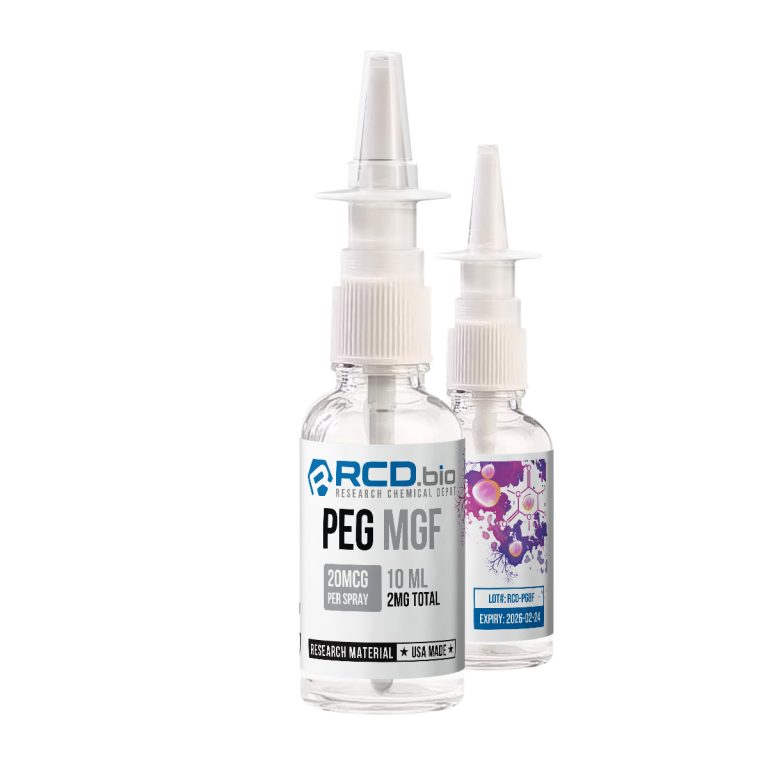
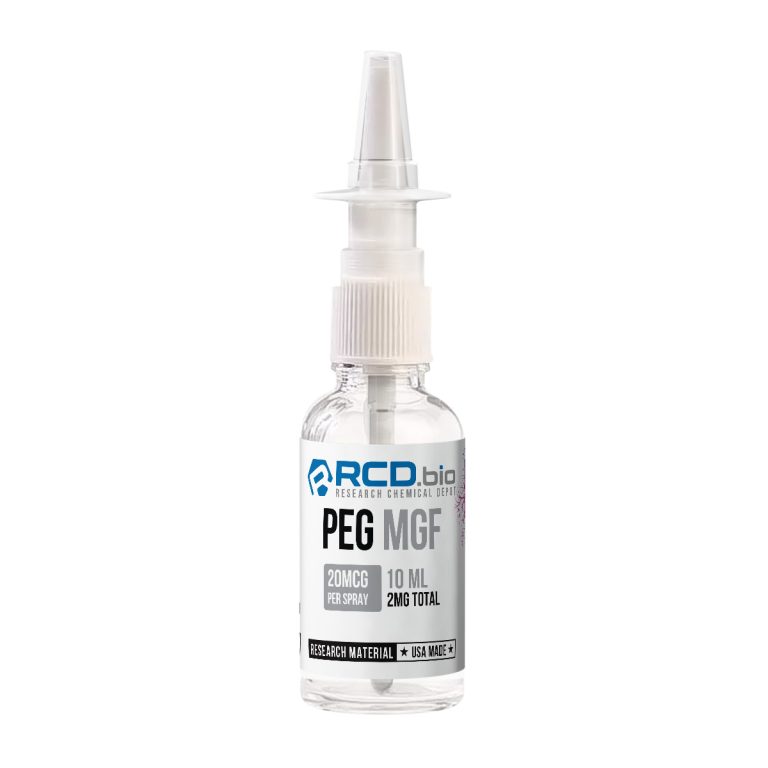
What is PEG-MGF Nasal Spray?
PEG-MGF (Pegylated Mechano Growth Factor) is a synthetic pegylated analog of Mechano Growth Factor (MGF), the 24-amino acid C-terminal E-domain peptide produced when the IGF-1 gene undergoes alternative splicing under mechanical stress or tissue damage to generate the IGF-1Ec isoform. MGF was first characterized by Geoffrey Goldspink and colleagues at University College London and represents the autocrine/paracrine splice variant of IGF-1 that drives the initial phase of satellite cell activation in skeletal muscle repair. Native MGF has an extremely short plasma half-life of approximately 5-7 minutes due to rapid proteolytic degradation. PEG-MGF addresses this limitation by covalently conjugating a polyethylene glycol (PEG) chain to the MGF E-peptide, extending the estimated biological half-life to approximately 48-72 hours in preclinical preparations. PEG-MGF has not been approved as a registered pharmaceutical in any country and has not been approved by the Food and Drug Administration for any indication.
The compound has been investigated in rabbit skeletal muscle preparations, rat muscle damage models, and primary human muscle cell culture systems for its role in satellite cell activation, myoblast proliferation, and the temporal regulation of muscle repair signaling. Research has characterized the distinct functional roles of the MGF E-domain versus mature IGF-1 in muscle regeneration, with the MGF E-peptide promoting satellite cell proliferation and delaying terminal differentiation via a receptor pathway distinct from the classical IGF-1 receptor. The nasal spray formulation is studied as a preclinical research delivery route. Evidence of olfactory bulb-mediated CNS transport for intranasally administered peptides in rodent models supports this approach. Intranasal delivery also bypasses hepatic first-pass metabolism relative to systemic routes in preclinical pharmacokinetic models.
DISCLAIMER: PEG-MGF Nasal Spray, as supplied by RCDbio, is not a dietary supplement and has not been approved by the Food and Drug Administration for human use, veterinary use, consumption, or any therapeutic application. This product is not intended for human consumption or therapeutic self-administration. It is supplied exclusively for in vitro and preclinical laboratory research purposes. All RCDbio research compounds are for laboratory and research purposes only.
Chemical Properties of PEG-MGF
| Property | Details |
| Product Type | Synthetic PEGylated Peptide (IGF-1Ec Splice Variant Derivative) |
| Product Name | PEG-MGF (Polyethylene Glycol Mechano Growth Factor) |
| Application | Scientific / Research Use Only |
| CAS Number | No unique CAS assigned for the PEGylated conjugate; core peptide fragment varies by manufacturer specification |
| Molar Mass | ~2,867.2 g/mol (core peptide, C121H200N42O39); total MW increases with PEG chain size and is vendor-specification dependent |
| Chemical Formula | C121H200N42O39 (core peptide) |
| Sequence | Tyr-Gln-Pro-Pro-Ser-Thr-Asn-Lys-Asn-Thr-Lys-Ser-Gln-Arg-Arg-Lys-Gly-Ser-Thr-Phe-Glu-Glu-Arg-Lys (24-mer Ec domain fragment; PEG conjugation site is N-terminal or lysine-directed per synthesis specification) |
| Synonyms | Pegylated MGF; PEG-IGF-1Ec; PEGylated Mechano Growth Factor |
| Physical Form | Lyophilized white to off-white powder |
| Solubility | Soluble in sterile water for injection (bacteriostatic water) or acetic acid (0.1–1%); solubility in aqueous buffer may vary with PEG chain length and conjugation site. Gently swirl to dissolve; do not vortex. |
| Storage (Lyophilized) | Store at -20°C in a sealed, light-protected container with desiccant; minimize temperature cycling prior to reconstitution |
| Storage (Reconstituted / Nasal Spray) | Store at 4°C; use within 48–72 hours of reconstitution. Do not subject it to repeated freeze-thaw cycles. Discard any solution that appears turbid, discolored, or shows particulate matter. |
| PubChem CID | No PubChem CID assigned to the PEGylated conjugate; core Ec peptide fragment data vary by exact sequence specification |
| Purity | ≥98% (HPLC verified, independent third-party laboratory analysis; COA available per batch) |
| WADA Status | PEG-MGF is not listed by name on the current WADA Prohibited List; however, as a growth factor and IGF-1 splice variant, it falls under S2.3 (Growth Factors and Growth Factor Modulators) of the 2026 WADA Prohibited List, which prohibits growth factors affecting muscle, tendon, or ligament protein synthesis. MGF and its derivatives are prohibited at all times in- and out-of-competition. Verify current status at GlobalDRO.com. |
How Does PEG-MGF Work?
PEG-MGF delivers the biological activity of the MGF E-peptide with an extended plasma half-life conferred by PEGylation. The MGF E-domain acts via a receptor pathway distinct from the classical IGF-1 receptor to activate quiescent muscle satellite cells, stimulate myoblast proliferation, and delay terminal differentiation. This separates its function from mature IGF-1, which promotes myoblast differentiation and protein synthesis. The following mechanistic observations are from preclinical and in vitro data only.
Non-IGF-1R Receptor Pathway and Satellite Cell Activation
The MGF E-peptide domain acts via a receptor pathway distinct from the IGF-1 receptor (IGF-1R). Blocking IGF-1R with a specific antibody did not prevent MGF E-domain effects on myoblast proliferation in cell culture preparations, confirming that the E-peptide functions independently of the classical IGF-1/IGF-1R signaling axis [Yang and Goldspink, 2002; PMID 12095637]. Unlike mature IGF-1, which promotes terminal differentiation of myoblasts, the MGF E-domain inhibited terminal differentiation while increasing myoblast proliferation, establishing functionally distinct roles for the two IGF-1 gene products in muscle cell preparations.
Temporal Regulation of Muscle Repair: MGF then IGF-1Ea
In rat tibialis anterior muscle preparations following mechanical damage, MGF mRNA was rapidly and transiently expressed within hours of injury, declining within a few days. This rapid MGF pulse was followed by a more gradual and sustained increase in IGF-1Ea mRNA. Satellite cell activation markers (M-cadherin, MyoD) were expressed during the MGF pulse phase, indicating that the initial MGF signal drives satellite cell activation, while subsequent IGF-1Ea expression drives differentiation and protein synthesis to complete repair [Hill and Goldspink, 2003; PMID 12692175]. This temporal two-stage sequence provides the mechanistic rationale for studying MGF E-peptide preparations separately from mature IGF-1 compounds.
Mechanical Stress-Responsive IGF-1 Splicing
In rabbit extensor digitorum longus muscle preparations, stretch using plaster cast immobilization resulted in marked upregulation of MGF mRNA within 4 days. Electrical stimulation combined with stretch produced even greater MGF and systemic IGF-1 mRNA increases, while electrical stimulation alone without stretch produced no significant upregulation [McKoy et al., 1999; PMID 10087355]. These findings established that MGF expression is mechanically regulated and distinguishes it from systemic IGF-1 isoforms in its expression requirements.
MGF E-Peptide in Human Muscle Cell Preparations
In primary human muscle cell cultures isolated from subjects of different ages, the MGF 24-amino acid E-peptide significantly increased the proliferative life span and delayed senescence of satellite cells from neonatal and young adult preparations. The MGF E-peptide alone enhanced satellite cell activation, proliferation, and fusion capacity for muscle repair without requiring co-stimulation with other growth factors [Kandalla et al., 2011; PMID 21354439]. Age-dependent differences in response were noted, with satellite cells from older adult preparations showing attenuated responses.
PEGylation and Half-Life Extension
Native MGF E-peptide has a plasma half-life of approximately 5-7 minutes, attributable to rapid proteolytic degradation in systemic circulation. PEGylation extends the estimated half-life to approximately 48-72 hours in preclinical preparations by providing steric protection against proteolytic enzymes and reducing renal clearance. The specific PEGylation site and its effect on E-peptide receptor binding kinetics have not been fully characterized in published preclinical literature.
Intranasal Delivery & Pharmacokinetics
Olfactory Bulb-Mediated CNS Transport
When administered intranasally in preclinical rodent model systems, peptide compounds can access the central nervous system through the olfactory nerve (cranial nerve I) pathway. Compounds deposited on the olfactory mucosa are transported along olfactory axons through the cribriform plate to the olfactory bulb, from which access to deeper CNS structures has been characterized in rodent preparations. The olfactory and trigeminal nerve pathways for nose-to-brain peptide transport have been investigated in preclinical studies of peptide and protein delivery [Wong et al., 2024; PMID 38441832]. No compound-specific olfactory transport data for PEG-MGF has been published. IGF-1 splice variant receptors are expressed in CNS tissue, making olfactory delivery pathway characterization a relevant research consideration.
Hepatic First-Pass Metabolism Bypass
The intranasal route avoids portal circulation and hepatic first-pass metabolic processing. Native MGF is subject to rapid proteolytic degradation in systemic circulation. The PEG chain confers steric protection against peptidase activity relevant to the intranasal delivery context. Nasal mucosal proteases are a significant barrier to peptide absorption, and the PEG modification may provide partial resistance to this degradation. These observations are derived from preclinical studies and do not constitute evidence of efficacy via any route in human subjects.
Nasal Mucosal Absorption
PEG-MGF has an approximate molar mass of 2867.2 g/mol (~2.87 kDa for the base peptide; higher with PEG chain). At approximately 2.87 kDa for the peptide core, paracellular and endocytic uptake mechanisms are likely predominant absorption pathways at the nasal mucosa. The PEG modification increases the effective hydrodynamic radius, which may reduce paracellular absorption efficiency relative to the unmodified E-peptide but improves mucosal stability. Specific nasal mucosal permeability coefficients for PEG-MGF have not been published.
Compound-Specific Pharmacokinetics
No formal intranasal pharmacokinetic data for PEG-MGF has been published in the peer-reviewed literature as of June 2026. The estimated half-life of approximately 48-72 hours for PEG-MGF is derived from preclinical subcutaneous administration data and has not been formally established via controlled pharmacokinetic studies. Native MGF has a plasma half-life of approximately 5-7 minutes. No human pharmacokinetic data exist for PEG-MGF via any route. Researchers should account for the absence of published intranasal-specific pharmacokinetic parameters when designing laboratory protocols.
Key Research Findings
MGF E-Peptide Acts via Non-IGF-1R Receptor Pathway (Mouse Myoblast Cell Preparation): The MGF E-domain inhibited terminal myoblast differentiation while increasing proliferation in cell culture preparations; IGF-1R blockade did not prevent these effects, confirming the MGF E-peptide acts via a receptor pathway distinct from the IGF-1R, unlike mature IGF-1, which promotes differentiation via IGF-1R [Yang and Goldspink, 2002; PMID 12095637]
Temporal MGF-IGF-1Ea Repair Sequence (Rat Tibialis Anterior Muscle Preparation): Following mechanical and chemical muscle damage, MGF mRNA was rapidly expressed and declined within days while IGF-1Ea mRNA increased more slowly; satellite cell activation markers (M-cadherin, MyoD) peaked during the MGF phase, confirming MGF drives the initial satellite cell activation step before IGF-1Ea drives differentiation [Hill and Goldspink, 2003; PMID 12692175]
Mechanical Stress-Dependent MGF Splice Variant Expression (Rabbit Skeletal Muscle Preparation): MGF mRNA was markedly upregulated by stretch and combined stretch/electrical stimulation in rabbit extensor digitorum longus preparations; electrical stimulation alone without stretch produced no significant MGF upregulation, confirming mechanical loading as the primary regulatory signal for MGF splice variant expression [McKoy et al., 1999; PMID 10087355]
MGF E-Peptide Enhances Human Satellite Cell Proliferation and Fusion (Primary Human Muscle Cell Cultures): The MGF 24-amino acid E-peptide significantly increased satellite cell proliferative life span and delayed senescence in primary human muscle cell preparations from neonatal and young adult subjects; enhanced satellite cell activation, proliferation, and fusion capacity were observed without co-stimulation from other growth factors [Kandalla et al., 2011; PMID 21354439]
All findings listed above are from preclinical in vitro and in vivo model systems using mouse cell lines, rat muscle preparations, rabbit skeletal muscle, and primary human muscle cell cultures. Key Research Findings rows 1-3 describe native MGF E-peptide or IGF-1Ec splice variant biology; row 4 uses the isolated MGF E-peptide in human cell cultures. None of these studies uses PEG-MGF directly. These observations do not constitute evidence of efficacy or safety for PEG-MGF nasal spray in any organism. No human clinical data has been established for research-grade PEG-MGF administered via the intranasal route.
What are the Potential Research Applications?
In controlled laboratory environments, PEG-MGF nasal spray has been investigated for the following research applications. These are observed in preclinical and in vitro contexts only and do not constitute claims of efficacy or safety in any organism.
Satellite Cell Biology and Myogenic Signaling Research
PEG-MGF provides a long-acting research tool for studying MGF E-peptide effects on satellite cell activation in skeletal muscle preparations. Research applications include satellite cell proliferation and differentiation assays, comparative studies of MGF E-peptide versus mature IGF-1 signaling in myoblast cell culture systems, and characterization of the non-IGF-1R receptor pathway responsible for MGF E-domain biological activity.
Muscle Repair Temporal Sequencing Research
PEG-MGF’s extended half-life relative to native MGF makes it useful for studying sustained MGF E-peptide signaling in preclinical muscle repair models. Research applications include temporal expression profiling of muscle repair genes following mechanical damage, examination of satellite cell activation and fusion kinetics in rodent muscle injury preparations, and characterization of the MGF-IGF-1Ea two-stage repair sequence in aged versus young muscle preparations.
Sarcopenia and Age-Related Muscle Loss Research
PEG-MGF is investigated as a tool compound for studying age-related satellite cell decline in preclinical aging research models. Research applications include comparative satellite cell activation studies across age groups in primary human muscle cell cultures, examination of MGF E-peptide responsiveness as a function of age, and characterization of sarcopenia-relevant signaling pathways in rodent aging model systems.
PEGylation and Peptide Half-Life Extension Research
PEG-MGF provides a model compound for studying the effects of PEGylation on peptide stability, receptor binding kinetics, and biological activity in preclinical preparations. Research applications include comparative pharmacokinetic profiling of PEG-MGF versus native MGF, assessment of PEG chain effects on E-peptide receptor engagement, and examination of anti-PEG antibody formation in repeated-dose preclinical studies.
What are the Potential Side Effects?
Researchers in preclinical and in vitro settings have noted the following observations. Long-term safety and toxicity profiles remain incompletely characterized for the research-grade nasal spray formulation.
- IGF-1 receptor cross-activation risk (preclinical class context): PEG-MGF delivers the MGF E-peptide, which acts via a non-IGF-1R pathway; however, the intact PEG-MGF construct may retain partial IGF-1R binding activity depending on PEGylation site and conformational effects; inadvertent intranasal self-exposure carries a theoretical risk of IGF-1R-mediated effects, including hypoglycemia and growth-related signaling at supraphysiologic exposures
- Anti-PEG antibody formation (preclinical class concern): Repeated exposure to PEGylated compounds can induce anti-PEG antibodies in preclinical preparations, potentially causing accelerated blood clearance (ABC phenomenon) or hypersensitivity reactions upon subsequent exposures; this class-level concern applies to PEG-MGF as a PEGylated research compound
- Satellite cell exhaustion (theoretical preclinical concern): Chronic or supraphysiologic stimulation of satellite cell proliferation in preclinical preparations carries a theoretical risk of depleting the satellite cell pool over time; this has not been characterized specifically for PEG-MGF in published preclinical studies
- Absence of intranasal-specific safety data: No safety or tolerability data specific to the intranasal route of administration for PEG-MGF has been published in the peer-reviewed literature as of June 2026
- No completed human clinical trials: No human Phase 1 safety or efficacy trials for PEG-MGF have been completed or published as of June 2026
No human safety or tolerability data has been established for PEG-MGF nasal spray. These observations are derived from preclinical class-level data and should not be extrapolated to human or animal outcomes.
Risk & Handling
Handling Precautions
Standard laboratory PPE is required: nitrile gloves, a laboratory coat, and eye protection. The following nasal spray-specific precautions apply:
- Do not direct the nasal spray actuator toward the face, eyes, or mucous membranes during handling, testing, or transfer. CNS-active compounds may produce pharmacological effects via inadvertent intranasal self-exposure.
- Handle the nasal spray solution in a clean laboratory environment. For aliquoting or analytical sampling, use a laminar flow cabinet.
- The nasal spray solution is an aqueous formulation susceptible to microbial contamination if compromised. Handle under aseptic conditions. Discard if the solution appears cloudy, discolored, or shows particulate matter.
- Avoid aerosol generation during any manipulation of the nasal spray solution.
Exposure Risks
Risk Tier: LOW-MODERATE
PEG-MGF acts via IGF-1 gene splice variant signaling pathways. Inadvertent intranasal self-exposure carries a theoretical risk of satellite cell activation and potential IGF-1R cross-activation at higher exposure levels. The PEG component carries a risk of anti-PEG antibody sensitization with repeated inadvertent exposures. No human safety or tolerability data have been established for PEG-MGF nasal spray. Researchers should handle this compound with precautions appropriate to a growth factor peptide analog with growth-promoting signaling activity in preclinical preparations.
Storage
In-use nasal spray: Store at 2-8°C. Use within 28 days of first actuation. Protect from light. Keep upright.
DO NOT FREEZE the ready-to-use nasal spray formulation. Freezing alters pH, buffer stability, excipient integrity, and spray actuation properties. PEGylated peptides may be susceptible to complex disruption under freeze-thaw cycling.
Lyophilized bulk stock (if applicable): Store at -20°C in sealed, desiccated, light-protected containers. Avoid repeated freeze-thaw cycles.
Discard any solution that appears cloudy, discolored, or shows visible particulate matter.
FAQs
Q: How does intranasal administration facilitate the delivery of PEG-MGF in preclinical research models?
A: Intranasal application allows peptide compounds to access peripheral targets via systemic absorption and central targets via the olfactory nerve (cranial nerve I) and trigeminal nerve pathways. The PEG chain confers steric protection against nasal mucosal peptidase degradation. The olfactory transport pathway has been characterized for structurally related peptide compounds in rodent models [Wong et al., 2024; PMID 38441832]. No compound-specific olfactory transport data exists for PEG-MGF. No human delivery data has been established for research-grade PEG-MGF nasal spray.
Q: What is the recommended storage and in-use shelf life for PEG-MGF nasal spray?
A: Sealed product should be stored at 2-8°C, protected from light. Once first actuated, in-use shelf life is 28 days at 2-8°C. DO NOT FREEZE the ready-to-use solution. Freezing may destabilize the buffer and disrupt PEG-peptide complex integrity. Lyophilized bulk stock should be stored at -20°C in sealed, desiccated, light-protected conditions. Discard if the solution shows cloudiness, discoloration, or particulate matter.
Q: Is the PEG-MGF nasal spray formulation suitable for cell culture or in vitro assay systems?
A: The formulation is prepared in isotonic saline (0.9% NaCl, pH 6.0-7.0) without preservatives. The pH range (6.0-7.0) is closer to the typical cell culture range (7.2-7.4) than other nasal spray formulations in the RCDbio range; dilution into culture medium before application is still recommended to normalize pH. Researchers should validate the PEG carrier compatibility independently in their specific cell system. Researchers are responsible for confirming compatibility with their assay system.
Q: What is the plasma half-life of PEG-MGF compared to native MGF?
A: Native MGF E-peptide has a plasma half-life of approximately 5-7 minutes due to rapid proteolytic degradation. PEGylation extends the estimated half-life of PEG-MGF to approximately 48-72 hours in preclinical preparations. No formal published pharmacokinetic study has been conducted for PEG-MGF via any route. No intranasal pharmacokinetic parameters have been published as of June 2026.
Q: How does PEG-MGF differ from MGF, IGF-1 LR3, and mature IGF-1?
A: Native MGF is the unmodified 24-amino acid E-peptide with a half-life of approximately 5-7 minutes. PEG-MGF is the same E-peptide with PEG conjugation for extended half-life (~48-72 hours). Both act via a non-IGF-1R receptor pathway to drive satellite cell proliferation in the early repair phase. IGF-1 LR3 and mature IGF-1 act via IGF-1R to drive differentiation and protein synthesis in the later repair phase.
Q: What is the WADA status of PEG-MGF?
A: PEG-MGF is prohibited under the 2026 WADA Prohibited List, Category S2.3 (Growth Factors and Growth Factor Modulators). Mechano growth factors (MGFs) are explicitly listed. This prohibition applies both in and out of competition for all WADA Code signatories. Verify current status at GlobalDRO.com. RCDbio products are supplied for laboratory research purposes only and are not supplied for use in competitive sport contexts.
Q: What is the FDA regulatory status of PEG-MGF?
A: PEG-MGF is not FDA-approved for any indication. As of the 2023 FDA classification, PEG-MGF was placed on the 503A Category 2 restricted bulk drug substance list. As of June 2026, PEG-MGF is expected to remain on the Category 2 restricted list. A PCAC advisory panel meeting scheduled for July 2026 will review the regulatory status of specific peptides. The research-grade nasal spray supplied by RCDbio is for laboratory research use only and is not a compounded pharmaceutical product.
Related Research Compounds
Researchers investigating PEG-MGF nasal spray may also be interested in the following compounds currently available for laboratory research at RCDbio:
IGF-1 LR3 Nasal Spray — A long-acting synthetic analog of mature IGF-1 investigated in preclinical preparations for IGF-1R-mediated myoblast differentiation and protein synthesis via the downstream repair phase of the MGF-IGF-1 signaling sequence.
BPC-157 Nasal Spray— A stable gastric pentadecapeptide investigated in preclinical rodent preparations for cytoprotection, angiogenesis, NO-system modulation, and tissue healing across multiple organ systems via intranasal delivery.
TB-500 (Thymosin Beta-4) Nasal Spray — A synthetic 43-amino acid analog of thymosin beta-4 investigated in preclinical rodent preparations for actin sequestration, angiogenesis, and tissue repair signaling.
All products listed are for laboratory and research purposes only.
References
- Yang, S.Y., & Goldspink, G. (2002). Different roles of the IGF-I Ec peptide (MGF) and mature IGF-I in myoblast proliferation and differentiation. FEBS Letters, 522(1-3), 156-160.
https://pubmed.ncbi.nlm.nih.gov/12095637/
- Hill, M., & Goldspink, G. (2003). Expression and splicing of the insulin-like growth factor gene in rodent muscle is associated with muscle satellite (stem) cell activation following local tissue damage. Journal of Physiology, 549(Pt 2), 409-418.
https://pubmed.ncbi.nlm.nih.gov/12692175/
- McKoy, G., Ashley, W., Mander, J., Yang, S.Y., Williams, N., Russell, B., & Goldspink, G. (1999). Expression of insulin growth factor-1 splice variants and structural genes in rabbit skeletal muscle induced by stretch and stimulation. Journal of Physiology, 516(Pt 2), 583-592.
https://pubmed.ncbi.nlm.nih.gov/10087355/
- Kandalla, P.K., Goldspink, G., Butler-Browne, G., & Mouly, V. (2011). Mechano Growth Factor E peptide (MGF-E), derived from an isoform of IGF-1, activates human muscle progenitor cells and induces an increase in their fusion potential at different ages. Mechanisms of Ageing and Development, 132(4), 154-162.
https://pubmed.ncbi.nlm.nih.gov/21354439/
- Wong, C.Y.J., Baldelli, A., Hoyos, C.M., et al. (2024). Insulin delivery to the brain via the nasal route: unraveling the potential for Alzheimer’s Disease therapy. Drug Delivery and Translational Research, 14(7), 1776-1793.
https://pubmed.ncbi.nlm.nih.gov/38441832/
Research Transparency Note: No peer-reviewed publications specific to intranasal delivery of PEG-MGF are available as of June 2026. References 1-4 above describe native MGF E-peptide or IGF-1Ec splice variant biology in mouse, rat, rabbit, and primary human cell preparations. None of these studies directly uses PEG-MGF; they are cited as a mechanistic context for the MGF E-peptide activity that PEG-MGF is designed to replicate with extended half-life. The olfactory transport pathway evidence in Reference 5 is class-level and applies to structurally related peptide hormones in rodent models.
Disclaimer
PEG-MGF Nasal Spray is exclusively for laboratory research purposes. RCDbio products are not intended to diagnose, prevent, treat, or cure any disease or medical condition.
The Food and Drug Administration has not evaluated the statements on our website. This product is not approved for human or veterinary use. Researchers must comply with all applicable local, state, and federal laws and regulations governing the purchase and use of research compounds. By purchasing, you agree to our Terms and Conditions. RCDbio reserves the right to refuse sales to unauthorized individuals.
ATTENTION: All RCDbio products are strictly for LABORATORY AND RESEARCH PURPOSES ONLY. They are not intended for human consumption, veterinary use, or any other non-research application. For queries, complaints, or support, contact support@legacy.rcdbio.co
Reviews
There are no reviews yet