

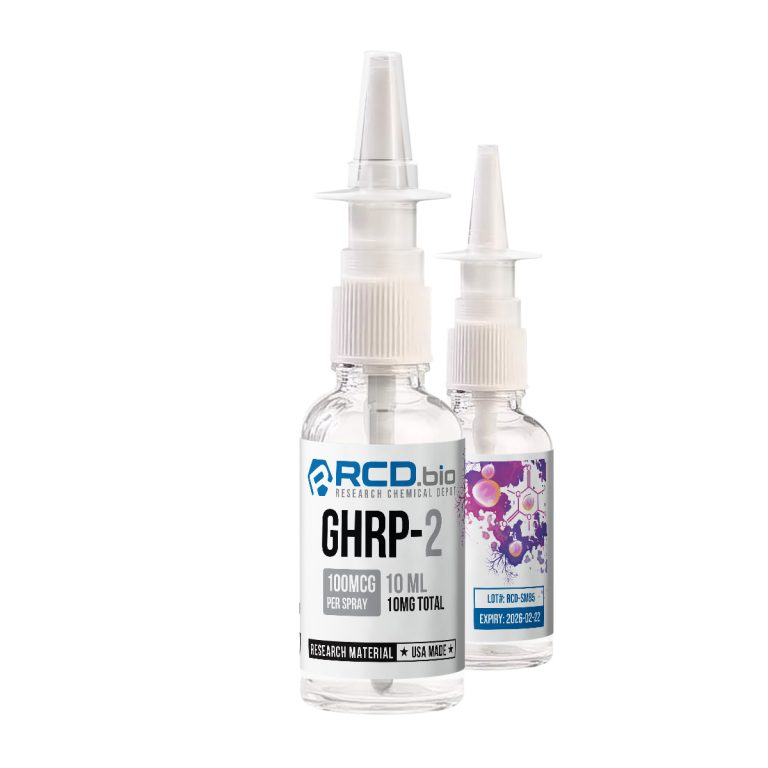
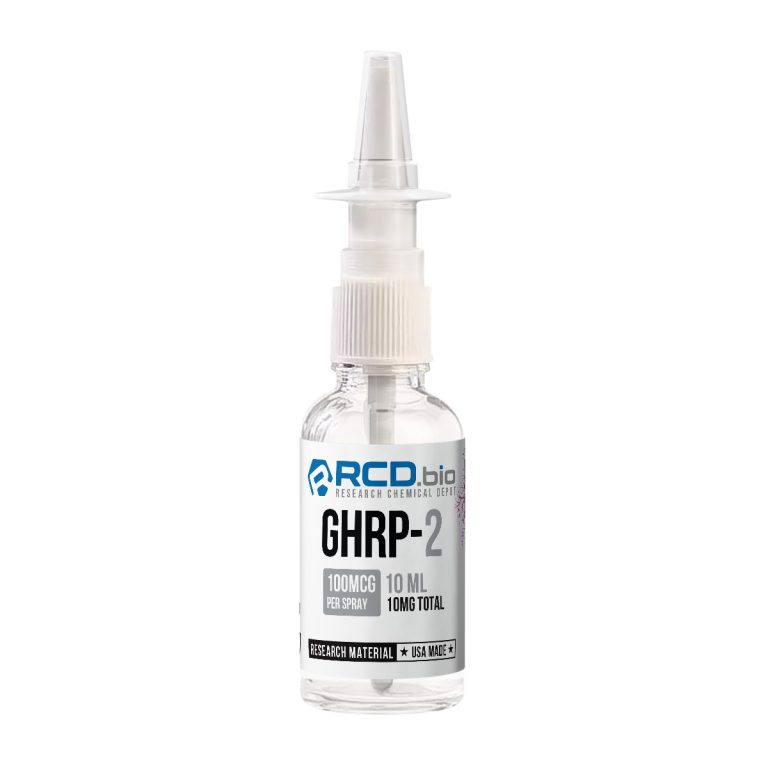
Description
What is GHRP-2 Nasal Spray?
GHRP-2 (Growth Hormone Releasing Peptide-2; pralmorelin; KP-102) is a synthetic hexapeptide with the sequence H-D-Ala-D-2Nal-Ala-Trp-D-Phe-Lys-NH2 and a C-terminal amide. It is a member of the growth hormone secretagogue (GHS) class and functions as a potent agonist at the growth hormone secretagogue receptor type 1a (GHS-R1a), the endogenous receptor for ghrelin. GHRP-2 was developed through the pioneering research of Cyril Y. Bowers and colleagues at Tulane University School of Medicine, building on earlier work on GHRP-6 (His-D-Trp-Ala-Trp-D-Phe-Lys-NH2). The compound incorporates D-amino acids at positions 1 (D-Ala) and 5 (D-Phe), and a 2-naphthylalanine (D-2Nal) residue at position 2, which together confer resistance to proteolytic degradation and enhance GHS-R1a binding affinity. GHRP-2 (as pralmorelin) holds the distinction of being the only growth hormone secretagogue approved by any regulatory authority for clinical use: it was approved by Japan’s Pharmaceuticals and Medical Devices Agency (PMDA) in October 2004 as a diagnostic agent for the assessment of growth hormone deficiency (GHD) in adults and children over four years of age, marketed by Kaken Pharmaceutical Co., Ltd. under the brand name GHRP Kaken 100. GHRP-2 has not been approved by the Food and Drug Administration for any indication, and the approved Japanese indication is a single-dose diagnostic application via intravenous injection, not a therapeutic use. The research-grade nasal spray formulation supplied by RCDbio is not a pharmaceutical product and is not equivalent to GHRP Kaken 100.
The compound has been extensively investigated in ovine and rat somatotroph preparations, primary pituitary cell cultures, and human clinical study systems for its effects on GH secretion, somatostatin suppression, intracellular cAMP pathway activation, and GHRH-synergistic amplification of pulsatile GH release. Research has characterized a mechanistic distinction between GHRP-2 and GHRP-6: GHRP-2 increases intracellular cAMP via adenylyl cyclase activation in ovine somatotroph preparations in a manner similar to GHRH, while GHRP-6 does not [Wu et al., 1996; PMID 8699133]. The nasal spray formulation is investigated as a delivery route in preclinical research contexts, based on evidence of class-level intranasal GHS receptor engagement for related ghrelin mimetics and olfactory bulb-mediated CNS transport for peptide compounds in rodent models.
The nasal spray formulation is investigated as a delivery route in preclinical research contexts, based on evidence of olfactory bulb-mediated CNS transport for peptide compounds administered intranasally in rodent models. Intranasal delivery has been studied for its potential to bypass hepatic first-pass metabolism and enhance CNS bioavailability relative to systemic routes in preclinical pharmacokinetic models. The nasal mucosa’s proximity to the central nervous system via the olfactory nerve makes it a research-relevant delivery route for CNS-active research compounds.
DISCLAIMER: GHRP-2 Nasal Spray as supplied by RCDbio is not a dietary supplement and has not been approved by the Food and Drug Administration for human use, veterinary use, consumption, or any therapeutic application. This product is not intended for human consumption or therapeutic self-administration. It is supplied exclusively for in vitro and preclinical laboratory research purposes. All RCDbio research compounds are for laboratory and research purposes only.
Chemical Properties of GHRP-2
| Property | Details |
| Product Type | Synthetic Hexapeptide / GHS-R1a Agonist / Growth Hormone Secretagogue / Ghrelin Mimetic |
| Product Name | GHRP-2 Nasal Spray |
| Application | Scientific / Research Use Only |
| CAS Number | 158861-67-7 |
| Molar Mass | 817.992 g/mol |
| Chemical Formula | C45H55N9O6 |
| IUPAC Name | (2S)-6-Amino-2-[[(2S)-2-[[(2S)-2-[[(2S)-2-[[(2R)-2-[[(2R)-2-aminopropanoyl]amino]-3-naphthalen-2-ylpropanoyl]amino]propanoyl]amino]-3-(1H-indol-3-yl)propanoyl]amino]-3-phenylpropanoyl]amino]hexanamide (PubChem CID 6852372) |
| Synonyms | GHRP-2; Growth Hormone Releasing Peptide-2; Pralmorelin; KP-102; GPA-748; WAY-GPA-748; GHRP Kaken (brand name — Japan PMDA-approved diagnostic IV formulation only; not equivalent to this research-grade nasal spray formulation) |
| Physical Form | Lyophilized white to off-white powder (compound); supplied as aqueous nasal spray solution |
| Solubility | Soluble in sterile water and 0.9% saline at ≥1 mg/mL |
| Storage (Lyophilized) | -20°C, desiccated, protected from light |
| Storage (Reconstituted / Nasal Spray) | 2-8°C; use within 28 days of first actuation; DO NOT FREEZE; protect from light; keep upright |
| PubChem CID | 6852372 |
| Purity | ≥98% (HPLC verified, independent third-party laboratory analysis; COA available per batch) |
| WADA Status | PROHIBITED — 2026 WADA Prohibited List, Class S2.2.4 (Growth Hormone Releasing Factors — GH-Releasing Peptides). GHRP-2 is explicitly named by both common name and pharmaceutical name: “GH-releasing peptides (GHRPs) [e.g., alexamorelin, examorelin (hexarelin), GHRP-1, GHRP-2 (pralmorelin), GHRP-3, GHRP-4, GHRP-5 and GHRP-6].” This prohibition applies both in and out of competition for all WADA Code signatories. RCDbio products are for laboratory research purposes only and are not supplied for use in competitive sport contexts. |
How Does GHRP-2 Work?
GHRP-2 acts as a potent agonist at GHS-R1a, the Gq/G11-protein-coupled receptor expressed on hypothalamic neurons (including arcuate nucleus NPY/AgRP neurons) and anterior pituitary somatotrophs. GHRP-2 also activates adenylyl cyclase and elevates intracellular cAMP in ovine somatotroph preparations, a mechanistic distinction from GHRP-6, which does not increase cAMP in the same preparations. The compound operates via a dual-site mechanism: directly stimulating pituitary somatotrophs and engaging hypothalamic neurons to amplify endogenous GHRH release and reduce somatostatin tone. The following mechanistic observations are from preclinical and in vitro data only unless otherwise specified.
Dual Site of Action: Pituitary Somatotroph Stimulation and Hypothalamic Engagement
The GHRP class acts via a unique and complementary dual-site mechanism on the hypothalamus and pituitary via non-GHRH, non-opiate receptors. GHRP synergistically releases GH in combination with GHRH in a manner not explained by somatostatin inhibition or GHRH stimulation alone, indicating independent complementary mechanisms [Bowers et al., 1991; PMID 2004615]. The synergistic interaction of GHRP with GHRH is one of the defining features of GHS pharmacology across the class.
Adenylyl Cyclase/cAMP Pathway Activation — Mechanistic Distinction from GHRP-6
GHRP-2 and GHRH increased intracellular cAMP concentrations and caused GH release in a dose-dependent manner in partially purified sheep somatotrophs in vitro. GHRP-6 did not increase cAMP levels in the same preparations. An additive effect of maximal doses of GHRH and GHRP-2 was observed on both cAMP and GH levels. Pretreatment with MDL 12,330A (an adenylyl cyclase inhibitor) prevented cAMP accumulation and GH release caused by GHRP-2, and the cAMP antagonist Rp-cAMP also blocked GH release in response to GHRP-2. Somatostatin prevented cAMP accumulation and GH release responses to GHRP-2. Ca2+ channel blockade prevented GH release despite cAMP accumulation, establishing that Ca2+ influx is required downstream of cAMP for GH secretion [Wu et al., 1996; PMID 8699133].
Somatostatin Suppression and GHRH Synergy
GHRP-2’s GH-releasing action is GHRH-dependent in preclinical preparations. The compound operates in part by suppressing somatostatin tone and synergizing with endogenous GHRH release to amplify GH pulse amplitude. In postmenopausal women, continuous IV infusion of GHRP-2 (1 mcg/kg/h for 24 hours) amplified GH secretory burst mass 7-fold versus saline, and combined E2 plus GHRP-2 produced 8.8-fold amplification; these effects were observed across pulsatile, basal, and circadian modes of GH secretion [Shah et al., 2000; PMID 10946861]. This human study is cited as a mechanistic and pharmacodynamic context for GHRP-2 activity and not as evidence for the nasal spray formulation.
Intranasal GHS-R1a Engagement — Class-Level Evidence
A 2025 study at the University of Gothenburg examined whether intranasal delivery of ghrelin, GHRP-6, or MK-0677 engages the brain ghrelin signaling system in mice. Only intranasal GHRP-6 (5 mg/kg) increased food intake without adverse effects and showed increased Fos expression in arcuate nucleus neurons co-expressing Ghsr mRNA (63.5%), Agrp mRNA (79%), and Ghrh mRNA (11.4%); intranasal GHRP-6 also elevated serum GH levels. Intranasal ghrelin and MK-0677 at the tested doses did not produce equivalent effects [Poelman et al., 2025; PMID 39813130]. These findings are from GHRP-6, a related but distinct ghrelin mimetic, and provide class-level mechanistic support for GHS intranasal CNS engagement. Compound-specific data for intranasal GHRP-2 has not been published.
Intranasal Delivery & Pharmacokinetics
Olfactory Bulb-Mediated CNS Transport
When administered intranasally in preclinical rodent model systems, peptide compounds can access the central nervous system through the olfactory nerve (cranial nerve I) pathway. Compounds deposited on the olfactory mucosa are transported along olfactory axons through the cribriform plate to the olfactory bulb, from which access to deeper CNS structures, including the hypothalamus and arcuate nucleus, has been characterized in rodent preparations. The olfactory and trigeminal nerve pathways for nose-to-brain peptide transport have been investigated in preclinical studies of peptide and protein delivery [Wong et al., 2024; PMID 38441832]. A 2025 study demonstrated that intranasal administration of the related ghrelin mimetic GHRP-6 engaged arcuate nucleus GHS-R1a/AgRP neurons and elevated GH in mice [Poelman et al., 2025; PMID 39813130]. No compound-specific intranasal CNS delivery data for GHRP-2 has been published.
Hepatic First-Pass Metabolism Bypass
The intranasal route avoids portal circulation and hepatic first-pass metabolic processing. GHRP-2 incorporates D-amino acids (D-Ala at position 1, D-Phe at position 5) and a 2-naphthylalanine residue, which together confer resistance to aminopeptidase and protease-mediated degradation in biological fluids. The C-terminal amide further reduces carboxypeptidase susceptibility. These structural modifications support improved stability in the intranasal delivery context. These observations do not constitute evidence of intranasal efficacy in human subjects.
Nasal Mucosal Absorption
GHRP-2 has a molar mass of 817.992 g/mol (~0.82 kDa). This molecular weight falls within the sub-1 kDa range, indicating that transcellular and paracellular absorption mechanisms are both highly favorable at the nasal mucosa. At this size, nasal mucosal absorption is substantially less restricted by molecular weight than for larger peptides in the RCDbio range. Specific nasal mucosal permeability coefficients for GHRP-2 have not been published.
Compound-Specific Pharmacokinetics
The approved Japanese pralmorelin formulation is a single-dose intravenous preparation (100 mcg/kg IV bolus). No formal published pharmacokinetic data for intranasal GHRP-2 exist as of June 2026. The plasma half-life of GHRP-2 following systemic administration is approximately 15-20 minutes based on pharmacodynamic (GH response) kinetics from clinical study data. No human pharmacokinetic data has been published for the intranasal route. Researchers should account for the absence of intranasal-specific pharmacokinetic parameters when designing laboratory protocols.
Key Research Findings
Dual-Site GHRP Mechanism: Complementary Pituitary and Hypothalamic Action and GHRH Synergy (Rat In Vitro and In Vivo Preparations): GHRP acts via a unique dual-site mechanism on the hypothalamus and pituitary via non-GHRH, non-opiate receptors; synergistic GH release with GHRH is not explained by somatostatin inhibition or GHRH stimulation alone, indicating independent complementary mechanisms; opiates and GHRP synergistically release GH by independent pathways [Bowers et al., 1991; PMID 2004615]
GHRP-2 Activates Adenylyl Cyclase/cAMP in Somatotrophs Unlike GHRP-6; Somatostatin Suppresses Both (Ovine and Rat Pituitary Cell Preparations): GHRP-2 and GHRH increased intracellular cAMP and GH release in dose-dependent fashion in partially purified ovine somatotrophs; GHRP-6 did not increase cAMP; adenylyl cyclase inhibition prevented GHRP-2-driven cAMP accumulation and GH release; somatostatin prevented both cAMP accumulation and GH release for GHRP-2; Ca2+ influx is required downstream for GH secretion; species differences noted between ovine and rat somatotroph preparations [Wu et al., 1996; PMID 8699133]
GHRP-2 Diagnostic Use and Clinical Development Review (Clinical/Regulatory Review): GHRP-2 (pralmorelin) is a GHS-R1a agonist that markedly increases plasma GH in healthy subjects; in patients with GHD the GH response is significantly lower, with a validated diagnostic cut-off of 15.0 mcg/L peak GH; pralmorelin received PMDA approval in Japan in 2004 as a single-dose diagnostic agent for GHD assessment; North American development with Wyeth was discontinued [Drugs in R&D, 2004; PMID 15230633]
Intranasal GHRP-6 Engages Arcuate Nucleus GHS-R1a/AgRP Neurons and Elevates GH in Mice (Class-Level Intranasal GHS Study): Intranasal GHRP-6 (5 mg/kg) in mice increased food intake, elevated Fos expression in arcuate nucleus neurons co-expressing Ghsr mRNA (63.5%), Agrp mRNA (79%), and Ghrh mRNA (11.4%), and elevated serum GH levels; intranasal ghrelin and MK-0677 did not produce equivalent effects at the doses tested [Poelman et al., 2025; PMID 39813130]
Row 1 characterizes the founding GHRP class mechanism in rat preparations. Row 2 directly characterizes GHRP-2 in ovine and rat somatotroph cell preparations. Row 3 is a clinical/regulatory review covering the Japan PMDA approval context. Row 4 characterizes intranasal GHRP-6, a related but distinct ghrelin mimetic, not GHRP-2 directly; cited as class-level intranasal GHS-R1a CNS delivery evidence. These observations do not constitute evidence of efficacy or safety for GHRP-2 nasal spray in any organism. The Japan PMDA approval covers single-dose intravenous pralmorelin for diagnostic use only; this does not extend to or validate the intranasal research-grade formulation.
What are the Potential Research Applications?
In controlled laboratory environments, GHRP-2 nasal spray has been investigated for the following research applications. These are observed in preclinical and in vitro contexts only and do not constitute claims of efficacy or safety in any organism.
GHS-R1a Signaling and Somatotroph Biology Research
GHRP-2 is the most potent member of the traditional GHRP hexapeptide class for peak GH output per microgram and is a well-characterized GHS-R1a reference agonist. Research applications include GH secretion assays in pituitary somatotroph cell preparations, comparative cAMP pathway studies between GHRP-2 and GHRP-6 in matched somatotroph preparations, somatostatin suppression characterization, and dose-response GH release studies in rodent pituitary model systems.
Hypothalamic Arcuate Nucleus and GH Axis Research
GHRP-2’s dual hypothalamic and pituitary site of action and GHS-R1a expression in arcuate nucleus NPY/AgRP neurons support its use as a research tool in hypothalamic circuit studies. Research applications include arcuate nucleus GHS-R1a activation and AgRP/NPY pathway characterization, GHRH-GHRP synergistic signaling studies, hypothalamic orexigenic circuit investigation, and comparative CNS target engagement between intranasal GHRP-2 and intranasal GHRP-6 in rodent preparations.
Diagnostic GH Axis Research
The established Japan PMDA-approved diagnostic context for pralmorelin supports its use as a reference GH stimulation agent in preclinical research. Research applications include GH deficiency model characterization using GHS-R1a stimulation, comparative GH stimulation test assay development in rodent model systems, and GH secretory profile analysis using deconvolution methodology.
Intranasal GHS-R1a Delivery Research
GHRP-2’s low molecular weight (~818 Da), D-amino acid-conferred protease resistance, and GHS-R1a agonist activity support its investigation as an intranasal research tool for hypothalamic GHS receptor engagement. Research applications include comparison of intranasal versus subcutaneous GHS-R1a engagement profiles, investigation of arcuate nucleus neuronal activation following intranasal GHRP-2 in rodent model systems, and nose-to-brain delivery characterization for D-amino acid-containing hexapeptide secretagogues.
What are the Potential Side Effects?
Researchers in preclinical and in vitro settings have noted the following observations. Long-term safety and toxicity profiles remain incompletely characterized for the research-grade nasal spray formulation. Safety information from the approved Japanese pralmorelin diagnostic formulation is provided as class-level context and does not directly translate to the intranasal research-grade formulation.
- Cortisol and prolactin elevation (preclinical and clinical context): GHRP-2 at research doses modestly elevates cortisol and prolactin via ACTH-cortisol axis activation; this is a documented class effect of the GHRP family and is less pronounced with GHRP-2 than with GHRP-6 or hexarelin; inadvertent intranasal self-exposure carries a theoretical risk of transient cortisol and prolactin elevation
- Appetite stimulation and orexigenic effects (GHS class context): GHS-R1a agonism activates NPY/AgRP orexigenic circuits in the arcuate nucleus; inadvertent intranasal self-exposure may produce appetite stimulation and orexigenic CNS effects consistent with GHS-R1a agonism
- GH elevation and IGF-1 axis activation (class context): GHRP-2 is a potent GH secretagogue; inadvertent intranasal self-exposure carries a theoretical risk of acute GH pulse stimulation with downstream IGF-1 axis implications at sufficient exposure concentrations
- Favorable safety profile in approved Japanese diagnostic application: Pralmorelin, administered as a single-dose IV bolus (100 mcg/kg) for GHD diagnosis, has an established clinical safety record in Japan since 2004; no significant toxicities were reported in the approved diagnostic indication; this does not extend to the intranasal route, chronic dosing, or therapeutic use
- Absence of intranasal-specific safety data: No safety or tolerability data specific to the intranasal route of administration for GHRP-2 has been published in the peer-reviewed literature as of June 2026
No human safety or tolerability data has been established for GHRP-2 nasal spray via the intranasal route. The observations above are derived from preclinical model systems and the approved diagnostic clinical context and should not be extrapolated to intranasal route outcomes.
Risk & Handling
Handling Precautions
Standard laboratory PPE is required: nitrile gloves, a laboratory coat, and eye protection. The following nasal spray-specific precautions apply:
- Do not direct the nasal spray actuator toward the face, eyes, or mucous membranes during handling, testing, or transfer. GHRP-2 is a potent GHS-R1a agonist; inadvertent intranasal self-exposure carries a documented risk of GH secretagogue activity, orexigenic CNS effects, and cortisol/prolactin axis modulation at sufficient exposure concentrations.
- Handle the nasal spray solution in a clean laboratory environment. For aliquoting or analytical sampling, use a laminar flow cabinet.
- The nasal spray solution is an aqueous formulation susceptible to microbial contamination if compromised. Handle under aseptic conditions. Discard if the solution appears cloudy, discolored, or shows particulate matter.
- Avoid aerosol generation during any manipulation of the nasal spray solution.
Exposure Risks
Risk Tier: MODERATE
GHRP-2 is a potent GHS-R1a agonist with documented GH secretagogue activity and WADA-prohibited status. Inadvertent intranasal self-exposure carries a documented risk of systemic GH pulse stimulation, orexigenic arcuate nucleus activation, and cortisol/prolactin elevation based on the compound’s pharmacological profile. No human safety or tolerability data has been established for GHRP-2 nasal spray via the intranasal route. Researchers should handle this compound with precautions appropriate to a potent GH secretagogue with documented neuroendocrine activity.
Storage
In-use nasal spray: Store at 2-8°C. Use within 28 days of first actuation. Protect from light. Keep upright.
DO NOT FREEZE the ready-to-use nasal spray formulation. Freezing alters pH, buffer stability, excipient integrity, and spray actuation properties.
Lyophilized bulk stock (if applicable): Store at -20°C in sealed, desiccated, light-protected containers. Avoid repeated freeze-thaw cycles.
Discard any solution that appears cloudy, discolored, or shows visible particulate matter.
FAQs
Q: How does intranasal delivery of GHRP-2 access GHS-R1a targets in preclinical research models?
A: GHRP-2 has dual GHS-R1a targets in both the anterior pituitary and the hypothalamic arcuate nucleus. The intranasal route bypasses hepatic first-pass metabolism and provides access to both targets via systemic absorption and olfactory/trigeminal nerve transport pathways. A 2025 study demonstrated that intranasal GHRP-6 (5 mg/kg), a related ghrelin mimetic, engaged arcuate nucleus GHS-R1a/AgRP neurons and elevated serum GH levels in mice [Poelman et al., 2025; PMID 39813130]. No compound-specific intranasal data exists for GHRP-2. No human intranasal delivery data has been established.
Q: What is the recommended storage and in-use shelf life for GHRP-2 nasal spray?
A: Sealed product should be stored at 2-8°C, protected from light. Once first actuated, in-use shelf life is 28 days at 2-8°C. DO NOT FREEZE the ready-to-use solution. Lyophilized bulk stock should be stored at -20°C in sealed, desiccated, light-protected conditions. Discard if the solution shows cloudiness, discoloration, or particulate matter.
Q: Is the GHRP-2 nasal spray formulation suitable for cell culture or in vitro assay systems?
A: The formulation is prepared in isotonic saline (0.9% NaCl, pH 5.5-7.0) without preservatives. Dilution into culture medium before application is recommended to normalize pH. GHRP-2 is a potent GHS-R1a agonist; researchers should account for GH secretagogue activity in GHS-R1a-expressing cell preparations when designing assay systems. Researchers are responsible for confirming compatibility with their assay system.
Q: How does GHRP-2 differ from GHRP-6 and ipamorelin?
A: All three are GHS-R1a agonists. GHRP-2 delivers the highest peak GH output per microgram of the traditional GHRP hexapeptide series and activates adenylyl cyclase/cAMP in somatotrophs, a mechanism not shared by GHRP-6 [Wu et al., 1996; PMID 8699133]. GHRP-6 produces comparable GH release with more pronounced appetite stimulation and cortisol/prolactin elevation. Ipamorelin is a pentapeptide GHS-R1a agonist with the highest selectivity in the class, producing GH release with minimal cortisol/prolactin effects. GHRP-2 also uniquely holds a regulatory approval in Japan (pralmorelin, PMDA 2004, single-dose diagnostic IV), which neither GHRP-6 nor ipamorelin has achieved.
Q: What is the WADA status of GHRP-2?
A: GHRP-2 is explicitly named on the 2026 WADA Prohibited List under Class S2.2.4 (Growth Hormone Releasing Factors — GH-Releasing Peptides): “GH-releasing peptides (GHRPs) [e.g. alexamorelin, examorelin (hexarelin), GHRP-1, GHRP-2 (pralmorelin), GHRP-3, GHRP-4, GHRP-5 and GHRP-6].” This prohibition applies both in and out of competition for all WADA Code signatories. RCDbio products are supplied for laboratory research purposes only.
Q: What is the FDA and international regulatory status of GHRP-2?
A: GHRP-2 (pralmorelin) received PMDA approval in Japan in October 2004 as a single-dose diagnostic agent (GHRP Kaken 100, 100 mcg/kg IV) for the assessment of growth hormone deficiency — the only regulatory approval for any GHS class compound globally. GHRP-2 is not FDA-approved for any indication. North American development with Wyeth was discontinued [Drugs in R&D, 2004; PMID 15230633]. The research-grade nasal spray is not equivalent to GHRP Kaken 100, is not approved for any indication or route of administration, and is supplied exclusively for laboratory research purposes.
Q: What distinguishes GHRP-2 from other compounds in the RCDbio GH axis nasal spray range?
A: GHRP-2 is a GHS-R1a agonist acting on the ghrelin receptor with dual hypothalamic and pituitary targets. CJC-1295, with DAC and Sermorelin, is a GHRH receptor agonist acting on somatotrophs via the GHRH receptor/adenylyl cyclase pathway, distinct from but synergistic with the GHS-R1a pathway. GHRP-2 has the unique distinction of being the only compound in the GH axis range with any regulatory approval anywhere in the world (Japan PMDA, single-dose diagnostic IV), and the only GHS-R1a agonist explicitly named by pharmaceutical name on the WADA Prohibited List.
Related Research Compounds
Researchers investigating GHRP-2 nasal spray may also be interested in the following compounds currently available for laboratory research at RCDbio:
GHRP-6 Nasal Spray — The founding member of the GHS hexapeptide class investigated for GHS-R1a-mediated GH secretion and appetite stimulation; shares the same dual pituitary/hypothalamic site of action as GHRP-2 with a different cAMP mechanistic profile and greater orexigenic potency.
CJC-1295 With DAC Nasal Spray— A long-acting GHRH analog investigated for GHRH-R/cAMP-mediated GH axis modulation via a complementary and synergistic pathway to GHS-R1a agonism in preclinical somatotroph preparations.
Sermorelin Nasal Spray — The native GRF(1-29) GHRH-R agonist investigated in preclinical somatotroph preparations for short-duration GH-releasing activity via the canonical GHRH receptor mechanism.
All products listed are for laboratory and research purposes only.
References
- Bowers, C.Y., Sartor, A.O., Reynolds, G.A., & Badger, T.M. (1991). On the actions of the growth hormone-releasing hexapeptide, GHRP. Endocrinology, 128(4), 2027-2035.
https://pubmed.ncbi.nlm.nih.gov/2004615/
- Wu, D., Chen, C., Zhang, J., Bowers, C.Y., & Clarke, I.J. (1996). The effects of GH-releasing peptide-6 (GHRP-6) and GHRP-2 on intracellular adenosine 3′,5′-monophosphate (cAMP) levels and GH secretion in ovine and rat somatotrophs. Journal of Endocrinology, 148(2), 197-205.
https://pubmed.ncbi.nlm.nih.gov/8699133/
- Shah, N., Evans, W.S., Bowers, C.Y., & Veldhuis, J.D. (2000). Oral estradiol administration modulates continuous intravenous growth hormone (GH)-releasing peptide-2-driven GH secretion in postmenopausal women. Journal of Clinical Endocrinology and Metabolism, 85(8), 2649-2659.
https://pubmed.ncbi.nlm.nih.gov/10946861/
- Drugs in R&D. (2004). Pralmorelin: GHRP 2, GPA 748, growth hormone-releasing peptide 2, KP-102 D, KP-102 LN, KP-102D, KP-102LN. Drugs in R&D, 5(4), 236-239.
https://pubmed.ncbi.nlm.nih.gov/15230633/
- Poelman, R., Le May, M.V., Schele, E., Stoltenborg, I., & Dickson, S.L. (2025). Intranasal delivery of a ghrelin mimetic engages the brain ghrelin signaling system in mice. Endocrinology, 166(3).
https://pubmed.ncbi.nlm.nih.gov/39813130/
- Wong, C.Y.J., Baldelli, A., Hoyos, C.M., et al. (2024). Insulin delivery to the brain via the nasal route: unraveling the potential for Alzheimer’s Disease therapy. Drug Delivery and Translational Research, 14(7), 1776-1793.
https://pubmed.ncbi.nlm.nih.gov/38441832/
Research Transparency Note: No peer-reviewed publications specific to intranasal delivery of GHRP-2 are available as of June 2026. Reference 1 describes the founding GHRP class mechanism in rat preparations. Reference 2 directly characterizes GHRP-2 in ovine and rat somatotroph in vitro preparations. Reference 3 describes intravenous GHRP-2 infusion in postmenopausal women — this human study is in the context of the approved IV diagnostic application and does not establish intranasal efficacy. Reference 4 is a regulatory review covering the Japan PMDA approval for IV pralmorelin. Reference 5 characterizes intranasal GHRP-6, not GHRP-2; cited as class-level intranasal GHS-R1a CNS engagement evidence only. Reference 6 provides class-level intranasal peptide delivery evidence.
Disclaimer
GHRP-2 Nasal Spray is exclusively for laboratory research purposes. RCDbio products are not intended to diagnose, prevent, treat, or cure any disease or medical condition.
The Food and Drug Administration has not evaluated the statements on our website regarding this intranasal research formulation. This product is not approved for human or veterinary use. Researchers must comply with all applicable local, state, and federal laws and regulations governing the purchase and use of research compounds. By purchasing, you agree to our Terms and Conditions. RCDbio reserves the right to refuse sales to unauthorized individuals.
ATTENTION: All RCDbio products are strictly for LABORATORY AND RESEARCH PURPOSES ONLY. They are not intended for human consumption, veterinary use, or any other non-research application. For queries, complaints, or support, contact support@legacy.rcdbio.co
Reviews
There are no reviews yet