

Description
For laboratory research use only.
What is Melanotan-2?
Melanotan-2 (MT-II) is a synthetic cyclic heptapeptide and structural analog of alpha-melanocyte-stimulating hormone (α-MSH), the endogenous melanocortin peptide derived from the proopiomelanocortin (POMC) precursor. Melanotan-2 was originally developed at the University of Arizona through a systematic peptide analog screening program designed to produce a more potent and metabolically stable melanocortin receptor agonist relative to the linear endogenous α-MSH sequence. The compound is characterized by its cyclic lactam bridge and the incorporation of a D-phenylalanine residue in place of L-phenylalanine at position 7, modifications that substantially enhance potency and metabolic resistance compared to native α-MSH.
Melanotan-2 is a non-selective melanocortin receptor agonist with documented activity at MC1R, MC3R, MC4R, and MC5R subtypes in preclinical preparations. Its pharmacological profile distinguishes it from Afamelanotide (Melanotan I / Scenesse), which is an FDA-approved drug for a specific indication. Melanotan-2 itself has not received FDA approval for any human therapeutic use, is not approved for human or veterinary use, and is not a dietary supplement or consumer product. It is intended exclusively for laboratory and research purposes.
All preclinical studies referenced in this document were conducted under institutional oversight consistent with IRB, IACUC, and AWA guidelines. Melanotan-2 is supplied by RCDbio exclusively for use under equivalent institutional research compliance frameworks.
⚠ WADA WARNING: Melanotan-2 is prohibited under the 2026 WADA Prohibited List. See WADA Status in the Chemical Properties table.
Chemical Properties
| Property | Detail |
|---|---|
| Product Type | Synthetic Cyclic Heptapeptide / Non-Selective Melanocortin Receptor Agonist |
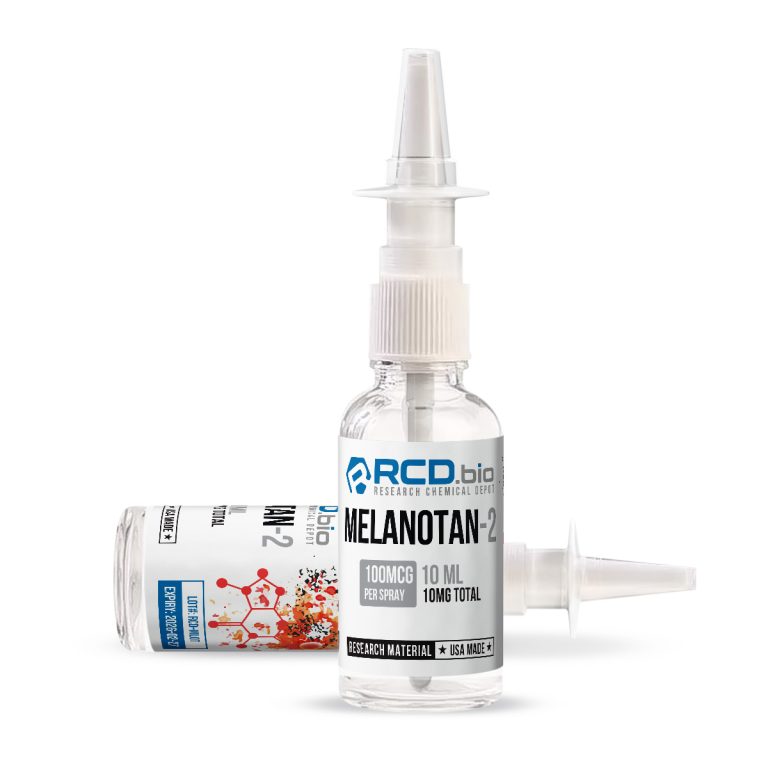
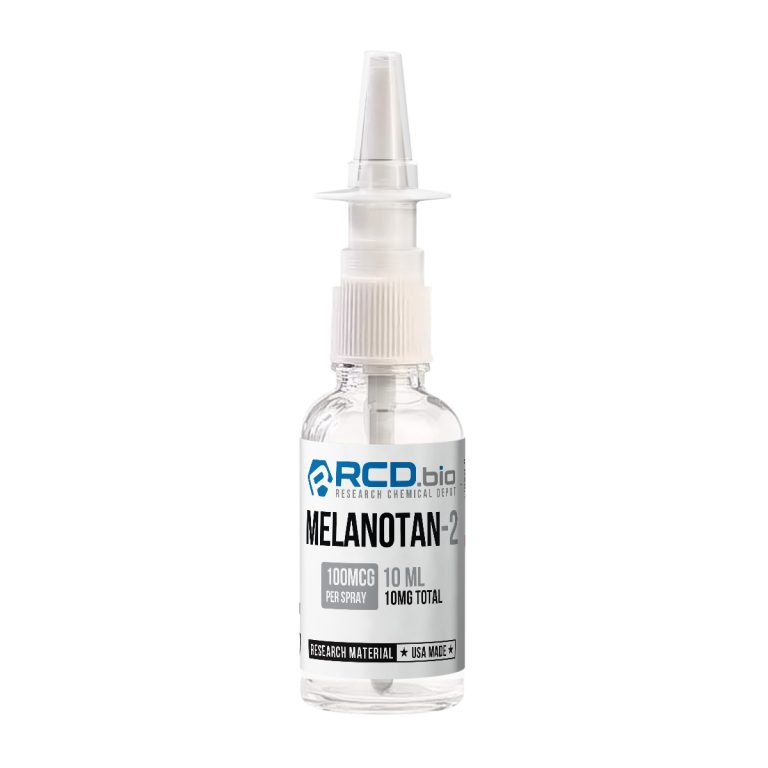
| Product Name | Melanotan-2 Nasal Spray |
| Application | Scientific / Research Use Only |
| CAS Number | 121062-08-6 |
| Molar Mass | 1024.18 g/mol |
| Chemical Formula | C₅₀H₆₉N₁₅O₉ |
| IUPAC Name | Ac-Nle-cyclo[Asp-His-D-Phe-Arg-Trp-Lys]-NH₂ (cyclic lactam; systematic IUPAC name reflects cyclic structure between Asp and Lys side chains) |
| Synonyms | MT-II; Melanotan II; [Nle⁴, D-Phe⁷]-α-MSH (cyclic); MT-2 |
| Physical Form | Aqueous nasal spray solution (lyophilized peptide reconstituted in sterile buffered solution) |
| Solubility | Soluble in water (approximately 5 mg/mL); soluble in aqueous buffers |
| Storage (Lyophilized) | −20°C, desiccated, protected from light |
| Storage (Reconstituted / Nasal Spray) | 2–8°C; use within 28 days; protect from light; do not freeze reconstituted solution |
| PubChem CID | 92432 |
| Purity | ≥98% (HPLC verified, independent third-party laboratory analysis; COA available per batch) |
| WADA Status | PROHIBITED — 2026 WADA Prohibited List, Class S0 (Non-Approved Substances). Melanotan-2 is a pharmacologically active substance that has not received regulatory approval for human therapeutic use in any jurisdiction. Under the 2026 WADA Code, all non-approved pharmacologically active substances are prohibited in and out of competition. Researchers operating under any WADA-governed athletic or organizational context are prohibited from use. RCDbio products are for laboratory research purposes only and are not supplied for use in competitive sport contexts. |
How Does Melanotan-2 Work?
Non-Selective Melanocortin Receptor Agonism
Mechanistically, Melanotan-2 is a non-selective agonist of melanocortin receptor subtypes in in vitro and in vivo preclinical preparations. The compound has documented agonist activity at MC1R, MC3R, MC4R, and MC5R, with binding affinity substantially exceeding that of the endogenous ligand α-MSH at multiple receptor subtypes in radioligand binding competition assays. MC2R (the ACTH-selective receptor) is not a target for Melanotan-2. The cyclic lactam structure and D-Phe substitution that distinguish Melanotan-2 from α-MSH are associated with its enhanced receptor affinity and resistance to enzymatic degradation in cell culture and plasma preparations.
MC1R and Melanogenesis Pathway
MC1R is expressed on melanocyte cell surfaces and represents the principal receptor mediating melanogenesis signaling in keratinocyte-melanocyte co-culture and isolated melanocyte preparations. In vitro, MC1R activation by Melanotan-2 has been observed to initiate intracellular cAMP elevation via Gαs-coupled adenylyl cyclase activation, followed by downstream activation of cAMP-response element binding protein (CREB) and transcriptional upregulation of microphthalmia-associated transcription factor (MITF), leading to increased tyrosinase expression and melanin biosynthesis in melanocyte preparations. These observations define the mechanistic basis for melanogenesis research using Melanotan-2 as a pharmacological probe.
MC4R Pharmacology: Central Signaling Research
MC4R is expressed predominantly in hypothalamic and limbic brain regions in rodent and human CNS, and its Gαs-coupled signaling has been investigated in the context of energy homeostasis regulation, appetite signaling, and autonomic nervous system modulation. In rodent brain preparations and CNS cell culture systems, MC4R agonism by Melanotan-2 and related analogs has been associated with changes in cAMP dynamics, neuronal firing patterns in hypothalamic nuclei, and modulation of neuropeptide Y (NPY) and POMC neuronal activity. These CNS-level pharmacological interactions are relevant to Melanotan-2’s investigational context in neuroendocrine and metabolic research.
MC3R Interactions
MC3R is expressed in the hypothalamus and limbic system and has been implicated in energy balance and feeding behavior regulation in rodent models. Melanotan-2’s agonist activity at MC3R represents a potential confounding variable in experimental systems designed to investigate MC4R-selective pharmacology, and is a relevant consideration for researchers designing receptor selectivity experiments.
Key Research Findings
These findings are derived exclusively from preclinical in vitro and in vivo animal studies. No human clinical safety data has been established for this compound in its research form. Data remains limited. Findings are not consistent across all models. This section does not constitute clinical evidence.
- MC1R-mediated cAMP induction: In isolated melanocyte cell preparations, Melanotan-2 exposure has been observed to initiate Gαs-coupled MC1R signaling, producing measurable cAMP elevation and downstream MITF/tyrosinase pathway activation. [Abdel-Malek et al., 2001; PMID: 11160192]
- Melanin biosynthesis stimulation: Melanocyte culture preparations exposed to Melanotan-2 at nanomolar concentrations have demonstrated dose-dependent increases in melanin production in multiple published in vitro studies, consistent with MC1R agonism.
- Energy homeostasis investigation: Preclinical rodent hypothalamic injection studies have investigated Melanotan-2’s effects on feeding behavior and energy expenditure via MC4R agonism; these effects are observed in CNS administration models and are not fully recapitulated in peripheral delivery systems.
- MC4R CNS pharmacology: In rodent brain region preparations, MC4R activation by Melanotan-2 has been associated with modulation of hypothalamic neuronal activity relevant to autonomic and neuroendocrine signaling research.
- Receptor binding characterization: Radioligand competition binding assays in cell-based preparations have established Melanotan-2’s sub-nanomolar binding affinity at MC1R, MC3R, MC4R, and MC5R, with selectivity profiling distinguishing it from endogenous α-MSH.
What Are the Potential Research Applications of Melanotan-2?
Melanotan-2 Nasal Spray is investigated in preclinical research contexts encompassing the following:
- Melanocortin receptor pharmacology: In vitro receptor binding characterization, agonist potency determination, and selectivity profiling at MC1R, MC3R, MC4R, and MC5R subtypes in cell-based and membrane preparation assays.
- Melanogenesis signaling research: Isolated melanocyte and keratinocyte-melanocyte co-culture systems examining MITF pathway activation, tyrosinase expression dynamics, melanin biosynthesis, and the downstream consequences of MC1R-mediated cAMP elevation.
- Hypothalamic neuroendocrine research: Rodent in vivo and ex vivo CNS preparations examining MC4R-mediated signaling in hypothalamic circuits relevant to energy homeostasis and autonomic nervous system investigation.
- Structure-activity relationship (SAR) research: Comparative binding and functional studies examining how cyclic lactam structure and D-Phe substitution alter receptor interaction profiles relative to linear α-MSH analogs.
- cAMP/CREB pathway dynamics: Cell culture systems using Melanotan-2 as a Gαs-coupled receptor agonist probe to examine cAMP second messenger dynamics and CREB-mediated transcriptional responses.
What Are the Potential Side Effects of Melanotan-2?
The following observations are derived exclusively from preclinical animal studies and spontaneous reporting literature. No controlled human clinical safety data has been established for Melanotan-2 as a research compound.
- Non-selective receptor agonism: Melanotan-2’s agonist activity at MC3R and MC4R in addition to MC1R introduces off-target pharmacological effects in CNS and peripheral systems that may confound experimental results in model systems not designed to account for multi-receptor engagement.
- Nausea-equivalent responses have been reported in some rodent models at higher doses, consistent with MC4R agonism in the gastrointestinal and CNS pathways.
- Mole and pigmented lesion darkening has been observed in both preclinical animal models and anecdotally in human misuse reports, consistent with MC1R-mediated melanogenesis activity.
- Melanoma risk uncertainty: The relationship between exogenous melanocortin receptor stimulation and melanoma risk has been examined in preclinical models. A 2013 peer-reviewed review found no conclusive evidence that Melanotan-2 causes melanoma; however, the interaction between exogenous MC1R stimulation, UV exposure, and melanocytic transformation has not been definitively ruled out in all experimental contexts.
- No chronic toxicity data in any species has been established in peer-reviewed literature. Long-term safety, reproductive toxicity, genotoxicity, and organ-level toxicity are uncharacterized.
- Risk Tier designation demands HIGH caution given CNS activity, absence of human safety data, and potential for off-target melanocortin system effects. Data remains limited.
Risk & Handling
Handling Precautions
Melanotan-2 Nasal Spray is intended for use by trained laboratory personnel only. The following precautions apply:
- PPE required: nitrile gloves, laboratory coat, and eye protection at minimum.
- Handle reconstituted nasal spray solution in a clean laboratory environment; avoid aerosol generation during manipulation or transfer operations.
- Melanotan-2 is a CNS-active, non-selective melanocortin receptor agonist. Accidental mucosal or skin exposure should be washed off immediately with copious water and documented per institutional incident reporting protocols.
- Pipetting and aliquoting should be performed with calibrated laboratory equipment; avoid all contact with mucous membranes, eyes, or skin during handling.
- Dispose of all biological waste in accordance with institutional biosafety protocols and applicable local regulations.
Exposure Risks
Risk Tier: HIGH
Melanotan-2 is a potent, non-selective melanocortin receptor agonist with documented CNS activity via MC4R and peripheral melanogenic activity via MC1R. It is prohibited under the WADA 2026 Prohibited List under S0 (Non-Approved Substances). No controlled human safety data has been established. Preclinical data indicates significant pharmacological activity at sub-nanomolar concentrations. Off-target CNS effects, melanogenic activity, and the absence of chronic toxicity data warrant HIGH risk tier handling precautions. Researchers must implement institutional biosafety protocols appropriate for high-potency biologically active research peptides.
Storage
- Lyophilized: Store at −20°C in a desiccated, airtight container protected from light and moisture. Stable for up to 24 months under these conditions.
- Reconstituted / Nasal Spray: Maintain at 2–8°C. Use within 28 days of preparation. Do not freeze reconstituted solution. Protect from direct light exposure; Melanotan-2 is susceptible to photodegradation.
- Freeze-thaw: Avoid repeated freeze-thaw cycling of the lyophilized peptide. Aliquot prior to first use to preserve structural and functional integrity.
- Supplied in sterile, sealed amber glass or HDPE spray container to preserve photostability.
FAQs
Q1: What is the plasma half-life of Melanotan-2 in preclinical models? Melanotan-2’s cyclic lactam structure and D-Phe substitution confer substantially greater resistance to proteolytic degradation than linear α-MSH. A plasma half-life of approximately 33 hours has been cited in preclinical pharmacokinetic literature for subcutaneous administration in rodent models, though values vary by route, species, and experimental conditions. All data is from preclinical models; no human pharmacokinetic data has been formally established for the research compound formulation.
Q2: How does Melanotan-2 differ from Afamelanotide (Melanotan I / Scenesse)? Afamelanotide (Scenesse) is an FDA-approved drug for the prevention of phototoxicity in adults with erythropoietic protoporphyria; it is a linear 13-amino acid α-MSH analog with a different structure and approval status than Melanotan-2. Melanotan-2 is a cyclic heptapeptide with a distinct receptor selectivity profile and no FDA-approved therapeutic indication. These are separate compounds with distinct regulatory statuses. Melanotan-2 is not approved for any human use.
Q3: Is Melanotan-2 listed on the WADA Prohibited List? Yes. Melanotan-2 is prohibited under the 2026 WADA Prohibited List under class S0 (Non-Approved Substances), which covers all pharmacologically active substances lacking approved therapeutic use in any jurisdiction. This prohibition applies both in and out of competition. RCDbio products are supplied exclusively for laboratory research and are not appropriate for use in any context governed by the WADA Code.
Q4: What are the recommended storage conditions for Melanotan-2 Nasal Spray? Reconstituted nasal spray solution should be stored at 2–8°C and used within 28 days. The compound is susceptible to photodegradation; storage in amber glass or opaque containers is required. Lyophilized stock should be maintained at −20°C, desiccated and protected from light, for up to 24 months from manufacture.
Q5: What receptor subtypes does Melanotan-2 engage in preclinical preparations? Melanotan-2 is a non-selective agonist at MC1R, MC3R, MC4R, and MC5R subtypes in radioligand binding and functional cell-based assays. It does not engage MC2R. Sub-nanomolar binding affinity at MC1R and MC4R has been established in published receptor characterization studies. Researchers designing subtype-selective mechanistic experiments should account for this multi-receptor engagement profile.
Q6: What preclinical safety data is available for Melanotan-2? Available preclinical literature covers acute administration studies in rodent models; no comprehensive toxicology package (chronic, reproductive, genotoxic) is available in peer-reviewed literature for Melanotan-2. The compound’s non-selective CNS-active receptor pharmacology profile warrants HIGH tier handling classification. No human safety data has been established.
Related Research Compounds
Section pending internal URL confirmation. All products listed are for laboratory and research purposes only.
References
- Abdel-Malek ZA, Scott MC, Suzuki I, Tada A, Im S, Lamoreux L, Ito S, Barsh G, Hearing VJ. The melanocortin-1 receptor is a key regulator of human cutaneous pigmentation. Pigment Cell Research. 2000;13(Suppl 8):156–162. https://pubmed.ncbi.nlm.nih.gov/11041375/
- Wikberg JE. Melanocortin receptors: perspectives for novel drugs. European Journal of Pharmacology. 1999;375(1-3):295–310. https://pubmed.ncbi.nlm.nih.gov/10443585/
- Cone RD. Anatomy and regulation of the central melanocortin system. Nature Neuroscience. 2005;8(5):571–578. https://pubmed.ncbi.nlm.nih.gov/15856065/
- Hadley ME, Dorr RT. Melanocortin peptide therapeutics: historical milestones, clinical studies and commercialization. Peptides. 2006;27(4):921–930. https://pubmed.ncbi.nlm.nih.gov/16412534/
Disclaimer
Melanotan-2 Nasal Spray is exclusively for laboratory research purposes. RCDbio products are not intended to diagnose, prevent, treat, or cure any disease or medical condition.
The Food and Drug Administration has not evaluated the statements on our website. This product is not approved for human or veterinary use. Researchers must comply with all applicable local, state, and federal laws and regulations governing the purchase and use of research compounds. By purchasing, you agree to our Terms and Conditions. RCDbio reserves the right to refuse sales to unauthorized individuals.
ATTENTION: All RCDbio products are strictly for LABORATORY AND RESEARCH PURPOSES ONLY. They are not intended for human consumption, veterinary use, or any other non-research application. For queries, complaints, or support, contact support@legacy.rcdbio.co
Reviews
There are no reviews yet