

Description
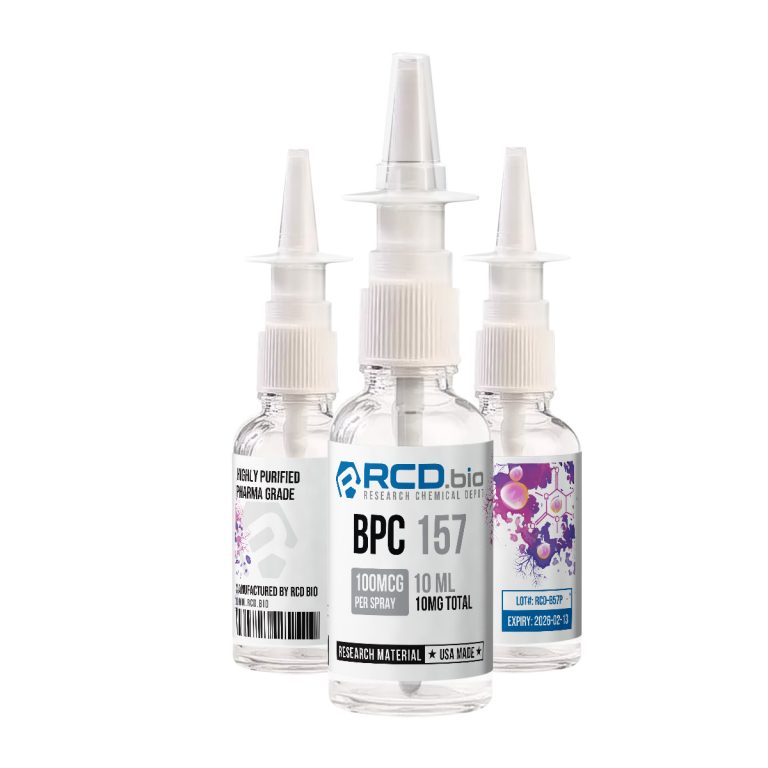
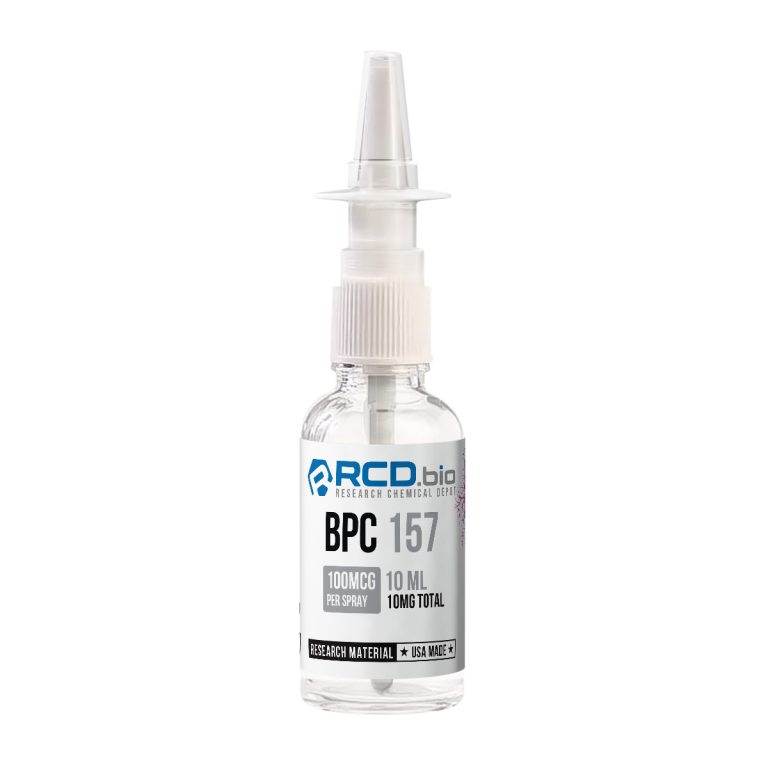
What is BPC-157 Nasal Spray?
BPC-157 (Body Protection Compound 157; PL 14736; bepecin) is a stable synthetic pentadecapeptide consisting of 15 amino acids with the sequence Gly-Glu-Pro-Pro-Pro-Gly-Lys-Pro-Ala-Asp-Asp-Ala-Gly-Leu-Val (GEPPPGKPADDAGLV). It is derived from a partial sequence of a protein found in human gastric juice. BPC-157 was developed and characterized by Predrag Sikiric and colleagues at the University of Zagreb in Croatia beginning in the early 1990s. The compound is distinguished by its stability in human gastric juice for more than 24 hours, which separates it from many other bioactive peptides subject to rapid degradation in the GI environment. BPC-157 has not been approved as a registered pharmaceutical in any country and has not been approved by the Food and Drug Administration for any indication.
The compound has been extensively investigated in rodent model systems for its pleiotropic biological activities, including gastrointestinal cytoprotection, endothelium protection, vascular recruitment, tissue healing across multiple organ systems, modulation of the nitric oxide (NO) signaling system, and interaction with dopaminergic and serotonergic CNS systems. Research preparations include rat gastric ulcer models, fistula healing models, musculoskeletal healing preparations, CNS injury models, and vascular occlusion/thrombosis preparations. The compound has been evaluated in early-phase clinical trials for ulcerative colitis (PL-10, PLD-116, PL 14736) without reported side effects. The nasal spray formulation is studied as a preclinical research delivery route. Evidence of olfactory bulb-mediated CNS transport for intranasally administered peptides in rodent models supports this approach. Intranasal delivery also bypasses hepatic first-pass metabolism relative to systemic routes.
DISCLAIMER: BPC-157 Nasal Spray, as supplied by RCDbio, is not a dietary supplement and has not been approved by the Food and Drug Administration for human use, veterinary use, consumption, or any therapeutic application. This product is not intended for human consumption or therapeutic self-administration. It is supplied exclusively for in vitro and preclinical laboratory research purposes. All RCDbio research compounds are for laboratory and research purposes only.
Chemical Properties of BPC-157
| Property | Details |
| Product Type | Synthetic Pentadecapeptide / Stable Gastric Peptide / Cytoprotective Agent |
| Product Name | BPC-157 Nasal Spray |
| Application | Scientific / Research Use Only |
| CAS Number | 137525-51-0 |
| Molar Mass | 1419.55 g/mol |
| Chemical Formula | C62H98N16O22 |
| IUPAC Name | glycyl-L-alpha-glutamyl-L-prolyl-L-prolyl-L-prolylglycyl-L-lysyl-L-prolyl-L-alanyl-L-alpha-aspartyl-L-alpha-aspartyl-L-alanylglycyl-L-leucyl-L-valine |
| Synonyms | BPC-157; Body Protection Compound 157; PL 14736; Bepecin; GEPPPGKPADDAGLV; Pentadecapeptide BPC 157 |
| Physical Form | Aqueous nasal spray solution (lyophilized peptide reconstituted in sterile buffered solution) |
| Solubility | Soluble in sterile water and 0.9% saline at ≥1 mg/mL |
| Storage (Lyophilized) | −20°C, desiccated, protected from light |
| Storage (Reconstituted / Nasal Spray) | 2–8°C; use within 28 days; protect from light; do not freeze reconstituted solution |
| PubChem CID | 9941957 |
| Purity | ≥98% (HPLC verified, independent third-party laboratory analysis; COA available per batch) |
| WADA Status | PROHIBITED — 2026 WADA Prohibited List, Class S0 (Non-Approved Substances). BPC-157 falls under S0, which prohibits any pharmacological substance not approved by a regulatory authority for human therapeutic use. This prohibition applies both in and out of competition for all WADA Code signatories. No Therapeutic Use Exemption (TUE) is available for BPC-157. RCDbio products are for laboratory research purposes only and are not supplied for use in competitive sport contexts. |
How Does BPC-157 Work?
BPC-157 exerts pleiotropic biological effects across multiple organ systems in preclinical rodent model preparations. Its primary mechanistic activities involve modulation of the nitric oxide (NO) signaling system, endothelium protection and vascular recruitment, cytoprotection of gastric and extragastric tissues, and interaction with dopaminergic and serotonergic CNS systems. No single confirmed receptor target has been identified. The following mechanistic observations are from preclinical and in vitro data only.
Nitric Oxide System Modulation
BPC-157 interacts with the NO signaling system in a bidirectional manner in preclinical rat preparations. It counteracts both L-NAME-induced lesions (including hypertension, vascular injury, and gastric mucosal damage produced by NOS inhibition) and L-arginine-induced effects (including hypotension, prolonged bleeding, and thrombocytopenia produced by excess NO substrate). This bidirectional modulation suggests that BPC-157 acts as a NO system regulator rather than a simple NOS activator or inhibitor in these preclinical preparations [Sikiric et al., 2011; PMID 21548867].
Endothelium Protection and Vascular Recruitment
BPC-157 exhibits potent endothelium-protective activity in preclinical vascular injury preparations. It prevents and reverses thrombus formation in abdominal aorta anastomosis models and venous thrombosis following inferior caval vein occlusion in rat preparations. BPC-157 activates collateral blood vessel pathways in response to vascular obstruction and recruits blood vessels toward tissue defects in response to perforating injuries. This vascular recruitment activity has been proposed as the third component of BPC-157’s cytoprotection mechanism alongside gastric cell protection and endothelium protection [Sikiric et al., 2018; PMID 29879879].
Cytoprotection and Gastrointestinal Healing
BPC-157 demonstrates cytoprotective activity across gastric, duodenal, intestinal, liver, and pancreatic lesion models in rat preparations. It heals gastric and duodenal ulcers, reverses esophagitis, normalizes lower esophageal and pyloric sphincter pressures, and heals intestinal anastomoses, fistulas, and short-bowel syndrome preparations. Its cytoprotective activity extends to extragastric tissues, including skin, tendon, ligament, muscle, bone, and nerve in preclinical rodent models. These effects are observed across parenteral and oral administration routes at doses from nanogram to microgram per kilogram body weight [Sikiric et al., 2011; PMID 21548867].
Organoprotection as Integrative Stress Response Mediator
BPC-157 has been characterized as an integrative mediator of the adaptive bodily response to stress in preclinical rat model systems. Its organoprotective effects encompass counteraction of NSAID-induced lesions in the stomach, liver, brain, and joints; modulation of dopamine and serotonin system function; free radical scavenging activity; and interaction with growth factor gene expression (Fos, c-Jun, Egr-1). The compound’s pleiotropic activity across organ systems and its native stability in human gastric juice support its characterization as a broad-spectrum cytoprotective and organoprotective agent in preclinical preparations [Sikiric et al., 2017; PMID 28228068].
Intranasal Delivery & Pharmacokinetics
Olfactory Bulb-Mediated CNS Transport
When administered intranasally in preclinical rodent model systems, peptide compounds can access the central nervous system through the olfactory nerve (cranial nerve I) pathway. Compounds deposited on the olfactory mucosa are transported along olfactory axons through the cribriform plate to the olfactory bulb, from which access to deeper CNS structures has been characterized in rodent preparations. The olfactory and trigeminal nerve pathways for nose-to-brain peptide transport have been investigated in preclinical studies of peptide and protein delivery [Wong et al., 2024; PMID 38441832]. No compound-specific olfactory transport data for BPC-157 have been published. BPC-157’s documented neuroprotective and CNS system modulation activity in preclinical rat preparations makes the olfactory CNS delivery pathway a research-relevant consideration for the nasal spray formulation.
Hepatic First-Pass Metabolism Bypass
The intranasal route avoids portal circulation and hepatic first-pass metabolic processing. BPC-157 is notable for its stability in human gastric juice for more than 24 hours. This stability profile is relevant to the intranasal delivery context as it suggests partial resistance to mucosal peptidase activity, which may support improved nasal mucosal bioavailability relative to proteolytically labile peptides. These observations are derived from preclinical studies and do not constitute evidence of efficacy via any route in human subjects.
Nasal Mucosal Absorption
BPC-157 has a molar mass of 1419.56 g/mol (approximately 1.42 kDa). This molecular weight falls at the lower boundary of the 1-5 kDa bracket, indicating paracellular and endocytic uptake mechanisms are the likely predominant absorption pathways at the nasal mucosa alongside potential transcellular contributions. BPC-157’s linear peptide structure and gastric stability profile are relevant to its behavior at the nasal mucosa. Specific nasal mucosal permeability coefficients for BPC-157 have not been formally characterized in published preclinical models.
Compound-Specific Pharmacokinetics
Specific intranasal pharmacokinetic data for BPC-157 in standardized preclinical models is not available in the published literature as of June 2026. The elimination half-life of BPC-157 following systemic (IV and IM) administration is approximately 7.9-30 minutes in rat models. BPC-157’s stability in gastric juice for more than 24 hours contrasts with its short systemic half-life, indicating that GI stability and systemic stability profiles differ substantially. Researchers should account for the absence of intranasal-specific pharmacokinetic parameters when designing laboratory protocols.
Key Research Findings
Vascular Recruitment and Endothelium Protection (Rat Vascular Injury Preparations): BPC-157 prevented and reversed thrombus formation after abdominal aorta anastomosis and inferior caval vein occlusion; activated collateral blood vessel pathways after vascular obstruction; and recruited blood vessels toward tissue perforations, demonstrating a third component of cytoprotection beyond gastric and endothelium cell protection [Sikiric et al., 2018; PMID 29879879]
NO System Bidirectional Modulation and GI Tract Healing (Rat Preparations): BPC-157 counteracted both L-NAME-induced (NOS-inhibited) and L-arginine-induced (excess NO) lesions in rat preparations; healed gastric, duodenal, intestinal, esophageal, fistula, and short-bowel syndrome preparations via angiogenic, endothelium-protective, and dopamine/serotonin system modulating mechanisms [Sikiric et al., 2011; PMID 21548867]
Organoprotection as Integrative Stress Response Mediator (Rat Preparations): BPC-157 was characterized as an integrative mediator of the adaptive stress response in preclinical rat preparations, demonstrating counteraction of dopamine and serotonin system dysfunction, NSAID-induced multi-organ lesions, and growth factor gene modulation (Fos, c-Jun, Egr-1) alongside GI and extragastric tissue healing [Sikiric et al., 2017; PMID 28228068]
Vascular Recovery and Multiorgan Protection (Rat Occlusion/Occlusion-Like Syndrome Preparations): BPC-157 counteracted advanced vascular occlusion/occlusion-like syndromes through activation of collateral rescuing pathways, including azygos vein direct blood flow delivery, with protective effects observed in brain, heart, lung, liver, kidney, and gastrointestinal tract preparations [Sikiric et al., 2024; PMID 38980576]
All findings listed above are derived from preclinical in vivo and in vitro model systems using rat preparations. The majority of cited research originates from the Sikiric laboratory at the University of Zagreb; researchers should consider this concentrated authorship when evaluating the evidence base. These observations do not constitute evidence of efficacy or safety for BPC-157 nasal spray in any organism. No human clinical data has been established for research-grade BPC-157 administered via the intranasal route.
What are the Potential Research Applications?
In controlled laboratory environments, BPC-157 nasal spray has been investigated for the following research applications. These are observed in preclinical and in vitro contexts only and do not constitute claims of efficacy or safety in any organism.
Gastrointestinal Cytoprotection Research
BPC-157 is a well-characterized cytoprotective agent in preclinical rat GI model systems. Research applications include gastric and duodenal ulcer healing characterization, NSAID-induced GI injury counteraction studies, intestinal fistula and anastomosis healing models, and esophageal motility and sphincter pressure investigations in rat preparations.
NO System Modulation Research
BPC-157 provides a unique research tool for studying bidirectional NO system modulation. Research applications include characterization of L-NAME and L-arginine interaction effects, NOS pathway modulation studies, and examination of NO-dependent vascular and mucosal protective mechanisms in rat and in vitro endothelial cell preparations.
Vascular and Angiogenesis Research
BPC-157 is investigated as a proangiogenic and endothelium-protective research tool in preclinical vascular preparations. Applications include vascular recruitment and collateral pathway activation studies, thrombosis prevention and reversal models, endothelial cell survival assays, and VEGF-pathway characterization in wound and vascular injury rodent preparations.
CNS System Research
BPC-157 modulates dopaminergic and serotonergic CNS systems in preclinical rat preparations. Research applications include characterization of BPC-157 effects on dopamine and serotonin receptor system function, neuroprotective studies in CNS injury models, gut-brain axis interaction research, and investigation of GABA system modulation in preclinical rodent model systems.
What are the Potential Side Effects?
Researchers in preclinical and in vitro settings have noted the following observations. Long-term safety and toxicity profiles remain incompletely characterized for the research-grade nasal spray formulation.
- No lethal dose reported in preclinical studies (preclinical): LD1 could not be achieved in published preclinical toxicology studies for BPC-157; no acute lethal toxicity has been reported in rat preparations at doses from nanogram to microgram per kilogram body weight; the absence of identified LD1 should not be interpreted as establishing a human safety profile
- Early-phase clinical trial data — no reported side effects (ulcerative colitis trials): BPC-157 was evaluated in early-phase clinical trials for ulcerative colitis without reported side effects according to published review data; these were early-phase studies and do not constitute a comprehensive human safety characterization for any route of administration [Sikiric et al., 2011; PMID 21548867]
- Hemodynamic modulation risk (preclinical): BPC-157 modulates the NO signaling system in a bidirectional manner; inadvertent intranasal self-exposure may produce unpredictable hemodynamic effects given its dual counteraction of both NOS inhibition and excess NO substrate effects in preclinical preparations
- Absence of intranasal-specific safety data: No safety or tolerability data specific to the intranasal route of administration for BPC-157 has been published in the peer-reviewed literature as of June 2026
- Concentrated single-source evidence base: The majority of published BPC-157 preclinical data originates from the Sikiric research group at the University of Zagreb; independent replication of the full range of reported effects is limited in the published literature
No human safety or tolerability data has been established for BPC-157 nasal spray. These observations are derived from experimental systems and should not be extrapolated to human or animal outcomes.
Risk & Handling
Handling Precautions
Standard laboratory PPE is required: nitrile gloves, a laboratory coat, and eye protection. The following nasal spray-specific precautions apply:
- Do not direct the nasal spray actuator toward the face, eyes, or mucous membranes during handling, testing, or transfer. CNS-active compounds may produce pharmacological effects via inadvertent intranasal self-exposure.
- Handle the nasal spray solution in a clean laboratory environment. For aliquoting or analytical sampling, use a laminar flow cabinet.
- The nasal spray solution is an aqueous formulation susceptible to microbial contamination if compromised. Handle under aseptic conditions. Discard if the solution appears cloudy, discolored, or shows particulate matter.
- Avoid aerosol generation during any manipulation of the nasal spray solution.
Exposure Risks
Risk Tier: LOW-MODERATE
BPC-157 has a broad preclinical biological activity profile that includes NO system modulation, hemodynamic effects, and CNS system interactions. Inadvertent intranasal self-exposure during laboratory handling carries a risk of unpredictable hemodynamic and CNS effects given the compound’s bidirectional NO modulatory activity. No acute lethal toxicity has been identified in preclinical rat studies. No human safety or tolerability data has been established for BPC-157 nasal spray. Researchers should handle this compound with precautions appropriate to a biologically active peptide with documented pleiotropic systemic activity in preclinical preparations.
Storage
In-use nasal spray: Store at 2-8°C. Use within 28 days of first actuation. Protect from light. Keep upright.
DO NOT FREEZE the ready-to-use nasal spray formulation. Freezing alters pH, buffer stability, excipient integrity, and spray actuation properties.
Lyophilized bulk stock (if applicable): Store at -20°C in sealed, desiccated, light-protected containers. Avoid repeated freeze-thaw cycles.
Discard any solution that appears cloudy, discolored, or shows visible particulate matter.
FAQs
Q: How does intranasal administration facilitate CNS access for BPC-157 in preclinical research models?
A: Intranasal application allows peptide compounds to access the CNS via the olfactory nerve (cranial nerve I) and trigeminal nerve pathways. This transport pathway has been characterized for structurally related peptide compounds in rodent models [Wong et al., 2024; PMID 38441832]. No compound-specific olfactory transport data exists for BPC-157. BPC-157 is also active via oral and parenteral routes in preclinical preparations, and intranasal delivery additionally bypasses hepatic first-pass metabolism. No human CNS delivery data has been established for research-grade BPC-157 nasal spray.
Q: What is the recommended storage and in-use shelf life for BPC-157 nasal spray?
A: Sealed product should be stored at 2-8°C, protected from light. Once first actuated, in-use shelf life is 28 days at 2-8°C. DO NOT FREEZE the ready-to-use solution. Freezing destabilizes the buffer, alters pH, and may damage spray actuation. Lyophilized bulk stock should be stored at -20°C in sealed, desiccated, light-protected conditions. Discard if the solution shows cloudiness, discoloration, or particulate matter.
Q: Is the BPC-157 nasal spray formulation suitable for cell culture or in vitro assay systems?
A: The formulation is prepared in isotonic saline (0.9% NaCl, pH 5.0-6.0) without preservatives. The preservative-free composition reduces cytotoxicity risk in sensitive cell preparations. Researchers should validate the vehicle independently in their specific cell system. The formulation pH (5.0-6.0) is below the typical cell culture range (7.2-7.4); dilution into culture medium before application is recommended. Researchers are responsible for confirming compatibility with their assay system.
Q: What is the plasma half-life of BPC-157 in preclinical models?
A: The elimination half-life of BPC-157 following systemic (IV and IM) administration is approximately 7.9-30 minutes in rat models. BPC-157 is stable in human gastric juice for more than 24 hours despite its short systemic half-life. No formal intranasal pharmacokinetic parameters have been published as of June 2026.
Q: What is the FDA regulatory status of BPC-157?
A: BPC-157 is not FDA-approved for any indication. As of September 2023, it was classified as a 503A Category 2 bulk drug substance, restricting its use in licensed compounding pharmacies. As of June 2026, the FDA compounding status remains under administrative review pending an advisory panel meeting. The research-grade nasal spray supplied by RCDbio is for laboratory research use only and is not a compounded pharmaceutical product.
Q: What is the WADA status of BPC-157?
A: BPC-157 is prohibited under the 2026 WADA Prohibited List, Class S0 (Non-Approved Substances), which prohibits any pharmacological substance not approved by a regulatory authority for human therapeutic use. This prohibition applies both in and out of competition. No Therapeutic Use Exemption is available. RCDbio products are supplied for laboratory research purposes only.
Q: What is the evidence base for BPC-157 and how should it be interpreted?
A: The majority of published preclinical research on BPC-157 originates from the Sikiric research group at the University of Zagreb. A broad range of biological activities has been reported in rat model systems, including GI cytoprotection, wound healing, vascular protection, and CNS system modulation. Independent replication of the full range of reported effects is limited. No completed controlled human efficacy trials have been published as of June 2026. Early-phase clinical trials for ulcerative colitis reported no side effects, but do not establish efficacy. Researchers should account for the concentrated single-source nature of the preclinical evidence base when designing and interpreting laboratory protocols.
Related Research Compounds
Researchers investigating BPC-157 nasal spray may also be interested in the following compounds currently available for laboratory research at RCDbio:
TB-500 (Thymosin Beta-4) Nasal Spray— A synthetic 43-amino acid analog of thymosin beta-4 investigated in preclinical rodent preparations for actin sequestration, angiogenesis, and tissue repair signaling via wound healing model systems.
Semax Nasal Spray — A synthetic ACTH(4-7) analog investigated in preclinical rodent preparations for BDNF/TrkB pathway modulation and CNS neurotrophin expression via intranasal delivery.
Selank Nasal Spray — A synthetic analog of the immunomodulatory peptide tuftsin investigated in preclinical preparations for GABA-A receptor modulation and BDNF expression via intranasal delivery.
All products listed are for laboratory and research purposes only.
References
- Sikiric, P., Rucman, R., Turkovic, B., Sever, M., Klicek, R., Radic, B., Drmic, D., Stupnisek, M., Misic, M., Vuletic, L.B., Pavlov, K.H., Barisic, I., Kokot, A., Peklic, M., Strbe, S., Blagaic, A.B., Tvrdeic, A., Rokotov, D.S., Vrcic, H., Staresinic, M., & Seiwerth, S. (2018). Novel cytoprotective mediator, stable gastric pentadecapeptide BPC 157. Vascular recruitment and gastrointestinal tract healing. Current Pharmaceutical Design, 24(18), 1990-2001.
https://pubmed.ncbi.nlm.nih.gov/29879879/
- Sikiric, P., Seiwerth, S., Rucman, R., Turkovic, B., Rokotov, D.S., Brcic, L., Sever, M., Klicek, R., Radic, B., Drmic, D., Ilic, S., Kolenc, D., Vrcic, H., & Sebecic, B. (2011). Stable gastric pentadecapeptide BPC 157: novel therapy in the gastrointestinal tract. Current Pharmaceutical Design, 17(16), 1612-1632.
https://pubmed.ncbi.nlm.nih.gov/21548867/
- Sikiric, P., Seiwerth, S., Rucman, R., Drmic, D., Stupnisek, M., Kokot, A., Sever, M., Zoricic, I., Zoricic, Z., Batelja, L., Ziger, T., Luetic, K., Vlainic, J., Rasic, Z., & Bencic, M.L. (2017). Stress in the gastrointestinal tract and stable gastric pentadecapeptide BPC 157. Finally, do we have a solution? Current Pharmaceutical Design, 23(27), 4012-4028.
https://pubmed.ncbi.nlm.nih.gov/28228068/
- Sikiric, P., Sever, M., Krezic, I., Vranes, H., Kalogjera, L., Smoday, I.M., Vukovic, V., Oroz, K., Coric, L., Skoro, M., Kavelj, I., Zubcic, S., Sikiric, S., Beketic Oreskovic, L., Oreskovic, I., Blagaic, V., Brcic, K., Strbe, S., Staresinic, M., Boban Blagaic, A., Skrtic, A., & Seiwerth, S. (2024). New studies with stable gastric pentadecapeptide protecting the gastrointestinal tract: significance of counteraction of vascular and multiorgan failure of occlusion/occlusion-like syndrome in cytoprotection/organoprotection. Inflammopharmacology, 32(5), 3119-3161.
https://pubmed.ncbi.nlm.nih.gov/38980576/
- Wong, C.Y.J., Baldelli, A., Hoyos, C.M., et al. (2024). Insulin delivery to the brain via the nasal route: unraveling the potential for Alzheimer’s Disease therapy. Drug Delivery and Translational Research, 14(7), 1776-1793.
https://pubmed.ncbi.nlm.nih.gov/38441832/
Research Transparency Note: No peer-reviewed publications specific to intranasal delivery of BPC-157 are available as of June 2026. References 1-4 above are predominantly from the Sikiric research group at the University of Zagreb and describe preclinical rat preparations. These findings have not been comprehensively replicated by independent research groups. The olfactory transport pathway evidence in Reference 5 is class-level and applies to structurally related peptide hormones in rodent models.
Disclaimer
BPC-157 Nasal Spray is exclusively for laboratory research purposes. RCDbio products are not intended to diagnose, prevent, treat, or cure any disease or medical condition.
The Food and Drug Administration has not evaluated the statements on our website. This product is not approved for human or veterinary use. Researchers must comply with all applicable local, state, and federal laws and regulations governing the purchase and use of research compounds. By purchasing, you agree to our Terms and Conditions. RCDbio reserves the right to refuse sales to unauthorized individuals.
ATTENTION: All RCDbio products are strictly for LABORATORY AND RESEARCH PURPOSES ONLY. They are not intended for human consumption, veterinary use, or any other non-research application. For queries, complaints, or support, contact support@legacy.rcdbio.co
Reviews
There are no reviews yet