

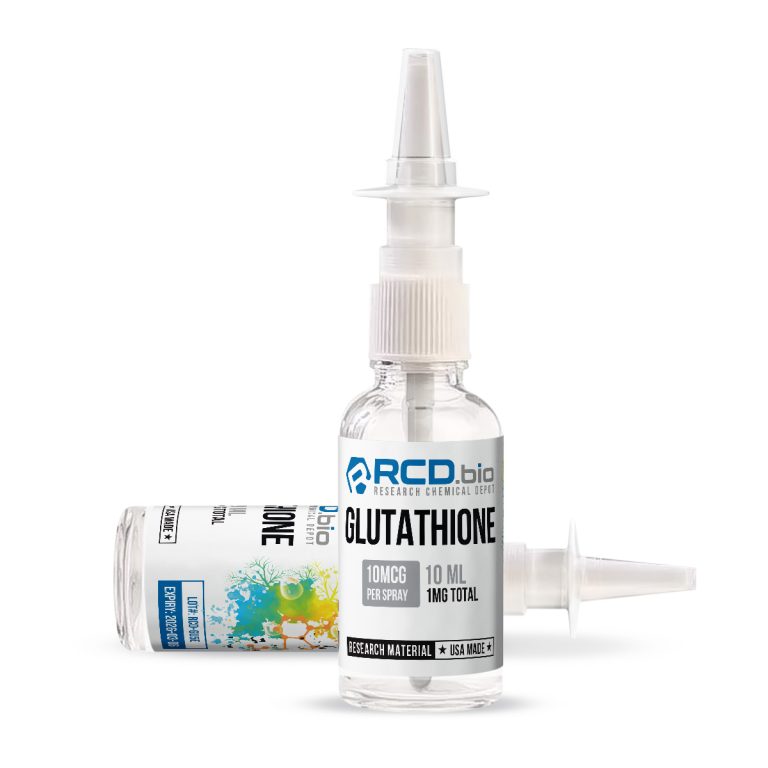
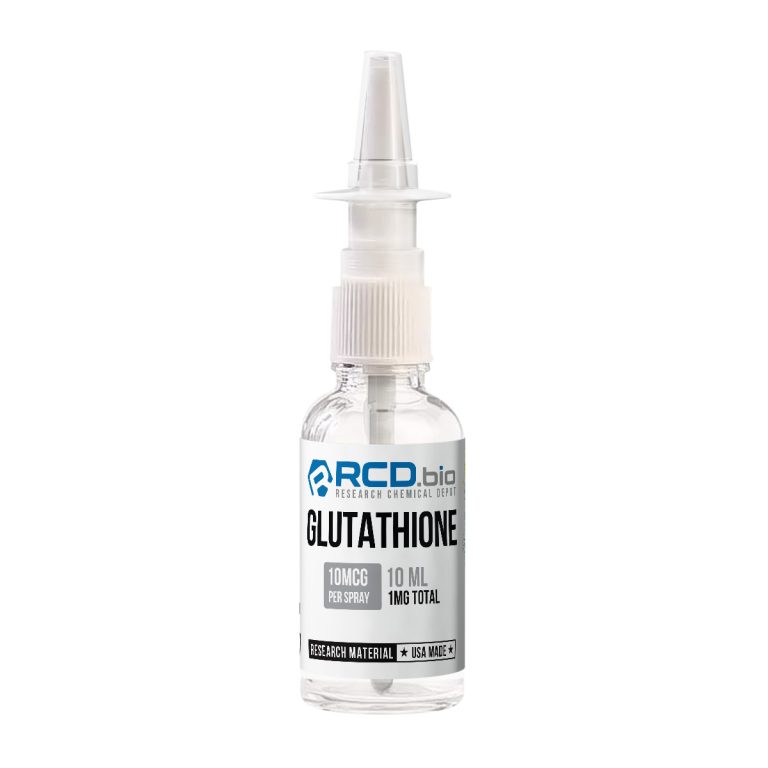
Description
What is Glutathione (GSH) Nasal Spray?
Glutathione (GSH; gamma-glutamylcysteinylglycine; L-gamma-glutamyl-L-cysteinyl-glycine) is a low-molecular-weight endogenous tripeptide thiol found in virtually all mammalian cells, with intracellular concentrations ranging from 0.5 to 10 millimolar, making it the most abundant non-protein thiol in animal tissues. It is synthesized intracellularly from three amino acids, L-glutamate, L-cysteine, and glycine, in a sequential two-step enzymatic process catalyzed by gamma-glutamylcysteine synthetase (glutamate-cysteine ligase; GCL) and glutathione synthetase (GS). The gamma-peptide bond connecting glutamate to cysteine in GSH is structurally distinctive: it forms via the gamma-carboxyl group of glutamate rather than the alpha-carboxyl group, making GSH resistant to the aminopeptidases that cleave conventional alpha-peptide bonds and conferring it with a unique structural stability absent in standard linear peptides. Reduced glutathione (GSH) and its oxidized disulfide form (GSSG) constitute the primary redox couple in mammalian cells; the GSH/GSSG ratio is a key indicator of cellular redox status and oxidative stress [Wu et al., 2004; PMID 14988435].
Glutathione serves as both a direct antioxidant and a critical co-substrate for enzymatic antioxidant defense. As a direct antioxidant, the free sulfhydryl (-SH) group of the cysteine residue donates electrons to neutralize reactive oxygen species (ROS) and reactive nitrogen species (RNS), becoming oxidized to GSSG in the process. As a co-substrate, GSH serves as an essential electron donor to the glutathione peroxidase (GPx) enzyme family, catalyzing the reduction of hydrogen peroxide and lipid hydroperoxides; as a nucleophilic co-substrate to the glutathione-S-transferase (GST) superfamily, facilitating detoxification of electrophilic xenobiotics; and as a substrate for glutaredoxins in the reversible reduction of protein disulfide bonds. GSH deficiency has been documented across a broad range of pathological conditions, including neurodegenerative diseases, Alzheimer’s disease, HIV/AIDS, cancer, liver disease, and diabetes [Franco et al., 2007; PMID 18158646].
Glutathione supplied by RCDbio has not been approved as a standalone pharmaceutical product by the Food and Drug Administration for human use via the intranasal route. The research-grade nasal spray formulation is not a pharmaceutical or compounded medication, is not a dietary supplement, and is not equivalent to any approved glutathione-containing product. The intranasal route is of particular research interest for glutathione because of its poor oral bioavailability (due to degradation by gamma-glutamyl transpeptidase in the GI mucosa) and the established evidence that intranasal administration can elevate brain GSH levels [Mischley et al., 2015; PMID 26230671].
The nasal spray formulation is investigated as a delivery route in preclinical research contexts, based on evidence of olfactory bulb-mediated CNS transport for compounds administered intranasally in rodent models and direct Phase I/IIa clinical evidence of safety and tolerability of intranasal glutathione in human subjects with Parkinson’s disease [Mischley et al., 2015; PMID 26230671]. Intranasal delivery has been studied for its potential to bypass hepatic first-pass metabolism, circumvent GI-tract gamma-glutamyl transpeptidase-mediated degradation, and enhance CNS bioavailability relative to oral and systemic routes.
DISCLAIMER: Glutathione (GSH) Nasal Spray, as supplied by RCDbio, is not a dietary supplement and has not been approved by the Food and Drug Administration for human use, veterinary use, consumption, or any therapeutic application via the intranasal route. This product is not intended for human consumption or therapeutic self-administration. It is supplied exclusively for in vitro and preclinical laboratory research purposes. All RCDbio research compounds are for laboratory and research purposes only.
Chemical Properties of Glutathione (GSH)
| Property | Details |
| Product Type | Endogenous Tripeptide Thiol / Primary Intracellular Antioxidant / Cellular Redox Regulator / GPx Co-substrate / GST Co-substrate |
| Product Name | Glutathione (GSH) Nasal Spray |
| Application | Scientific / Research Use Only |
| CAS Number | 70-18-8 |
| Molar Mass | 307.32 g/mol |
| Chemical Formula | C10H17N3O6S |
| IUPAC Name | (2S)-2-amino-4-{[(1R)-1-[(carboxymethyl)carbamoyl]-2-sulfanylethyl]carbamoyl}butanoic acid (PubChem CID 124886) |
| Synonyms | Glutathione; GSH; L-Glutathione reduced; gamma-L-Glutamyl-L-cysteinyl-glycine; gamma-Glutamylcysteinylglycine; L-gamma-Glutamyl-L-cysteinyl-glycine; Isethion; Glutathionum; Reduced glutathione |
| Physical Form | Lyophilized white to off-white powder (compound); supplied as aqueous nasal spray solution. Oxidation state is critical — GSH must be maintained in the reduced form; oxidation to GSSG represents loss of active species. |
| Solubility | Freely soluble in water at >=100 mg/mL; insoluble in methanol and diethyl ether |
| Storage (Lyophilized) | -20 degrees C; under inert gas (nitrogen or argon); sealed, desiccated, light-protected container. Lyophilized GSH is susceptible to oxidation on exposure to air. |
| Storage (Reconstituted / Nasal Spray) | 2-8 degrees C; use within 7 days of first actuation; DO NOT FREEZE; protect from light; keep upright; limit air exposure at actuation. The 7-day in-use shelf life is substantially shorter than for other formulations in this range due to the oxidative instability of reduced thiol in aqueous solution. |
| PubChem CID | 124886 (reduced glutathione; GSH) |
| Purity | >=98% (HPLC verified, independent third-party laboratory analysis; COA available per batch; reduced form confirmed by Ellman’s reagent or equivalent thiol quantification) |
| WADA Status | Glutathione (GSH) is not explicitly named on the 2026 WADA Prohibited List. As an endogenous antioxidant metabolite present in all mammalian cells, it does not fall within the scope of prohibited performance-enhancing substance categories at this time. Researchers should verify the current status at GlobalDRO.com. RCDbio products are for laboratory research purposes only. |
How Does Glutathione (GSH) Work?
Glutathione does not act through a single receptor. It is a pleiotropic cellular effector whose activity depends on the free sulfhydryl (-SH) group of its cysteine residue, enabling direct electron donation (non-enzymatic antioxidant activity) and co-substrate activity with multiple enzyme systems. Its effects span direct ROS/RNS neutralization, enzymatic antioxidant cascades, detoxification of electrophiles and xenobiotics, protein thiol redox regulation (glutathionylation), and modulation of cellular signaling pathways sensitive to the cellular redox state. The following mechanistic observations are from in vitro and preclinical data unless otherwise specified.
Direct ROS Scavenging and GSH/GSSG Redox Couple
The sulfhydryl group of the cysteine residue in GSH directly neutralizes reactive oxygen species, including superoxide radical, hydrogen peroxide, hydroxyl radical, and reactive nitrogen species. During this process, two molecules of GSH are oxidized to form GSSG; the enzyme glutathione reductase (GR) regenerates GSH from GSSG using NADPH as the electron donor, completing the GSH/GSSG redox cycle. The GSH/GSSG ratio serves as a quantitative index of the cellular oxidative state. In non-stressed mammalian cells, the ratio is maintained above 100:1 (strongly reduced); oxidative stress conditions shift this ratio toward GSSG accumulation [Wu et al., 2004; PMID 14988435].
Glutathione Peroxidase (GPx) Co-substrate Activity
GSH serves as the essential two-electron donor for the glutathione peroxidase (GPx) enzyme family. GPx enzymes catalyze the reduction of hydrogen peroxide and lipid hydroperoxides to water and lipid alcohols, consuming two molecules of GSH and producing GSSG. GPx1 (cytosolic), GPx4 (phospholipid hydroperoxide GPx, critical for ferroptosis inhibition), and GPx8 (ER-resident) depend on adequate GSH supply. Depletion of cellular GSH impairs GPx activity, allowing H2O2 and lipid peroxide accumulation with downstream consequences for mitochondrial integrity and ferroptotic cell death pathways [Franco et al., 2007; PMID 18158646].
Glutathione-S-Transferase (GST) Co-substrate and Xenobiotic Detoxification
GSH serves as an obligate nucleophilic co-substrate for the glutathione-S-transferase (GST) superfamily, which catalyzes the conjugation of electrophilic xenobiotics, carcinogens, and endogenous reactive compounds to glutathione, facilitating their excretion. GST-mediated GSH conjugation is one of the primary mechanisms for phase II hepatic detoxification and for the inactivation of reactive metabolites generated by cytochrome P450 enzyme activity [Franco et al., 2007; PMID 18158646].
Protein Glutathionylation and Redox Signal Transduction
Under conditions of oxidative stress, GSH participates in the reversible S-glutathionylation of protein cysteine residues — a post-translational modification that protects protein thiols from irreversible oxidation and modulates redox-sensitive proteins involved in signal transduction, gene expression, apoptosis, and cell proliferation. GSH functions as a regulator of redox-sensitive signaling pathways, including NF-kB, AP-1, and Nrf2, with consequences for inflammatory response, cellular survival, and antioxidant gene expression [Franco et al., 2007; PMID 18158646].
Intranasal CNS Delivery and Brain Redox Research Context
Substantia nigra GSH depletion is one of the earliest and most consistent neurochemical changes in Parkinson’s disease, preceding dopaminergic neuronal loss. In a Phase I/IIa clinical trial, 30 individuals with PD were randomized to placebo (saline), 300 mg/day, or 600 mg/day intranasal glutathione in three divided daily doses over 3 months. No substantial differences between groups in adverse events were observed and all groups met tolerability criteria, supporting the safety and tolerability of intranasal glutathione [Mischley et al., 2015; PMID 26230671]. These data relate to safety and tolerability in a clinical PD population and do not constitute evidence of efficacy.
Intranasal Delivery & Pharmacokinetics
Olfactory Bulb-Mediated CNS Transport and GI Degradation Bypass
Oral glutathione has poor systemic bioavailability because gamma-glutamyl transpeptidase (GGT) in the intestinal brush border degrades GSH extracellularly by cleaving the gamma-glutamyl bond. Intranasal delivery bypasses GI-tract GGT degradation and avoids hepatic first-pass metabolism. The small molecular weight of GSH (~307 Da) makes it a favorable candidate for nasal mucosal absorption. Phase I/IIa clinical data in Parkinson’s disease patients support the safety and tolerability of intranasal administration [Mischley et al., 2015; PMID 26230671]. Olfactory and trigeminal nerve transport pathways have been characterized for nose-to-brain delivery in preclinical rodent models [Wong et al., 2024; PMID 38441832].
Oxidative Stability — Critical Formulation Consideration
Unlike all other compounds in the RCDbio nasal spray research range, glutathione’s primary research activity depends entirely on maintaining the reduced (thiol) form (GSH). Oxidation to GSSG occurs rapidly in aqueous solution in the presence of dissolved oxygen, particularly at physiological or alkaline pH and in the presence of trace metal ions. The research-grade formulation is prepared at pH 5.0-6.5 in nitrogen-purged isotonic saline to minimize oxidation. However, each actuation introduces air contact; researchers must limit repeated opening cycles and confirm reduced form integrity by Ellman’s reagent before use in any redox-sensitive assay system.
Nasal Mucosal Absorption
Glutathione has a molar mass of 307.32 g/mol (~0.31 kDa) — the smallest molecular weight of any compound in the RCDbio nasal spray research range. At this size, nasal mucosal absorption via transcellular and paracellular mechanisms is highly favorable. The hydrophilic character of GSH limits passive transcellular lipid-bilayer diffusion, making paracellular absorption the primary pathway. GSH may also interact with membrane GGT at the mucosal surface, which may affect the net absorption of intact GSH.
Compound-Specific Pharmacokinetics
No formal intranasal pharmacokinetic parameters (Tmax, Cmax, brain bioavailability) for the research-grade glutathione nasal spray have been published as of June 2026. The Phase I/IIa clinical trial (Mischley et al., 2015; PMID 26230671) characterized safety and tolerability endpoints, not pharmacokinetic parameters. GSH administered intranasally may be partially degraded by nasal mucosal GGT before absorption. Researchers should account for the absence of formal intranasal pharmacokinetic parameters and the oxidative instability of the compound when designing laboratory protocols.
Key Research Findings
GSH Metabolism, Biosynthesis, and Role in Antioxidant Defense, Nutrient Metabolism, and Disease (Review of GSH Biochemistry): GSH synthesis is regulated primarily by gamma-glutamylcysteine synthetase activity and cysteine availability; GSH/GSSG constitutes the major redox couple in animal cells; GSH plays important roles in antioxidant defense, nutrient metabolism, and regulation of gene expression, DNA synthesis, cell proliferation, apoptosis, signal transduction, cytokine production, and immune response; GSH deficiency contributes to oxidative stress in aging and the pathogenesis of multiple diseases including Parkinson’s disease, Alzheimer’s disease, liver disease, HIV/AIDS, and cancer [Wu et al., 2004; PMID 14988435]
Central Role of GSH in Pathophysiology — Antioxidant Defense, Detoxification, and Signal Transduction (Review): GSH metabolism and transport participate in antioxidant defense, drug detoxification, and cell signaling, including regulation of gene expression, apoptosis, and cell proliferation; alterations in GSH concentration are documented features of pathological conditions, including diabetes, cancer, AIDS, neurodegenerative diseases, and liver disease; GSH catabolism modulates redox-sensitive components of signal transduction cascades [Franco et al., 2007; PMID 18158646]
Phase I/IIa Randomized Double-Blind Trial of Intranasal Glutathione in Parkinson’s Disease — Safety and Tolerability (Human Clinical Data, Intranasal Route): 30 individuals with PD were randomized to placebo, 300 mg/day, or 600 mg/day intranasal glutathione in three divided daily doses for 3 months; no substantial differences between groups in adverse events or safety measures; all groups met tolerability criteria; data support the safety and tolerability of intranasal glutathione at these doses [Mischley et al., 2015; PMID 26230671]
Rows 1 and 2 are mechanistic biochemistry reviews characterizing GSH biology in cell and animal model systems. Row 3 is the only published Phase I/IIa randomized double-blind clinical trial of intranasal glutathione — it characterizes safety and tolerability in PD patients and does not establish efficacy for any indication. Glutathione nasal spray is the only compound in the RCDbio nasal spray research range with published human Phase I/IIa clinical data specifically for the intranasal route of administration. These observations do not constitute evidence of efficacy or safety for the research-grade nasal spray formulation in any organism outside the specific PD clinical population studied.
What are the Potential Research Applications?
In controlled laboratory environments, glutathione nasal spray has been investigated for the following research applications. These are observed in preclinical and in vitro contexts unless otherwise noted and do not constitute claims of efficacy or safety in any organism.
CNS Oxidative Stress and Neuroprotection Research
The intranasal route provides access to CNS oxidative stress research targets, and clinical evidence supports safety and tolerability in human subjects [Mischley et al., 2015; PMID 26230671]. Research applications include brain GSH level quantification following intranasal administration in rodent model preparations, neurodegenerative disease model preparations investigating GSH depletion and supplementation, substantia nigra oxidative stress model systems, hippocampal redox state characterization, and comparative studies of intranasal versus systemic GSH delivery.
Redox Biology and GSH/GSSG Ratio Research
GSH is the primary intracellular redox buffer and reference compound for cellular redox biology. Research applications include GSH/GSSG ratio determination in cell preparations under varying oxidative stress conditions, glutathione peroxidase (GPx) activity assay systems, glutaredoxin-mediated protein deglutathionylation studies, NF-kB and Nrf2 pathway activation studies, and ferroptosis inhibition assays via GPx4/GSH pathway characterization.
Detoxification and Phase II Metabolism Research
Research applications include GST isoenzyme substrate specificity characterization, electrophile detoxification pathway mapping in hepatocyte cell preparations, drug-GSH conjugation studies relevant to Phase II metabolic research, and chemotherapy resistance mechanism investigation via GST/GSH pathway analysis.
Intranasal Delivery Pharmacokinetics Research
GSH’s small molecular weight (~307 Da), high water solubility, and established intranasal clinical safety profile make it a research-relevant model compound. Research applications include nose-to-brain transport characterization for small hydrophilic thiol compounds in rodent olfactory model preparations, intranasal formulation optimization studies, and comparative CNS bioavailability studies for intranasal versus systemic and oral GSH delivery.
What are the Potential Side Effects?
Researchers in preclinical and in vitro settings have noted the following observations. Long-term safety and toxicity profiles remain incompletely characterized for the research-grade nasal spray formulation.
- Favorable clinical safety and tolerability — established in Phase I/IIa intranasal clinical data: Intranasal glutathione at 300-600 mg/day for 3 months was safe and well-tolerated in 30 PD patients with no substantial differences in adverse events between treatment and placebo groups [Mischley et al., 2015; PMID 26230671]; this constitutes human-specific intranasal safety data but does not establish safety for the research-grade formulation outside the specific clinical context
- Nasal mucosal irritation (local administration context): Sinus irritation and hyposmia were monitored as safety endpoints in the Phase I/IIa trial; mild nasal irritation or epistaxis is a possible local reaction at high concentrations.
- Oxidized GSSG content — stability-related consideration: If the formulation has been used past the 7-day in-use shelf life or the reduced form has been compromised, GSSG may be present; confirm reduced form by Ellman’s reagent before use in sensitive cell preparations
- Sulfhydryl-related reactivity (high concentration context): At high concentrations, the free thiol group of GSH may react with oxidized protein cysteines in cell-free assay systems; this is a relevant confound in protein biochemistry assay systems
- No established safety concerns at physiological concentrations: As an endogenous metabolite present in all mammalian cells at millimolar concentrations, GSH has no reported acute toxicity at physiological and near-physiological concentrations
No human safety or tolerability data has been established for the research-grade glutathione nasal spray formulation. These observations are derived from the clinical context (Mischley et al., 2015) and experimental systems and should not be extrapolated to outcomes outside the specific populations and protocols studied.
Risk & Handling
Handling Precautions
Standard laboratory PPE is required: nitrile gloves, a laboratory coat, and eye protection. The following nasal spray-specific and compound-specific precautions apply:
- Do not direct the nasal spray actuator toward the face, eyes, or mucous membranes during handling, testing, or transfer. Although glutathione is an endogenous metabolite with established intranasal safety in clinical research, inadvertent high-dose intranasal self-exposure may produce nasal mucosal effects at non-physiological concentrations.
- Handle the nasal spray solution in a clean laboratory environment under nitrogen or inert gas where possible. Minimize air exposure at each actuation. For aliquoting or analytical sampling, use a laminar flow cabinet.
- The nasal spray solution is susceptible to both microbial contamination and oxidative degradation. Discard if the solution appears cloudy, discolored (yellow-brown discoloration indicates GSSG formation), or shows particulate matter, or after 7 days from first actuation, regardless of appearance.
- Avoid aerosol generation during any manipulation of the nasal spray solution. Confirm the reduced form by Ellman’s reagent before each research use.
Exposure Risks
Risk Tier: LOW
Glutathione is an endogenous metabolite universally present in mammalian cells at millimolar concentrations and has one of the most favorable safety profiles of any compound in the RCDbio nasal spray research range. Clinical Phase I/IIa data specifically for the intranasal route confirm safety and tolerability in a PD patient population [Mischley et al., 2015; PMID 26230671]. The primary laboratory risk is inadvertent use of oxidized (GSSG-containing) material in redox-sensitive assay systems. Confirm the reduced form before each experimental use.
Storage
In-use nasal spray: Store at 2-8 degrees C. Use within 7 days of first actuation. Protect from light. Keep upright. Limit air exposure at actuation. Discard after 7 days regardless of remaining volume or appearance.
DO NOT FREEZE the ready-to-use nasal spray formulation. Freezing and thawing promote glutathione oxidation.
Lyophilized bulk stock: Store at -20 degrees C in sealed containers under inert gas (nitrogen or argon), desiccated, light-protected. Reseal immediately after each use under inert gas.
Discard any solution that appears cloudy, discolored (yellow-brown coloration), or shows visible particulate matter.
FAQs
Q: How does intranasal glutathione access CNS targets, and why is this route preferred over oral in research?
A: Oral glutathione is degraded by gamma-glutamyl transpeptidase (GGT) in the intestinal brush border before reaching systemic circulation, resulting in very poor oral bioavailability. Intranasal delivery bypasses GI-tract GGT degradation and provides olfactory and trigeminal nerve-mediated nose-to-brain transport, directly elevating brain GSH levels. Phase I/IIa clinical data in PD patients support safety and tolerability at 300-600 mg/day [Mischley et al., 2015; PMID 26230671].
Q: What is the recommended storage and in-use shelf life for glutathione nasal spray, and why is it shorter than other formulations?
A: Sealed product should be stored at 2-8 degrees C under an inert atmosphere, protected from light. Once first actuated, in-use shelf life is 7 days — substantially shorter than other single-peptide formulations (28 days), due to oxidative instability of the reduced thiol form in aqueous solution. DO NOT FREEZE. Minimize air exposure at actuation. Discard if yellow-brown discoloration is observed. Confirm the reduced form by Ellman’s reagent before research use.
Q: Is the glutathione nasal spray formulation suitable for cell culture or in vitro assay systems?
A: The formulation is prepared in isotonic saline (0.9% NaCl, pH 5.0-6.5) without preservatives. The acidic pH is required for GSH stability but falls outside the typical cell culture pH range (7.2-7.4); dilution into culture medium before application to normalize pH is essential. Researchers must confirm the reduced form is intact by Ellman’s reagent assay before use in any redox-sensitive assay system. High GSH concentrations may induce protein glutathionylation in cell-free systems. Researchers are responsible for confirming compatibility.
Q: What is unique about glutathione compared to other compounds in the RCDbio nasal spray range?
A: Glutathione has several unique characteristics: it is the only endogenous metabolite in the range universally present in all mammalian cells; it has the lowest molecular weight (~307 Da); it has a gamma-peptide bond rather than an alpha-peptide bond; it has direct antioxidant activity via free thiol without receptor mediation; it has a 7-day in-use shelf life due to oxidative instability; and it is the only compound in the entire RCDbio nasal spray range with published human Phase I/IIa clinical safety and tolerability data specifically for the intranasal route [Mischley et al., 2015; PMID 26230671].
Q: What is the WADA status of glutathione?
A: Glutathione is not explicitly named on the 2026 WADA Prohibited List. As an endogenous antioxidant metabolite universally present in all mammalian cells, it does not fall within performance-enhancing substance categories at this time. Verify current status at GlobalDRO.com. RCDbio products are supplied for laboratory research purposes only.
Q: What is the FDA regulatory status of glutathione?
A: Glutathione does not have a standalone FDA-approved pharmaceutical drug product for intranasal administration. RCDbio’s research-grade glutathione nasal spray is not a pharmaceutical product, is not a dietary supplement, and is not equivalent to any approved or compounded glutathione formulation. It is supplied exclusively for in vitro and preclinical laboratory research purposes.
Q: Why does the glutathione nasal spray solution need to be nitrogen-purged, and what happens if it oxidizes?
A: Reduced glutathione (GSH) is susceptible to oxidation to glutathione disulfide (GSSG; CAS 27025-41-8; MW 612.63 g/mol) in the presence of dissolved oxygen, particularly at physiological or alkaline pH. GSSG lacks the free thiol group responsible for antioxidant activity, GPx co-substrate function, and GST co-substrate activity. Nitrogen purging removes dissolved oxygen to slow this oxidation. Yellow-brown discoloration is an indicator of significant oxidation. Using oxidized material in place of GSH in redox-sensitive assay systems will produce incorrect results. Always confirm the reduced form by Ellman’s reagent (DTNB assay) before research use.
Related Research Compounds
Researchers investigating glutathione nasal spray may also be interested in the following compounds currently available for laboratory research at RCDbio:
Epithalon Nasal Spray — A synthetic tetrapeptide investigated for telomerase modulation, neuroendocrine signaling, and direct cortical neuron activation via intranasal delivery; shares the CNS oxidative stress and neuroprotection research context.
BPC-157 Nasal Spray — A stable gastric pentadecapeptide investigated for NO-system modulation, cytoprotection, and endothelium protection in preclinical rodent preparations; complements glutathione’s antioxidant research context via a non-overlapping cytoprotective mechanism.
MOTS-c Nasal Spray — A mitochondrial-derived peptide investigated for AMPK-mediated metabolic homeostasis and antioxidant response element (ARE) gene regulation; relevant as a complementary mitochondrial oxidative stress and cellular redox research tool.
All products listed are for laboratory and research purposes only.
References
- Wu, G., Fang, Y.Z., Yang, S., Lupton, J.R., & Turner, N.D. (2004). Glutathione metabolism and its implications for health. The Journal of Nutrition, 134(3), 489-492.
https://pubmed.ncbi.nlm.nih.gov/14988435/
- Franco, R., Schoneveld, O.J., Pappa, A., & Panayiotidis, M.I. (2007). The central role of glutathione in the pathophysiology of human diseases. Archives of Physiology and Biochemistry, 113(4-5), 234-258.
https://pubmed.ncbi.nlm.nih.gov/18158646/
- Mischley, L.K., Leverenz, J.B., Lau, R.C., Polissar, N.L., Neradilek, M.B., Samii, A., & Standish, L.J. (2015). A randomized, double-blind phase I/IIa study of intranasal glutathione in Parkinson’s disease. Movement Disorders, 30(12), 1696-1701.
https://pubmed.ncbi.nlm.nih.gov/26230671/
- Wong, C.Y.J., Baldelli, A., Hoyos, C.M., et al. (2024). Insulin delivery to the brain via the nasal route: unraveling the potential for Alzheimer’s Disease therapy. Drug Delivery and Translational Research, 14(7), 1776-1793.
https://pubmed.ncbi.nlm.nih.gov/38441832/
Research Transparency Note: Reference 1 is a comprehensive biochemistry review of GSH metabolism. Reference 2 reviews the central pathophysiological role of GSH in human diseases. Reference 3 (Mischley et al., 2015; PMID 26230671) is a Phase I/IIa randomized double-blind clinical trial specifically investigating intranasal glutathione in 30 Parkinson’s disease patients — the only published human clinical trial of intranasal glutathione and the only compound-specific human intranasal clinical safety dataset in the entire RCDbio nasal spray research range; it establishes safety and tolerability only, not efficacy. Reference 4 provides class-level intranasal delivery evidence. Glutathione nasal spray is uniquely positioned in the RCDbio range as the only compound for which intranasal route-specific human clinical safety data is available.
Disclaimer
Glutathione (GSH) Nasal Spray is exclusively for laboratory research purposes. RCDbio products are not intended to diagnose, prevent, treat, or cure any disease or medical condition.
The Food and Drug Administration has not evaluated the statements on our website. This product is not approved for human or veterinary use. Researchers must comply with all applicable local, state, and federal laws and regulations governing the purchase and use of research compounds. By purchasing, you agree to our Terms and Conditions. RCDbio reserves the right to refuse sales to unauthorized individuals.
ATTENTION: All RCDbio products are strictly for LABORATORY AND RESEARCH PURPOSES ONLY. They are not intended for human consumption, veterinary use, or any other non-research application. For queries, complaints, or support, contact support@legacy.rcdbio.co
Reviews
There are no reviews yet