

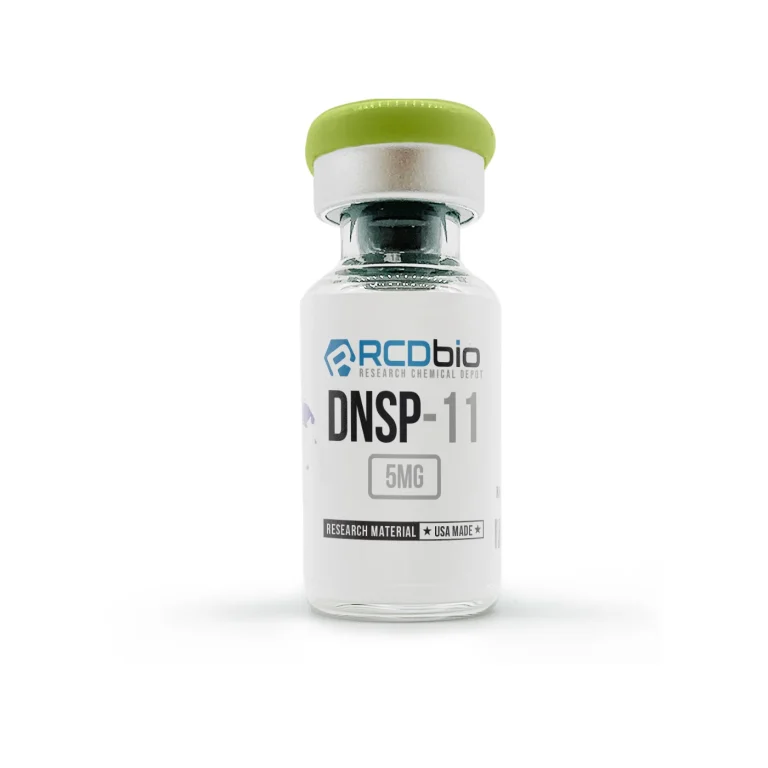
Description
What is DNSP-11?
DNSP-11 (Dopamine Neuron Stimulating Peptide-11) is a synthetic 11-amino acid C-terminal amidated peptide with the sequence Pro-Pro-Glu-Ala-Pro-Ala-Glu-Asp-Arg-Ser-Leu-NH2 (PPEAPAEDRSL-amide). It was identified and characterised by Bradley, Gerhardt, Gash, and colleagues at the University of Kentucky as a predicted endoproteolytic cleavage product from the proprotein region of human glial cell line-derived neurotrophic factor (GDNF). Examination of the human preproGDNF sequence (211 amino acids total) identified flanking dibasic endopeptidase cleavage sites that would yield DNSP-11 as an 11-mer amidated peptide upon processing — a predicted biological origin analogous to the processing of neuropeptides from larger precursor proteins throughout the nervous system.
The compound was independently validated through the observation that the rat homologue of DNSP-11 — named brain excitatory peptide (BEP) — was separately characterised as a functional neuropeptide exhibiting increased synaptic excitability, supporting the hypothesis that DNSP-11 represents a physiologically relevant proGDNF processing product rather than an in silico artefact. DNSP-11 has been detected by immunostaining in tyrosine hydroxylase-positive (TH+) dopaminergic neurons of the rat substantia nigra at postnatal day 10, where it co-localises with GDNF in dopaminergic cell bodies. A notably strong DNSP-11 immunostaining signal has been reported in the locus coeruleus — a region where GDNF is not expressed — suggesting DNSP-11 may have independent signalling functions beyond its proGDNF origin.
The primary research significance of DNSP-11 lies in its demonstration that the prosequence of a major neurotrophic factor contains a biologically active, independently functional neuropeptide — challenging the previous assumption that propeptide sequences serve primarily as structural precursors without independent biological function. Its neurotrophic-like actions in dopaminergic preparations, combined with its small size (~1243 g/mol) and ease of chemical synthesis relative to the 32–42 kDa mature GDNF protein, make DNSP-11 an investigated candidate for novel dopaminergic pathway research.
DNSP-11 is not approved by the Food and Drug Administration for human or veterinary use. It is not a dietary supplement and is not intended for human consumption or therapeutic self-administration. All RCDbio research compounds are supplied strictly for laboratory and research purposes only.
Chemical Properties
| Property | Detail |
| Product Type | Synthetic 11-Amino Acid Amidated Neuropeptide / ProGDNF-Derived Dopaminergic Neurotrophic Peptide |
| Product Name | DNSP-11 (Dopamine Neuron Stimulating Peptide-11) |
| Application | Scientific / Research Use Only |
| CAS Number | No dedicated CAS widely indexed in chemical databases for DNSP-11. Available commercially as TFA salt (Sigma-Aldrich product D8571 — DNSP-11 trifluoroacetate salt). Verify identity via MS data from COA. |
| Molar Mass | ~1243 g/mol (PPEAPAEDRSL-NH2 free base; calculated from sequence with C-terminal amide) |
| Chemical Formula | C52H84N16O16 (calculated free base; C-terminal amide) |
| PubChem CID | No dedicated PubChem CID confirmed for DNSP-11 in the published database |
| Amino Acid Sequence | Pro-Pro-Glu-Ala-Pro-Ala-Glu-Asp-Arg-Ser-Leu-NH2 (PPEAPAEDRSL-amide); 11 amino acids; C-terminal amide |
| Protein Origin | Predicted endoproteolytic processing product from human pre-proGDNF prosequence; positions flanked by dibasic endopeptidase cleavage sites; high sequence homology to rat and mouse proGDNF sequences |
| Rat Homologue | Brain Excitatory Peptide (BEP) — independently characterised functional neuropeptide with synaptic excitability activity |
| Receptor | Does NOT directly interact with GFRα1 (the physiological GDNF receptor); proposed mechanism involves ERK1/2 phosphorylation and GAPDH binding (distinct from mature GDNF signalling) |
| Synonyms | DNSP-11; Dopamine Neuron Stimulating Peptide 11; PPEAPAEDRSL-amide; proGDNF 11-mer |
| Physical Form | Lyophilized white to off-white powder (supplied as TFA salt by Sigma-Aldrich; free base form may vary by supplier) |
| Solubility | Soluble in water and aqueous buffers; freely soluble in PBS |
| Storage (Lyophilized) | −20°C; sealed container; protected from light and moisture |
| Storage (Reconstituted) | 4°C; use within 48–72 hours; avoid repeated freeze-thaw cycles |
| Purity | ≥98% (HPLC verified, independent third-party laboratory analysis) |
| WADA Status | DNSP-11 is not explicitly named on the 2026 WADA Prohibited List. As a non-approved synthetic neuropeptide with dopaminergic neurotrophic activity, S0 (Non-Approved Substances) provisions may apply in sport-adjacent research contexts. Verify at GlobalDRO.com prior to use. |
How Does DNSP-11 Work?
DNSP-11 exhibits neurotrophic-like actions on dopaminergic neurons in preclinical preparations but operates through a distinct mechanism from mature GDNF, which signals through the GFRα1/RET receptor complex. DNSP-11 does not directly bind GFRα1, indicating that the prosequence-derived peptide has evolved distinct receptor or binding partner interactions from the mature neurotrophic factor it originates from.
ERK1/2 Phosphorylation Pathway
The primary identified intracellular signalling mechanism for DNSP-11 is activation of the extracellular signal-regulated kinase 1/2 (ERK1/2) pathway. In MN9D and B65 dopaminergic cell line preparations treated with DNSP-11 (0.1–1 μM), elevated levels of phosphorylated ERK1/2 were detected by western blot, consistent with ERK pathway activation [Fuqua et al., 2014]. ERK1/2 signalling is a well-characterised pro-survival pathway in dopaminergic neurons downstream of neurotrophic factor receptor activation, and its activation by DNSP-11 through a GFRα1-independent mechanism suggests a novel receptor or intracellular binding partner. ERK activation is also reported to affect mitochondrial function in dopaminergic cell preparations, providing a potential mechanistic link to DNSP-11’s observed mitochondrial activity effects.
GAPDH Binding and Nuclear Translocation
Proteomic analyses and binding studies in dopaminergic cell preparations identified glyceraldehyde-3-phosphate dehydrogenase (GAPDH) as a binding partner for DNSP-11. DNSP-11 binds GAPDH, and nitrosylation of GAPDH decreases this binding — a mechanistically relevant finding, as nitrosylation of GAPDH is associated with Parkinson’s disease pathology. DNSP-11 treatment reduced GAPDH nitrosylation in cell preparations and altered nuclear GAPDH levels — suggesting that DNSP-11 may modulate the GAPDH nitrosylation/nuclear translocation pathway implicated in apoptotic signalling in dopaminergic neurons.
Neuroprotection Against 6-OHDA and Staurosporine
In primary rat mesencephalic and MN9D dopaminergic cell culture preparations, DNSP-11 demonstrated protection against 6-hydroxydopamine (6-OHDA)-induced cytotoxicity. In nutrient-deprived dopaminergic B65 cells, DNSP-11 at ~10 nM (10 ng/mL) blocked staurosporine-induced cytotoxicity [Bradley et al., 2010]. The neuroprotective mechanism at the cellular level involves attenuation of apoptotic pathway activation, consistent with ERK1/2-mediated pro-survival signalling and GAPDH nitrosylation reduction.
In Vivo Dopamine System Modulation
Following a single injection of DNSP-11 into the normal adult rat substantia nigra, increases in resting levels of dopamine and its metabolites (DOPAC, HVA) were observed at 28 days post-injection — a duration inconsistent with the peptide’s direct molecular half-life and suggesting trophic or neuroadaptive cellular responses rather than simple receptor agonism [Bradley et al., 2010]. In a severe 6-OHDA PD rat model, DNSP-11 administration significantly improved apomorphine-induced rotational behaviour — a standard behavioural measure of nigrostriatal dopamine pathway integrity.
Key Research Findings
In preclinical and in vitro research contexts, DNSP-11 has been associated with the following observations:
- In vitro neuroprotection: Supported survival of primary fetal mesencephalic neurons; protected MN9D and primary mesencephalic cultures from 6-OHDA cytotoxicity; blocked staurosporine-induced cytotoxicity at ~10 nM in nutrient-deprived B65 cells [Bradley et al., 2010].
- In vivo dopamine restoration: Single injection into normal adult rat substantia nigra produced increases in resting dopamine and metabolites sustained for 28 days post-injection [Bradley et al., 2010].
- PD model behavioural improvement: Significantly improved apomorphine-induced rotational behaviour in a severe 6-OHDA parkinsonian rat model [Bradley et al., 2010].
- ERK1/2 phosphorylation: Elevated ERK1/2 phosphorylation in MN9D and B65 dopaminergic cell preparations; ERK activation identified as primary intracellular DNSP-11 signalling pathway — distinct from mature GDNF GFRα1/RET pathway [Fuqua et al., 2014].
- Non-GFRα1 mechanism: DNSP-11 confirmed not to directly interact with GFRα1 (mature GDNF receptor); represents a mechanistically novel neurotrophic pathway from the GDNF prosequence.
- Intranasal delivery: Intranasal administration of DNSP-11 demonstrated capacity to protect and/or restore the nigrostriatal system in the 6-OHDA rat model, supporting CNS delivery via this non-invasive route in preclinical model systems.
All findings listed above are derived from preclinical in vitro and in vivo rodent model data. No human clinical trial data has been established for DNSP-11. These observations do not constitute evidence of efficacy or safety in any human condition or organism.
What are the Potential Research Applications of DNSP-11?
In controlled laboratory environments, DNSP-11 has been investigated for the following research applications. These do not constitute claims of efficacy or safety in any organism.
Dopaminergic Neuron Survival and Neuroprotection Studies DNSP-11 is employed as a novel proGDNF-derived neurotrophic reference compound in primary rat mesencephalic neuron preparations and dopaminergic cell line systems, examining its capacity to support TH+ neuron survival, extend neuritic outgrowth, and protect against dopaminergic cytotoxins (6-OHDA, MPP+) in controlled concentration-response experimental designs.
GFRα1-Independent Neurotrophic Pathway Research DNSP-11’s confirmed non-GFRα1 mechanism makes it an ideal tool compound for dissecting GDNF-independent dopaminergic trophic signalling. Research employs receptor binding assays, GFRα1 knockout cell preparations, and proteomic approaches to characterise DNSP-11’s novel receptor/binding partner interactions and distinguish their contributions to ERK1/2 activation.
ERK1/2 Pathway Research in Dopaminergic Biology DNSP-11 is employed in ERK1/2 phosphorylation studies in dopaminergic cell preparations to characterise MAPK cascade dynamics, duration, and downstream transcriptional consequences in the context of dopaminergic neuron protection and neuroadaptation.
ProGDNF Propeptide Biology Research DNSP-11 serves as the primary model compound for investigating the general hypothesis that GDNF propeptide processing yields biologically active neuropeptides with functions independent of mature GDNF — a hypothesis with broader implications for our understanding of neurotrophic factor propeptide biology.
Parkinson’s Disease Preclinical Model Research In 6-OHDA rodent models of PD, DNSP-11 is investigated for protection and restoration of nigrostriatal dopamine pathway integrity, with a particular research focus on non-invasive intranasal delivery as a potential CNS drug delivery strategy for small neuropeptides.
What are the Potential Side Effects of DNSP-11?
The following observations are from preclinical research.
- Generally well-tolerated profile reported in primary mesencephalic cell culture, dopaminergic cell line, and rodent in vivo preparations at research-relevant doses; no significant adverse effects reported in published studies at effective neurotrophic concentrations
- The proline-rich N-terminal sequence (PPE-AP) may confer some inherent resistance to aminopeptidase degradation relative to unprotected peptides, but specific plasma half-life data is not available in published literature
- GAPDH binding activity is a relevant consideration in proteomics-based assay systems where GAPDH is used as a housekeeping reference — DNSP-11 treatment may alter GAPDH expression patterns and nuclear localisation in treated cell preparations
- No human safety or tolerability data has been established for DNSP-11. These observations are derived from experimental systems and should not be extrapolated to human or animal outcomes.
Risk & Handling
Handling Precautions
DNSP-11 should only be handled by trained laboratory personnel. Appropriate PPE is required: nitrile gloves, laboratory coat, and eye protection at minimum. When working with lyophilized powder, use within a laminar flow cabinet. Avoid aerosol generation during reconstitution.
Exposure Risks
Risk Tier: LOW–MODERATE
DNSP-11 is a pharmacologically active dopaminergic neurotrophic peptide with characterised ERK1/2 activation and dopaminergic system modulation in preclinical preparations. Accidental systemic exposure could engage these pathways in tissues expressing DNSP-11’s target binding partners. No human safety data has been established for DNSP-11.
Storage
- Lyophilized form: Store at −20°C in original sealed, light-protected container with desiccant
- Reconstituted form: Store at 4°C; use within 48–72 hours
- Avoid repeated freeze-thaw cycles
- Protect from prolonged light exposure
Frequently Asked Questions
Q: What is DNSP-11 and what is it investigated for in research? A: DNSP-11 (PPEAPAEDRSL-amide) is a synthetic 11-amino acid amidated neuropeptide predicted from the proGDNF sequence. It is investigated in preclinical research contexts for dopaminergic neuron survival, 6-OHDA neuroprotection, ERK1/2 pathway activation, and Parkinson’s disease model restoration. Unlike mature GDNF, DNSP-11 does not bind GFRα1, indicating a mechanistically distinct neurotrophic pathway. It is not FDA approved and is intended strictly for laboratory research purposes.
Q: How does DNSP-11 differ from GDNF? A: GDNF is a 32–42 kDa homodimeric neurotrophic factor signalling through the GFRα1/RET receptor complex. DNSP-11 is an 11-amino acid peptide (~1243 g/mol) predicted to derive from the GDNF prosequence — not from mature GDNF itself. Critically, DNSP-11 does not bind GFRα1, meaning it accesses dopaminergic neuroprotective effects through a separate receptor or binding partner. Its small size offers practical research advantages over the large GDNF protein: easier synthesis, greater chemical modification flexibility, and superior CNS bioavailability in preclinical delivery models.
Q: What is the significance of DNSP-11 not binding GFRα1? A: GFRα1 is the canonical high-affinity receptor for mature GDNF; signalling through GFRα1/RET produces cAMP and PI3K/AKT pathway activation in dopaminergic neurons. DNSP-11’s lack of GFRα1 interaction, combined with its ERK1/2 activation and GAPDH binding activities, means it accesses dopaminergic neuroprotective pathways through a novel, GFRα1-independent mechanism. This distinction is pharmacologically important for research examining pathway-specific contributions to dopaminergic neuroprotection and raises the possibility of a biologically relevant proGDNF propeptide signalling system independent of mature GDNF.
Q: What does the 28-day dopamine elevation finding mean for DNSP-11 research? A: In normal adult rat substantia nigra, a single injection of DNSP-11 produced increases in resting dopamine and metabolite levels sustained for 28 days — far beyond what direct receptor agonism or peptide half-life could explain. This persistent effect suggests DNSP-11 induces lasting trophic or neuroadaptive changes in dopaminergic neuron function rather than simply occupying a receptor. The mechanism underlying this sustained response is under investigation and represents one of the most intriguing research questions in DNSP-11 biology.
Q: How should DNSP-11 be stored? A: Lyophilized DNSP-11 should be stored at −20°C in a sealed, light-protected container with desiccant. Once reconstituted, store at 4°C and use within 48–72 hours. Avoid repeated freeze-thaw cycles.
Related Research Compounds
Researchers investigating DNSP-11 may also be interested in the following compounds currently available for laboratory research at RCDbio:
- Humanin — A mitochondria-derived 24-amino acid peptide investigated for anti-apoptotic Bax inhibition and neuroprotective pathway research; shares the proprotein-derived neuropeptide origin and dopaminergic/CNS neuroprotection research context with DNSP-11.
- Colivelin — A chimeric neuroprotective peptide investigated for STAT3-mediated neuroprotection at femtomolar concentrations; shares the CNS neuroprotection and neurodegeneration model research context with DNSP-11.
All products listed are for laboratory and research purposes only.
References
- Bradley, L. H., Fuqua, J., Richardson, A., Turchan-Cholewo, J., Ai, Y., Kelps, K. A., Glass, J. D., He, X., Zhang, Z., Grondin, R., Littrell, O. M., Huettl, P., Pomerleau, F., Gash, D. M., & Gerhardt, G. A. (2010). Dopamine neuron stimulating actions of a GDNF propeptide. PLoS ONE, 5(3), e9752. https://pubmed.ncbi.nlm.nih.gov/20305789/
- Fuqua, J. L., Littrell, O. M., Lundblad, M., Turchan-Cholewo, J., Abdelmoti, L. G., Galperin, E., Bradley, L. H., Cass, W. A., Gash, D. M., & Gerhardt, G. A. (2014). Dynamic changes in dopamine neuron function after DNSP-11 treatment: effects in vivo and increased ERK 1/2 phosphorylation in vitro. Peptides, 54, 1–8. https://pubmed.ncbi.nlm.nih.gov/24406899/
- Kelps, K. A., Turchan-Cholewo, J., Hascup, E. R., Gash, D. M., Gerhardt, G. A., Littrell, O. M., & Bradley, L. H. (2011). Evaluation of the Physical and In Vitro Protective Activity of Three Synthetic Peptides Derived from the Pro- and Mature GDNF Sequence. Neuropeptides, 45(4), 213–218. https://pubmed.ncbi.nlm.nih.gov/21513973/
- Littrell, O. M., Fuqua, J. L., Richardson, A. D., Turchan-Cholewo, J., Hascup, E. R., Huettl, P., Pomerleau, F., Bradley, L. H., Gash, D. M., & Gerhardt, G. A. (2013). A synthetic five amino acid propeptide increases dopamine neuron differentiation and neurochemical function. Neuropeptides, 47(1), 43–49. https://pubmed.ncbi.nlm.nih.gov/22981157/
Disclaimer
DNSP-11 is exclusively for laboratory research purposes. RCDbio products are not intended to diagnose, prevent, treat, or cure any disease or medical condition.
The Food and Drug Administration has not evaluated the statements on our website. This product is not approved for human or veterinary use. Researchers must comply with all applicable local, state, and federal laws and regulations governing the purchase and use of research compounds. By purchasing, you agree to our Terms and Conditions. RCDbio reserves the right to refuse sales to unauthorized individuals.
ATTENTION: All RCDbio products are strictly for LABORATORY AND RESEARCH PURPOSES ONLY. They are not intended for human consumption, veterinary use, or any other non-research application. For queries, complaints, or support, contact support@legacy.rcdbio.co
Reviews
There are no reviews yet